Architecture this week looked as much to the past as to the future. Across museums, restored landmarks, and large-scale urban redevelopments, the featured stories explored how architecture is continually reinterpreted through new cultural, political, and urban lenses. From reconsidering the architectural legacy of post-independence West Africa to transforming former prisons into energy-neutral neighborhoods and restoring twentieth-century cultural landmarks, the projects demonstrate how existing buildings and histories remain active participants in contemporary discourse. Alongside these interventions, the announcement of the World Architecture Festival shortlist and renewed attention to global urban growth provide a broader picture of a profession negotiating heritage, environmental responsibility, and rapidly changing cities.

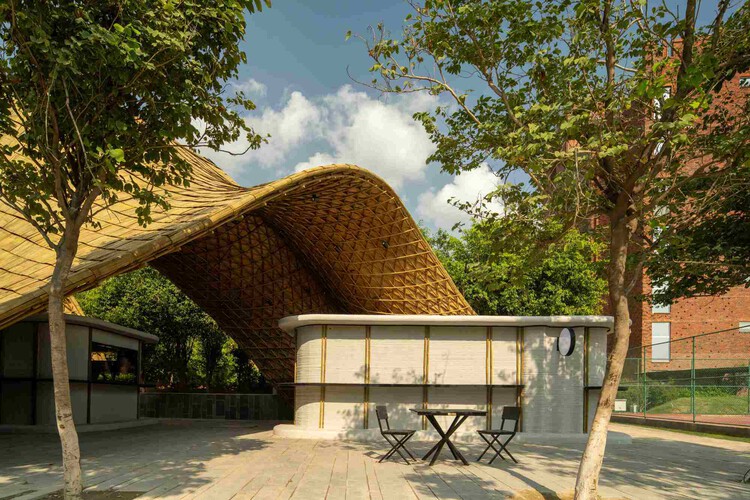
Reframing Architectural Legacies
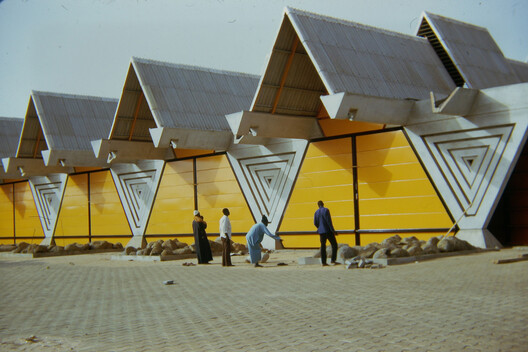
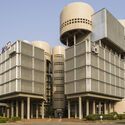
Questions of architectural history and cultural representation emerged this week through two projects that revisit twentieth-century modernism from different perspectives. Opening at New York's Museum of Modern Art, Architects of Liberation: Modernism in Western Africa presents one of the most comprehensive examinations to date of architecture produced during the decades following independence across seven West African nations. Rather than treating modernism as a universal export, the exhibition reveals how architects reinterpreted its language through local climates, political aspirations, and cultural identities, foregrounding practitioners whose work has largely remained absent from mainstream architectural histories.
Related Article
World Architecture Festival Reveals the 2026 ShortlistA similar reconsideration of modernist heritage unfolds in Valparaíso, where the restored Teatro Mauri has reopened after decades of neglect. Originally completed in 1951 by Alfredo Vargas Stoller, the project carefully recovers the building's architectural character while adapting it to contemporary performance standards. More than a preservation effort, the intervention reinforces the theater's role within the city's cultural life, demonstrating how restoration can reactivate historic architecture without reducing it to an artifact.
Growing Cities and the Transformation of Existing Urban Fabric
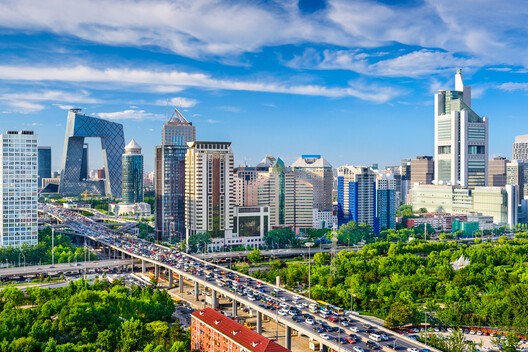
As global cities continue to expand, architecture is increasingly shaped by the pressures of demographic growth, environmental performance, and changing patterns of urban life. Released around World Population Day, this year's estimates of the world's largest metropolitan areas highlight where demands for housing, mobility, infrastructure, and public space are expected to intensify in the coming decades. These broader dynamics provide context for projects such as OMA's The Martin, the latest residential building completed within Amsterdam's Bajes Kwartier redevelopment. Designed as part of the transformation of the former Bijlmerbajes prison into an energy-neutral mixed-use neighborhood, the project combines new housing with shared amenities while integrating preserved elements of the former correctional complex, illustrating how adaptive reuse can reshape existing urban districts for contemporary living.
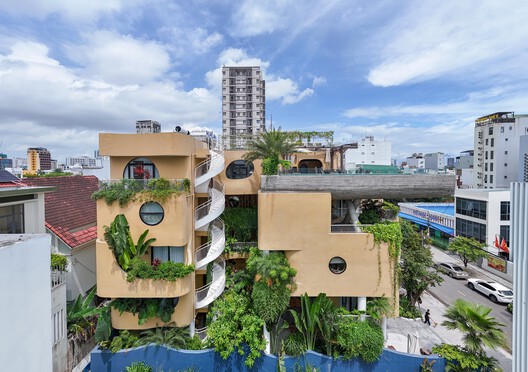
The global architecture community also turned its attention to the announcement of the 2026 World Architecture Festival shortlist. Covering completed buildings, future projects, interiors, and landscape works, this year's selection brings together projects from across a broad range of building types, including civic, cultural, educational, healthcare, residential, transport, and adaptive reuse. The shortlist features internationally established practices such as Foster + Partners, Herzog & de Meuron, Studio Gang, Grimshaw, Perkins&Will, RSHP, Woods Bagot, KPF, and Nikken Sekkei, alongside emerging firms from around the world. Finalists will present their projects live before international juries during the festival in Fort Lauderdale this November, with category winners advancing to compete for the festival's highest honors.
On the Radar
Rio de Janeiro Selected to Host the 2028 UIA International Forum
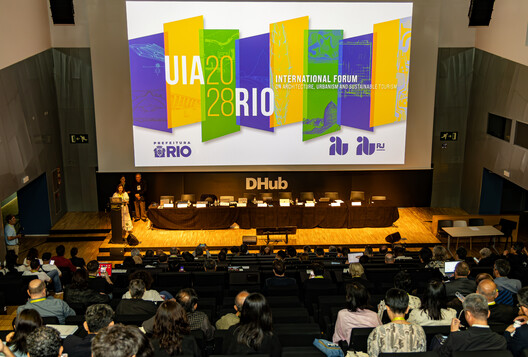
Rio de Janeiro has been selected to host the 5th International Forum of the International Union of Architects (UIA) in 2028, marking the first time the event will take place in the Americas. Led by the Brazilian Institute of Architects (IAB) in partnership with the City of Rio de Janeiro, the successful bid proposes a global discussion on architecture, urbanism, and sustainable tourism under the theme "One City. Many Worlds." Expected to bring together more than 5,000 architects, researchers, students, public officials, and tourism professionals, the forum will position Rio as a platform for exchanging strategies on climate adaptation, heritage preservation, cultural diversity, and urban development, while supporting the city's ambition to become UNESCO-UIA's first World Capital of Sustainable Tourism.
MVRDV Unveils Office Towers for Taipei's Nangang District
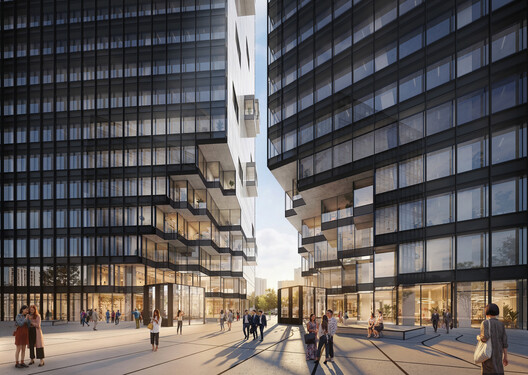
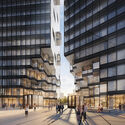
MVRDV has revealed the design for Nangang Pair, a mixed-use office development that will serve as a new eastern gateway to Taipei's Nangang district. Located adjacent to Kunyang Station, the project divides a single building mass into two towers to create a public plaza that improves pedestrian connections and responds to the area's role as a major transportation hub. The design emphasizes the separation through contrasting facade treatments and fragmented balconies, while the ground floor integrates retail, restaurants, and public lobby spaces. Developed for JUT Group, the project also incorporates rooftop gardens, rainwater harvesting, flood mitigation systems, and photovoltaic panels, aligning the development with the district's ongoing urban renewal and climate resilience strategies.
Alvisi Kirimoto Designs Temporary Installation for Rome's Basilica di Massenzio
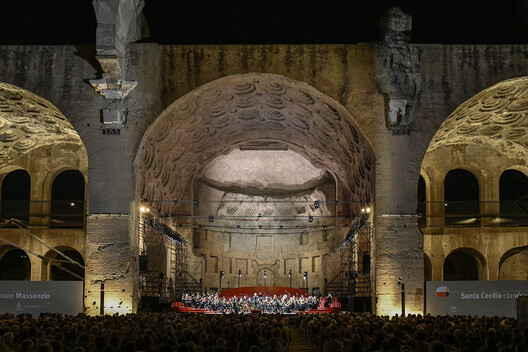
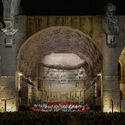
Alvisi Kirimoto has designed a new temporary installation for the 2026 summer season of the Accademia Nazionale di Santa Cecilia within Rome's Basilica di Massenzio. Building on the practice's earlier regeneration project for the archaeological site, the intervention introduces a lightweight scenographic setting that expands the multifunctional stage previously created inside the basilica's central nave. Constructed from red-painted marine plywood, the installation includes stepped seating for an orchestra of up to 90 musicians and a circular platform for an 80-member choir, alongside integrated backstage facilities concealed within the monument. Conceived to support large-scale performances while maintaining a restrained dialogue with the historic setting, the project continues the Basilica di Massenzio's transformation into a venue for contemporary cultural programming within one of Rome's most significant archaeological landmarks.
This article is part of our new This Week in Architecture series, bringing together featured articles this week and emerging stories shaping the conversation right now. Explore more architecture news, projects, and insights on ArchDaily.