How can architectural design become an active tool for conservation? By considering nature as an inexhaustible source of inspiration, a harmonious connection with it frames the countless interrelationships that exist among humans, living organisms, and natural cycles. Designing with the landscape means learning to coexist with its temporal dynamics without controlling its processes. Traditions, ecology, and the past and present of a place all contribute to creating spaces that interpret their communities. Landscape architecture can draw inspiration from birds, plants, and other natural elements to shape the complex, dynamic network of ecosystems and human activities that make up the environment.
All living beings interact with and modify their surroundings while simultaneously influencing other species and their relationships, creating networks and connections between organisms and environments. Human beings are part of this transformative movement, shaping every territory they inhabit through their intellectual capacity, cultural richness, and ability to organize collectively. However, this capacity now poses a threat to many forms of life, damaging ecological functions that are essential to our existence. The triple environmental crisis—climate change, biodiversity loss, and pollution—is largely the result of a profound physical, biological, and spiritual disconnection between human communities and the ecosystems that sustain life's essential functions.
Ecosystem services represent the tangible and intangible contributions that nature provides for human survival and development. Highlighting the importance of ecosystems to human life, the Millennium Ecosystem Assessment—a global initiative launched by the United Nations between 2001 and 2005—classified these benefits into four categories: provisioning services (such as food, water, timber, fiber, and medicinal plants); regulating services (including climate regulation, flood control, water purification, and pest management); supporting services (such as soil formation, photosynthesis, and nutrient cycling); and cultural services (including recreational, aesthetic, educational, spiritual, and cultural experiences).
Related Article
Designing in Harmony with Nature: Architecture in Urban Wetlands and the Pursuit of Territorial Well-BeingToday, this concept has evolved into "Nature's Contributions to People" (NCP), recognizing the dynamic, two-way relationship between people and nature while acknowledging the diversity of values, perceptions, and knowledge systems that emerge from this interaction.
The beauty of nature moves us as something great that points beyond ourselves. Human beings come from nature and return to it again. When we perceive as beautiful a landscape that we have not domesticated and shaped to our own measure, we become aware of the dimension of our lives within nature's immeasurability. We feel uplifted; humble and proud, all at once. — Peter Zumthor, Thinking Architecture
Reflecting on the ways we inhabit the planet, Fundación Cosmos is a Chilean organization dedicated to designing infrastructure and territorial management models based on nature. Recognizing the importance of reconnecting people with place, the organization works through landscape architecture to integrate ecological conservation, environmental education, and responsible public use in collaboration with local communities, municipal governments, and public agencies. Through projects developed in urban and peri-urban wetlands throughout Chile, its approach is grounded in vernacular architecture and biomimicry, drawing inspiration from local species, ecological dynamics, and traditional building knowledge.
At Fundación Cosmos, we understand that design cannot be an isolated or imposed act; it must be a sensitive and respectful response to the territories we inhabit. That is why we work with an architecture that is inspired by nature and engages in dialogue with it. This approach not only minimizes ecological impact but also allows us to create infrastructure that strengthens conservation and generates meaningful experiences for communities. For us, designing with nature is an essential part of how we imagine the future of public and natural spaces. — Felipe Correa, Architect and Project Director, Fundación Cosmos
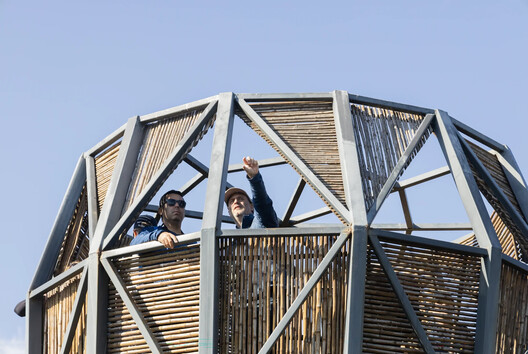
Discover four projects by Fundación Cosmos in Chile, inspired by birds and insects, that explore the role of landscape architecture in transforming ecosystems into urban wetland parks.
Siete Colores Observation Tower
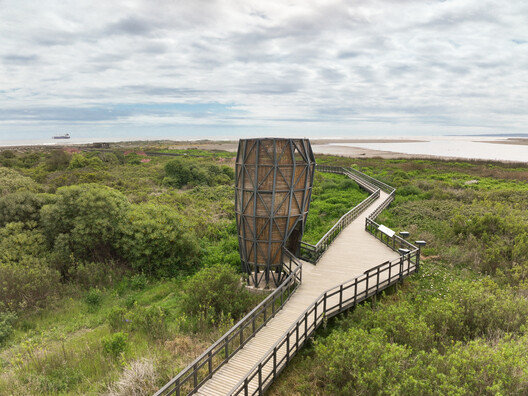
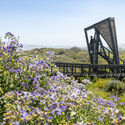
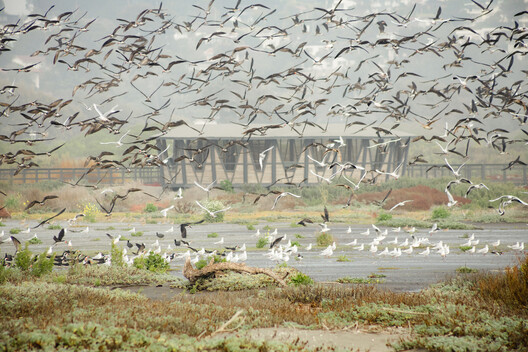
At the mouth of the Maipo River, on the border between the municipalities of Santo Domingo and San Antonio in Chile's Valparaíso Region, lies Parque Humedal Río Maipo. As a space dedicated to conservation, recreation, and environmental education, the interaction between freshwater and saltwater, combined with nutrient inputs and tidal fluctuations, creates a productive and biodiverse environment. More than 190 bird species and 147 plant species inspired the design of infrastructure such as boardwalks, observation towers, and interpretive signage that connect local communities with the ecosystem.
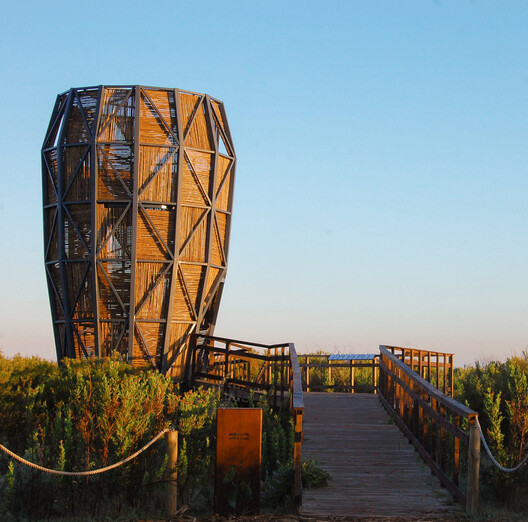
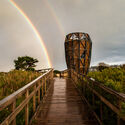
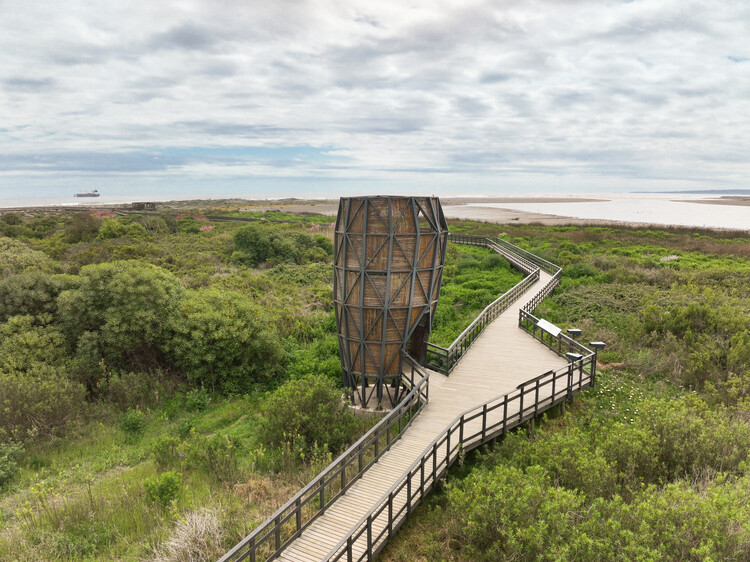
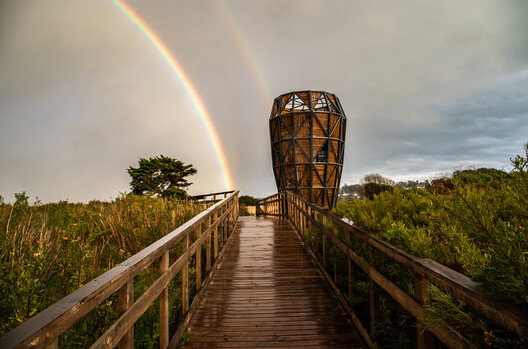
Standing seven meters tall, the Siete Colores Observation Tower is inspired by the nest of the Many-colored Rush Tyrant (Tachuris rubrigastra), a bird that inhabits the grasslands and carefully weaves its nests from reeds to protect its young. During the design phase, soil studies recommended minimizing excavation for the foundations. Observing the bird's nesting strategy—constructing a cone-shaped nest around a single reed stem—became the guiding principle of the project.
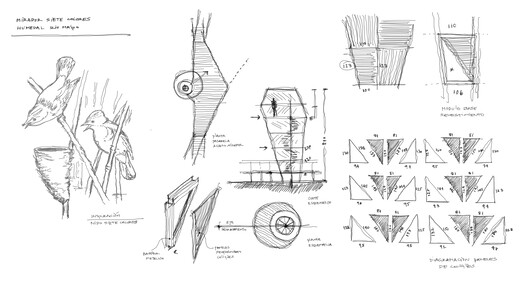
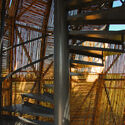
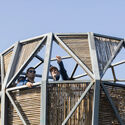
The tower was built around a single foundation point, with a central structural axis supporting the staircase, observation deck, and exterior cladding. The conical form minimizes the footprint at ground level while expanding toward the top, where the viewing platform is located. This solution reduces excavation, respects the wetland's natural hydrological flow, and integrates visually with the surrounding landscape while offering panoramic views of the river, reed beds, ocean, and nearby urban areas.
Rayador Observation Tower
Located along the southwestern edge of the Nature Sanctuary, this tower marks the boundary between Marbella Beach and the protected area. The Rayador Observation Tower was conceived as a clear physical landmark, signaling entry into a conservation area while reinforcing the ecological boundary of the wetland. Its design is inspired by the bill of the Black Skimmer (Rynchops niger), a bird found in the wetland that leaves a line on the water's surface while feeding.
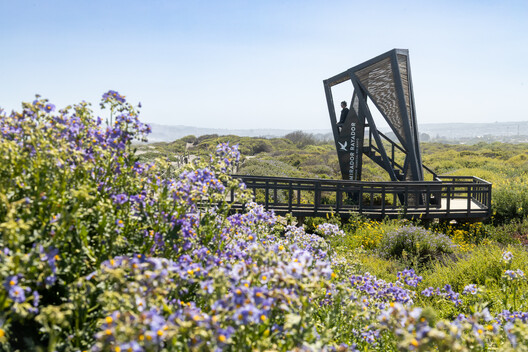
The tower's form references the behavior of this migratory estuarine bird, which flies just above the water with its bill partially open, appearing to "skim" or "scratch" the surface. This line traced across the water was reinterpreted architecturally as an edge condition. As a result, the tower adopts the shape of the bird's bill, symbolically representing the boundary between public space and protected habitat.
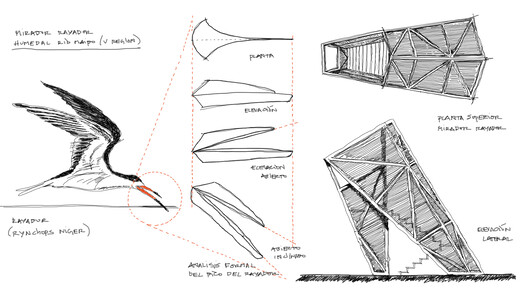
Structurally, the project consists of overlapping triangular timber frames screened with bamboo triangulations. The tower features two levels connected by a central staircase, culminating in a terrace overlooking coastal shrublands and the Pacific Ocean.
Chimalfe Park
In Gran Concepción, a system of wetlands that includes Rocuant-Andalién, Vasco da Gama, Paicaví, and Tucapel Bajo forms part of a fragmented ecological matrix with the potential to become a unified network of natural areas providing ecosystem services to local communities. The Chimalfe Wetland required a strategy to regulate public use while conserving nature and creating safe spaces for residents. A transitional edge condition was therefore developed between the residential area and a wooded zone known as the "Bosque Mágico." A perimeter park was designed around a canal that is proposed to be widened to increase ecosystem-service provision.
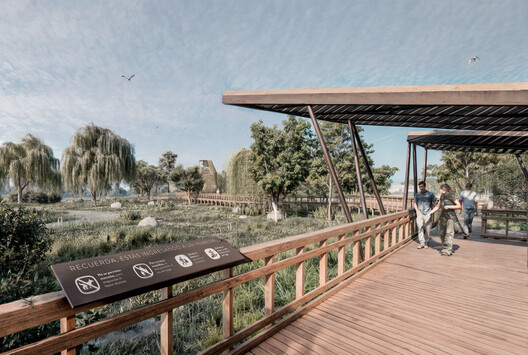
Inspired by dragonflies, the proposal emerged through participatory workshops with the local community of Hualpén. The presence of the Chimalfe—"dragonfly" in Mapudungun, the language of the Mapuche people—served as the formal inspiration for the park's landmarks. The dragonfly's wings, with their distinctive shape and geometric patterns, inspired the design of a large shelter that protects visitors from the region's frequent rainfall while also functioning as an educational and interpretive space.
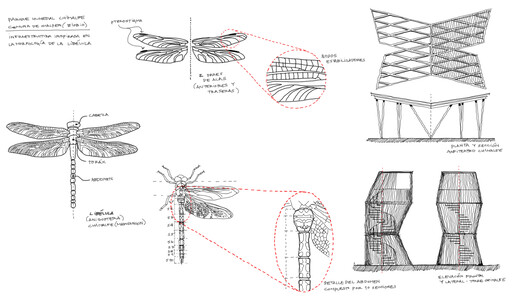
Likewise, the dragonfly's body inspired the design of a seven-meter-high observation tower that provides panoramic views of the ecosystem while creating a recognizable urban landmark that supports conservation efforts. Both structures are connected by a network of boardwalks that improve community access while protecting the ecosystem.
Paicaví–Tucapel Bajo Park
At the Paicaví–Tucapel Bajo Wetland, designated an Urban Wetland in 2023, the project includes a new entrance portal leading to an environmental education area associated with a nearby school. This space incorporates a shaded structure and an orchard. The park's layout responds to the site's long, narrow form and its visual connection to the broader wetland system, organizing and zoning the area as a conservation park. Trails through tall vegetation, elevated boardwalks crossing reed beds, low-impact lighting, and interpretive signage define the visitor experience.
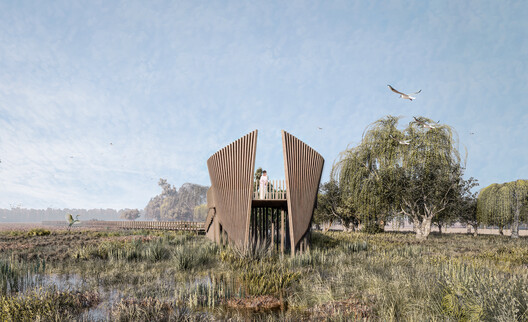
Inspired by the flight of a heron, the design incorporates an observation structure called "Traiwe" ("heron" in Mapudungun). The project takes inspiration from the white heron, a species identified by community members during participatory workshops as one of the wetland's most representative birds. By observing its behavior, the design references three phases of flight: preparation, takeoff, and flight.
Visitors begin their journey at ground level, gradually ascending via boardwalks before reaching an elevated lookout oriented toward the wetland as a whole. The slow, progressive ascent mirrors the bird's measured movement, while the observation tower's zigzag wooden lattice evokes the texture and appearance of its plumage.
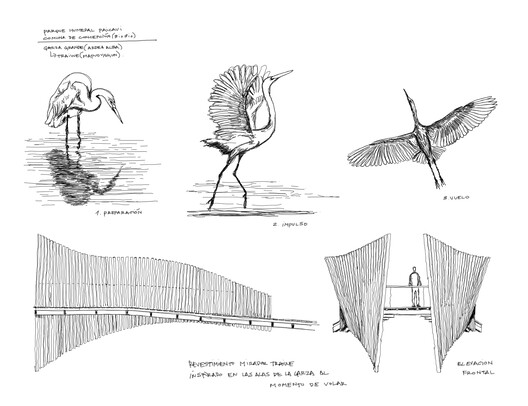
The structure consists of a wooden walkway that rises through accessible ramps, reaching a height of 2.88 meters and a total length of 5.95 meters. The walkway leads to a viewing platform overlooking the reed beds, enclosed by two curved wooden screens that subtly mimic the wings of a heron in flight.
Each of these projects reflects how all living beings are part of an interconnected web in which the existence of every species depends on collaboration with others, and where even small changes can trigger cascading effects throughout an ecosystem. Human beings are inherently social and cooperative. As historian Yuval Noah Harari states, "The real difference between us and other animals is the mythical glue that binds together large numbers of individuals, families, and groups." From the earliest hunter-gatherer societies to the present day, humans have thrived through collective life and cooperation. Biologist Lynn Margulis argued, "Life did not take over the globe by combat, but by networking." Working toward the creation of an ecologically minded citizenry may help pave the way for addressing the challenges of both the present and the future.
This article is part of the ArchDaily Topic: Transspecies Architecture: The Life of Materials, Ecological Alliances, and Nature's Agency. Every month we explore a topic in-depth through articles, interviews, news, and architecture projects. We invite you to learn more about our ArchDaily Topics. And, as always, at ArchDaily we welcome the contributions of our readers; if you want to submit an article or project, contact us.


