1. ArchDaily
  2. Wetland

Wetland: The Latest Architecture and News

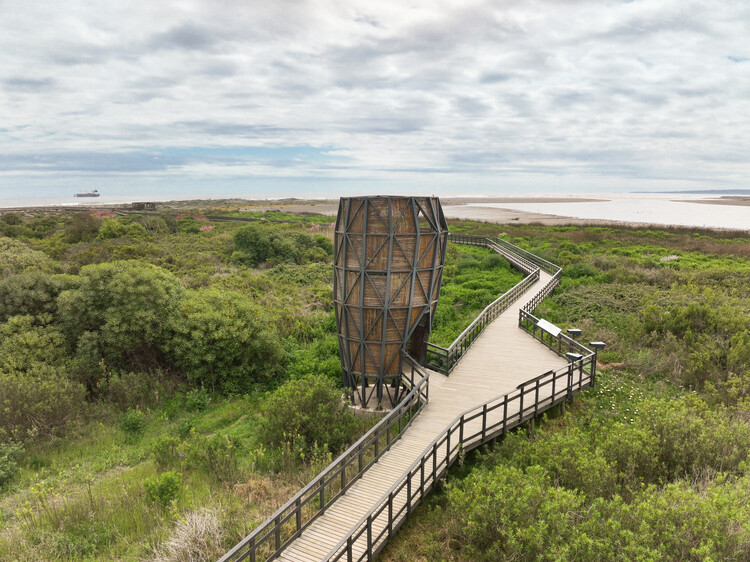
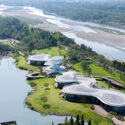
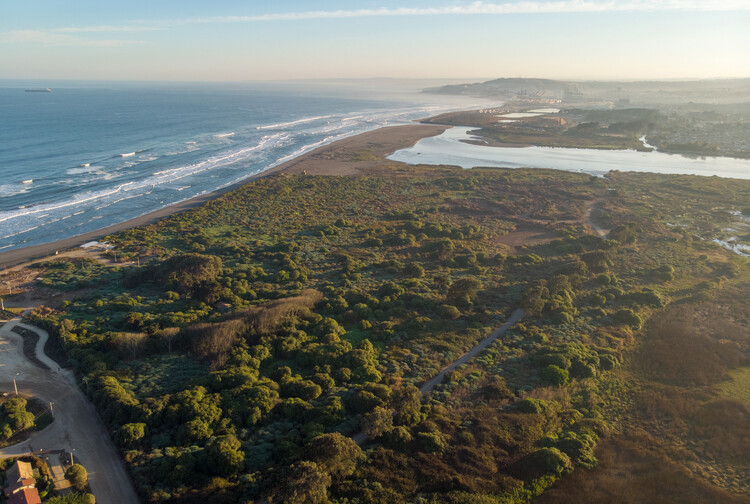
Architecture Inspired by Birds: Fundación Cosmos and the Wetland Parks of Chile

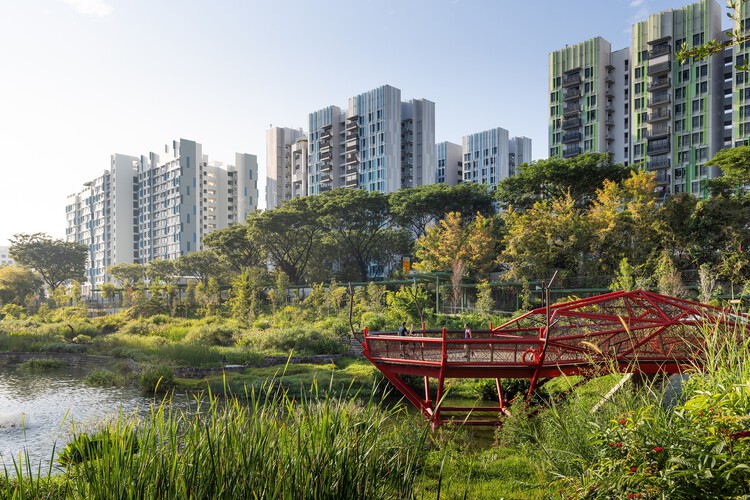
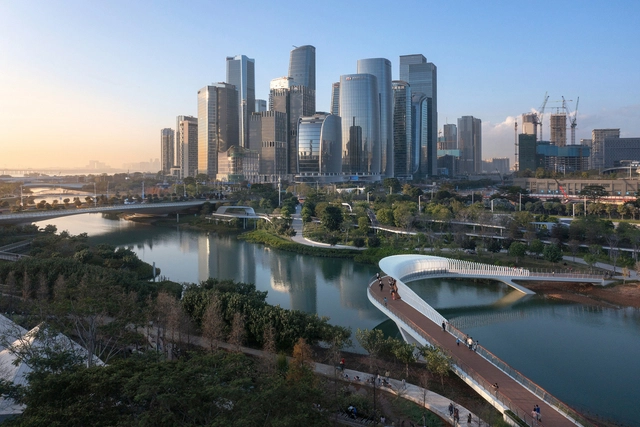
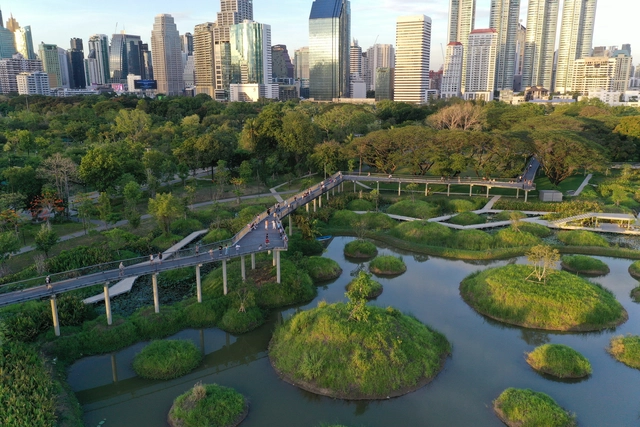
How can architectural design become an active tool for conservation? By considering nature as an inexhaustible source of inspiration, a harmonious connection with it frames the countless interrelationships that exist among humans, living organisms, and natural cycles. Designing with the landscape means learning to coexist with its temporal dynamics without controlling its processes. Traditions, ecology, and the past and present of a place all contribute to creating spaces that interpret their communities. Landscape architecture can draw inspiration from birds, plants, and other natural elements to shape the complex, dynamic network of ecosystems and human activities that make up the environment.

Architecture Inspired by Birds: Fundación Cosmos and the Wetland Parks of Chile - Image 1 of 4Architecture Inspired by Birds: Fundación Cosmos and the Wetland Parks of Chile - Image 2 of 4Architecture Inspired by Birds: Fundación Cosmos and the Wetland Parks of Chile - Image 3 of 4Architecture Inspired by Birds: Fundación Cosmos and the Wetland Parks of Chile - Image 4 of 4Architecture Inspired by Birds: Fundación Cosmos and the Wetland Parks of Chile - More Images+ 20

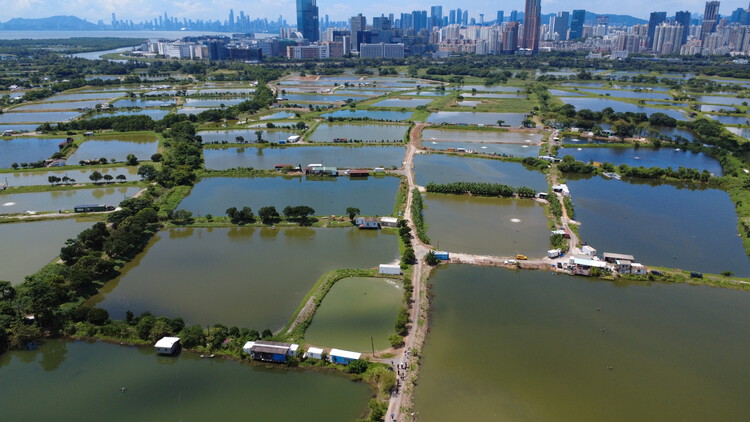
From Cloud to Coast: The Physical Cost of AI in Hong Kong’s Borderlands

Amid the rapid build-out of data centres and AI economies across the Greater Bay Area—and alongside the celebration of AI as a tool and "author," as featured in 2025 Hong Kong–Shenzhen Bi-City Biennale of Urbanism\Architecture (Hong Kong)—a parallel question becomes unavoidable: how do the planning and construction of AI infrastructure actually begin to shape everyday life? Many of the facilities already built remain intentionally distant from daily experience. The "cloud" may be marketed as immaterial, but its architecture is profoundly physical: high-power, high-heat, service-heavy environments that are often sited in remote or low-density areas to take advantage of lower land costs and to minimize friction with nearby communities. Security and risk management further reinforce this logic. Data centres hold sensitive, privileged information—corporate assets, legal records, government and institutional data—and remoteness becomes part of their operating model, keeping the infrastructures of AI both spatially and socially out of sight.

From Cloud to Coast: The Physical Cost of AI in Hong Kong’s Borderlands - Image 2 of 4From Cloud to Coast: The Physical Cost of AI in Hong Kong’s Borderlands - Image 6 of 4From Cloud to Coast: The Physical Cost of AI in Hong Kong’s Borderlands - Image 3 of 4From Cloud to Coast: The Physical Cost of AI in Hong Kong’s Borderlands - Image 4 of 4From Cloud to Coast: The Physical Cost of AI in Hong Kong’s Borderlands - More Images+ 7

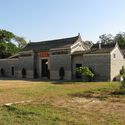
World Wetlands Day 2026: Integrating Traditional Knowledge for Climate Resilience

Observed annually on February 2, World Wetlands Day marks the adoption of the Ramsar Convention in 1971 and provides an international framework for recognizing the role of wetlands in environmental protection and sustainable development. The 2026 edition is held under the theme "Wetlands and traditional knowledge: Celebrating cultural heritage," drawing attention to the long-standing relationships between wetland ecosystems and the cultural practices, knowledge systems, and governance structures developed by communities over centuries. The theme highlights how inherited ecological knowledge, often embedded in rituals, seasonal calendars, land-use practices, and spatial organization, has shaped resilient interactions between human settlements and water-based landscapes.

World Wetlands Day 2026: Integrating Traditional Knowledge for Climate Resilience - Image 1 of 4World Wetlands Day 2026: Integrating Traditional Knowledge for Climate Resilience - Image 2 of 4World Wetlands Day 2026: Integrating Traditional Knowledge for Climate Resilience - Image 3 of 4World Wetlands Day 2026: Integrating Traditional Knowledge for Climate Resilience - Image 4 of 4World Wetlands Day 2026: Integrating Traditional Knowledge for Climate Resilience - More Images+ 5

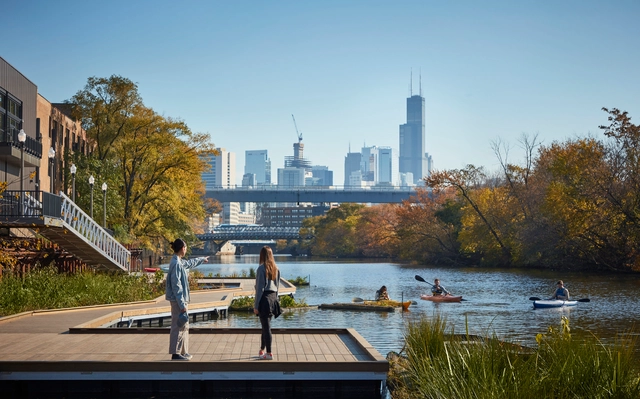
Local Knowledge and Ecological Context: City Making Lessons from Chicago’s Wild Mile

Subscriber Access | 

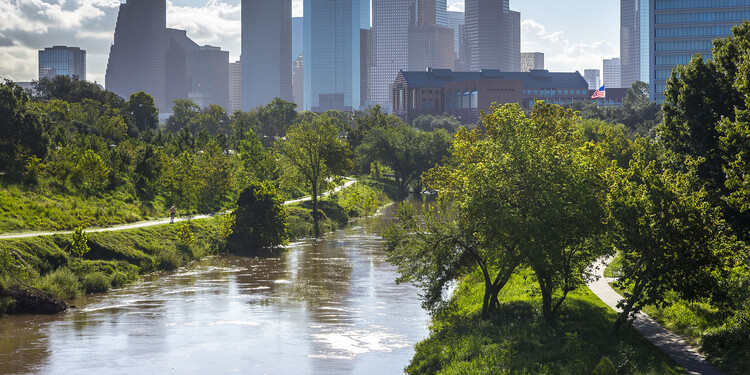
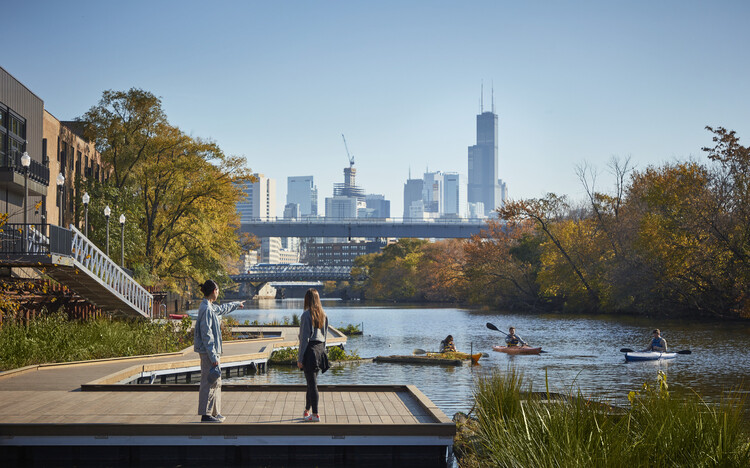
For more than a century, residents of growing American cities reshaped their rivers to serve industrial and manufacturing needs. Waterways were straightened, deepened, paved, or buried to support shipping routes and to move materials efficiently across regions. These transformations created an urban landscape in which rivers were treated as productive infrastructure rather than as living ecological systems.

This approach left a lasting imprint. Riparian habitats disappeared, water quality declined, regional biodiversity grew vulnerable, and communities grew accustomed to river corridors dominated by steel walls and concrete channels. The industrial reshaping of rivers in places such as Chicago, Los Angeles, and the Mississippi basin created durable patterns of development that still influence how cities function today.

Local Knowledge and Ecological Context: City Making Lessons from Chicago’s Wild Mile - Image 1 of 4Local Knowledge and Ecological Context: City Making Lessons from Chicago’s Wild Mile - Image 2 of 4Local Knowledge and Ecological Context: City Making Lessons from Chicago’s Wild Mile - Image 3 of 4Local Knowledge and Ecological Context: City Making Lessons from Chicago’s Wild Mile - Image 4 of 4Local Knowledge and Ecological Context: City Making Lessons from Chicago’s Wild Mile - More Images+ 7

Bugs, Bees, and Trees: How to Integrate Biodiversity in the Built Environment

Subscriber Access | 

Biodiversity, defined by the World Wide Fund for Nature (WWF) as the different kinds of life found in an area, is in a state of crisis all across the world, with declines in the numbers of organisms and many species declared as at risk of extinction. All types are affected, from plants and fungi to large mammals, and there is a clear link to human activity being the cause. Although farming methods and climate change due to greenhouse gases play a major role, cities and buildings can play a small but important role in countering this decline.

Bugs, Bees, and Trees: How to Integrate Biodiversity in the Built Environment - Image 1 of 4Bugs, Bees, and Trees: How to Integrate Biodiversity in the Built Environment - Image 2 of 4Bugs, Bees, and Trees: How to Integrate Biodiversity in the Built Environment - Image 3 of 4Bugs, Bees, and Trees: How to Integrate Biodiversity in the Built Environment - Image 4 of 4Bugs, Bees, and Trees: How to Integrate Biodiversity in the Built Environment - More Images+ 9

Absorb, Filter, Store: 9 Projects Showcasing How Sponge Cities Adapt to Climate Challenges

Subscriber Access | 

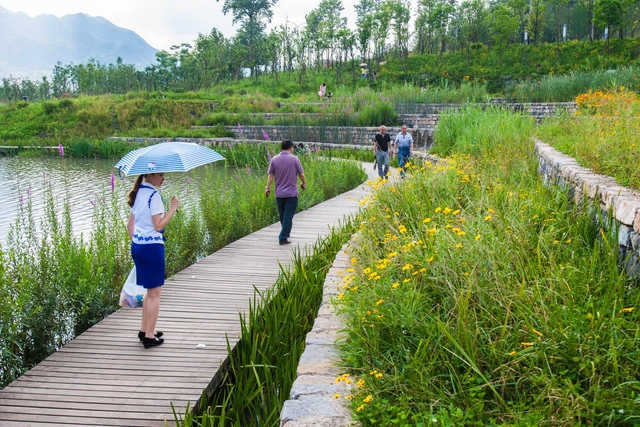
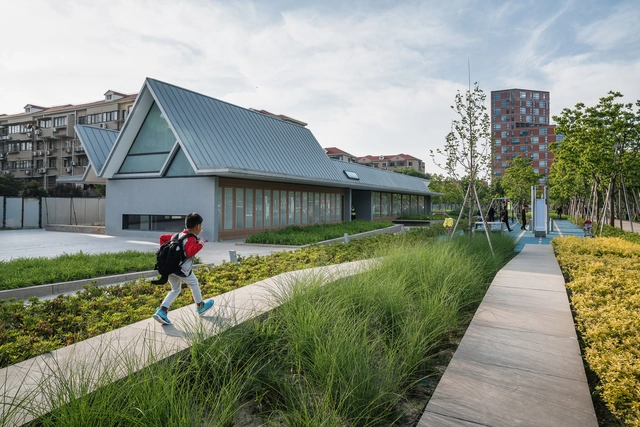
The concept of "sponge cities" has gained prominence since it was introduced by Chinese landscape architect Kongjian Yu, founder of Turenscape, and was officially adopted as a national policy in China in 2013 to combat urban flooding. This approach prioritizes nature-based infrastructure such as wetlands, rain gardens, and permeable pavements, creating landscapes with porous soil where native plants can thrive with minimal maintenance. When it rains, these systems absorb and slow down water flow, reducing flood risks. In contrast, traditional concrete- and pipe-based drainage solutions, though widely used, are costly, rigid, and require frequent maintenance, sometimes even making cities more vulnerable to flooding due to blockages and overflows.

Absorb, Filter, Store: 9 Projects  Showcasing How Sponge Cities Adapt to Climate Challenges - Image 1 of 4Absorb, Filter, Store: 9 Projects  Showcasing How Sponge Cities Adapt to Climate Challenges - Image 2 of 4Absorb, Filter, Store: 9 Projects  Showcasing How Sponge Cities Adapt to Climate Challenges - Image 3 of 4Absorb, Filter, Store: 9 Projects  Showcasing How Sponge Cities Adapt to Climate Challenges - Image 4 of 4Absorb, Filter, Store: 9 Projects  Showcasing How Sponge Cities Adapt to Climate Challenges - More Images+ 5

Urban Landscape as an "Art of Survival”: An interview with Kongjian Yu, the Advocate of the Sponge Cities Concept

Subscriber Access | 

Alarming cases of climate disasters are a constant presence in world news. Last month's floods in southern Brazil gained special attention from heat waves and forest fires to droughts and cyclones. This tragedy, which left over half a million people homeless, was understood to be the result of a combination of factors, including human actions that have devastated ecosystems to create environmentally irresponsible cities.

In this context, the work of Beijing-based architect Kongjian Yu, founder of the landscape architecture firm Turenscape, has gained international visibility and recognition, which included receiving the 2023 Cornelia Hahn Oberlander International Landscape Architecture Prize (“Oberlander Prize”). His "sponge cities" concept, designed to address and prevent urban flooding in the face of accelerated climate change, was adopted as national policy in China in 2013. This approach prioritizes large-scale nature-based infrastructures such as wetlands, greenways, and parks.

Urban Landscape as an "Art of Survival”: An interview with Kongjian Yu, the Advocate of the Sponge Cities Concept - Arch Daily InterviewsUrban Landscape as an "Art of Survival”: An interview with Kongjian Yu, the Advocate of the Sponge Cities Concept - Arch Daily InterviewsUrban Landscape as an "Art of Survival”: An interview with Kongjian Yu, the Advocate of the Sponge Cities Concept - Arch Daily InterviewsUrban Landscape as an "Art of Survival”: An interview with Kongjian Yu, the Advocate of the Sponge Cities Concept - Arch Daily InterviewsUrban Landscape as an Art of Survival”: An interview with Kongjian Yu, the Advocate of the Sponge Cities Concept - More Images+ 4

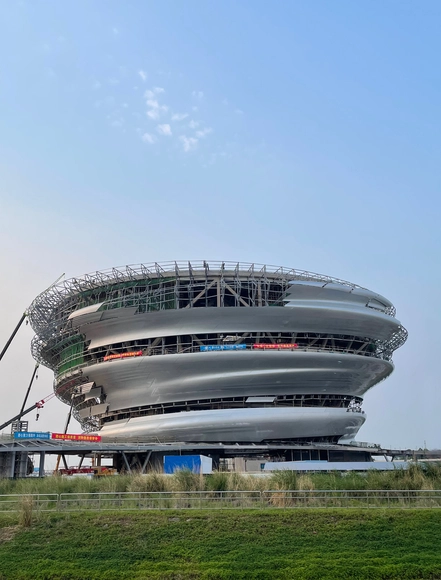
MAD Architects Reveals Latest Construction Updates for the Hainan Science Museum in China

The Hainan Science Museum, designed by Ma Yansong / MAD Architects, is progressing through its construction phases. The project began its design phase in 2020, broke ground in November 2021, and completed its main structure in June 2023. The museum, located on the west coast of Haikou City in Hainan Province, aims to be a landmark that integrates modern architecture with natural surroundings, promoting the convergence of technology and nature. The museum is expected to finish its curtain wall and landscaping by June this year and open for visitors in 2025.

MAD Architects Reveals Latest Construction Updates for the Hainan Science Museum in China - Image 1 of 4MAD Architects Reveals Latest Construction Updates for the Hainan Science Museum in China - Image 2 of 4MAD Architects Reveals Latest Construction Updates for the Hainan Science Museum in China - Image 3 of 4MAD Architects Reveals Latest Construction Updates for the Hainan Science Museum in China - Image 4 of 4MAD Architects Reveals Latest Construction Updates for the Hainan Science Museum in China - More Images+ 21

Floods in Rio Grande do Sul: The Tragedy of Non-Resilient Cities

Subscriber Access | 

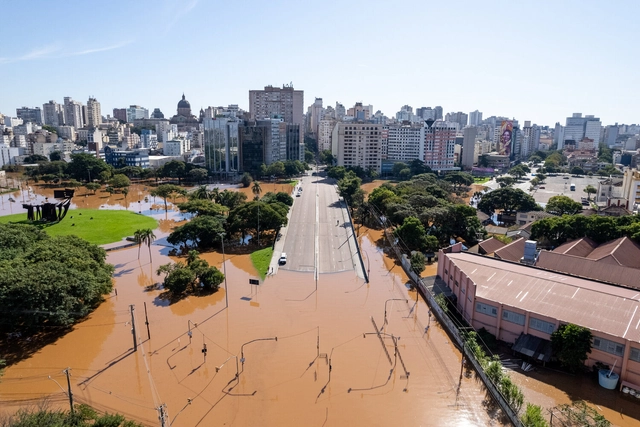
The world has changed, and accepting this fact is no longer a matter of choice but survival. Our rainfall patterns, periods of drought, average temperatures, sea levels—everything is in constant flux. The denialist stance of many countries, including Brazil, has led to catastrophic situations like the one we are facing now.

The floods that devastated the southern region of the country in recent days cannot be considered isolated incidents. Due to global warming, climate events like this will become increasingly frequent. In other words, unfortunately, we cannot prevent them from happening, but we can—and must—make our cities more resilient to these situations.

Floods in Rio Grande do Sul: The Tragedy of Non-Resilient Cities - Image 1 of 4Floods in Rio Grande do Sul: The Tragedy of Non-Resilient Cities - Image 2 of 4Floods in Rio Grande do Sul: The Tragedy of Non-Resilient Cities - Image 3 of 4Floods in Rio Grande do Sul: The Tragedy of Non-Resilient Cities - Image 4 of 4Floods in Rio Grande do Sul: The Tragedy of Non-Resilient Cities - More Images+ 11

What is Peatland: A Powerful Carbon Store and Ecosystem

A type of wetland that provides an incredible carbon-storing capacity. This could be an excellent way to describe a peatland. Found in practically every climate zone in the world, this type of ecosystem is much more than this short description, as it plays an important role in mitigating the climate crisis. But what is it, and how can we use it responsibly?

What Are Artificial Wetlands and How Do They Work?

Subscriber Access | 

World Wetlands Day is celebrated every February 2nd to raise awareness of wetlands. This day also marks the anniversary of the Wetlands Convention, adopted as an international treaty in 1971. Its enactment is because nearly 90% of the world's wetlands have been degraded since 1700, decimated three times faster than the forests. However, they are essential ecosystems that contribute to biodiversity, climate mitigation and adaptation, freshwater availability, world economies, and much more.

UAE / Wetland Wins the Golden Lion for Best National Participation at the 2021 Venice Biennale

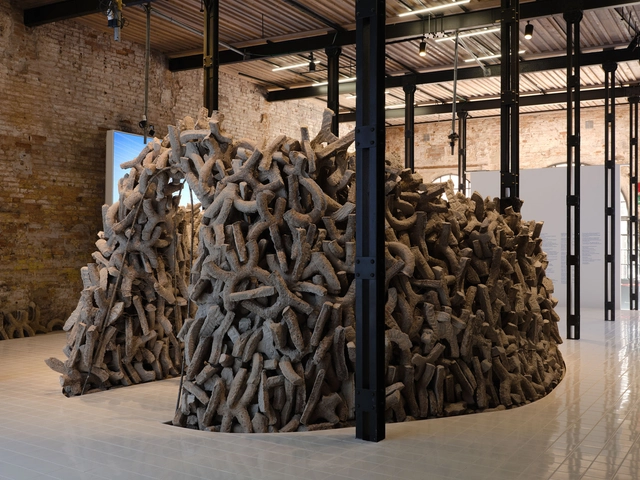
The United Arab Emirates has won the Golden Lion for Best National Participation at the 2021 Venice Biennale, with its contribution entitled Wetland curated by Wael Al Awar and Kenichi Teramoto. Selected by a jury that consists of Kazuyo Sejima (president-Japan), Sandra Barclay (Peru), Lamia Joreige (Lebanon), Lesley Lokko (Ghana-Scotland), and Luca Molinari (Italy), the winning contribution at the 17th Venice Architecture Biennale explores the local geography of the United Arab Emirates to find alternatives to cement, one of the key emitters of the world's carbon dioxide.

The award ceremony, broadcasted live on the Biennale’s official page also presented the Golden Lion for Best Participant in the International Exhibition How will we live together? to RAUMLABORBERLIN- Instances of Urban Practice while the Silver Lion for a promising young participant in the International Exhibition How will we live together? went to Border Ecologies and the Gaza Strip- Foundation for Achieving Seamless Territory (FAST). Other recognitions included a special mention for the national participation of the Philippines and Russia, and to Cave_bureau for the Anthropocene Museum: Exhibit 3.0 Obsidian Rain.

UAE / Wetland Wins the Golden Lion for Best National Participation at the 2021 Venice Biennale - Image 2 of 4UAE / Wetland Wins the Golden Lion for Best National Participation at the 2021 Venice Biennale - Image 3 of 4UAE / Wetland Wins the Golden Lion for Best National Participation at the 2021 Venice Biennale - Image 4 of 4UAE / Wetland Wins the Golden Lion for Best National Participation at the 2021 Venice Biennale - Featured ImageUAE / Wetland Wins the Golden Lion for Best National Participation at the 2021 Venice Biennale - More Images+ 15

Softer Ground: Reclaiming Wetlands through Design

Softer Ground: Reclaiming Wetlands through Design - Featured Image
© David Lloyd, SWA

Architecture is shaped by its environment and natural forces. Inherently, the discipline focuses on the design of objects over systems, on formal morphology over networks or ecologies. However, no building exists outside its context; every structure is sited among ever-changing climates and cultural conditions. How designers respond and connect to these larger systems can radically change the nature and quality of their work. Often, it is the greatest constraints that produce novel solutions.

Softer Ground: Reclaiming Wetlands through Design - Image 2 of 4Softer Ground: Reclaiming Wetlands through Design - Image 3 of 4Softer Ground: Reclaiming Wetlands through Design - Image 4 of 4Softer Ground: Reclaiming Wetlands through Design - Image 5 of 4Softer Ground: Reclaiming Wetlands through Design - More Images+ 10

Competition-Winning Paris Office Park Design to Reintroduce Play into the Workplace

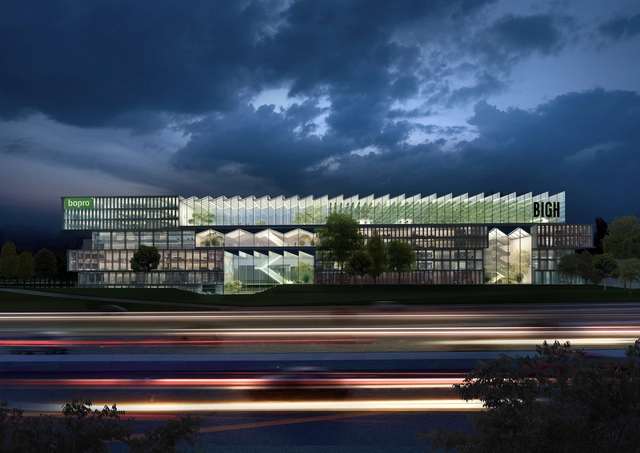
Dutch Firms Team RAU, SeARCH, and karres +brands have been named as one of the winners of the Inventons la Metropole de Grand Paris, the largest European competition for city planning, architecture and public space. Their project, Triango, reinvents Paris’ Triangle de Gonesse into a dynamic and lively business park which promotes sustainability in every sense of the word.

Competition-Winning Paris Office Park Design to Reintroduce Play into the Workplace - Office Buildings, FacadeCompetition-Winning Paris Office Park Design to Reintroduce Play into the Workplace - Office Buildings, FacadeCompetition-Winning Paris Office Park Design to Reintroduce Play into the Workplace - Office Buildings, FacadeCompetition-Winning Paris Office Park Design to Reintroduce Play into the Workplace - Office Buildings, FacadeCompetition-Winning Paris Office Park Design to Reintroduce Play into the Workplace - More Images+ 9