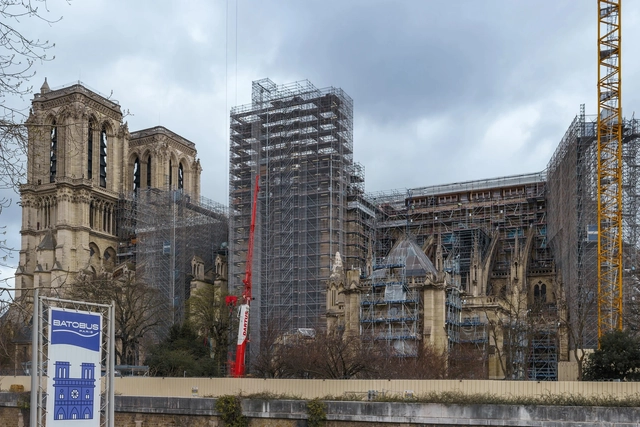
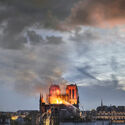
Scaffolding continues to surround the cathedral on March 24, 2023.. Image via Shutterstock | O.Kemppainen
On April 15, 2019, a devastating fire occurred at the infamous Notre Dame Cathedral in Paris, France. The fire caused significant damage to the historic structure, which is a landmark in the city and a symbol of French Gothic architecture. The cathedral has been undergoing restoration works and is on course to reopen to the public in 2024. Throughout the process of restoration, its interior cleaning methodologies were debated, its carpentry was entirely replaced by medieval-skilled timber craftsmen, and the completion date for the cathedral is still on track for December 2024.
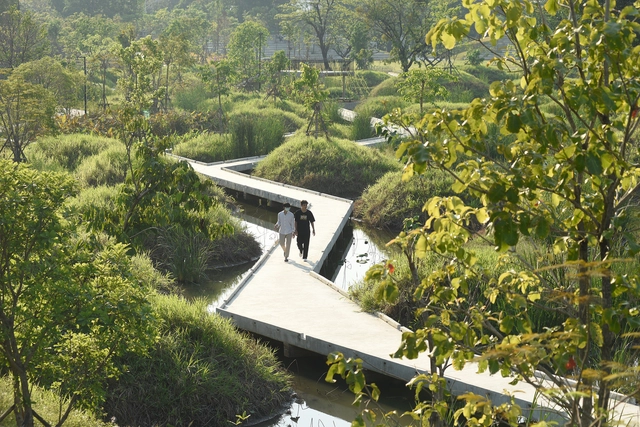
In an age where humanity's detrimental impact on the environment has become increasingly evident, the concept of rewilding is emerging as a powerful approach to conservation and ecological restoration. In line with growing attention on landscape architecture in recent years, the idea of removing human intervention from our natural surroundings in order to restore a stable equilibrium seems to offer a low-effort, ethereal way to right fundamental climate wrongs. But is a lack of meddling in nature really all there is to rewilding, and how does this relate to architecture and design? We look at key concepts, applications, and examples to find out.
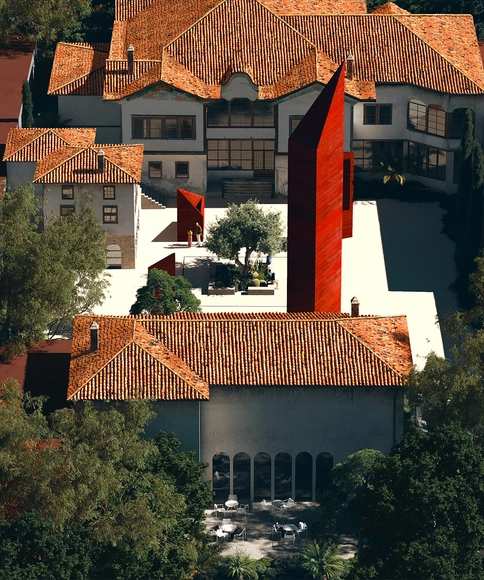
Switzerland-based office Oppenheim Architecture has been announced as the winner of a two-phase competition for the redesign and restoration of the Besa Museum in Tirana, Albania. The institution is dedicated to showcasing the Albanian code of honor represented through the name “Besa,” a concept that dictates welcoming any guests as one’s own. The museum is conceived as a continuation of the Jewish Museum on Vlora, diving deeper into the principle of Besa and its role in the help given to the Jews in Albania during the Holocaust.
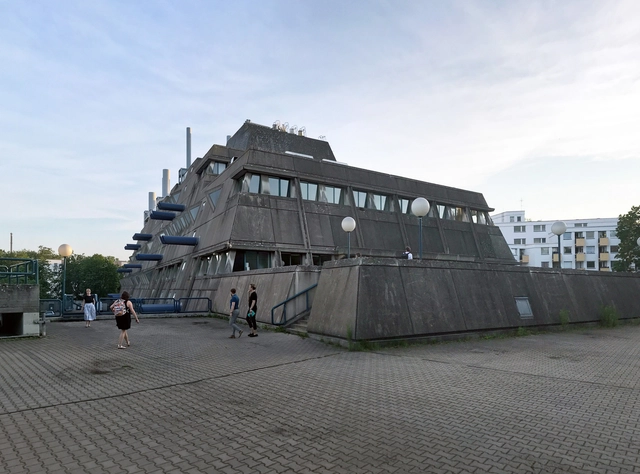
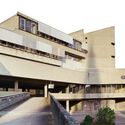
The former animal laboratories of the Charité in Lichterfelde, also known as the Mäusebunker building, have now been placed under monument protection, saving it from the threat of demolition that has been slated since 2010. The brutalist structure was designed by architects Gerd and Magdalena Hänska and built from 1971, and put into operation in 1982. While its strong image, combined with its function as a laboratory for animal tests, resulted in the general public’s distaste for it, the Brutalist building slowly gained acceptance and even a cult status among brutalist fans.
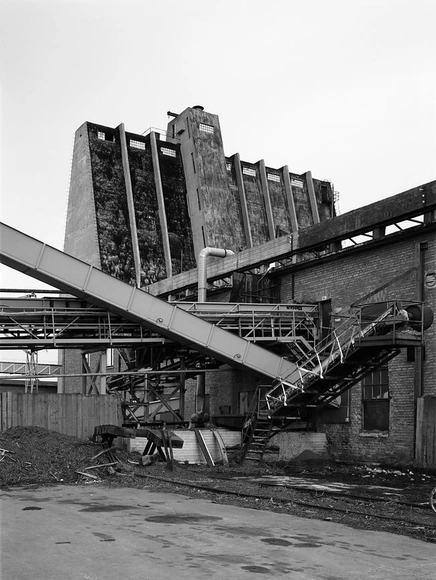
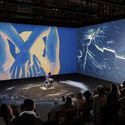
Oulu City Council has approved the AALTOSIILO restoration proposal by Skene Catling de la Peña. The concrete structure will be restored and reimagined as a multi-media performance, exhibition space, and “Tar Bar.” The 525 sqm Silo used to be used for storing woodchips and will now become a digitized communication point to connect the building with its surroundings. Now nearing its 100th anniversary, the proposal aims to at least double its lifespan.
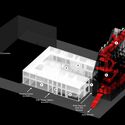
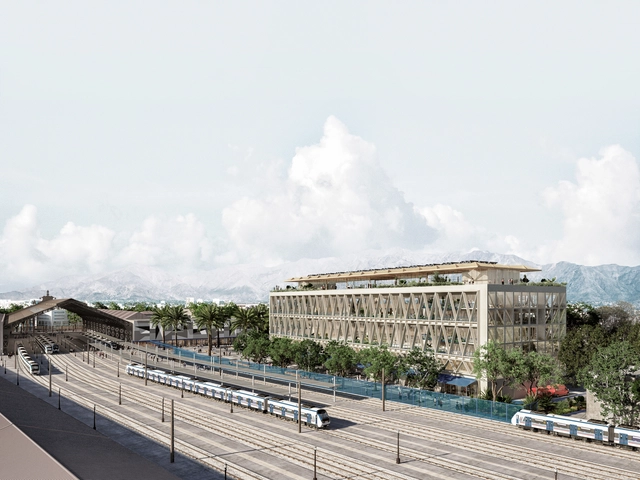
The Chilean architectural practice UMWELT, together with the landscape architecture office LANDMRX and the renowned Mexican firm PRODUCTORA, have won first place in the competition for the transformation of the former Correos de Chile (Chilean Postal Service) building located in Estación Central, Santiago. In 2021, EFE (Chile's State Railway Company) acquired the property to convert it into their new corporate headquarters, where the company's employees will work in interaction with the nearby railway operations.
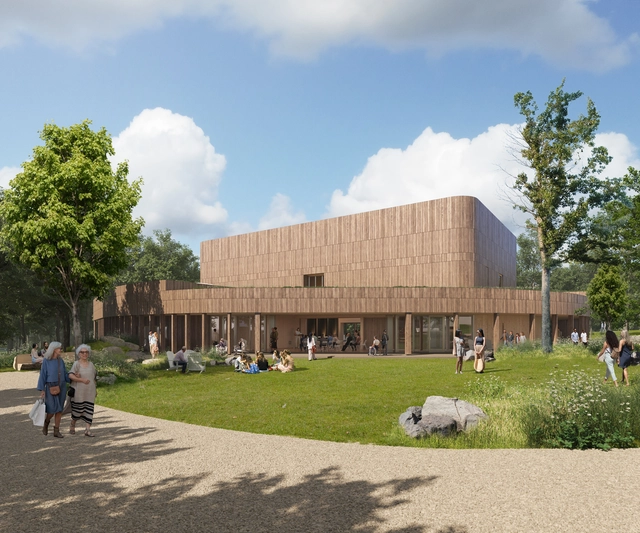
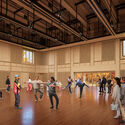
Rendering depicts a ground-level view of the planned new Doris Duke Theatre, viewed from a perspective right outside the Perles Family Studio. The new building will feature two lobbies with sliding doors, which will create multiple entrances and exits to the building. The lobby on the west side of the new Duke is visible in this image. Image Courtesy of Mecanoo Architects and Marvel
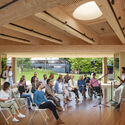
Jacob's Pillow has revealed its plans for the redesigned Doris Duke Theater, which will be built on the original site of the theater that was destroyed by a fire in November 2020. Mecanoo, based in the Netherlands and led by Creative Director and Founding Partner Francine Houben, has taken on the role of lead architect for the new building project, collaborating with Marvel, based in New York and led by Jonathan Marvel, who serves as the project's architect of record and landscape architects.
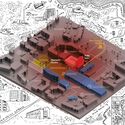
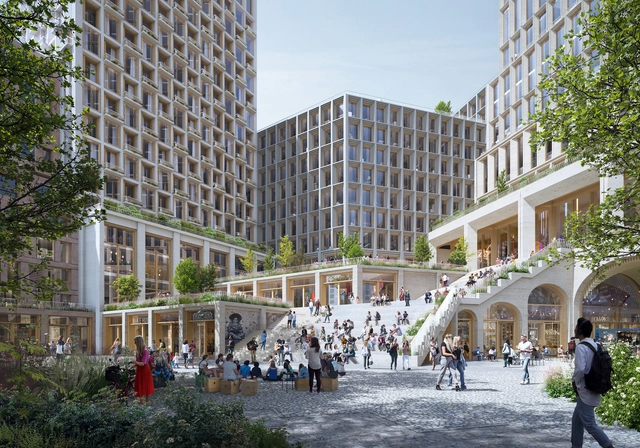
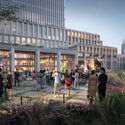
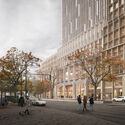
Henning Larsen has been selected as the winner of an international competition for the design of Kurfürstendamm 231, a new mixed-use urban development in western Berlin, Germany. Other finalists in the competition included Cobe, David Chipperfield, and Mäckler Architekten. The winning concept centers the neighborhood around an urban courtyard which acts as a large-scale meeting place for the local community. Nine buildings define the courtyard, including the existing Agrippina House, which is set to be rehabilitated through the project.
Enhancing the energy performance of existing buildings through refurbishment processes provides the opportunity to create more comfortable and sustainable environments, while also improving their functionality, aesthetics, and safety. Architectural approaches to these renovations encompass various aspects of a building, including interior spaces, structure, internal systems, and facades.
When it comes to rethinking a building's envelope, STACBOND’s composite panel solutions delve into the development of ventilated facades. These facade systems serve as an architectural strategy for energy-efficient building renovations. Minimizing energy consumption for heating and cooling, the rehabilitation strategy incorporates thermal insulation, moisture management, and thermal mass optimization.
Architecture is a continually evolving form of human expression influenced by cultural and contextual factors. While many of the problems we face today aren't directly linked to architecture, it has the ability to provide or facilitate solutions to these challenges. This has been evident throughout history, as societal issues have played a significant role in shaping our built environments. For instance, during the Victorian era, the infamous "Great Stink" led to the modernization of London's drainage system and urban layout. Similarly, the 2008 recession gave rise to the sharing economy and coworking spaces. Nowadays, the climate crisis is transforming the way we conceive architecture, seeking to reduce the carbon footprint of buildings and cities to achieve the Paris Agreement objectives. Given this backdrop, what challenges should we expect in the future?
https://www.archdaily.com/1000810/energetic-retrofitting-a-solution-for-environmental-obsolescence-in-architectureEnrique Tovar
Some would say it's the fresh air, peace and quiet, and some the constant closeness to nature; nonetheless, we all agree there’s something unique about the countryside. As you step inside a farmhouse, all of these qualities can be reflected through the lense of contemporary interior design, creating a welcoming, light and calm ambiance. Known for their place in rural or agricultural settings and designed for farm living, traditional 1700’s farm houses –also known as “folk” houses– were initially influenced by their geographical conditions, enhancing the relationship with the environment. While conserving traditional approaches such as simple floor-plans, gabled roofs and large porches, farmhouse aesthetics have gone through transformations to adapt to contemporary ways of living. By reusing and using traditional rural architecture as a direct reference, we analyze how current projects follow its singular design strategies: noble materials, spaces connected to the environment, and simple and functional spaces with unique details.
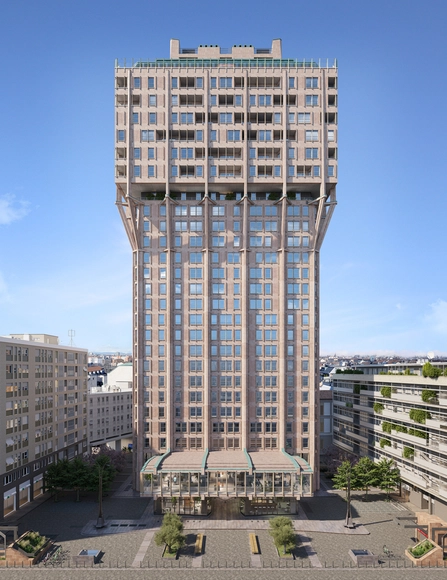
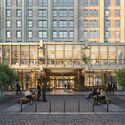
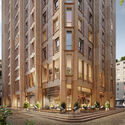
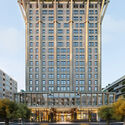
Torre Velasca, the renowned 1950s skyscraper by BBPR in Milan, Italy, is currently undergoing an extensive renovation process led by Asti Architetti and developed by Hines. After completing the work on the facades and with the extensive restoration of the interiors under way, the office has made public the project for the redesign of the Piazza Velasca, the square surrounding the tower. By turning it into a meeting and social gathering place, the architects hope to restore the status of the complex as a symbol of Milan’s architectural heritage. Pedestrian access to the building, and the renovation of previously disused adjacent spaces will open up the area for public access and will restore the original meaning of “piazza,” or square. The project is scheduled for completion by early 2024.
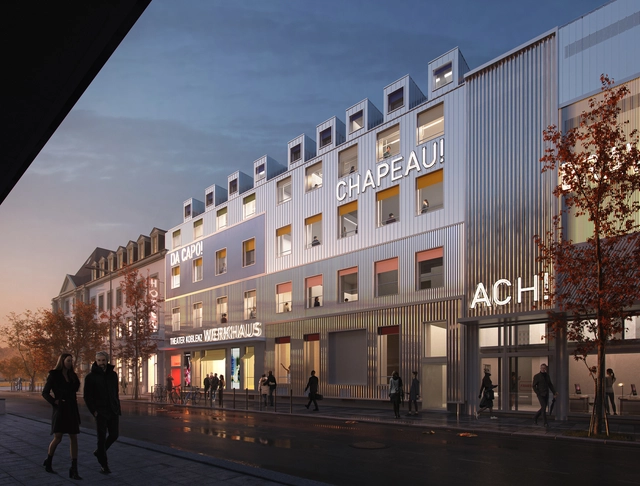
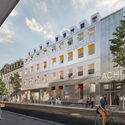
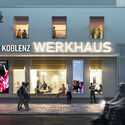
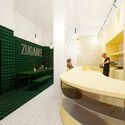
MVRDV has revealed its design for the extensive renovation project of the Theater Koblenz, in Germany. The project includes an interior redesign and a significant backstage element makeover. The proposal, which operates within the confines of the existing structure, balances the many requirements of the brief: history preservation is taken into account alongside essential technical improvements and roof rehabilitation. Additionally, the operations building's façade on Clemensstraße will be renovated to give this backstage entrance a contemporary, expressive appearance that emphasizes its inclusion in the theater complex, clearly separating it from the building's original guest entrance. The repair preserved a significant portion of the structure for future use and used biodegradable materials as much as feasible to reduce carbon emissions.
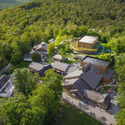
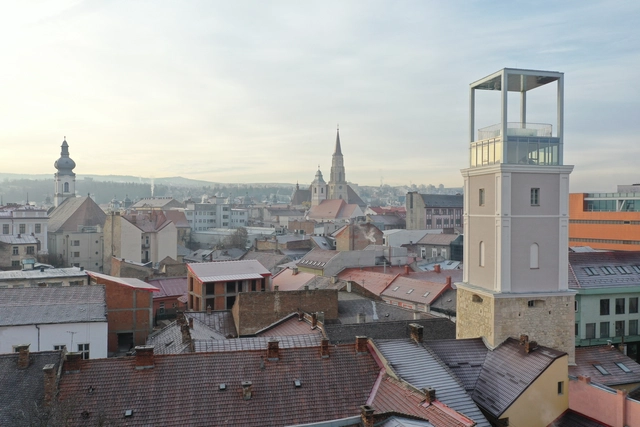
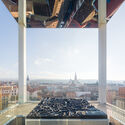
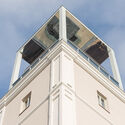
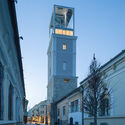
The skyline of Cluj-Napoca, a city located in the Transylvania region of Romania, is defined by a mosaic of historical and modern buildings, giving the city a unique and diverse appearance. Among the visible landmarks, the Firefighters' Tower, or "Turnul Pompierilor" in Romanian, stands out for its mixture of styles, from Medieval stonework to Baroque detailing and contemporary interventions. Despite it being a relatively small monument, with a ground floor area of just under 50 square meters, the tower holds layers of history narrating the evolution of its neighborhood and city, from its beginnings during Medieval times until the present day. Left derelict in recent years, a new intervention by Vlad Sebastian Rusu B.I.A and Octav Silviu Olănescu B.I.A. aims to restore the tower's position as a repository of local history and an attractive space for residents and visitors alike. This article explores the story behind the Firefighters' Tower both narratively and visually, through the lens of Cosmin Dragomir.
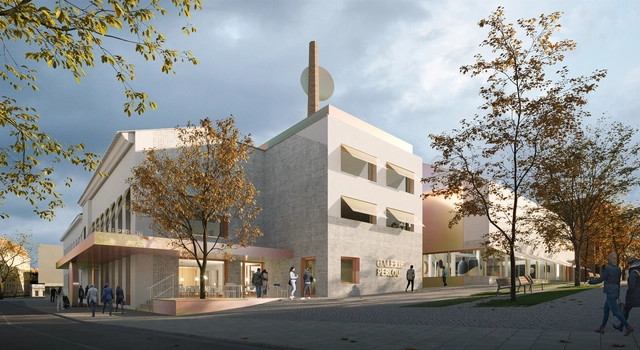
Pearl Gallery Renders. Image Courtesy of CHYBIK + KRISTOF
CHYBIK + KRISTOF architecture studio has been announced as the competition winners for a new cultural landmark that will transform and re-activate public space in Ústí nad Orlicí, Czech Republic. This former textile factory will be converted into a multifunctional cultural hub available to the public. The newly revitalized building will contribute to the existing cultural infrastructure, located near the main square of the city.
Refurbishment and adaptive reuse have been at the forefront of architectural discourse in recent years. This demonstrates that the profession is becoming increasingly aware of its impact on the environment and the opportunities presented by reusing what has already been built. Architecture 2030 has recently launched CARE, or Carbon Avoided Retrofit Estimator, a new digital tool that enables designers, owners, and communities to quantify the carbon benefits of adaptive reuse. By entering a streamlined set of project information, such as energy targets and potential building interventions, users can quickly estimate both operational carbon emissions generated by the use of the building and embodied carbon emissions, which are tied to the building materials employed.
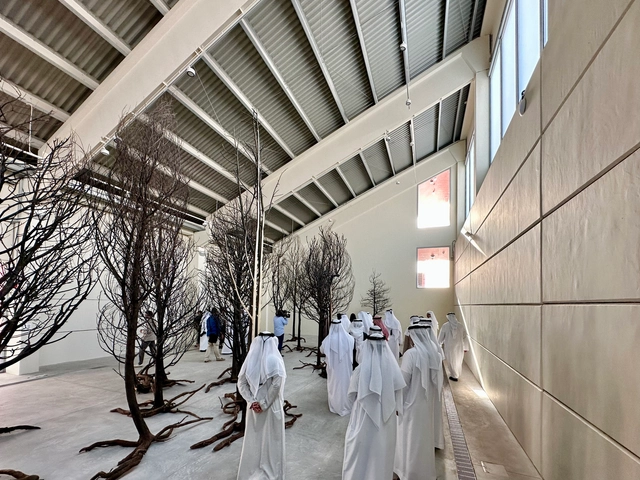
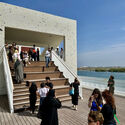
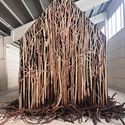
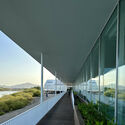
The Kalba Ice Factory, located in the city of Sharjah, on the coast of the UAE, has been renovated by the Sharjah Art Foundation and designed by Peru studio 51-1 Arquitectos, creating a space that seamlessly blends industrial aesthetics with natural surroundings. The transformation of this abandoned fish feed mill and ice storage facility into an art space is a testament to the power of adaptive reuse and preservation. In time for the Sharjah Biennial 15, the Kalba Ice Factory was opened to the public on 8 February 2023 as a venue for the Biennial.