1. ArchDaily
  2. Baroque

Baroque: The Latest Architecture and News

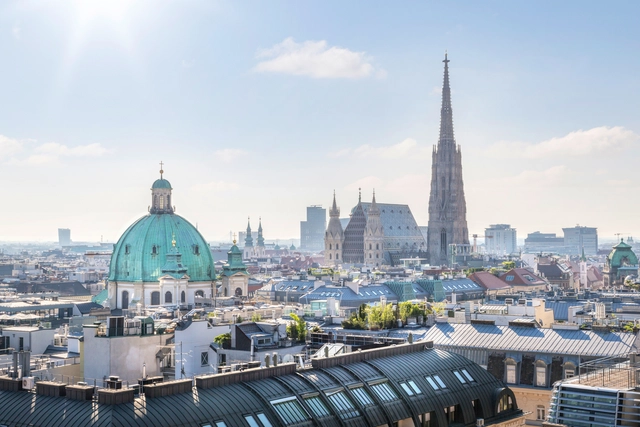
Vienna's Architectural Evolution: 21 Landmarks Spanning Baroque, Secession, and Contemporary Styles

Subscriber Access | 

Often referred to as the “City of Music,” Vienna stands as a living testament to architectural evolution across centuries. Bring together an array of styles, ranging from the grandeur of Baroque palaces to the innovative Art Nouveau designs and the Vienna Secession movement, visitors are drawn to the city for its architectural marvels. Vienna's eventful past is reflected in its architectural landscape, which has withstood wars, imperial expansions, and the changes of numerous artistic trends while managing to maintain its unique identity as a symbol of resilience and reinvention.

From Adolf Loos, whose radical ideas challenged the trends of his time, to Otto Wagner, a pioneer of Viennese Modernism, Vienna's architectural legacy continued to evolve. Fast-forwarding to contemporary times, Vienna's skyline bears the mark of internationally renowned architects like Zaha Hadid, whose fluid and futuristic designs push the boundaries of architecture. Hadid's work, including the Library and Learning Center at the University of Economics and Business, offers a dynamic contrast to the city's historic landscape. Moreover, firms like CRAB Studio, founded by Sir Peter Cook and Gavin Robotham, bring experimentalism to Vienna's architecture, infusing contemporary concepts into the urban fabric. These architects and firms contribute to Vienna's architectural richness, adding new chapters to its storied history while honoring its innovation and artistic legacy.

Vienna's Architectural Evolution: 21 Landmarks Spanning Baroque, Secession, and Contemporary Styles - Image 1 of 4Vienna's Architectural Evolution: 21 Landmarks Spanning Baroque, Secession, and Contemporary Styles - Image 2 of 4Vienna's Architectural Evolution: 21 Landmarks Spanning Baroque, Secession, and Contemporary Styles - Image 3 of 4Vienna's Architectural Evolution: 21 Landmarks Spanning Baroque, Secession, and Contemporary Styles - Image 4 of 4Vienna's Architectural Evolution: 21 Landmarks Spanning Baroque, Secession, and Contemporary Styles - More Images+ 18

From Art Nouveau to the Bauhaus: How Home Interiors Looked in Popular Art Movements

Subscriber Access | 

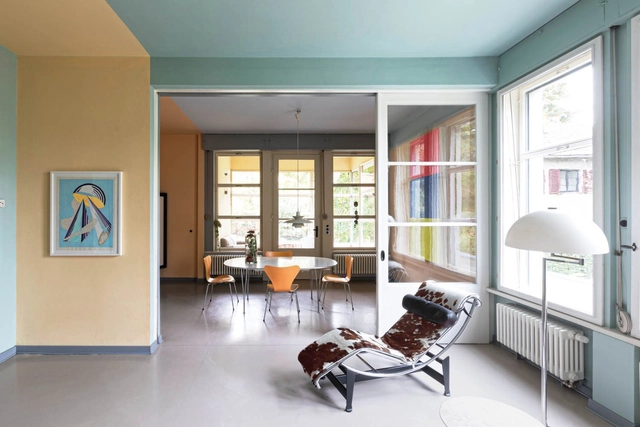
Art has always been a means for people to connect with space, and art movements have served as a platform for exploring new relationships with architecture. By incorporating art into buildings and interior spaces, they have been transformed, resulting in a fusion that creates beautiful, inspiring, and spiritually uplifting environments. Throughout history, various art movements, such as the Renaissance in the 17th century, Baroque in the 18th century, and Art Nouveau, Art Déco, and Bauhaus in the early 20th century, have had a significant impact on architecture. Architects drew inspiration from the ideals, concepts, stylistic approaches, and techniques of these movements, using them to create large-scale habitable structures. As the home is a fundamental expression of an architectural movement and the simplest canvas to exhibit the artistic ethos of any particular era, studying the interior spaces of houses provides a detailed picture of art's influence on spatial organization, furniture design, product patterns, and user interaction.

From Art Nouveau to the Bauhaus: How Home Interiors Looked in Popular Art Movements - Image 1 of 4From Art Nouveau to the Bauhaus: How Home Interiors Looked in Popular Art Movements - Image 2 of 4From Art Nouveau to the Bauhaus: How Home Interiors Looked in Popular Art Movements - Image 3 of 4From Art Nouveau to the Bauhaus: How Home Interiors Looked in Popular Art Movements - Image 4 of 4From Art Nouveau to the Bauhaus: How Home Interiors Looked in Popular Art Movements - More Images+ 18

Veszprém Architecture City Guide: Discover the Rich Heritage of One of Hungary's Oldest Cities

 | Sponsored Content

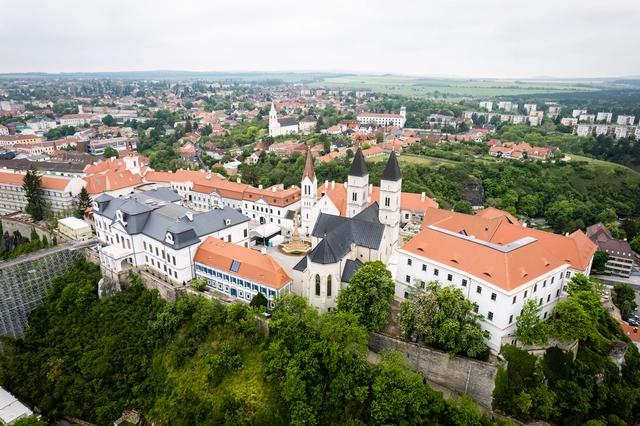
Though lesser known, the Hungarian city of Veszprém is one of the oldest and most important cities in the country. Designated as the European Union Capital of Culture for 2023, Veszprém boasts a longstanding history, visible through its evolving, yet well-preserved architectural monuments. In fact, one of the first notable observations as one walks through the city streets is its eclecticism and layers of historically diverse buildings, that sporadically arise. Despite the difference in styles and architectural languages, they collectively tell the story of the county and its spiritual and political relevance. Its pedestrian-friendly streets, many parks and public spaces, connect the Veszprém monuments, as one delves into a historic promenade.


Veszprém Architecture City Guide: Discover the Rich Heritage of One of Hungary's Oldest Cities - Featured ImageVeszprém Architecture City Guide: Discover the Rich Heritage of One of Hungary's Oldest Cities - Image 6 of 4Veszprém Architecture City Guide: Discover the Rich Heritage of One of Hungary's Oldest Cities - Image 17 of 4Veszprém Architecture City Guide: Discover the Rich Heritage of One of Hungary's Oldest Cities - Image 11 of 4Veszprém Architecture City Guide: Discover the Rich Heritage of One of Hungary's Oldest Cities - More Images+ 19

The Story Behind a Medieval Tower Restored to Reflect the History of an Overlooked Neighborhood in Cluj-Napoca, Romania

Subscriber Access | 

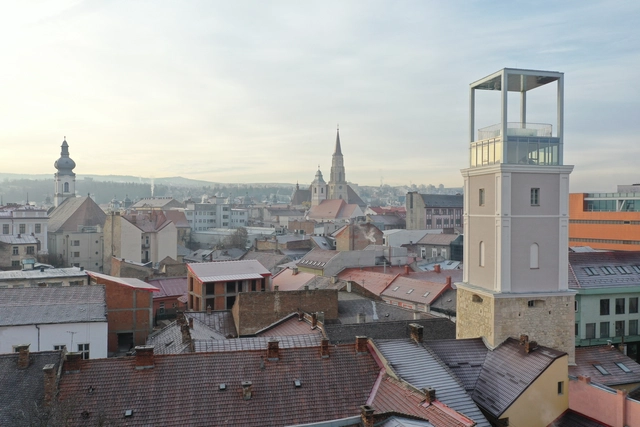
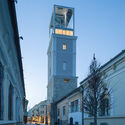
The skyline of Cluj-Napoca, a city located in the Transylvania region of Romania, is defined by a mosaic of historical and modern buildings, giving the city a unique and diverse appearance. Among the visible landmarks, the Firefighters' Tower, or "Turnul Pompierilor" in Romanian, stands out for its mixture of styles, from Medieval stonework to Baroque detailing and contemporary interventions. Despite it being a relatively small monument, with a ground floor area of just under 50 square meters, the tower holds layers of history narrating the evolution of its neighborhood and city, from its beginnings during Medieval times until the present day. Left derelict in recent years, a new intervention by Vlad Sebastian Rusu B.I.A and Octav Silviu Olănescu B.I.A. aims to restore the tower's position as a repository of local history and an attractive space for residents and visitors alike. This article explores the story behind the Firefighters' Tower both narratively and visually, through the lens of Cosmin Dragomir.

The Story Behind a Medieval Tower Restored to Reflect the History of an Overlooked Neighborhood in Cluj-Napoca, Romania - Image 1 of 4The Story Behind a Medieval Tower Restored to Reflect the History of an Overlooked Neighborhood in Cluj-Napoca, Romania - Image 2 of 4The Story Behind a Medieval Tower Restored to Reflect the History of an Overlooked Neighborhood in Cluj-Napoca, Romania - Image 3 of 4The Story Behind a Medieval Tower Restored to Reflect the History of an Overlooked Neighborhood in Cluj-Napoca, Romania - Image 4 of 4The Story Behind a Medieval Tower Restored to Reflect the History of an Overlooked Neighborhood in Cluj-Napoca, Romania - More Images+ 25

The Story Behind Frankfurt's New Old Town and how the Community Revived its Medieval Identity

Subscriber Access | 

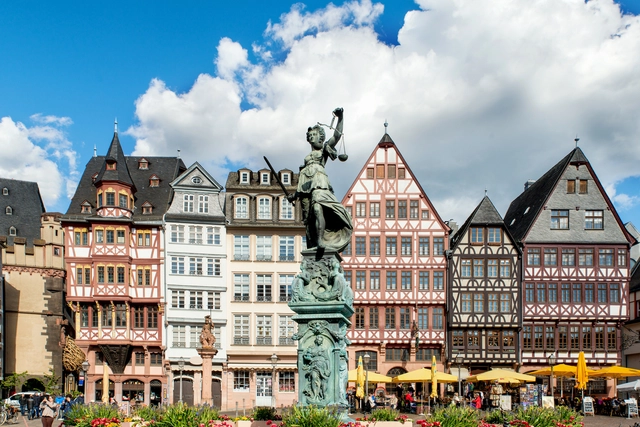
The architectural identity and urban fabric of the old city of Frankfurt has grown organically over centuries. Shops, bars, and craftsmen's workshops have always attracted a lot of visitors to the area between the Cathedral, or "Dom" in German, and the Römer, the main square in the center of Frankfurt. Historically, the area included buildings of many different styles, such as Gothic, Renaissance, Baroque and Classical architecture, which most locals only knew about from black and white photographs, the town’s famous miniature model in the historic museum, or stories passed down through generations.

However, the quarter’s picturesque buildings and alleyways, were almost entirely destroyed during the Second World War, but the collaborative work of the community and local authorities have made it seem as though time before the war stood still. The entire quarter was reconstructed exactly as its original plans, bringing Frankfurt’s medieval history back to life and creating what is now known as the Neue Alstadt, a project considered by some to be controversial.

The Story Behind Frankfurt's New Old Town and how the Community Revived its Medieval Identity - Image 1 of 4The Story Behind Frankfurt's New Old Town and how the Community Revived its Medieval Identity - Image 2 of 4The Story Behind Frankfurt's New Old Town and how the Community Revived its Medieval Identity - Image 3 of 4The Story Behind Frankfurt's New Old Town and how the Community Revived its Medieval Identity - Image 4 of 4The Story Behind Frankfurt's New Old Town and how the Community Revived its Medieval Identity - More Images+ 9

What Do We Do With the Houses of Empire?

Subscriber Access | 

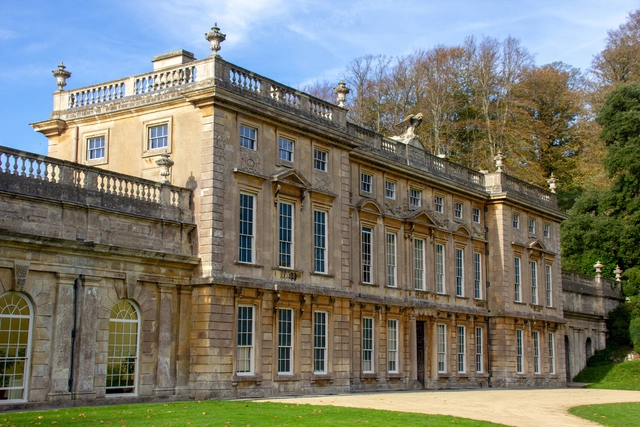
In June 2020, the statue of 17th-century slave trader Edward Colston was toppled in the southwestern city of Bristol in England. Before this, the statue sat on a plinth in a prominent public park, before being hauled into Bristol Harbour by Black Lives Matter protestors. This act has led to a long-overdue reckoning in the UK and other Western nations, a reckoning that has necessitated a deeper analysis of monuments that line cities, and how deeply imperialism can be interlinked with parts of the built environment. The ever-green question is, what do we do with these buildings?

What Do We Do With the Houses of Empire? - Image 1 of 4What Do We Do With the Houses of Empire? - Image 2 of 4What Do We Do With the Houses of Empire? - Image 3 of 4What Do We Do With the Houses of Empire? - Image 4 of 4What Do We Do With the Houses of Empire? - More Images+ 6

Exploring the Eccentric Decorations That Define Baroque Architecture

Subscriber Access | 

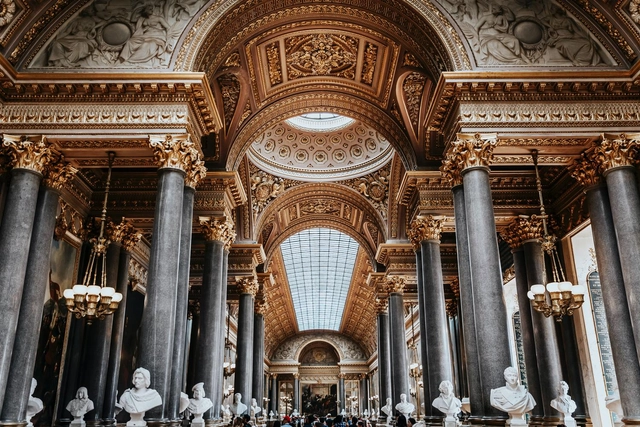
Architecture is perhaps the most expressive forms of culture, representing the zeitgeist of a particular location, and telling the story of how it evolved over time. It allows visitors to transport themselves back in history to understand the influences that shaped the world we once lived in. Baroque architecture, in particular, was one of the most ornamental and decorative architectural styles. Translating to “curious or strange” in French, it was once used as a derogatory word, meaning noisy, eccentric, and excessive- and Baroque architecture was truly just that.