1. ArchDaily
  2. Gothic

Gothic: The Latest Architecture and News

Cologne Architecture City Guide: 16 Historical and Contemporary Projects to Discover in the City of Spires

Subscriber Access | 

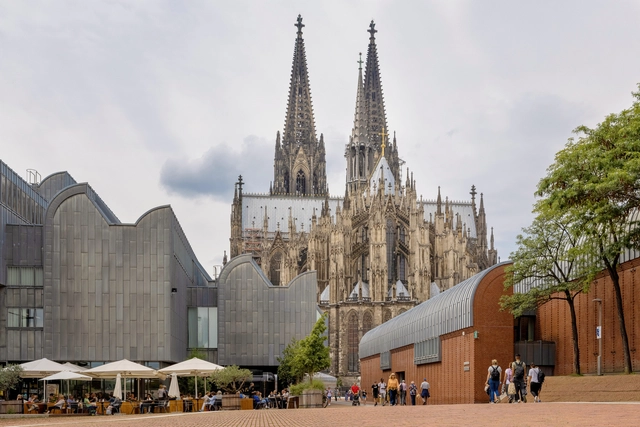
With its culturally and historically rich context, the city of Cologne, also called Köln by its locals, is considered one of the most important centers in West Germany. Nestled on the banks of the Rhine River, the city unfolds its architectural narrative through the interplay between historical landmarks, and contemporary interventions. In the old town, the medieval Cologne Cathedral, a UNESCO World Heritage Site and the tallest cathedral in the world, dominates the skyline. The cityscape is also shaped by the Twelve Romanesque churches of Cologne.

Beyond its historical core, Cologne embraces modernity with structures such as the Kranhaus buildings or Renzo Piano’s Weltstadthaus. The tapestry of architectural styles is further underlined by interventions such as Peter Zumthor’s Kolumba Museum, integrating the ruins of a late-Gothic church destroyed during World War II into a tranquil space dedicated to the contemplation of art and history.

Cologne Architecture City Guide: 16 Historical and Contemporary Projects to Discover in the City of Spires - Image 1 of 4Cologne Architecture City Guide: 16 Historical and Contemporary Projects to Discover in the City of Spires - Image 2 of 4Cologne Architecture City Guide: 16 Historical and Contemporary Projects to Discover in the City of Spires - Image 3 of 4Cologne Architecture City Guide: 16 Historical and Contemporary Projects to Discover in the City of Spires - Image 4 of 4Cologne Architecture City Guide: 16 Historical and Contemporary Projects to Discover in the City of Spires - More Images+ 14

Exploring Cameroon's Cathedrals: a Heritage Influenced by Byzantine and Gothic Movements

Subscriber Access | 

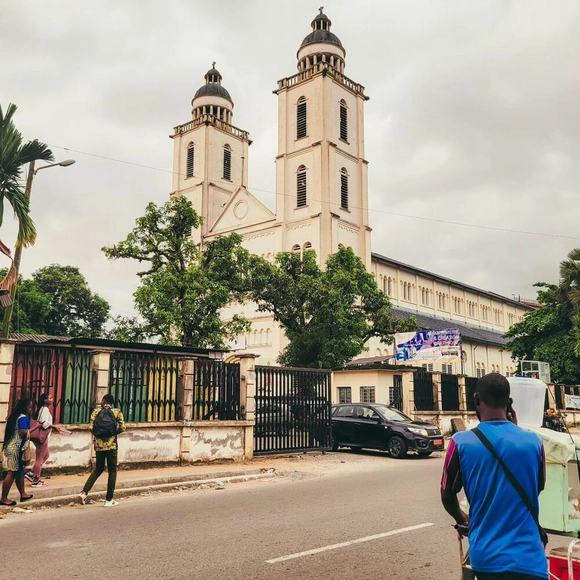
Cameroon boasts a rich architectural heritage of Catholic Christian worship buildings. These buildings encompass various styles, including contemporary designs, Terracotta brick explorations, and Gothic, and Byzantine architectural influences. Since the arrival of missionaries and colonial communities in 1890, numerous religious buildings have been constructed with the involvement of local communities. These buildings not only contributed to the development of the Christian faith but also served as venues for the exchange of architectural ideals between the local and foreign communities.

During this period, Cameroon explored the Gothic and Byzantine movements, which had reached their peak in Europe, to create these churches. They were interrogated through local building practices and now represent the historical heritage of the country's cathedrals.

Exploring Cameroon's Cathedrals: a Heritage Influenced by Byzantine and Gothic Movements  - Image 1 of 4Exploring Cameroon's Cathedrals: a Heritage Influenced by Byzantine and Gothic Movements  - Image 2 of 4Exploring Cameroon's Cathedrals: a Heritage Influenced by Byzantine and Gothic Movements  - Image 3 of 4Exploring Cameroon's Cathedrals: a Heritage Influenced by Byzantine and Gothic Movements  - Image 4 of 4Exploring Cameroon's Cathedrals: a Heritage Influenced by Byzantine and Gothic Movements  - More Images+ 8

Notre Dame Cathedral, Bangui: A Local Iteration of French Architecture in Central Africa

Subscriber Access | 

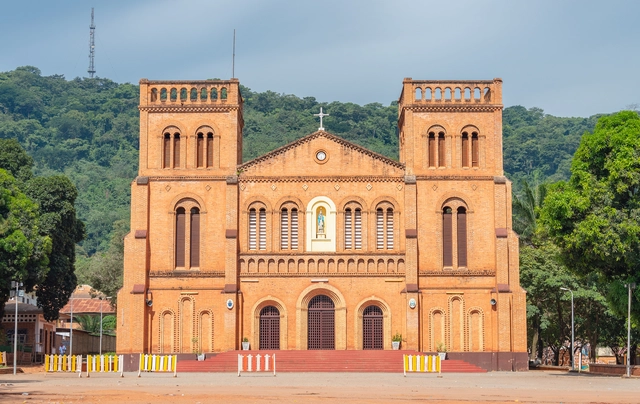
Located in the city of Bangui, the capital of the Central African Republic, is the Notre Dame Cathedral. This large red brick church was built in the early 1900s in the French colonial style. As the city grew from a small outpost to a colonial capital, the building was formed as a cultural and symbolic fusion of European and Central African architectural styles. Designed by French architect Roger Erell, the cathedral showcases local construction craftsmanship, provides a space for spiritual solace, and contributes to the national identity of the country.

Notre Dame Cathedral, Bangui: A Local Iteration of French Architecture in Central Africa - Image 1 of 4Notre Dame Cathedral, Bangui: A Local Iteration of French Architecture in Central Africa - Image 2 of 4Notre Dame Cathedral, Bangui: A Local Iteration of French Architecture in Central Africa - Image 3 of 4Notre Dame Cathedral, Bangui: A Local Iteration of French Architecture in Central Africa - Image 4 of 4Notre Dame Cathedral, Bangui: A Local Iteration of French Architecture in Central Africa - More Images+ 6

The Reconstruction of Notre Dame’s Spire Nears Completion

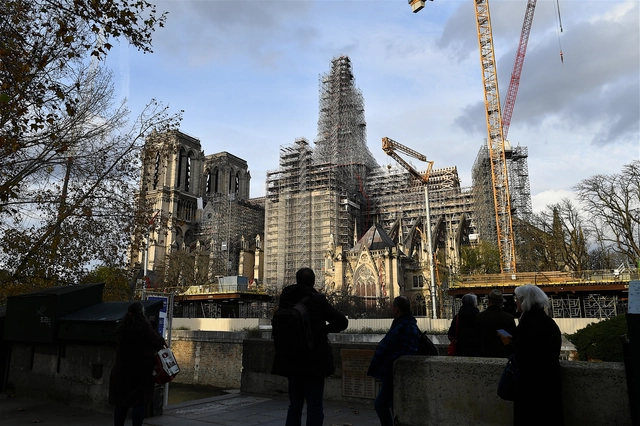
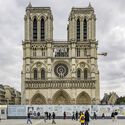
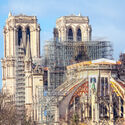
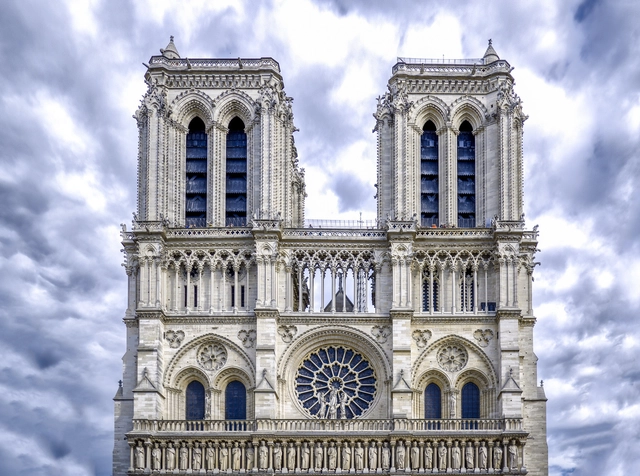
In April 2019, a devastating fire engulfed the 860-year-old Notre Dame Cathedral in Pars, severely damaging its wooden roof and leading to the collapse of the 19th-century spire, originally designed by Viollet-le-Duc. Immediately after, French President Emmanuel Macron promised that the iconic monument would be restored in just 5 years, an ambitious deadline. As the restoration of the roof structures nears completion, in February 2023, the scaffolding for the reconstruction of the spire has been assembled. The Spire is expected to be finished by the end of the month.

The Reconstruction of Notre Dame’s Spire Nears Completion - Image 1 of 4The Reconstruction of Notre Dame’s Spire Nears Completion - Image 2 of 4The Reconstruction of Notre Dame’s Spire Nears Completion - Image 3 of 4The Reconstruction of Notre Dame’s Spire Nears Completion - Image 4 of 4The Reconstruction of Notre Dame’s Spire Nears Completion - More Images

Vienna's Architectural Evolution: 21 Landmarks Spanning Baroque, Secession, and Contemporary Styles

Subscriber Access | 

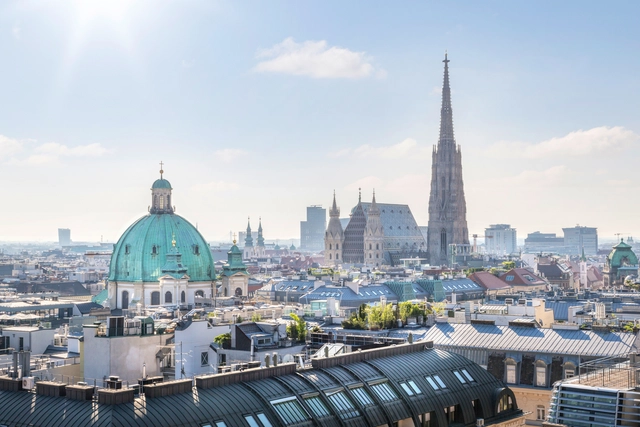
Often referred to as the “City of Music,” Vienna stands as a living testament to architectural evolution across centuries. Bring together an array of styles, ranging from the grandeur of Baroque palaces to the innovative Art Nouveau designs and the Vienna Secession movement, visitors are drawn to the city for its architectural marvels. Vienna's eventful past is reflected in its architectural landscape, which has withstood wars, imperial expansions, and the changes of numerous artistic trends while managing to maintain its unique identity as a symbol of resilience and reinvention.

From Adolf Loos, whose radical ideas challenged the trends of his time, to Otto Wagner, a pioneer of Viennese Modernism, Vienna's architectural legacy continued to evolve. Fast-forwarding to contemporary times, Vienna's skyline bears the mark of internationally renowned architects like Zaha Hadid, whose fluid and futuristic designs push the boundaries of architecture. Hadid's work, including the Library and Learning Center at the University of Economics and Business, offers a dynamic contrast to the city's historic landscape. Moreover, firms like CRAB Studio, founded by Sir Peter Cook and Gavin Robotham, bring experimentalism to Vienna's architecture, infusing contemporary concepts into the urban fabric. These architects and firms contribute to Vienna's architectural richness, adding new chapters to its storied history while honoring its innovation and artistic legacy.

Vienna's Architectural Evolution: 21 Landmarks Spanning Baroque, Secession, and Contemporary Styles - Image 1 of 4Vienna's Architectural Evolution: 21 Landmarks Spanning Baroque, Secession, and Contemporary Styles - Image 2 of 4Vienna's Architectural Evolution: 21 Landmarks Spanning Baroque, Secession, and Contemporary Styles - Image 3 of 4Vienna's Architectural Evolution: 21 Landmarks Spanning Baroque, Secession, and Contemporary Styles - Image 4 of 4Vienna's Architectural Evolution: 21 Landmarks Spanning Baroque, Secession, and Contemporary Styles - More Images+ 18

The Story Behind Frankfurt's New Old Town and how the Community Revived its Medieval Identity

Subscriber Access | 

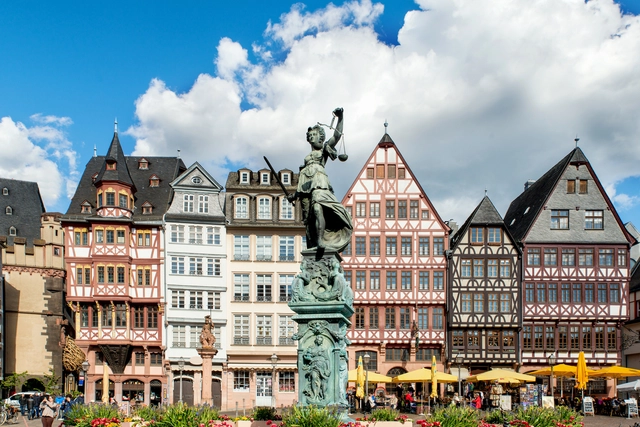
The architectural identity and urban fabric of the old city of Frankfurt has grown organically over centuries. Shops, bars, and craftsmen's workshops have always attracted a lot of visitors to the area between the Cathedral, or "Dom" in German, and the Römer, the main square in the center of Frankfurt. Historically, the area included buildings of many different styles, such as Gothic, Renaissance, Baroque and Classical architecture, which most locals only knew about from black and white photographs, the town’s famous miniature model in the historic museum, or stories passed down through generations.
However, the quarter’s picturesque buildings and alleyways, were almost entirely destroyed during the Second World War, but the collaborative work of the community and local authorities have made it seem as though time before the war stood still. The entire quarter was reconstructed exactly as its original plans, bringing Frankfurt’s medieval history back to life and creating what is now known as the Neue Alstadt, a project considered by some to be controversial.

The Story Behind Frankfurt's New Old Town and how the Community Revived its Medieval Identity - Image 1 of 4The Story Behind Frankfurt's New Old Town and how the Community Revived its Medieval Identity - Image 2 of 4The Story Behind Frankfurt's New Old Town and how the Community Revived its Medieval Identity - Image 3 of 4The Story Behind Frankfurt's New Old Town and how the Community Revived its Medieval Identity - Image 4 of 4The Story Behind Frankfurt's New Old Town and how the Community Revived its Medieval Identity - More Images+ 9

Enriching Architecture: Stained Glass

Subscriber Access | 

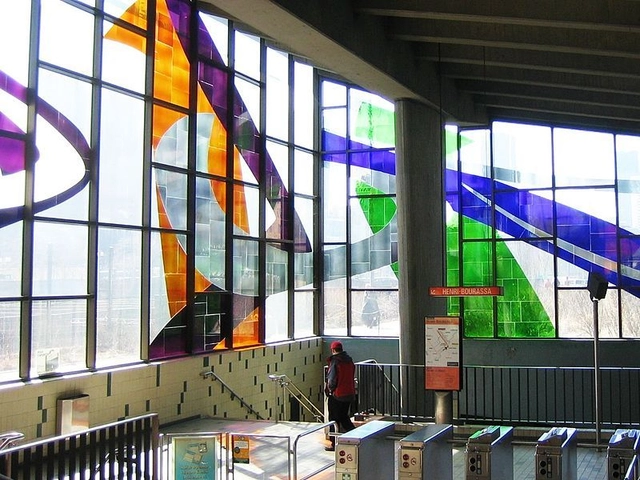
Predominantly associated with places of worship, stained glass has been used by artisans across the globe for thousands of years in an array of art ventures and installations. Intensifying architecture with vivid color, the process of stained glass refers to a particular action in which glass has been colored via metallic oxides during its manufacture, using different additives in order to create a range of hues and tones.

In terms of architectural enhancement, stained glass is often pieced together in order to produce depictions of decorative art, allowing light to filter and penetrate a particular structure or building. As a component it is both decorative and a variety of window, allowing a substantial and sufficient amount of light into a space, for atmospheric and beneficial effect. 

Enriching Architecture: Stained Glass  - Image 1 of 4Enriching Architecture: Stained Glass  - Image 2 of 4Enriching Architecture: Stained Glass  - Image 3 of 4Enriching Architecture: Stained Glass  - Image 4 of 4Enriching Architecture: Stained Glass  - More Images+ 9

The Origins and Evolution of Gothic Architecture

Subscriber Access | 

The word “Gothic” often envokes a description of mysterious homes, or a modern-day group of people who have an affinity for dark aesthetics, but what the gothic architectural style historically brought to the built environment could not have been more opposite. Gothic designs were actually created to bring more sunlight into spaces, mainly churches, and led to the design and construction of some of the world’s most iconic buildings.

How the Renaissance Influenced Architecture

After a prolonged period known as the Middle-Ages, a growing desire to both study and mimic nature itself began to emerge, with an inclination to discover and explore the world. Between 1400-1600 A.D. Europe was to witness a significant revival of the fine arts, painting, sculpture, and Architecture. The ‘Renaissance’, meaning ‘rebirth’ in French typically refers to this period of European history, although most closely associated with Italy, countries including England and France went through many of the same cultural changes at varying timescales.

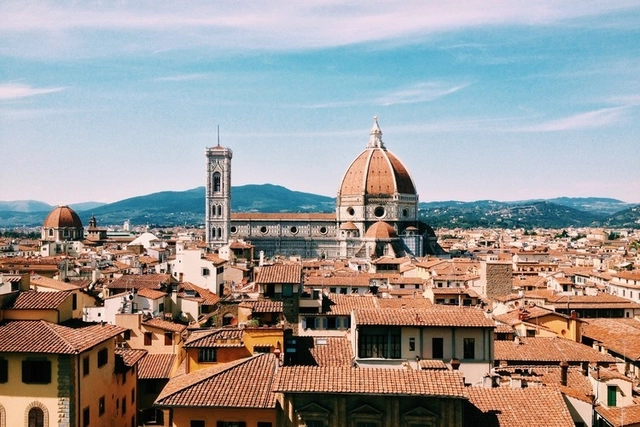
Prior to the dawn of the Renaissance, Europe was dominated by ornate and asymmetrical Gothic Architecture. Devoured by the plague, the continent lost approximately a third of its population, vastly changing society in terms of economic, social and religious effect. Contributing to Europe’s emergence into the Renaissance, the period ushered in a new era of architecture after a phase of Gothic art, with the rise of notions of ‘Humanism’. The idea of attaching much importance to the essence of individualism. The effect of Humanism included the emergence of the individual figure, greater realism and attention to detail, especially in depictions in art.

How the Renaissance Influenced Architecture  - Image 1 of 4How the Renaissance Influenced Architecture  - Image 2 of 4How the Renaissance Influenced Architecture  - Image 3 of 4How the Renaissance Influenced Architecture  - Image 5 of 4How the Renaissance Influenced Architecture  - More Images+ 7