1. ArchDaily
  2. Cathedral

Cathedral: The Latest Architecture and News

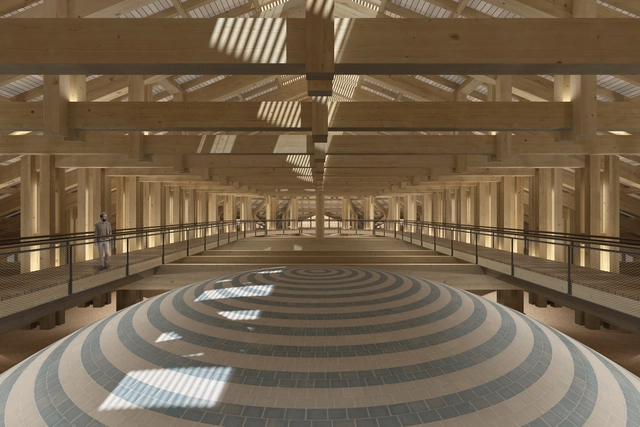
Track to Completing Málaga Cathedral: The Role of Timber in Designing the New Gable Roof

 | Sponsored Content

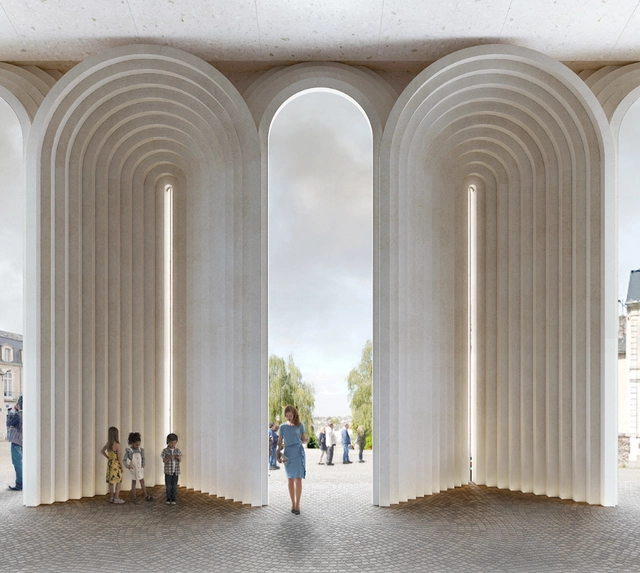
Like a musical composition, there is a particular category of buildings whose history might be compared to an unfinished symphony. Alternating between high notes and moments of silence, these structures are intermittent narratives that have spanned centuries. One of the most emblematic cases is the Sagrada Familia, which has been under construction for over a century and is on track to be completed this decade. While a hundred years of construction is no small feat, another building in this group surpasses that range: the Cathedral of Málaga, located in southern Spain, has been in the making for over five centuries.

Driven by Renaissance influences, the cathedral began construction in 1528. Since then, it has experienced periods of interruption throughout its history, resulting in an unfinished landmark. The cathedral is still missing one of its towers, has incomplete elements on its facade, and its vaults are exposed to the weather due to the absence of a covering structure. Over the years, various works have been undertaken—including the recent adaptation of tourist access to the domes—but one major task remains: the gable roof. Originally proposed in 1764 by Ventura Rodríguez, its design has been reimagined and will now be executed using contemporary wooden construction techniques.
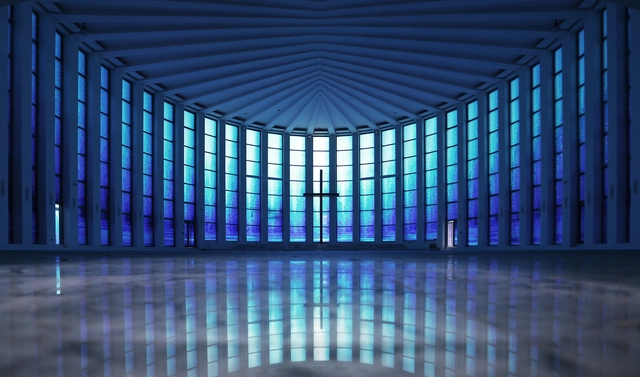
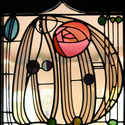
Changing Iconography of Ecclesiastical Architecture: 20 Examples of Contemporary Stained Glass in Churches

Subscriber Access | 

Whatever religion we classify ourselves as – or even if we actively renounce or denounce organized religion in all its forms – the one aspect of Christianity those in predominantly Christian countries are touched by at some point in their lives, is the classical aesthetic of church architecture.

Whether we actively attend church multiple times a week, begrudgingly once or twice a year, or once every ten years for one of life’s trinity of events: births, deaths, and marriages, while there we’re struck by the soaring arches, intricate stonework, and, on a sunny day, the spiritual beauty and colorful rainbows of light that stream through stained glass windows.

Changing Iconography of Ecclesiastical Architecture: 20 Examples of Contemporary Stained Glass in Churches - Image 1 of 4Changing Iconography of Ecclesiastical Architecture: 20 Examples of Contemporary Stained Glass in Churches - Image 2 of 4Changing Iconography of Ecclesiastical Architecture: 20 Examples of Contemporary Stained Glass in Churches - Image 3 of 4Changing Iconography of Ecclesiastical Architecture: 20 Examples of Contemporary Stained Glass in Churches - Image 4 of 4Changing Iconography of Ecclesiastical Architecture: 20 Examples of Contemporary Stained Glass in Churches - More Images+ 22

Goettsch Partners Wins Urban Renewal Design Competition in Jinan, China

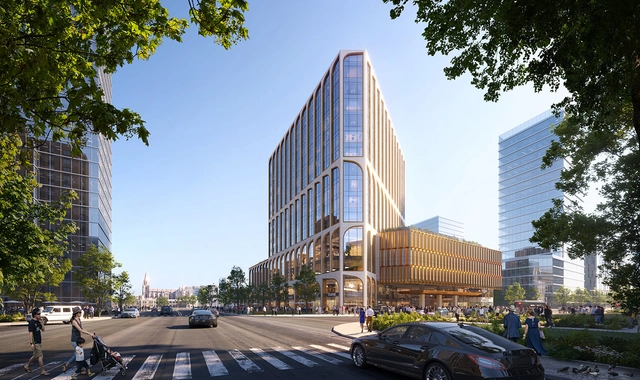
Goettsch Partners has recently won a design competition for an expansive urban renewal initiative in Jinan, China. Spanning three parcels, encompassing a total area of 111,500 sqm, the scheme is situated alongside the infamous Honglou Plaza. Positioned at the city’s center, Honglou Plaza holds historical significance as home to one of the region’s oldest cathedrals. The competition aimed to introduce concepts that would re-energize the regional core, through a design centered on pedestrian engagement.

Goettsch Partners Wins Urban Renewal Design Competition in Jinan, China - Image 1 of 4Goettsch Partners Wins Urban Renewal Design Competition in Jinan, China - Image 2 of 4Goettsch Partners Wins Urban Renewal Design Competition in Jinan, China - Image 3 of 4Goettsch Partners Wins Urban Renewal Design Competition in Jinan, China - Image 4 of 4Goettsch Partners Wins Urban Renewal Design Competition in Jinan, China - More Images+ 3

Exploring Cameroon's Cathedrals: a Heritage Influenced by Byzantine and Gothic Movements

Subscriber Access | 

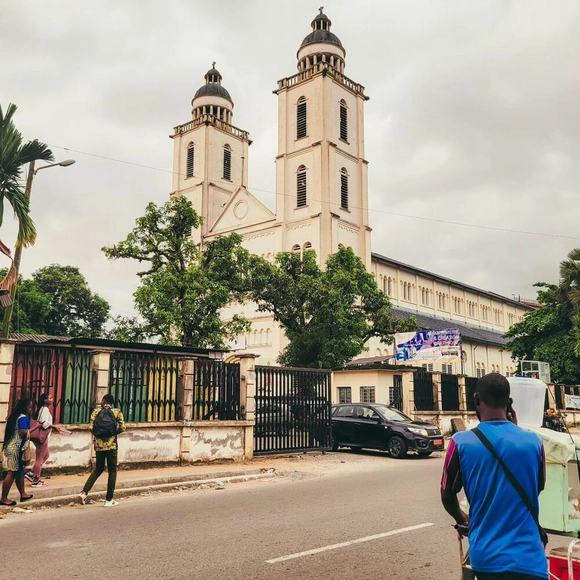
Cameroon boasts a rich architectural heritage of Catholic Christian worship buildings. These buildings encompass various styles, including contemporary designs, Terracotta brick explorations, and Gothic, and Byzantine architectural influences. Since the arrival of missionaries and colonial communities in 1890, numerous religious buildings have been constructed with the involvement of local communities. These buildings not only contributed to the development of the Christian faith but also served as venues for the exchange of architectural ideals between the local and foreign communities.
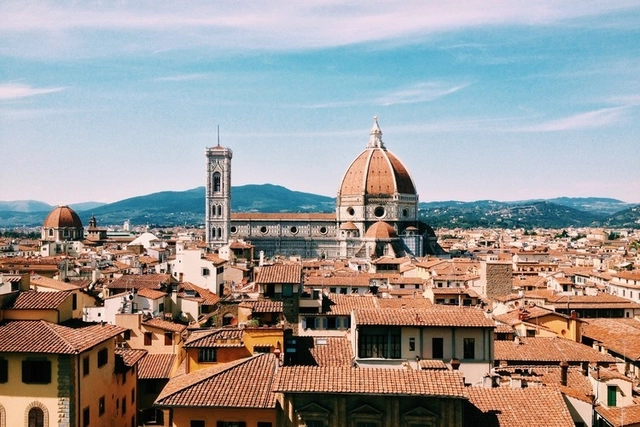
During this period, Cameroon explored the Gothic and Byzantine movements, which had reached their peak in Europe, to create these churches. They were interrogated through local building practices and now represent the historical heritage of the country's cathedrals.

Exploring Cameroon's Cathedrals: a Heritage Influenced by Byzantine and Gothic Movements  - Image 1 of 4Exploring Cameroon's Cathedrals: a Heritage Influenced by Byzantine and Gothic Movements  - Image 2 of 4Exploring Cameroon's Cathedrals: a Heritage Influenced by Byzantine and Gothic Movements  - Image 3 of 4Exploring Cameroon's Cathedrals: a Heritage Influenced by Byzantine and Gothic Movements  - Image 4 of 4Exploring Cameroon's Cathedrals: a Heritage Influenced by Byzantine and Gothic Movements  - More Images+ 8

Notre Dame Cathedral, Bangui: A Local Iteration of French Architecture in Central Africa

Subscriber Access | 

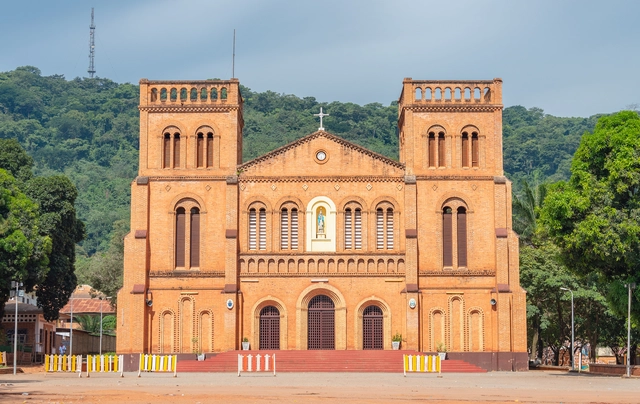
Located in the city of Bangui, the capital of the Central African Republic, is the Notre Dame Cathedral. This large red brick church was built in the early 1900s in the French colonial style. As the city grew from a small outpost to a colonial capital, the building was formed as a cultural and symbolic fusion of European and Central African architectural styles. Designed by French architect Roger Erell, the cathedral showcases local construction craftsmanship, provides a space for spiritual solace, and contributes to the national identity of the country.

Notre Dame Cathedral, Bangui: A Local Iteration of French Architecture in Central Africa - Image 1 of 4Notre Dame Cathedral, Bangui: A Local Iteration of French Architecture in Central Africa - Image 2 of 4Notre Dame Cathedral, Bangui: A Local Iteration of French Architecture in Central Africa - Image 3 of 4Notre Dame Cathedral, Bangui: A Local Iteration of French Architecture in Central Africa - Image 4 of 4Notre Dame Cathedral, Bangui: A Local Iteration of French Architecture in Central Africa - More Images+ 6

How to Frame Dawn in England's Cathedrals

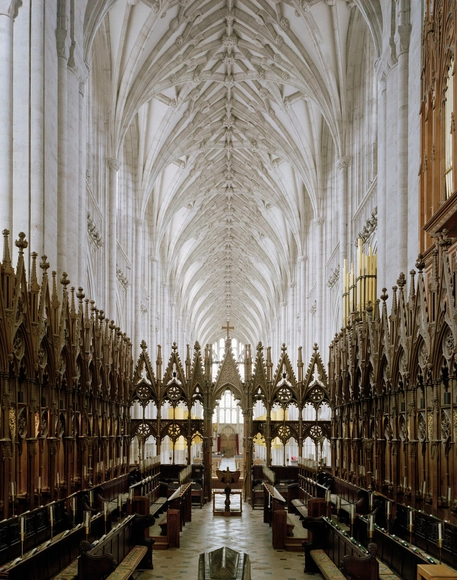
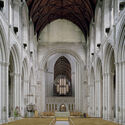
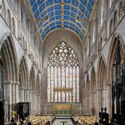
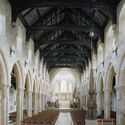
Using only natural light to document English cathedrals can turn into a logistical and technical challenge. However, Peter Marlow's photography has resulted in a remarkable series of iconic spiritual sites whose contemplative atmosphere is rarely accessible to others. Looking east with the camera towards the nave as the dawn light streamed through the main window opens a purist and mystical perspective to the time when these sacred structures were erected. 

How to Frame Dawn in England's Cathedrals  - Image 1 of 4How to Frame Dawn in England's Cathedrals  - Image 2 of 4How to Frame Dawn in England's Cathedrals  - Image 3 of 4How to Frame Dawn in England's Cathedrals  - Image 4 of 4How to Frame Dawn in England's Cathedrals  - More Images+ 2

Enriching Architecture: Stained Glass

Subscriber Access | 

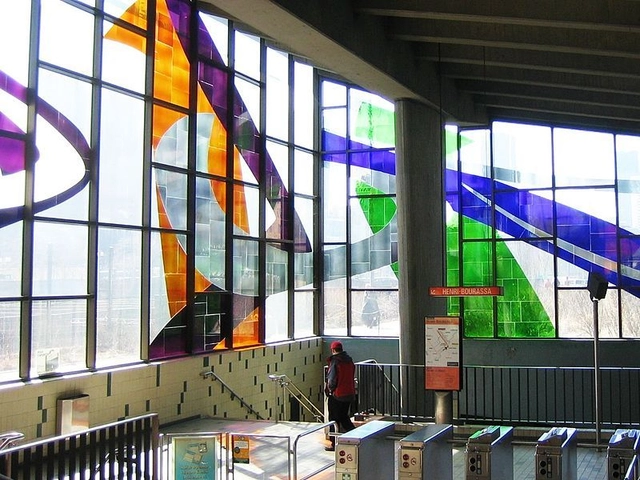
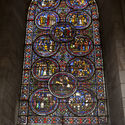
Predominantly associated with places of worship, stained glass has been used by artisans across the globe for thousands of years in an array of art ventures and installations. Intensifying architecture with vivid color, the process of stained glass refers to a particular action in which glass has been colored via metallic oxides during its manufacture, using different additives in order to create a range of hues and tones.

In terms of architectural enhancement, stained glass is often pieced together in order to produce depictions of decorative art, allowing light to filter and penetrate a particular structure or building. As a component it is both decorative and a variety of window, allowing a substantial and sufficient amount of light into a space, for atmospheric and beneficial effect. 

Enriching Architecture: Stained Glass  - Image 1 of 4Enriching Architecture: Stained Glass  - Image 2 of 4Enriching Architecture: Stained Glass  - Image 3 of 4Enriching Architecture: Stained Glass  - Image 4 of 4Enriching Architecture: Stained Glass  - More Images+ 9

How the Renaissance Influenced Architecture

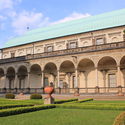
After a prolonged period known as the Middle-Ages, a growing desire to both study and mimic nature itself began to emerge, with an inclination to discover and explore the world. Between 1400-1600 A.D. Europe was to witness a significant revival of the fine arts, painting, sculpture, and Architecture. The ‘Renaissance’, meaning ‘rebirth’ in French typically refers to this period of European history, although most closely associated with Italy, countries including England and France went through many of the same cultural changes at varying timescales.

Prior to the dawn of the Renaissance, Europe was dominated by ornate and asymmetrical Gothic Architecture. Devoured by the plague, the continent lost approximately a third of its population, vastly changing society in terms of economic, social and religious effect. Contributing to Europe’s emergence into the Renaissance, the period ushered in a new era of architecture after a phase of Gothic art, with the rise of notions of ‘Humanism’. The idea of attaching much importance to the essence of individualism. The effect of Humanism included the emergence of the individual figure, greater realism and attention to detail, especially in depictions in art.

How the Renaissance Influenced Architecture  - Image 1 of 4How the Renaissance Influenced Architecture  - Image 2 of 4How the Renaissance Influenced Architecture  - Image 3 of 4How the Renaissance Influenced Architecture  - Image 5 of 4How the Renaissance Influenced Architecture  - More Images+ 7