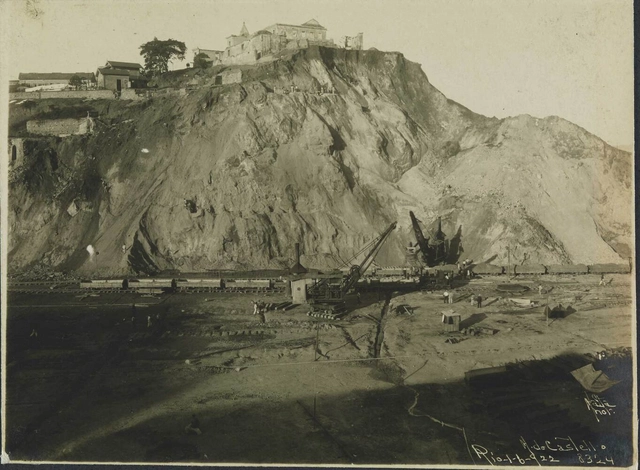
Augusto Malta, Demolition Morro do Castelo, Rio de Janeiro, RJ, June 1, 1922. . Image Courtesy of Biblioteca Nacional Digital Brasil, Fundação Biblioteca Nacional.
At the inauguration of the First Brazilian Congress of Eugenics in July of 1929, the physician and anthropologist Edgar Roquette-Pinto addressed an audience preoccupied with the question of how a country as vast as Brazil could best increase and improve its population. To accomplish this, Roquette-Pinto exalted “eugenia” as the new science that, together with medicine and hygiene, would guarantee the efficiency and perfection of the race. With the following words, the Brazilian scientist underscored a positivist agenda that brought architecture to the very core of the eugenics—the so-called science of race “improvement”—movement: “It is critical to emphasize that the influence [on our race] does not stem from the natural environment but rather from the artificial environment, created by man.” With these opening remarks to the Congress, Roquette-Pinto called attention to the crucial role that the man-made environment plays in the “amelioration” of what he called “the biological patrimony” of Brazil’s diverse population. In his invitation to social engineering, Roquette Pinto pointed to the environmental-genetic collusion that they hoped would bring with it the very possibility of progress.
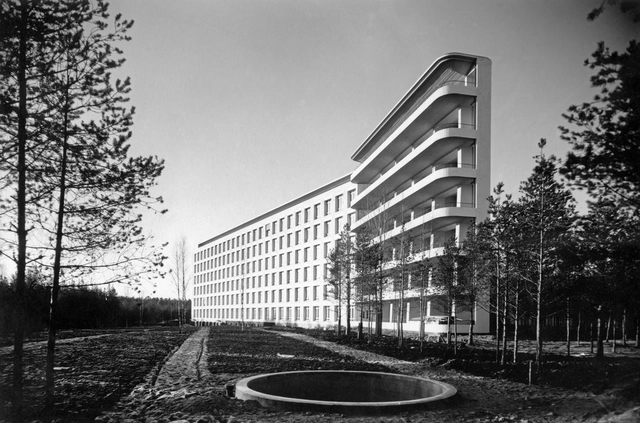
“Sick Architecture” opened on May 5th at CIVA in Brussels. Co-curated by Beatriz Colomina, the exhibition investigates the intrinsic relation between architecture and sickness. The architectural discourse always weaves itself through theories of body and brain, constructing the architect as a kind of doctor and the client as the patient. Architecture has been portrayed as a form of prevention and cure for thousands of years. Yet architecture is also often the cause of illness, from the institution of hospitals to toxic building materials and sick building syndrome. The outbreak of the COVID-19 pandemic further highlighted this topic.
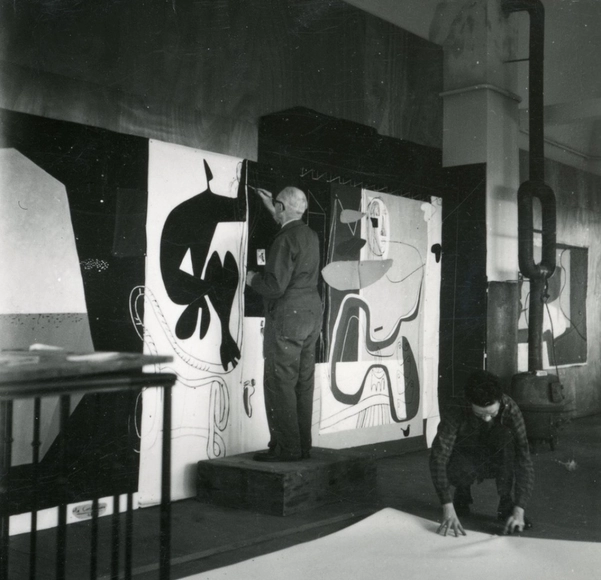
For sixty years, Le Corbusier used a wide variety of media to explore the themes and forms of his art, ranging from drawing to urbanism and including painting, architecture, and sculpture. He first discovered tapestry in 1936, in response to a request from Marie Cuttoli, who was then commissioning artworks woven in a factory in Aubusson from modern painters. However, it was twelve years later that he expressed his interest in producing woven artworks based on his drawings and found his way to this city in central France, where a true renaissance of tapestry had begun, at the initiative of Jean Lurçat and Jean Picart Le Doux.
Historic art movements and their visual characteristics have considerably paved the way for modern day architecture. For years, architects have been borrowing techniques and stylistic approaches to create their own architectural compositions, merging both disciplines together. Cubism, one of the most influential styles of the twentieth century, and heavily criticized for its experimentation with its non-representational art approach, is perhaps the most significant architecture inspiration. Just as the radical art movement rejected the then-rooted concept that art should mimic nature, architects found themselves following suit and designing structures that borrow Cubism’s avant-gardist features, creating buildings that, to this day, stand as iconic landmarks of the practice.
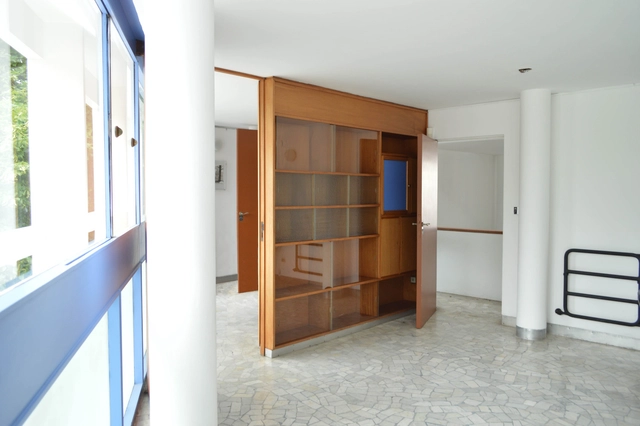
"La Curutchet habitada" is the title of a forthcoming book that records research developed by the Department of Interior Architecture and Furniture of the Instituto de Proyecto de FADU-Udelar, Uruguay, of which we share a small preview originally published in the magazine Summa+ 189 in December 2021.
Upon becoming a sovereign country, free from British Rule, the people of India found themselves faced with questions they had never needed to answer before. Coming from different cultures and origins, the citizens began to wonder what post-independence India would stand for. The nation-builders now had the choice to carve out their own future, along with the responsibility to reclaim its identity - but what was India's identity? Was it the temples and huts of the indigenous folk, the lofty palaces of the Mughal era, or the debris of British rule? There began a search for a contemporary Indian sensibility that would carry the collective histories of citizens towards a future of hope.
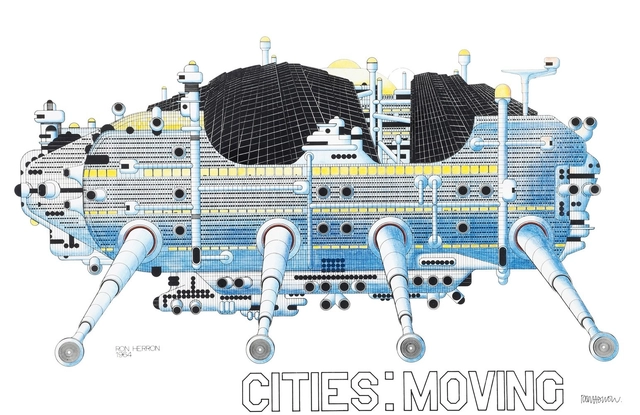
There’s the iconic Cenotaph for Newton drawing, the evocative monochrome illustration by Etienne-Louis Boullée. There are the experimental drawings of Lebbeus Woods, evocative urban visions of a distant future. There are also the well-known drawings of Le Corbusier’s utopian Ville Radieuse. Drawing, and in turn architectural visualizations, have always been a useful medium with which to contemplate architectural concepts of the future. It is fascinating to look back at the architectural visualizations of the future done in the past.
The early 20th century saw the birth of Modernist architecture. It brought with it a central architectural movement that in turn birthed off-shoots of its own. A figure often seen as the defining face of this movement is Le Corbusier, whose 1923 treatise Toward an Architecturewas influential to his Modernist contemporaries – a manifesto including the phrase “a house is a machine for living in” where good architecture would have to be intrinsically linked to function and the demands of industry.
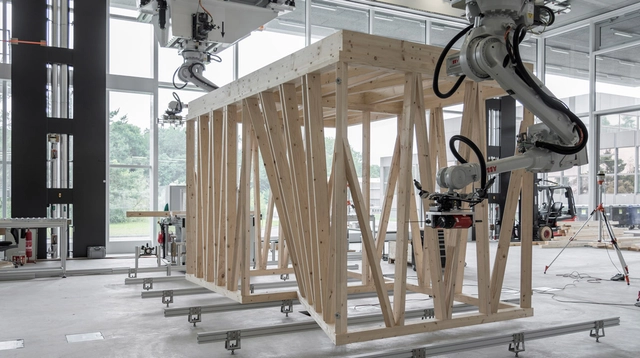
Robotic Collaboration. Image Courtesy of ETH Zurich
Digital spaces and fabrication technology have become as prominent as ever within the current state of our post-pandemic society, becoming increasingly more accessible and enabling quick and spontaneous acts of iteration and evolution. These technologies have resulted in the ability to mass-produce non-standard, highly differentiated building components within the same facility as their standardized counterpart, transforming how buildings and their respective components are conceived, designed, and represented, and how they are manufactured, assembled, and produced.
The beauty of digital fabrication is its ability to blend aspects of mass and artisanal production to the point where costs nearly disappear. Technology’s capacity to fabricate so simply and almost seamlessly raise the issues for its potential to significantly alter our current perception of architecture, thus producing the question: has the influence of mass production in architecture resulted in a loss of intentional design?
Boats offer delightful distractions for a surprisingly large number of architects. So many in fact, that there seems to be something about boats that appeals specifically to those trained in architecture.
The way our world looks like today is a result of centuries and centuries of human migration, of complex natural phenomena that has resulted in the geographic appearance of the world’s continents today. We understand this world through our lived experiences, but we also understand this world through a two-dimensional man-made invention – maps. Maps define the many contested borders of the world and have been used in an oppressive capacity, in particular places, for example, segmenting off sections of a place from marginalised societal groups.
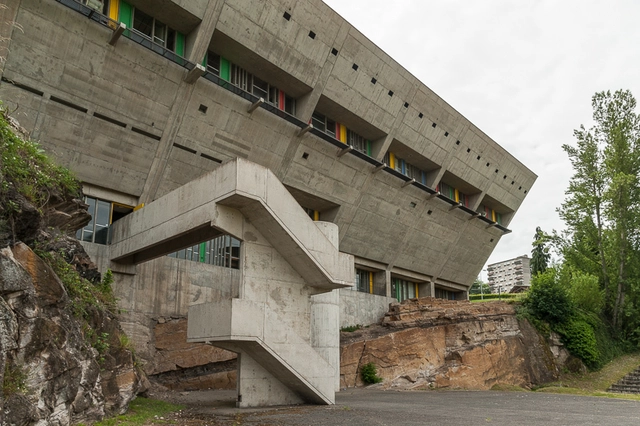
Le Corbusier was a pioneer of the Modernist Movement in architecture. Throughout his career, he undertook an array of projects all around the world. See below for 17 of his works that have been named World Heritage Sites by UNESCO, as well as many more of his other popular pieces. Hopefully, someday you get to go and see them yourself!
The historical Roman town has been busy at work and new exciting buildings, squares, and public parks have bloomed across the city. Since my first trip to Zürich in 2014, a lot has happened around good old Turicum.
After a compelling trip organized by Visit Zürich and my friend Philipp Heer, we were able to visit some of the newest, most interesting and uplifting places of the city. Flitting hither and thither, Roc Isern, David Basulto, and I enjoyed the privilege of a tailored itinerary, access to Zürich's gems, and perhaps the most inspiring, the architects behind these amazing structures.
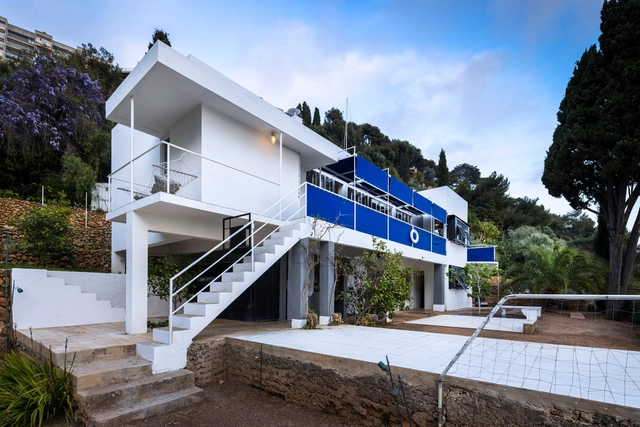
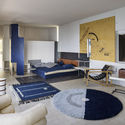
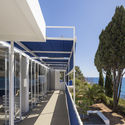
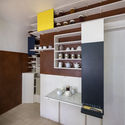
Association Cap Moderne have announced that the restoration of Eileen Gray’s modernist villa E-1027, along with other projects on the Cap Moderne site, such as Le Corbusier’s Cabanon and Unités de Camping, and l’Etoile de Mer restaurant, have been completed and are now open to visitors. The site is listed as a UNESCO World Heritage Site, and is considered as one of the must-see places to discover in the region, welcoming more than 10,000 visitors a year.
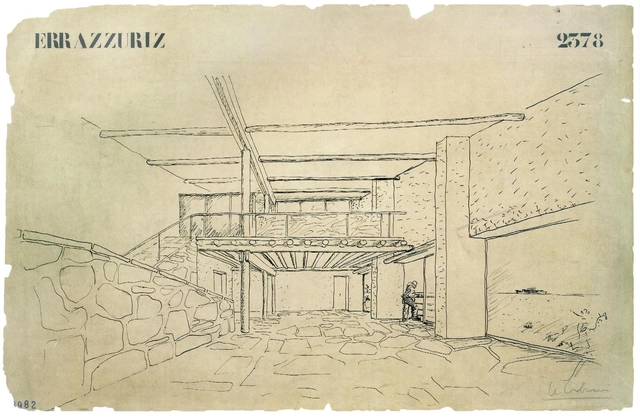
Sometimes architecture’s most influential designs remain unbuilt. Their mark on the world is larger than the physical footprint of the building despite it never breaking ground. This is the case for the Errazuriz House designed in 1930 by Le Corbusier for a Chilean diplomat to Argentina. The house was intended for the mountains of Zapallar Chile overlooking the Pacific Ocean. Its primary design feature, the uneven butterfly roof, was intended to reference the peaks and ridges of its surrounding terrain. This is the first instance of a butterfly roof, which would become a staple of post-war houses in California, built by the thousands. This video explores the Errazuriz house, its history, its design, and takes us on a virtual walkthrough of its digital reconstruction.
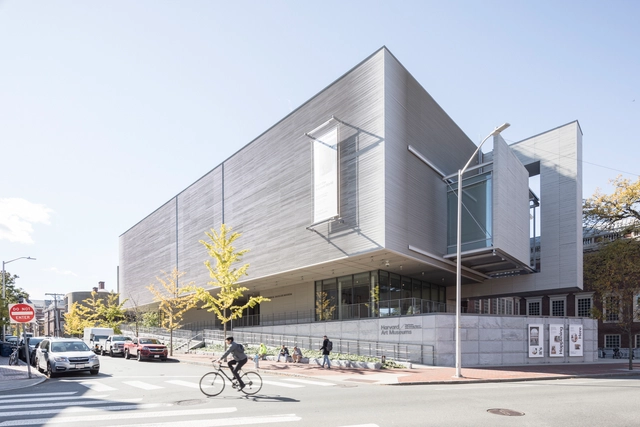
As the oldest institution of higher learning in the United States, Harvard has emerged as one of the world's most well-known universities. Organized into ten academic faculties and the Radcliffe Institute for Advanced Study, it is spread across 200 acres and centers on Harvard Yard in Cambridge. Developed along the Charles River adjacent to the Allston neighborhood of Boston, Harvard has the largest financial endowment of any academic institution. This has supported a number of different campus building projects across the university’s history.
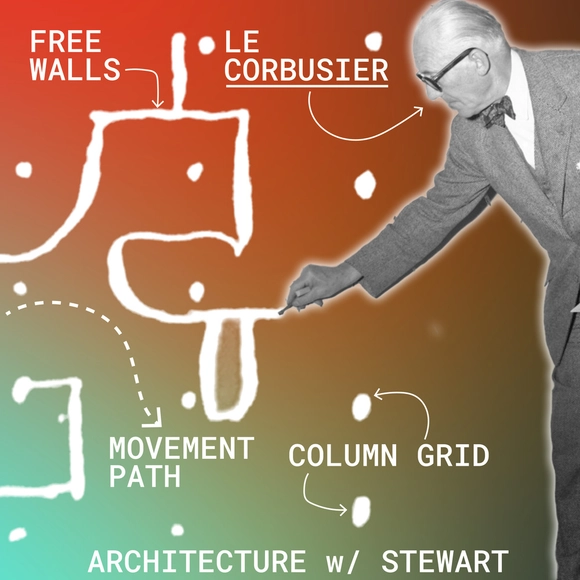
The term ‘open concept’ is popular with house-flipping television shows and real estate descriptions for lofts or contemporary style homes. However, the phrase is absent from the architect’s lexicon, likely due to a much more robust vocabulary and archive of precedents for describing the continuity of space in a domestic environment. This video is the second in a series that breaks down various ‘open concepts’ in architecture. The first video was dedicated to the ‘Organic Plan’ of Frank Lloyd Wright and this one takes a closer look at the ‘Free Plan’ of Le Corbusier. Through comparisons with Wright and supported with examples from the Five Points of a Modern Architecture, ‘Free Plans’ are presented as a unique way of understanding the coherence of space.
The Architectural realm has always been torn between artistic and rational cosmos. During our architectural studies, we are rarely given one specific methodology with which we can approach a project, resulting in diverse outcomes and methods of designing. However, in order for us to discover our personal stand, we must look back at the logic and philosophy of the great pioneers who influenced architecture before us.
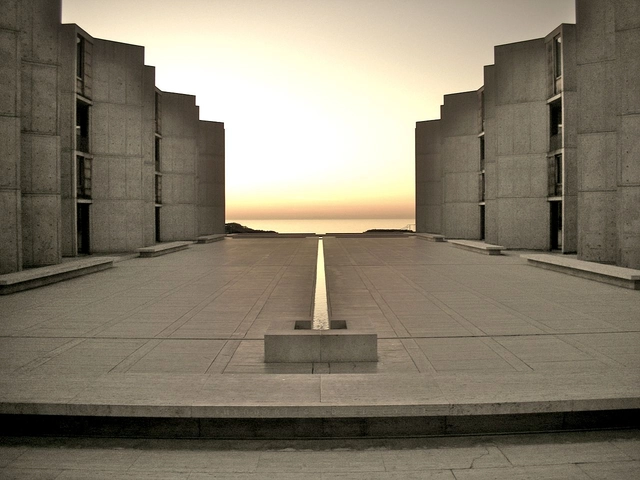
Le Corbusier, Mies van der Rohe, Frank Lloyd Wright, and Louis Kahn are four of the most notable architects to date. Read on to find out more about the creative process of these four leaders of the modern era, and why their projects and practices are still influential to our modern times.














.jpg?1643423986 "Villa Savoye, Le Corbusier, 1929. Image © Flickr User: End User")
.jpg?1643425181 "Villa Savoye, Le Corbusier, 1929. Image © Flickr User: End User")
_V%C3%ADctor_Pati%C3%B1o_George.jpg?1643424298 "Villa Stein, Le Corbusier, 1927. Image © Víctor Patiño George")