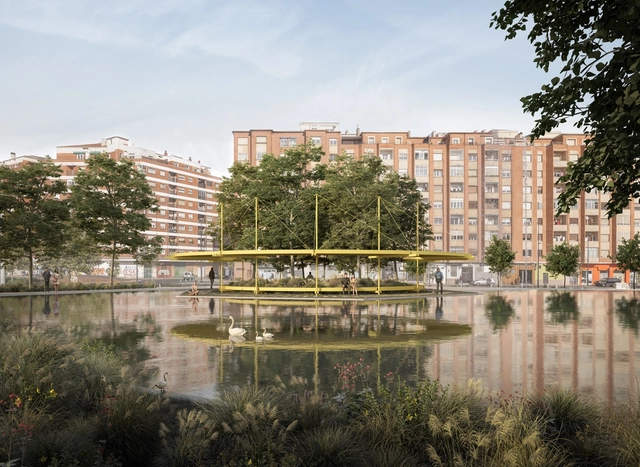
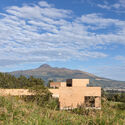
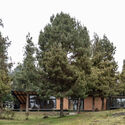
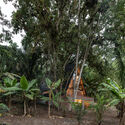
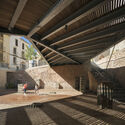
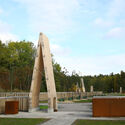
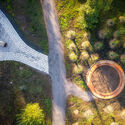
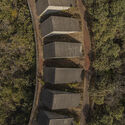
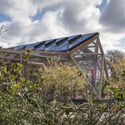
Al agua patos de K37.lab (Carlos Iraburu Elizalde, Álvaro Oriol, José Rodríguez-Losada, Carlos Iraburu Bonafé), España.. Image Cortesía de k37.lab
The renowned festival of ephemeral architecture and the city, Concéntrico, is gearing up for its eleventh edition, which, as every year, will take place in the city of Logroño. In 2025, the event will be held from June 19 to 24, featuring a program that includes various activities, conferences, and tours aimed at reflecting on public space, cities, and the ways we intervene in and interact with them.
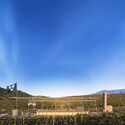
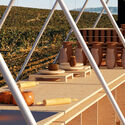
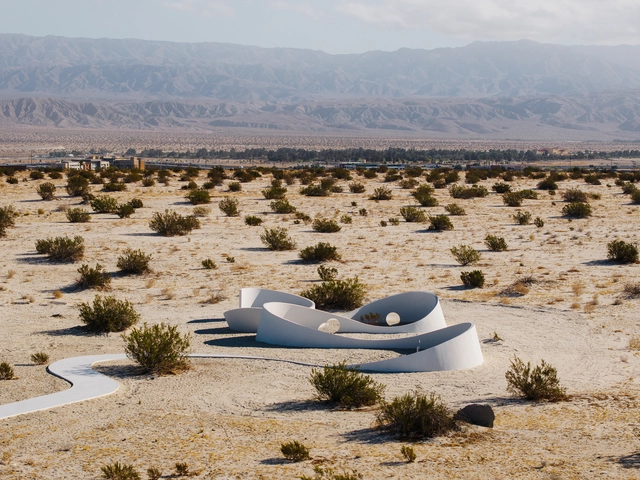
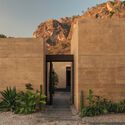
Desert X is a site-specific international art exhibition taking place this year across the Coachella Valley, California. Its fifth edition, curated by Artistic Director Neville Wakefield and co-curator Kaitlin Garcia Maestas, opened on March 10, 2025, featuring eleven installations by international artists integrated into the desert landscape. Artists were invited to propose alternative ways of perceiving a world "increasingly encircled by the transformational effects of nature and humanity," through physical installations in specific locations within the California desert. In this context, architecture is understood as the most visible evidence of human transformation, while immaterial elements, such as wind and light, highlight the transformative effects not only of human activity but also of nature itself. The exhibition is free and open to all, running through May 11, 2025. Below are images and descriptions of the eleven art installations featured in this year's Desert X exhibition.
https://www.archdaily.com/1027646/sana-frini-and-philippe-rahm-curate-the-architecture-exhibition-at-the-2025-versailles-biennale-of-architecture-and-landscapeArchDaily Team
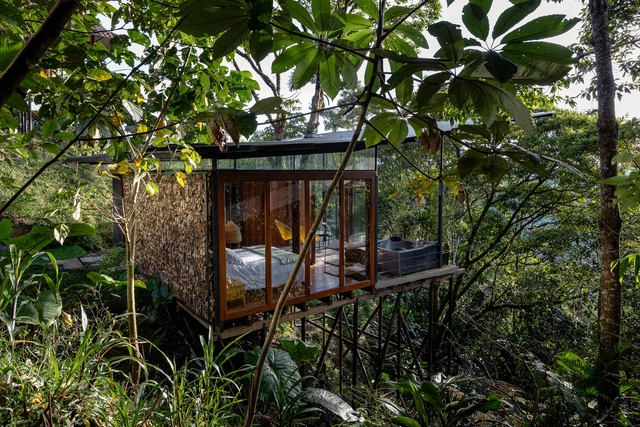
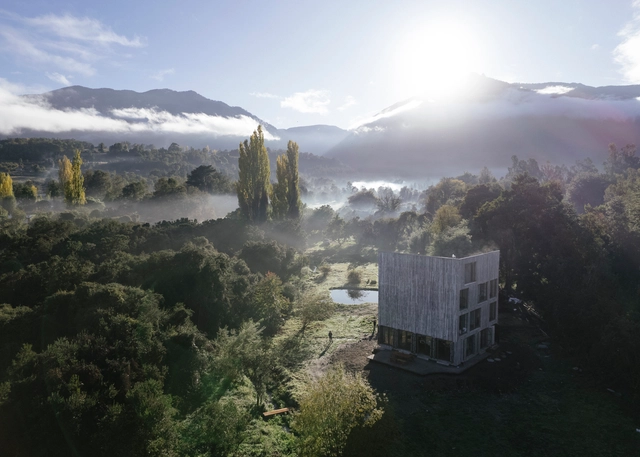
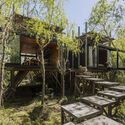
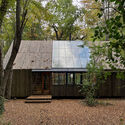
Ecuador, though a relatively small country in terms of land area, boasts a vast and diverse range of ecosystems and natural landscapes, including the Andes mountains, the Pacific coastline, and the Amazon rainforest. This makes the natural environment a key player, shaping its relationship with the built environment and demanding that architecture seamlessly integrate with and respect its context.
Over the years, Ecuadorian architecture has developed its own identity, successfully adapting to these diverse settings. Various construction techniques have been implemented, relying on locally sourced materials to create spaces and shelters in complete harmony with the landscape. Amid the growing trend of seeking a closer connection with nature, architecture in different regions of Ecuador has had to adjust to these conditions.
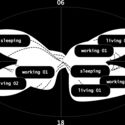
In 1993 a young professional couple with two toddlers and a large suburban lot in Naarden, a town less than half an hour's drive southeast of Amsterdam, approached Ben van Berkel to design an unusual house. They envisioned it as progressive and innovative in every way possible. More than that, they wanted a kind of building that "would be recognized as a reference in terms of renewal of the architectural language." Before settling on the architect, they spoke to several candidates, including Rem Koolhaas. They chose van Berkel who five years earlier, together with his then-wife Caroline Bos co-founded their eponymous practice, because as he told me, "I went to the site and studied it carefully and already had ideas about what I called the four quadrants of the landscape. I knew what kind of house it would be. I could see clearly where different rooms would go, how they would be shaped, and how they would relate to each other." The couple couldn't resist. Yet, there would be no rush on the project which took five years to complete, most time was invested in its design, going through many iterations and refinements, all based on the Möbius loop.
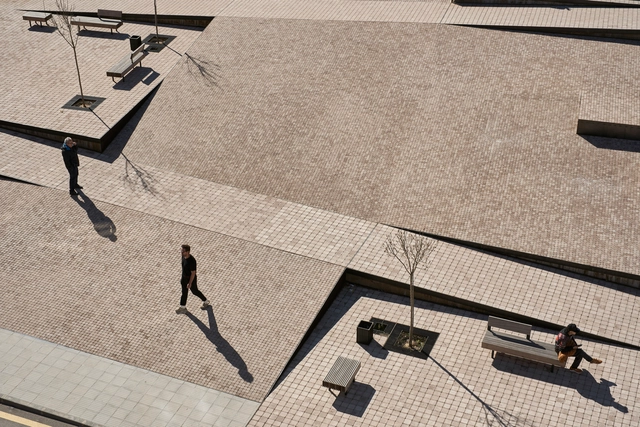
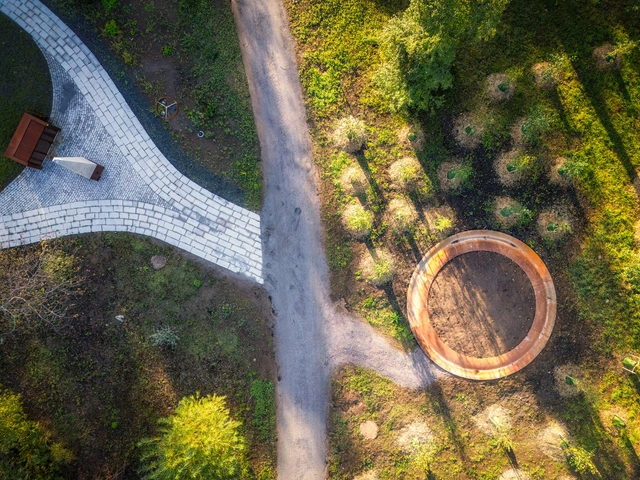
Spain boasts a vast diversity of natural and urban landscapes, where public space plays a leading role. Its relevance has grown in recent years, solidifying it as a key axis for interaction. Beyond its architectural and landscape qualities, public space offers visitors and citizens high-quality environments that contribute to improving living conditions, whether, in an urban park, a pedestrian axis within the city, or a space simply meant for being in a natural setting and connecting with the territory.
Opened in October 2024, the Järva Cemetery offers everyone, regardless of faith or beliefs, a space for remembrance, continuing Stockholm's long tradition of funeral history. After overcoming significant planning obstacles, the site, designed by Kristine Jensen Tegnestue and Poul Ingemann, was created to accommodate burials and funeral ceremonies, with options for coffins, urns, ash groves, and a commemorative forest. During the last edition of Open House Stockholm, visitors could explore its surrounding natural landscapes and connect with the space.
Annually, ArchDaily's curatorial team undertakes a rigorous selection process to identify exemplary projects in Latin American residential architecture. The goal is to share these works of architecture with our audience and highlight and promote good practices within contemporary architecture. This meticulous effort focuses on identifying projects that stand out for their design and their positive impact on the environment, innovative use of materials and techniques, and ability to address current needs.
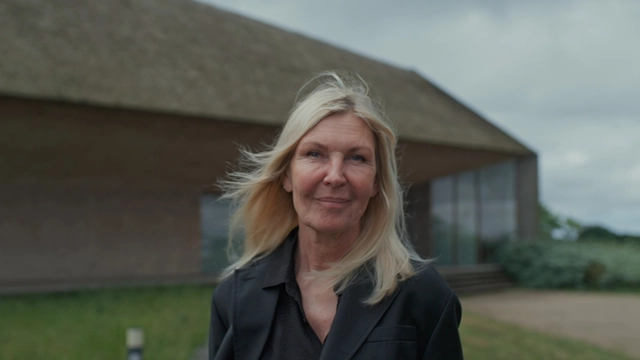
Buildings are deeply interconnected with their surroundings—the climate, culture, landscape, and the lives of their occupants. For Dorte Mandrup, a renowned Danish architect, context is more than a mere consideration; it is the driving force behind her designs. Her work demonstrates a profound curiosity about the people who will inhabit her buildings and the unique stories embedded within each site. Her buildings aren't just structures; they're thoughtful responses to their surroundings, without aiming to disappear within them.
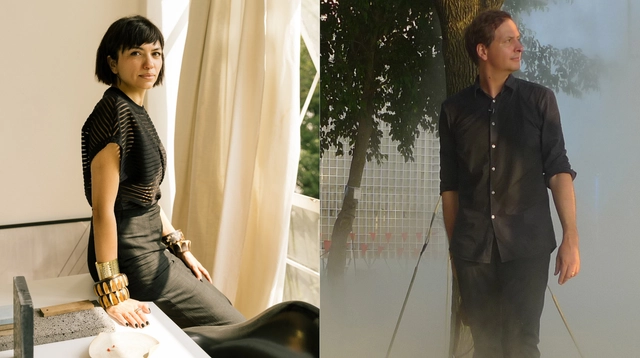
Dorte Mandrup is featured, alongside Tosin Oshinowo, in the second installment of the documentary Women in Architecture, released November 12, 2024. Produced by Sky-Frame in collaboration with ArchDaily and directed by Boris Noir, the film builds upon the first episode, which highlighted Toshiko Mori, Gabriela Carrillo, and Johanna Meyer-Grohbrügge, offering a continued exploration of diverse perspectives within architecture.
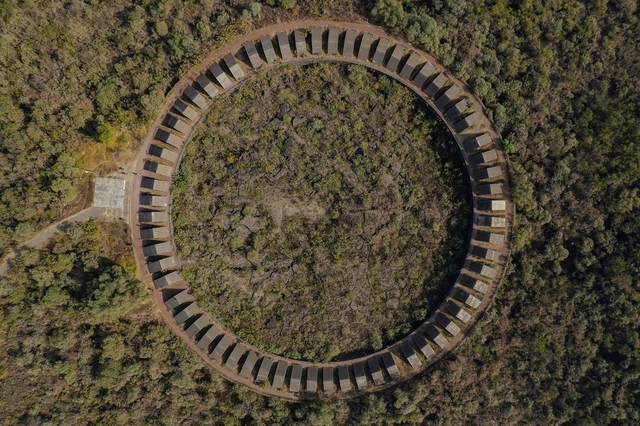
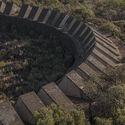
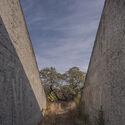
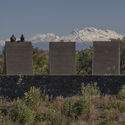
Espacio Escultórico de la UNAM. Image Cortesía de Andrés Cedillo
Integrating contemporary art with the landscape in a dialogue between human creation and the natural environment, the Sculpture Space of the National Autonomous University of Mexico (UNAM) represents one of the most important public artworks in Latin America. Both the Sculpture Space and the Pedregal de San Ángel Ecological Reserve at UNAM in Mexico City have recently been awarded the Carlo Scarpa International Prize for Gardens 2023-2024, granted by the Benetton Foundation for Studies and Research based in Treviso, Italy. They were recognized for their high natural, historical, and cultural value as works of preservation and collective art that emerged from a lava surface where new neighborhoods and UNAM’s University City were developed.
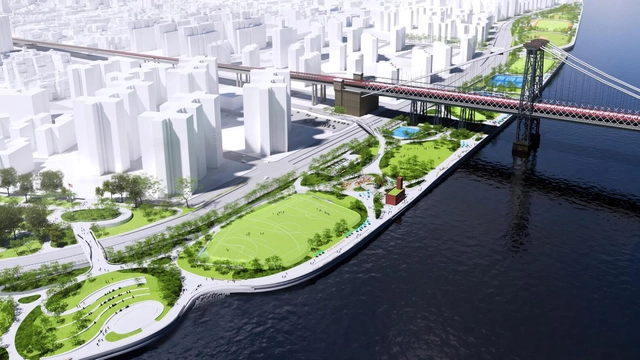
Superstorm Sandy inundated Lower Manhattan, causing billions in property and infrastructure damage. To protect against future flooding, storm surges, and sea level rise, landscape architects are developing an innovative mix of green and grey solutions along the southern coast of Manhattan.
These are not nature-based solutions but forms of armor. And designers are showing how this armature can be woven into the public realm, creating new kinds of infrastructure. Smart design is resulting in retractable gates and walls, landscaped berms, and raised platforms. No concrete walls separating communities from each other or the waterfront here.
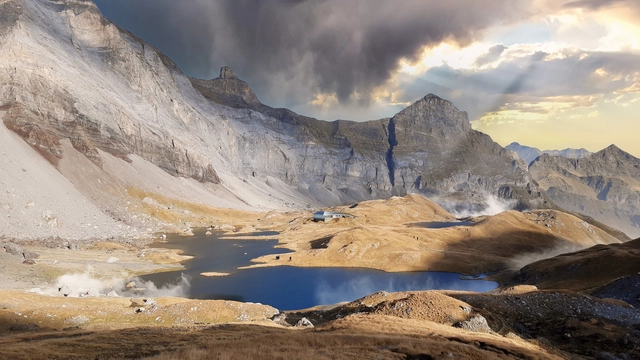
Snøhetta has announced a project to rebuild the Refuge de Barroude, a mountain refuge located in a UNESCO World Heritage site in the Pyrenees Mountain range of France. The old building, destroyed in an accidental fire ten years ago, is set to be revived as a stop-off point for hikers on the Haute Route des Pyrénées and as a support center for the staff of the National Park. The next phase of the project is due to begin in 2025.
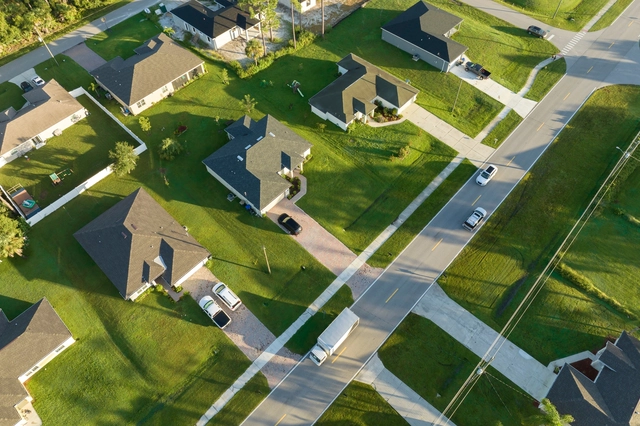
The almost cliché image of the white picket fence has become synonymous with the ideals of the American Dream. Behind the fence, there is invariably a perfectly manicured lawn, a green carpet upon which life can unfold. This image and its associations are not, however, accidental. In her book, "Domesticity at War", Beatriz Colomina notices that, since the Second World War, the lawn has taken a central space in the imagination of the country, becoming first a in order to make space for diversity, both social and ecological. symbol of the stability of the homes soldiers were hoping to return to, offering a space where those at home could still perform duties for the nation, and, after the war, propagating the image of an idealized lifestyle, one maintained with hard work and dedication. In recent years, the lawn has emerged once again as a site of conflict, this time between those hoping to preserve this idealized image, and those seeking to break the uniformity in order to make space for diversity, both social and ecological.
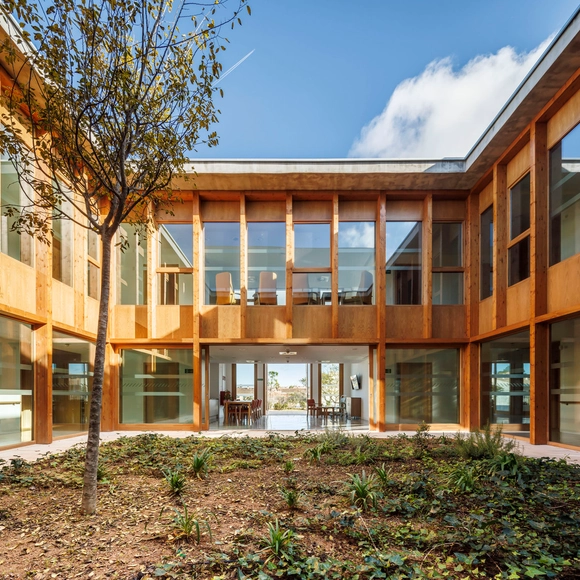
Faced with the aging of the global population, one of the most significant social transformations of the 21st century is anticipated. The design of patios, gardens, terraces, and other green areas in facilities for the elderly presents an opportunity to foster interaction, participation in various collective activities, and the establishment of gathering spaces aimed at reducing loneliness among older adults while enhancing well-being and social interaction in connection with nature. How can built environments be created to adapt to the needs of older adults?
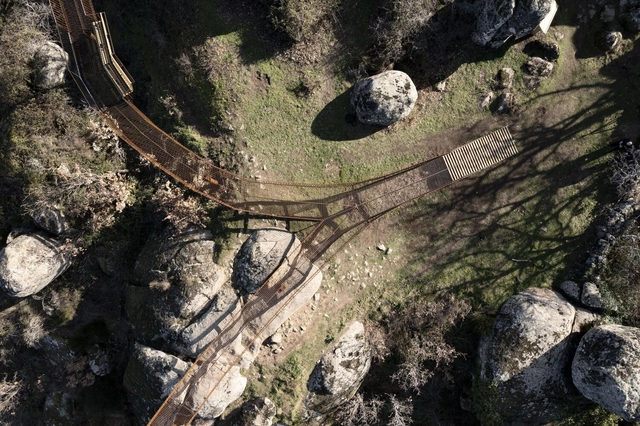
Spain, with its vast territory and notable diversity of landscapes, has been a reference point in the development of external infrastructures, both in urban and rural areas. Tourism has played a key role in this process, focusing on creating spaces that maximize the enjoyment of the natural environment and integrating local landscapes into urbanized areas. The construction of these infrastructures has had two main aspects: the adaptation of cities for both their residents and tourists and the development of rural or coastal areas, where nature is the main attraction. This has led to interventions ranging from creating waterfront promenades, viewpoints, and natural parks, to urbanization projects in previously untouched areas. Furthermore, urban growth has driven the creation of green infrastructures such as botanical gardens, ecological trails, and reserves that aim to protect the environment while being sustainably open to the public.
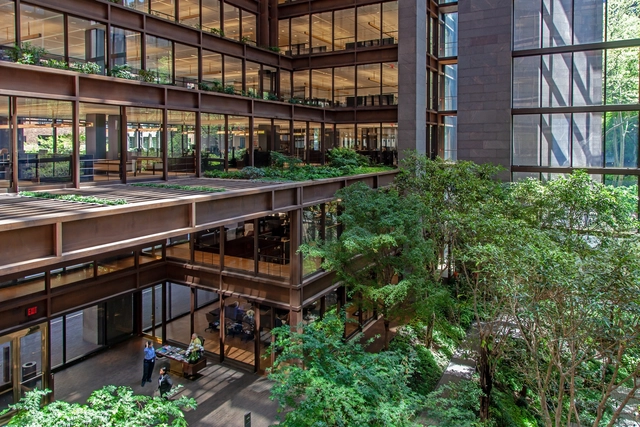
Modernistlandscape architecture marked a radical shift from traditional garden designs, emphasizing simplicity, functionality, and a stronger connection between people and their environments. From the 1930s through the 1960s, this movement saw the emergence of visionary landscape architects who integrated form and function in ways that redefined outdoor spaces. Their designs responded to the rapidly evolving urban landscapes of the time, prioritizing usability and creating environments that could accommodate modern life. The enduring influence of these principles continues to shape contemporary practices, while also presenting unique challenges in preservation as these landscapes age.
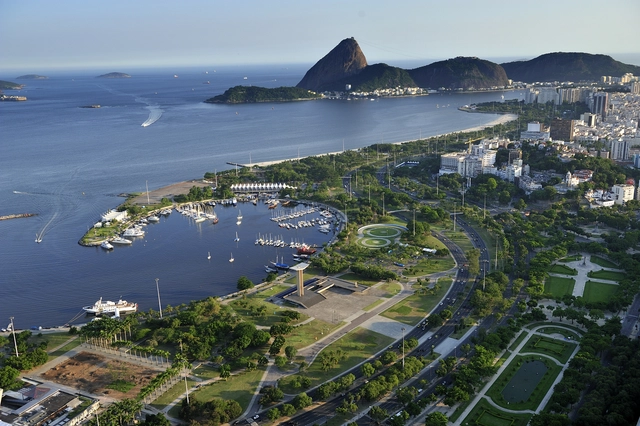
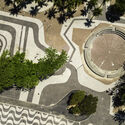
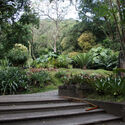
From the 1930s to the 1990s, Burle Marx's work anticipated many of today's concerns about sustainability and urban well-being. Long before terms like "sustainable design" or "green infrastructure" became commonplace, Burle Marx was already advocating for the use of native plants, recognizing their role in creating self-sustaining ecosystems that required minimal intervention. His projects often transformed neglected urban areas into vibrant, ecologically balanced spaces that not only improved the environment but also enhanced the quality of life for city dwellers.