1. ArchDaily
  2. UNAM

UNAM: The Latest Architecture and News

Smiljan Radić to Lead 2026 Pritzker Laureate Lecture and Panel on “Architecture: Distraction and Knowledge”

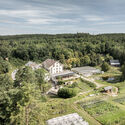
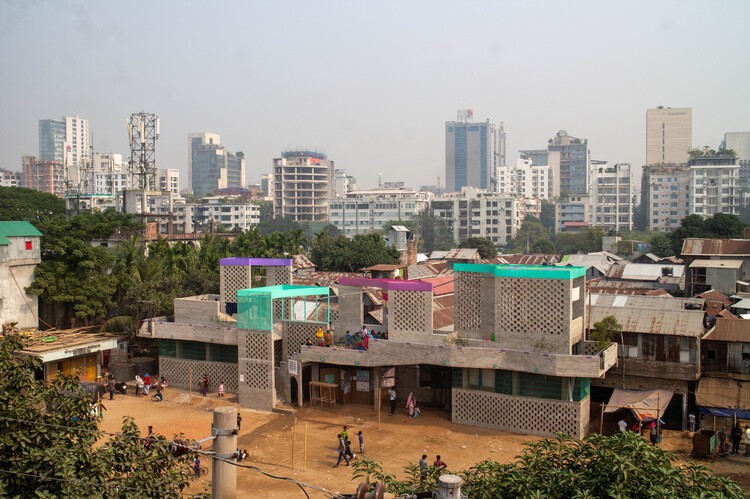
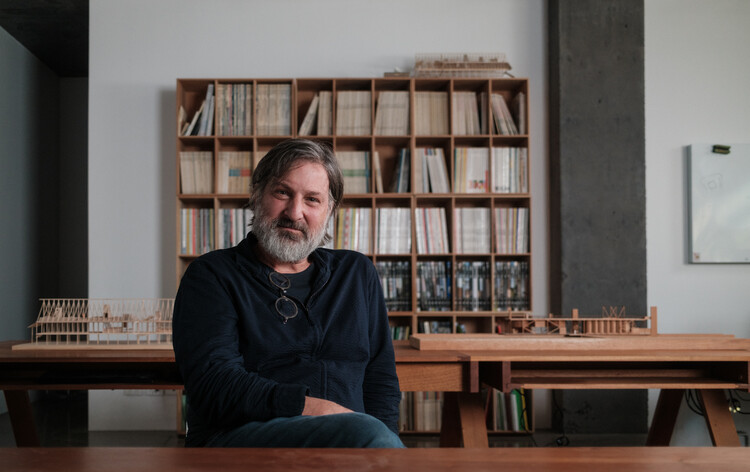
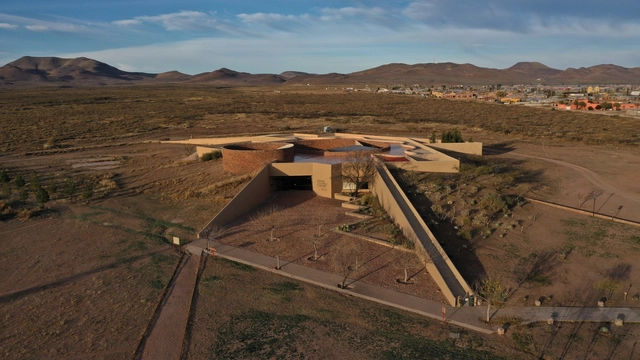
On March 12, the Chilean architect of Croatian descent, Smiljan Radić Clarke, was awarded the 2026 Pritzker Architecture Prize. The jury highlighted his "unorthodox approach to design," which "may initially appear unusual, unexpected, even rebellious; yet, far from producing alienation or estrangement, his anti-canonical stance feels fresh and unprecedented. It conveys the unmistakable sensation of encountering something new." This recognition will be celebrated with the annual Pritzker Architecture Prize Laureate Lecture and Panel Discussion, to be held in Mexico City at the Universidad Nacional Autónoma de México (UNAM), at the Faculty of Architecture's Teatro Estefanía Chávez, on May 12, 2026.

Smiljan Radić to Lead 2026 Pritzker Laureate Lecture and Panel on “Architecture: Distraction and Knowledge” - Image 1 of 4Smiljan Radić to Lead 2026 Pritzker Laureate Lecture and Panel on “Architecture: Distraction and Knowledge” - Image 2 of 4Smiljan Radić to Lead 2026 Pritzker Laureate Lecture and Panel on “Architecture: Distraction and Knowledge” - Image 3 of 4Smiljan Radić to Lead 2026 Pritzker Laureate Lecture and Panel on “Architecture: Distraction and Knowledge” - Image 4 of 4Smiljan Radić to Lead 2026 Pritzker Laureate Lecture and Panel on “Architecture: Distraction and Knowledge” - More Images

Mexican Architect Mario Schjetnan and Grupo de Diseño Urbano Awarded the 2025 Oberlander Prize for Landscape Architecture

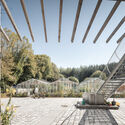
The biennial Cornelia Hahn Oberlander International Landscape Architecture Prize was established to increase the visibility, understanding, appreciation, and dialogue around landscape architecture. The creation of the Oberlander Prize began in 2014, and the most recent laureate was landscape architect Kongjian Yu, the pioneer of the "Sponge City" concept. This year, The Cultural Landscape Foundation (TCLF) announced that Mexico City-based landscape architect Mario Schjetnan and his firm Grupo de Diseño Urbano (GDU) are the recipients of the 2025 Oberlander Prize. According to TCLF, Schjetnan belongs to a generation of landscape architects, architects, and urbanists who became aware of the environmental impacts of urban development and their consequences for life, the planet, and its inhabitants. He and the GDU team are the first Latin Americans to be awarded the Oberlander Prize laureate.

Mexican Architect Mario Schjetnan and Grupo de Diseño Urbano Awarded the 2025 Oberlander Prize for Landscape Architecture - Image 1 of 4Mexican Architect Mario Schjetnan and Grupo de Diseño Urbano Awarded the 2025 Oberlander Prize for Landscape Architecture - Image 2 of 4Mexican Architect Mario Schjetnan and Grupo de Diseño Urbano Awarded the 2025 Oberlander Prize for Landscape Architecture - Image 3 of 4Mexican Architect Mario Schjetnan and Grupo de Diseño Urbano Awarded the 2025 Oberlander Prize for Landscape Architecture - Image 4 of 4Mexican Architect Mario Schjetnan and Grupo de Diseño Urbano Awarded the 2025 Oberlander Prize for Landscape Architecture - More Images+ 7

UNAM Sculpture Space: Integrating Art and Culture into Mexico's Natural Landscape

Subscriber Access | 

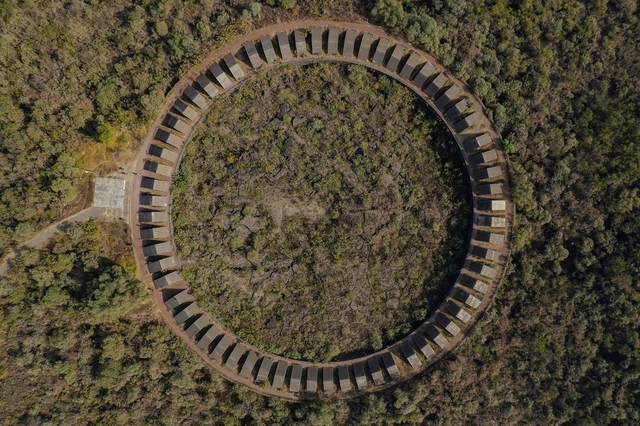
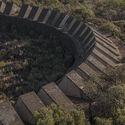
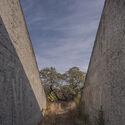
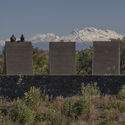
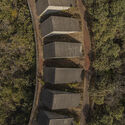
Integrating contemporary art with the landscape in a dialogue between human creation and the natural environment, the Sculpture Space of the National Autonomous University of Mexico (UNAM) represents one of the most important public artworks in Latin America. Both the Sculpture Space and the Pedregal de San Ángel Ecological Reserve at UNAM in Mexico City have recently been awarded the Carlo Scarpa International Prize for Gardens 2023-2024, granted by the Benetton Foundation for Studies and Research based in Treviso, Italy. They were recognized for their high natural, historical, and cultural value as works of preservation and collective art that emerged from a lava surface where new neighborhoods and UNAM’s University City were developed.

UNAM Sculpture Space: Integrating Art and Culture into Mexico's Natural Landscape - Image 1 of 4UNAM Sculpture Space: Integrating Art and Culture into Mexico's Natural Landscape - Image 2 of 4UNAM Sculpture Space: Integrating Art and Culture into Mexico's Natural Landscape - Image 3 of 4UNAM Sculpture Space: Integrating Art and Culture into Mexico's Natural Landscape - Image 4 of 4UNAM Sculpture Space: Integrating Art and Culture into Mexico's Natural Landscape - More Images+ 19

An Architectural System for the Transformation of Public Space: Discover the Work of Colectivo C733 in Mexico

Subscriber Access | 

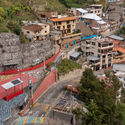
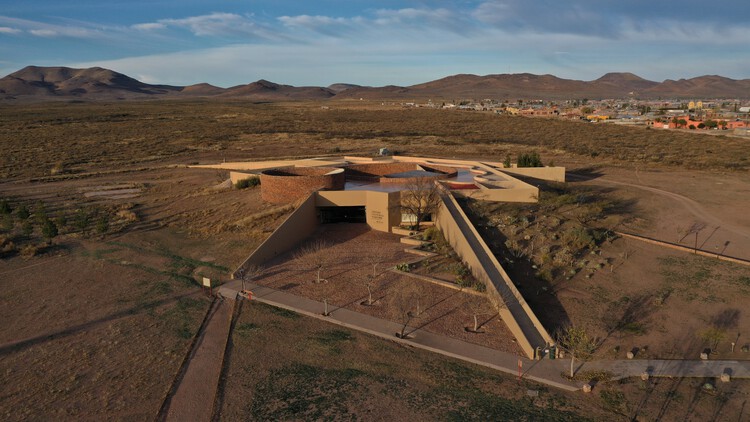
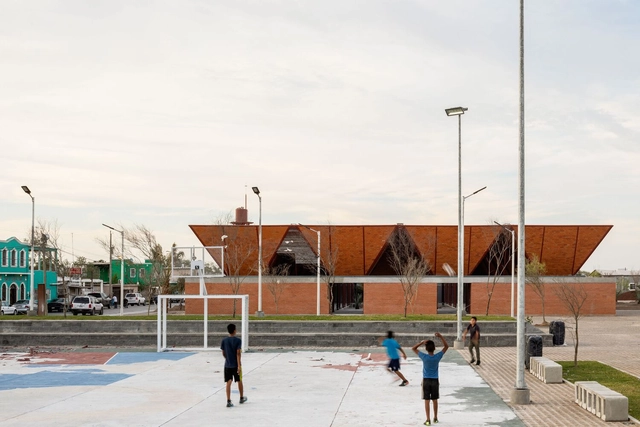
In 2019, the Secretariat of Urban Development hired the Faculty of Architecture at the National Autonomous University of Mexico to organize a competition to develop small-scale public works in vulnerable regions of northern Mexico. At that time, architects from the mentioned university—Gabriela Carrillo, Carlos Facio, José Amozurrutia, Eric Valdez, and Israel Espín—came together to participate in their proposal for this challenge. Believing in the importance of forming a team and understanding that architecture emerges from moments of collective discussion, exchange of ideas and positions, and sharing knowledge and experience, they formed the architectural collective C733.

An Architectural System for the Transformation of Public Space: Discover the Work of Colectivo C733 in Mexico - Image 1 of 4An Architectural System for the Transformation of Public Space: Discover the Work of Colectivo C733 in Mexico - Image 2 of 4An Architectural System for the Transformation of Public Space: Discover the Work of Colectivo C733 in Mexico - Image 3 of 4An Architectural System for the Transformation of Public Space: Discover the Work of Colectivo C733 in Mexico - Image 4 of 4An Architectural System for the Transformation of Public Space: Discover the Work of Colectivo C733 in Mexico - More Images+ 18

La Quebradora Water Park in Mexico: Designing Public Spaces to Improve Water Management

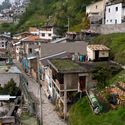
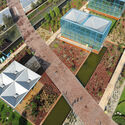
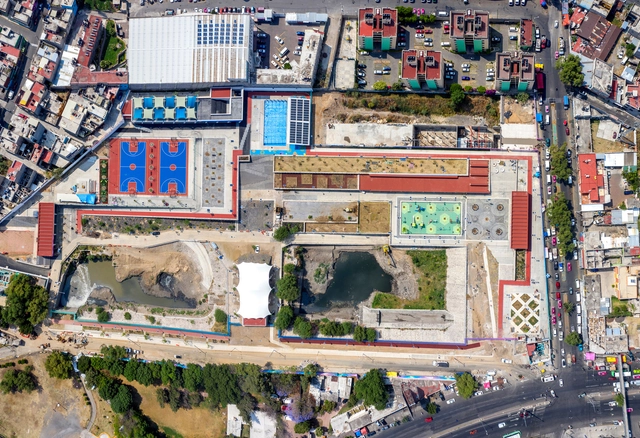
Within the framework of implementing green infrastructure projects for water management in the Basin of Mexico, utilizing existing public spaces, La Quebradora Water Park emerges as the first proposal for hydro-urban acupuncture. The project, developed by the team from the Institute of Social Research at UNAM, coordinated by Manuel Perló Cohen and Loreta Castro Reguera Mancera, aims to transform the site's infiltration into a landmark of good water management, public space creation, and strengthening of the social fabric through four levels: infrastructure, park, city, and viewpoint. Addressing part of the water and social issues facing the area, the proposal transforms urban infrastructure into a public and recreational space for the community in a densely populated area with scarce public spaces.
La Quebradora Water Park in Mexico: Designing Public Spaces to Improve Water Management - Image 1 of 4La Quebradora Water Park in Mexico: Designing Public Spaces to Improve Water Management - Image 2 of 4La Quebradora Water Park in Mexico: Designing Public Spaces to Improve Water Management - Image 3 of 4La Quebradora Water Park in Mexico: Designing Public Spaces to Improve Water Management - Image 4 of 4La Quebradora Water Park in Mexico: Designing Public Spaces to Improve Water Management - More Images+ 17

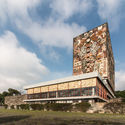
Architecture Classics: UNAM Central Library / Juan O'Gorman

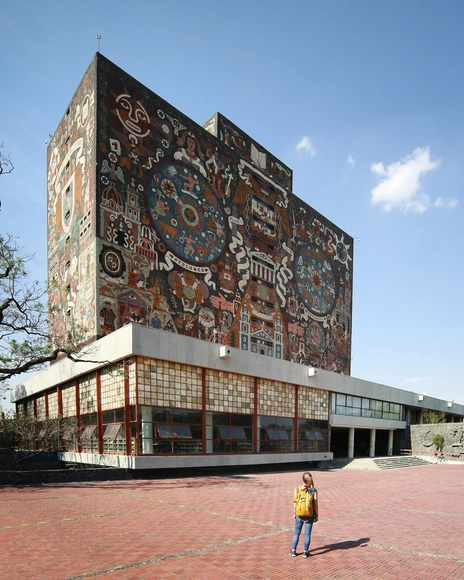
The northern side of the Rectoría tower in the Ciudad Universitaria, the main campus of the National Autonomous University of Mexico, emanates a particular Mexican character. It is a classic example of modern architecture that integrates architecture with sculptural and pictorial elements that denote the university's mission to carry and preserve knowledge, history, and Mexican cultural identity through the ages.

The creation of the UNAM tower's emblem was assigned to Juan O’Gorman, Gustavo Saavedra, and Juan Martínez de Velasco, who later brought in Juan Íñiguez, Rafael Carrasco Puente, and José María Luján as advisors for the project.

Architecture Classics: UNAM Central Library / Juan O'Gorman - Landmarks & MonumentsArchitecture Classics: UNAM Central Library / Juan O'Gorman - Landmarks & MonumentsArchitecture Classics: UNAM Central Library / Juan O'Gorman - Landmarks & MonumentsArchitecture Classics: UNAM Central Library / Juan O'Gorman - Landmarks & MonumentsArchitecture Classics: UNAM Central Library / Juan O'Gorman - More Images+ 15

Photographer Yueqi “Jazzy” Li Captures the Dynamism of Mexico City's UNAM Campus

Subscriber Access | 
Photographer Yueqi “Jazzy” Li Captures the Dynamism of Mexico City's UNAM Campus - Image 4 of 4
© Yueqi "Jazzy" Li

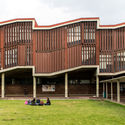
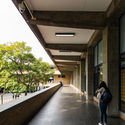
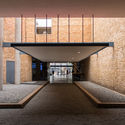
Although the National Autonomous University of Mexico (UNAM), south of Mexico City, is home to the well-known O’Gorman murals, it is, in fact, the campus itself, that is quite intriguing. Walking through UNAM, individuals find themselves in an architectural display of modernist buildings that date back 70 years, along with open courtyards, hidden walkways, and pavilions. Uniquely, the campus buildings have a little bit of everything: bold geometry, openness, abstraction, humanistic design, permeability with nature, decaying masonry walls, local lava rocks used as walls, and pavers throughout the campus.

Photographer Yueqi “Jazzy” Li Captures the Dynamism of Mexico City's UNAM Campus - Featured ImagePhotographer Yueqi “Jazzy” Li Captures the Dynamism of Mexico City's UNAM Campus - Image 1 of 4Photographer Yueqi “Jazzy” Li Captures the Dynamism of Mexico City's UNAM Campus - Image 2 of 4Photographer Yueqi “Jazzy” Li Captures the Dynamism of Mexico City's UNAM Campus - Image 3 of 4Photographer Yueqi “Jazzy” Li Captures the Dynamism of Mexico City's UNAM Campus - More Images+ 24

Félix Candela’s Concrete Shells Through Photographs, Architectural Models and Plans

 Félix Candela’s Concrete Shells Through Photographs, Architectural Models and Plans - Image 5 of 4
Courtesy of Alexander Eisenschmidt

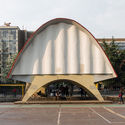
Spanish and Mexican architect Félix Candela is widely recognized as one of the most prominent figures in 20th century architecture. His innovative experiments with reinforced concrete produced iconic buildings deemed cascarones, or 'shell structures', such as the Pavilion of Cosmic Rays at UNAM, Mexico City (1951); the Chapel Lomas de Cuernavaca, Cuernavaca (1958); Los Manantiales Restaurant, Xochimilco (1958); and the Palace of Sports for the 1968 Olympic Games in Mexico City.

 Félix Candela’s Concrete Shells Through Photographs, Architectural Models and Plans - Image 1 of 4 Félix Candela’s Concrete Shells Through Photographs, Architectural Models and Plans - Image 2 of 4 Félix Candela’s Concrete Shells Through Photographs, Architectural Models and Plans - Image 3 of 4 Félix Candela’s Concrete Shells Through Photographs, Architectural Models and Plans - Image 4 of 4 Félix Candela’s Concrete Shells Through Photographs, Architectural Models and Plans - More Images+ 13