1. ArchDaily
  2. Industrial Architecture
Industrial Architecture: The Latest Architecture and News

Design as Repair: How Architecture Is Advancing Environmental Justice

Subscriber Access | 

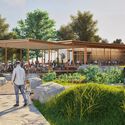
Environmental justice confronts a simple but uncomfortable truth: the benefits and burdens of the environment are not shared equally. Marginalized communities bear a disproportionate share of polluted air, unsafe water, toxic land uses, extreme heat, and the accelerating risks of climate change in cities around the world. These are the consequential products of decades of policy decisions, investment patterns, exclusionary planning practices, and planning choices that have consistently favored certain communities over others.

In cities and landscapes alike, these injustices are written into the physical fabric of places, even revealing extreme differences in environmental conditions between neighborhoods and districts. Dense neighborhoods with little tree canopy, for example, absorb and hold heat, exposing residents to higher rates of heat-related illness. Highways, industrial corridors, ports, and waste facilities cluster near low-income neighborhoods and communities of color, shaping conditions of health, air and soil quality, and long-term safety.

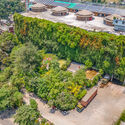
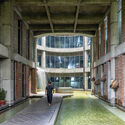
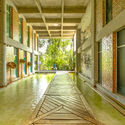
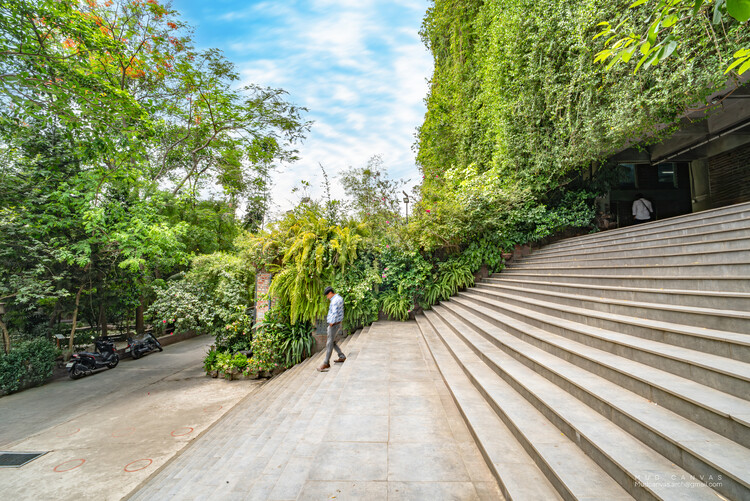
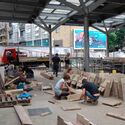
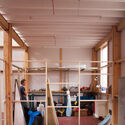
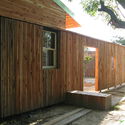
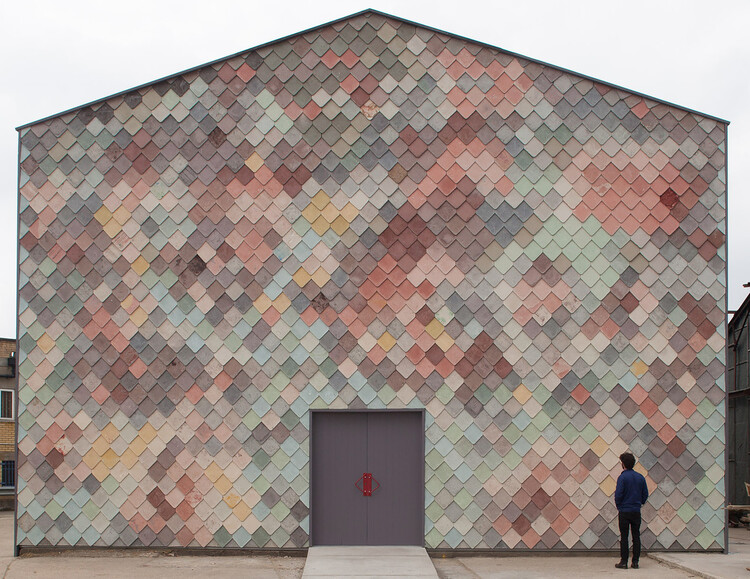
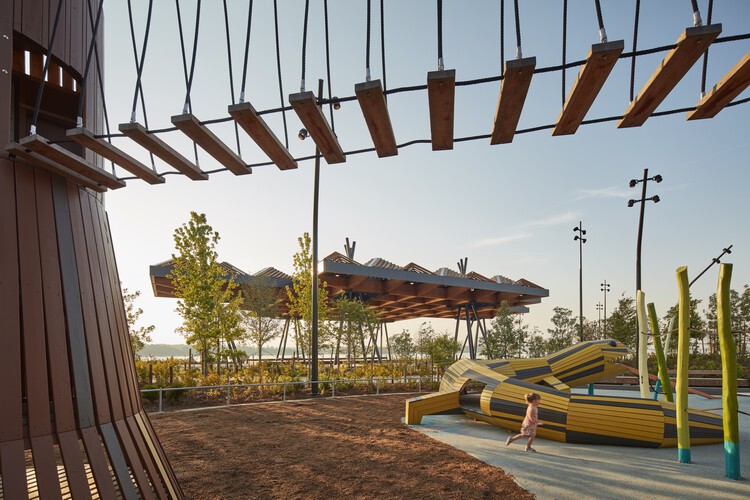
Design as Repair: How Architecture Is Advancing Environmental Justice - Image 1 of 4Design as Repair: How Architecture Is Advancing Environmental Justice - Image 2 of 4Design as Repair: How Architecture Is Advancing Environmental Justice - Image 3 of 4Design as Repair: How Architecture Is Advancing Environmental Justice - Image 4 of 4Design as Repair: How Architecture Is Advancing Environmental Justice - More Images+ 35

La Biennale di Venezia Inaugurates New Home for Its Historical Archive at the Arsenale

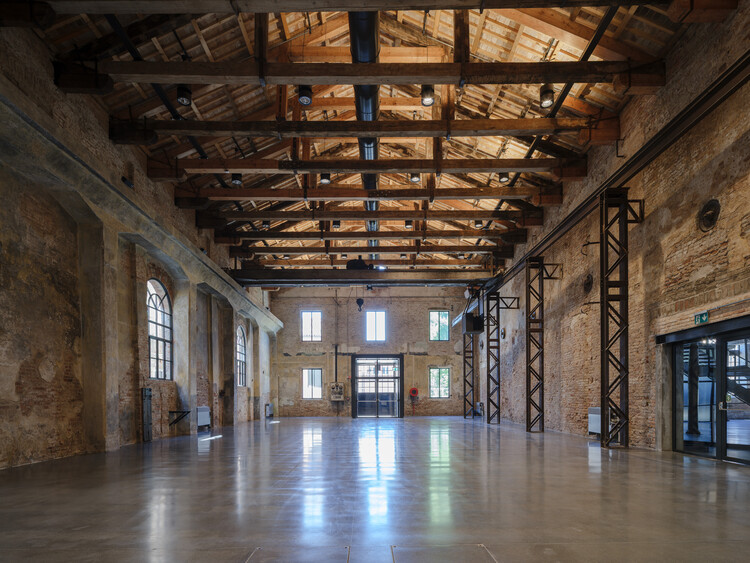
La Biennale di Venezia has inaugurated the new home of its Historical Archive – International Centre for Research on Contemporary Arts at the Arsenale, relocating the institution's archival collections and research activities to a restored complex within one of its principal exhibition sites. The opening introduces a new permanent headquarters for the archive, bringing together facilities for conservation, research, public consultation, and cultural programming within the historic Arsenale. To mark the occasion, La Biennale organized a three-day program of performances, lectures, conversations, and public visits, highlighting the archive's role within the institution's broader ecosystem of exhibitions, festivals, and educational initiatives.

La Biennale di Venezia Inaugurates New Home for Its Historical Archive at the Arsenale - Image 1 of 4La Biennale di Venezia Inaugurates New Home for Its Historical Archive at the Arsenale - Image 2 of 4La Biennale di Venezia Inaugurates New Home for Its Historical Archive at the Arsenale - Image 3 of 4La Biennale di Venezia Inaugurates New Home for Its Historical Archive at the Arsenale - Image 4 of 4La Biennale di Venezia Inaugurates New Home for Its Historical Archive at the Arsenale - More Images+ 6

UNStudio Reveals River-Oriented Master Plan for Former Industrial Site in Cluj-Napoca, Romania

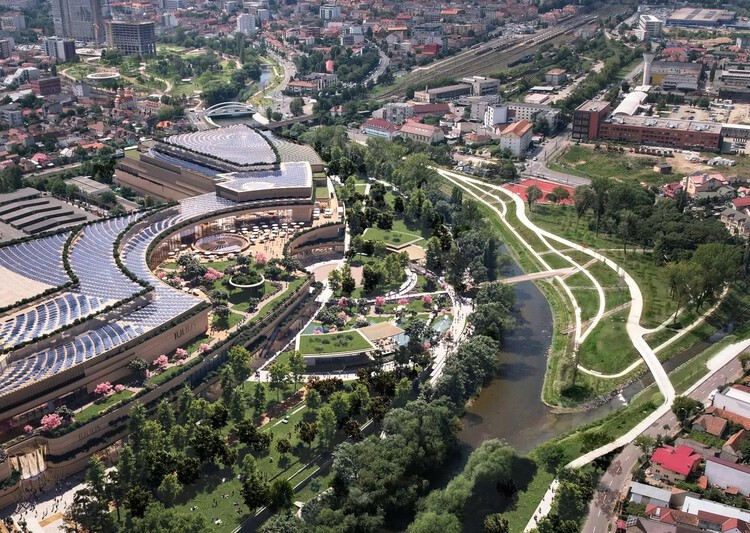
A former industrial site along the Someș River in Cluj-Napoca, Romania, is being transformed into a large-scale mixed-use district that reconnects the city with its waterfront. Designed by UNStudio in collaboration with Felixx Landscape Architects and Planners for developers IULIUS and Atterbury Europe, the RIVUS project combines urban regeneration, adaptive reuse, landscape design, and new public infrastructure within a single framework. Developed through a public participation process involving local residents, the proposal will transform the former Carbochim industrial platform into a river-oriented district organized around public space, mobility, and everyday urban activity.

UNStudio Reveals River-Oriented Master Plan for Former Industrial Site in Cluj-Napoca, Romania - Image 1 of 4UNStudio Reveals River-Oriented Master Plan for Former Industrial Site in Cluj-Napoca, Romania - Image 2 of 4UNStudio Reveals River-Oriented Master Plan for Former Industrial Site in Cluj-Napoca, Romania - Image 3 of 4UNStudio Reveals River-Oriented Master Plan for Former Industrial Site in Cluj-Napoca, Romania - Image 4 of 4UNStudio Reveals River-Oriented Master Plan for Former Industrial Site in Cluj-Napoca, Romania - More Images+ 1

The Spirit of Space: 10 Distillery Projects Where Production Shapes Architecture

Subscriber Access | 

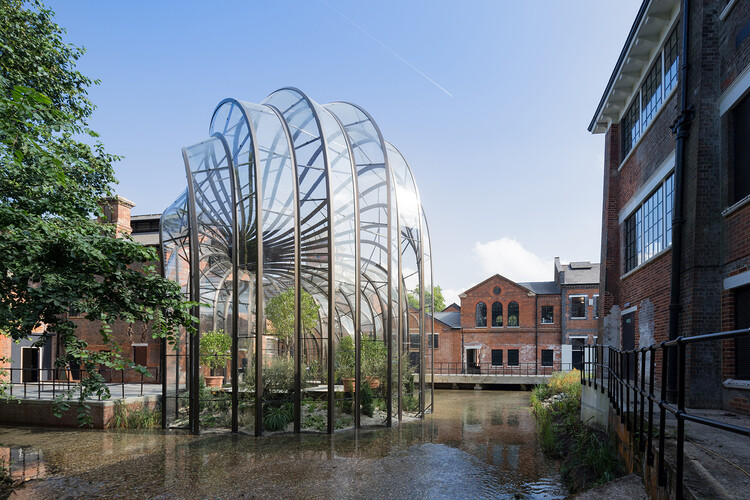
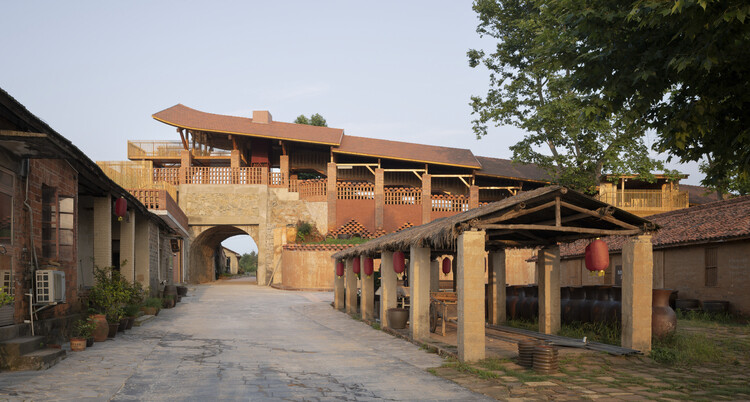
Unlike many industrial programs traditionally concealed behind neutral façades and hermetic spaces, contemporary distilleries often expose their production processes as an essential part of the architectural experience. The heat of the stills, the vapors of distillation, and the paths traced by raw materials cease to function merely as technical operations and instead assume spatial prominence.

Although they produce different spirits, the projects selected below share similar architectural challenges. All must organize industrial flows, control specific conditions of temperature, ventilation, and storage, and reconcile technical areas with public visitation routes. At the same time, each distillery develops particular responses to its territory, revealing different ways of relating production to landscape.

The Spirit of Space: 10 Distillery Projects Where Production Shapes Architecture - Image 1 of 4The Spirit of Space: 10 Distillery Projects Where Production Shapes Architecture - Image 2 of 4The Spirit of Space: 10 Distillery Projects Where Production Shapes Architecture - Image 3 of 4The Spirit of Space: 10 Distillery Projects Where Production Shapes Architecture - Image 4 of 4The Spirit of Space: 10 Distillery Projects Where Production Shapes Architecture - More Images+ 21

Case Study Houses and the Myth of a Universal Domestic Ideal

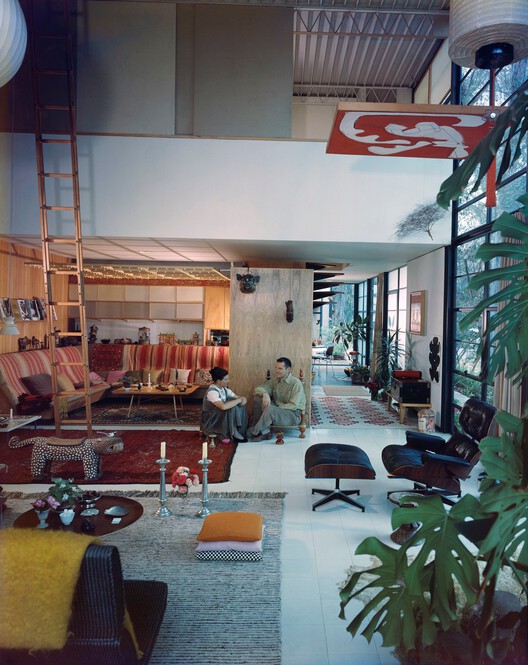
Sitting on low benches, casually talking, dressed in comfortable clothes, and surrounded by books, design objects, and works of art, Charles and Ray Eames appear in one of the most emblematic images of postwar modern domesticity in the United States. The house does not appear as an explicit architectural manifesto, but rather as an inhabited, appropriated, everyday space. Still, nearly everything in that scene functions as the condensation of a carefully constructed ideal: modern informality, the integration between architecture and daily life with the coexistence of industrial production. The photograph projects a way of living more than it represents a residence. And perhaps that was, from the very beginning, the central ambition behind the Case Study Houses.

Case Study Houses and the Myth of a Universal Domestic Ideal - Image 1 of 4Case Study Houses and the Myth of a Universal Domestic Ideal - Image 2 of 4Case Study Houses and the Myth of a Universal Domestic Ideal - Image 3 of 4Case Study Houses and the Myth of a Universal Domestic Ideal - Image 4 of 4Case Study Houses and the Myth of a Universal Domestic Ideal - More Images+ 16

Regenerative Salt Landscapes: An ArchDaily Student Project Awards Winner Rethinking Extraction in Argentina

Subscriber Access | 

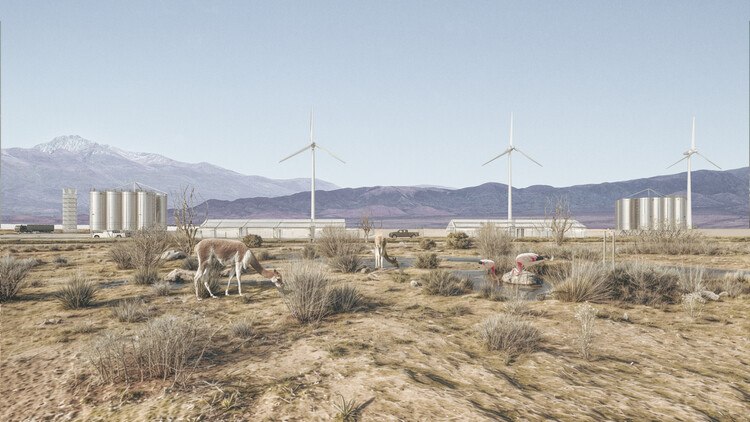
When people think of Argentina, they often picture landmarks like the Obelisk of Buenos Aires. Yet the country spans over 2,780,400 km², making it one of the largest in South America and home to a wide range of landscapes and realities that frequently go unnoticed. In fact, the province of Jujuy in northern Argentina lies within the Lithium Triangle: a high-altitude region shared with Bolivia and Chile that contains roughly 54% of the world's lithium reserves. Within this territory sits the Olaroz Salt Flat, a site where today two competing dynamics converge: the expansion of industrial lithium extraction and the preservation of ancestral culture and lands inhabited by Kolla and Atacama communities, creating a clash of high-capacity industrial extraction and traditional, low-impact agrarian practices.

In light of this problem, one of the winning teams of the ArchDaily Student Project Awards, made up of Ezequiel Lopez, Maria Victoria Echegaray, and Agustina Durandez, decided to look into the issue. This was done as part of their thesis project for the Bachelor's in Architecture program at the National University of Córdoba. Their work stems from an interest in engaging with territories that remain peripheral to architectural discourse, using the thesis as an opportunity for sustained, in-depth research. This allowed them to formulate informed design responses grounded in both territorial and socio-economic realities. Rejecting the binary between extraction and preservation, the project approaches the territory as a system where both can coexist through spatial and technical mediation.

Regenerative Salt Landscapes: An ArchDaily Student Project Awards Winner Rethinking Extraction in Argentina - Image 1 of 4Regenerative Salt Landscapes: An ArchDaily Student Project Awards Winner Rethinking Extraction in Argentina - Image 2 of 4Regenerative Salt Landscapes: An ArchDaily Student Project Awards Winner Rethinking Extraction in Argentina - Image 3 of 4Regenerative Salt Landscapes: An ArchDaily Student Project Awards Winner Rethinking Extraction in Argentina - Image 4 of 4Regenerative Salt Landscapes: An ArchDaily Student Project Awards Winner Rethinking Extraction in Argentina - More Images+ 13

Memory of the Earth: 4 Adaptive Reuse Projects Transforming Ceramic Factories

Subscriber Access | 

There is an ancestral gesture in shaping earth. Long before architecture was established as a discipline, clay was already being molded by hand and transformed by fire, turning raw matter into domestic utensils and cultural objects. Within the history of this craft, ceramic factories mark the transition from manual knowledge to serial production, expanding its scale without entirely severing its material origins. Scattered across different territories, these structures record the relationship between technique, landscape, and time. Over the decades, however, many of them lost their original function, replaced by more technological processes or absorbed by the urban development around them, entering an intermediate state between permanence and obsolescence.

Memory of the Earth: 4 Adaptive Reuse Projects Transforming Ceramic Factories - Image 1 of 4Memory of the Earth: 4 Adaptive Reuse Projects Transforming Ceramic Factories - Image 2 of 4Memory of the Earth: 4 Adaptive Reuse Projects Transforming Ceramic Factories - Image 3 of 4Memory of the Earth: 4 Adaptive Reuse Projects Transforming Ceramic Factories - Image 4 of 4Memory of the Earth: 4 Adaptive Reuse Projects Transforming Ceramic Factories - More Images+ 14

Unearthing the Ground: Architecture and the Politics of Oil

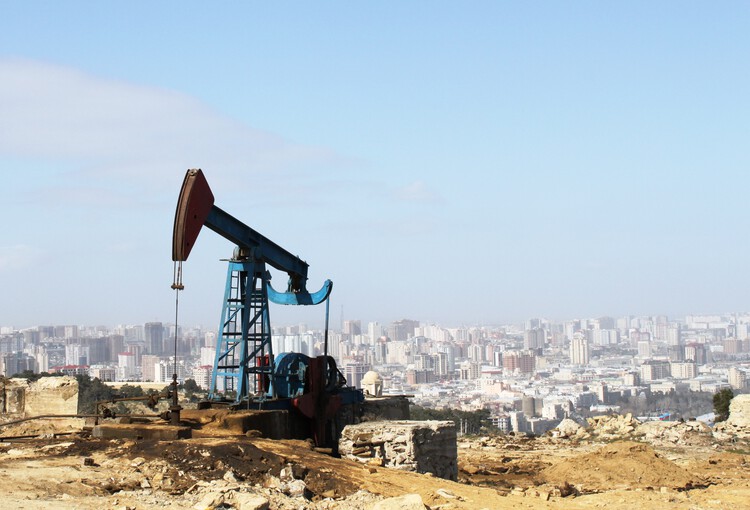
Beneath the ground lies a material that has quietly shaped the architecture of the modern world. Petroleum is rarely discussed within architectural discourse, yet the extraction, circulation, and consumption of oil have profoundly reorganized the spatial logic of territories. Pipelines, refineries, drilling platforms, ports, highways, and petrochemical complexes form a vast infrastructural landscape that sustains contemporary life, composing a dispersed architecture of energy.

Throughout the twentieth and twenty-first centuries, oil became the material foundation of industrial society. It fueled transportation, powered factories, and supported the growth of cities whose spatial organisation depended on continuous energy flows. Yet the infrastructures that enable these flows rarely become objects of architectural inquiry. Attention remains largely directed toward form, typology, or urban density, while the material systems that sustain these environments tend to remain displaced within the discipline.

Unearthing the Ground: Architecture and the Politics of Oil - Image 1 of 4Unearthing the Ground: Architecture and the Politics of Oil - Image 2 of 4Unearthing the Ground: Architecture and the Politics of Oil - Image 3 of 4Unearthing the Ground: Architecture and the Politics of Oil - Image 4 of 4Unearthing the Ground: Architecture and the Politics of Oil - More Images+ 15

Logistics Landscapes: The Architecture of the 24-Hour Supply Chain

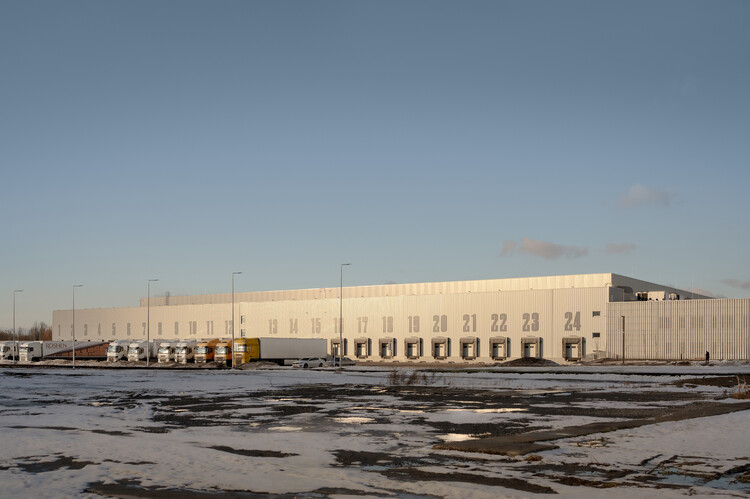
At the edge of most cities, beyond the ring roads and interchanges, a different kind of architecture is taking shape. It is not designed to be seen, visited, or remembered. It does not gather people; it moves things. Inside, thousands of parcels travel continuously, being sorted, lifted, scanned, and dispatched with minimal interruption. These buildings rarely enter architectural discourse, yet they are among the most consequential spaces of our time. The defining typology of the 21st century is increasingly the warehouse.

The scale of this transformation is difficult to grasp because it unfolds horizontally, across territories rather than skylines. Global warehouse space now exceeds tens of billions of square feet, expanding rapidly alongside the rise of e-commerce. During the COVID-19 pandemic, demand for logistics infrastructure accelerated by several years, compressing future growth into an already strained present. In India, the warehousing sector continues to grow at double-digit rates, reshaping peri-urban land into storage and distribution corridors. Logistics is no longer a background system; it is a territorial condition.

Logistics Landscapes: The Architecture of the 24-Hour Supply Chain - Image 1 of 4Logistics Landscapes: The Architecture of the 24-Hour Supply Chain - Image 2 of 4Logistics Landscapes: The Architecture of the 24-Hour Supply Chain - Image 3 of 4Logistics Landscapes: The Architecture of the 24-Hour Supply Chain - Image 4 of 4Logistics Landscapes: The Architecture of the 24-Hour Supply Chain - More Images+ 9

Settanta7 Advances Bosco della Musica Urban Regeneration Project in Milan

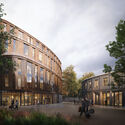
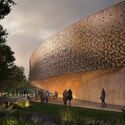
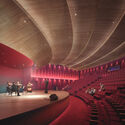
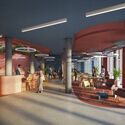
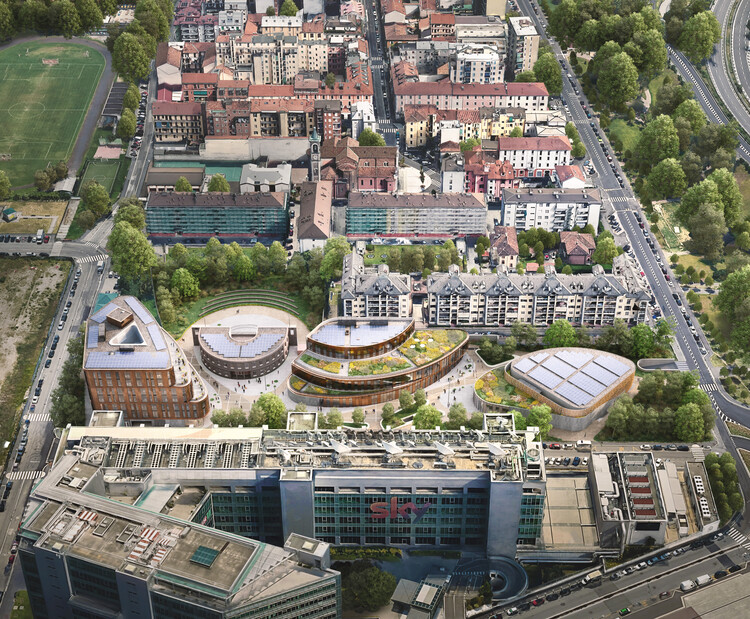
The architecture firm Settanta7 has begun the construction of Bosco della Musica, a new campus for the Conservatorio Giuseppe Verdi in Milan. The site is located in Rogoredo, a former industrial area in the southeastern part of the city, currently under scrutiny due to incidents of violence and public safety concerns. The area is therefore the focus of development initiatives by the Italian Ministry of Transport and Infrastructure, including the competition for this project, which was awarded to Settanta7 in 2022. The firm is responsible for the design and is overseeing the coordination of all disciplines as lead consultant for the construction of the entire project: a broader urban regeneration program that includes the redevelopment of the 17,400 sqm site and the adaptive reuse of the "Ex Chimici" industrial building, alongside the construction of four new buildings, three dedicated to educational activities and one intended for student housing.

Settanta7 Advances Bosco della Musica Urban Regeneration Project in Milan - Image 1 of 4Settanta7 Advances Bosco della Musica Urban Regeneration Project in Milan - Image 2 of 4Settanta7 Advances Bosco della Musica Urban Regeneration Project in Milan - Image 3 of 4Settanta7 Advances Bosco della Musica Urban Regeneration Project in Milan - Image 4 of 4Settanta7 Advances Bosco della Musica Urban Regeneration Project in Milan - More Images+ 1

Making Infrastructure Visible: When Systems Become Architecture

For centuries, large-scale infrastructure operated in the background. Ports, power plants, and energy facilities were positioned at the edges of cities, designed primarily for efficiency, and rarely considered part of civic life. Their function was indispensable, yet their architectural presence remained secondary. These structures supported urban growth and global exchange while maintaining a spatial distance from everyday urban experience.

Today, this condition is gradually shifting. As global trade intensifies and energy systems expand in complexity, the buildings that coordinate and house these networks are becoming more visible within the urban landscape. Rather than remaining neutral containers for technical operations, they begin to assert spatial identity. Infrastructure is no longer only operational; it is increasingly institutional, symbolic, and urban. The architecture that supports these systems now participates in how cities project themselves.

Making Infrastructure Visible: When Systems Become Architecture - Image 1 of 4Making Infrastructure Visible: When Systems Become Architecture - Image 2 of 4Making Infrastructure Visible: When Systems Become Architecture - Image 3 of 4Making Infrastructure Visible: When Systems Become Architecture - Image 4 of 4Making Infrastructure Visible: When Systems Become Architecture - More Images+ 6

SCAPE and BIG Unveil Final Plans for Manresa Wilds on Former Power Plant Site in Norwalk, US

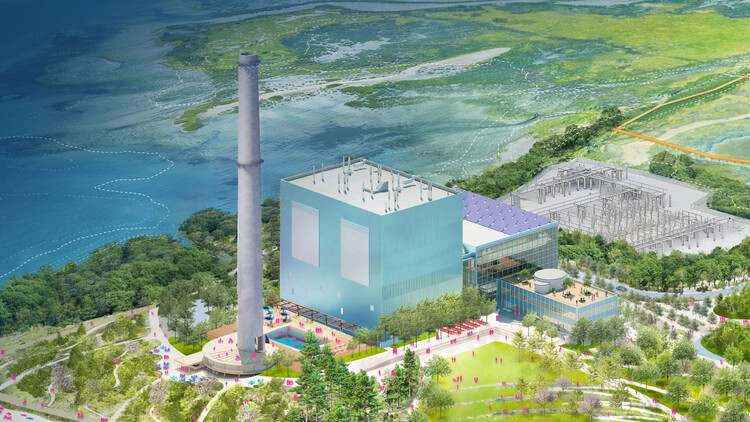
Manresa Island Corp. has unveiled the final vision for Manresa Wilds, a 125-acre waterfront park planned on a former power plant peninsula along Long Island Sound in Norwalk, United States. Developed in collaboration with landscape architecture firm SCAPE and architecture studio BIG, the proposal outlines the transformation of a polluted and long-inaccessible industrial shoreline into a publicly accessible coastal landscape. Following the receipt of a stewardship permit from Connecticut's Department of Energy and Environmental Protection in December 2025, the project will move forward in phases, beginning with the opening of the 28-acre Northern Forest in spring 2027. Subsequent phases, extending into the early 2030s, will deliver the majority of the restored landscape and the adaptive reuse of the 1960s-era power plant as a year-round civic and educational hub, opening nearly two miles of coastline that have been closed to the public for decades.

SCAPE and BIG Unveil Final Plans for Manresa Wilds on Former Power Plant Site in Norwalk, US - Image 1 of 4SCAPE and BIG Unveil Final Plans for Manresa Wilds on Former Power Plant Site in Norwalk, US - Image 2 of 4SCAPE and BIG Unveil Final Plans for Manresa Wilds on Former Power Plant Site in Norwalk, US - Image 3 of 4SCAPE and BIG Unveil Final Plans for Manresa Wilds on Former Power Plant Site in Norwalk, US - Image 4 of 4SCAPE and BIG Unveil Final Plans for Manresa Wilds on Former Power Plant Site in Norwalk, US - More Images+ 21

Diriyah Contemporary Art Biennale 2026 Opens at JAX District in Saudi Arabia

The third edition of the Diriyah Contemporary Art Biennale opened on January 30, 2026, and will remain on view through May 2, 2026, in Riyadh, Saudi Arabia. Organized by the Diriyah Biennale Foundation, the Biennale takes place at JAX District, a former industrial area in Diriyah near the UNESCO World Heritage Site of At-Turaif. Titled "في الحِلّ والترحال" / In Interludes and Transitions, the exhibition is led by Co-Artistic Directors Nora Razian and Sabih Ahmed, while Milan-based architect Sammy Zarka contributed as the Associate Architect and Exhibition Designer. The exhibition scenography is designed by Formafantasma, and the event brings together more than 65 artists from over 37 countries, including more than 25 newly commissioned works.

Diriyah Contemporary Art Biennale 2026 Opens at JAX District in Saudi Arabia - Image 1 of 4Diriyah Contemporary Art Biennale 2026 Opens at JAX District in Saudi Arabia - Image 2 of 4Diriyah Contemporary Art Biennale 2026 Opens at JAX District in Saudi Arabia - Image 3 of 4Diriyah Contemporary Art Biennale 2026 Opens at JAX District in Saudi Arabia - Image 9 of 4Diriyah Contemporary Art Biennale 2026 Opens at JAX District in Saudi Arabia - More Images+ 11

From Factories to Futures: Adaptive Reuse in the Post-Industrial City

In cities across the world, the relics of industrial production have become the laboratories of a new urban condition. Warehouses, power plants, and shipyards, once symbols of labor and progress, now stand as vast empty shells, waiting to be reimagined. Rather than erasing these structures, architects are finding creative ways to adapt them to contemporary needs, transforming spaces of manufacture into spaces of culture, education, and community life.

This shift reflects a broader change in architectural priorities: building less and reusing more. The practice of adaptive reuse responds simultaneously to environmental urgency and to the need for cultural continuity in urban environments.

From Factories to Futures: Adaptive Reuse in the Post-Industrial City - Image 1 of 4From Factories to Futures: Adaptive Reuse in the Post-Industrial City - Image 2 of 4From Factories to Futures: Adaptive Reuse in the Post-Industrial City - Image 3 of 4From Factories to Futures: Adaptive Reuse in the Post-Industrial City - Image 4 of 4From Factories to Futures: Adaptive Reuse in the Post-Industrial City - More Images+ 17

From Albania to Iran: 7 Unbuilt Infrastructure Projects Reimagining Mobility, Ecology, and Connection

Subscriber Access | 

Infrastructure has long defined the backbone of cities by linking people, landscapes, and economies through systems that often go unnoticed until they fail. Today, as global challenges demand more adaptive and human-centered responses, architects are rethinking what infrastructure can be: not just a framework for movement and utility, but a catalyst for ecological restoration, cultural continuity, and civic imagination. The following unbuilt projects, submitted by the ArchDaily community, explore this expanded role of infrastructure, where airports, bridges, industrial parks, and pedestrian networks become architectural expressions of connection and care.

From Albania to Iran: 7 Unbuilt Infrastructure Projects Reimagining Mobility, Ecology, and Connection - Image 6 of 4From Albania to Iran: 7 Unbuilt Infrastructure Projects Reimagining Mobility, Ecology, and Connection - Image 10 of 4From Albania to Iran: 7 Unbuilt Infrastructure Projects Reimagining Mobility, Ecology, and Connection - Image 15 of 4From Albania to Iran: 7 Unbuilt Infrastructure Projects Reimagining Mobility, Ecology, and Connection - Image 24 of 4From Albania to Iran: 7 Unbuilt Infrastructure Projects Reimagining Mobility, Ecology, and Connection - More Images+ 36

The Industrial Skyline: Transforming China's Decommissioned Factories into Cultural Venues

Across China, a legacy of vast industrial structures stands decommissioned, as a direct result of the nation's economic shift to different forms of industry. These buildings are defined by their colossal height and deep structural capacity. Today, they present an architectural challenge for contemporary urban renewal and a new topic for heritage preservation. As they become absorbed by growing urban developments, architects are tasked with translating them into functional, public-facing assets. Thus, recent interventions are capitalizing on defining elements such as furnaces and chimneys to help reposition these massive complexes as critical urban landmarks.

The Industrial Skyline: Transforming China's Decommissioned Factories into Cultural Venues - Image 1 of 4The Industrial Skyline: Transforming China's Decommissioned Factories into Cultural Venues - Image 2 of 4The Industrial Skyline: Transforming China's Decommissioned Factories into Cultural Venues - Image 3 of 4The Industrial Skyline: Transforming China's Decommissioned Factories into Cultural Venues - Image 4 of 4The Industrial Skyline: Transforming China's Decommissioned Factories into Cultural Venues - More Images+ 5

Why Sit by the Dock of the Bay? Designing Thresholds to the Water

Subscriber Access | 

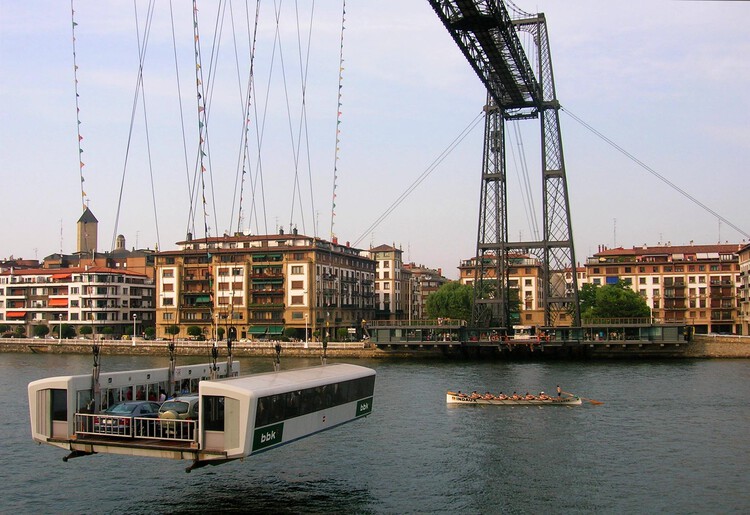
Boat docks and harbors are liminal spaces where the shore marks the meeting of land and water, and serve as a space for the convergence of culture, industry, and community. For those who work at sea, from commercial fishers to marine freight operators, the dock is a threshold between labor and rest, between oceanic uncertainty and terrestrial stability. For others, the dock serves as a gateway to recreation, sport, and adventure, accommodating everything from rowing clubs to family sailing trips. And for many who never board a vessel, the dock offers a powerful connection to the marine environment where one can pause, observe, and engage with the rhythmic tides.

Why Sit by the Dock of the Bay? Designing Thresholds to the Water - Image 1 of 4Why Sit by the Dock of the Bay? Designing Thresholds to the Water - Image 2 of 4Why Sit by the Dock of the Bay? Designing Thresholds to the Water - Image 3 of 4Why Sit by the Dock of the Bay? Designing Thresholds to the Water - Image 4 of 4Why Sit by the Dock of the Bay? Designing Thresholds to the Water - More Images+ 48

Evolution of Data Center Design: Modular Construction, Sustainable Architecture and Eclectic Form

As the AI fervor continues to reshape how people see the world, 2025 looms as yet another year in the march toward technological advancement. While some worry about the dominance of technology in society, architects are shifting their attention to the foundations of a digital future: data centers. The design of data centers challenges designers to reconcile the demands of technological functionality with the principles of architectural excellence. As the dependence on cloud computing, IoT ecosystems, and big data analytics deepens, data center architecture demands more attention. As data consumption skyrockets, data center consumption rates match the demand. These structures were once relegated to nondescript industrial zones, but are now becoming integral components of urban and suburban environments. While some community members are upset about the encroachment of data centers in their localities, others see them as indicators of economic development.

Evolution of Data Center Design: Modular Construction, Sustainable Architecture and Eclectic Form - Image 1 of 4Evolution of Data Center Design: Modular Construction, Sustainable Architecture and Eclectic Form - Image 2 of 4Evolution of Data Center Design: Modular Construction, Sustainable Architecture and Eclectic Form - Image 3 of 4Evolution of Data Center Design: Modular Construction, Sustainable Architecture and Eclectic Form - Image 4 of 4Evolution of Data Center Design: Modular Construction, Sustainable Architecture and Eclectic Form - More Images+ 4