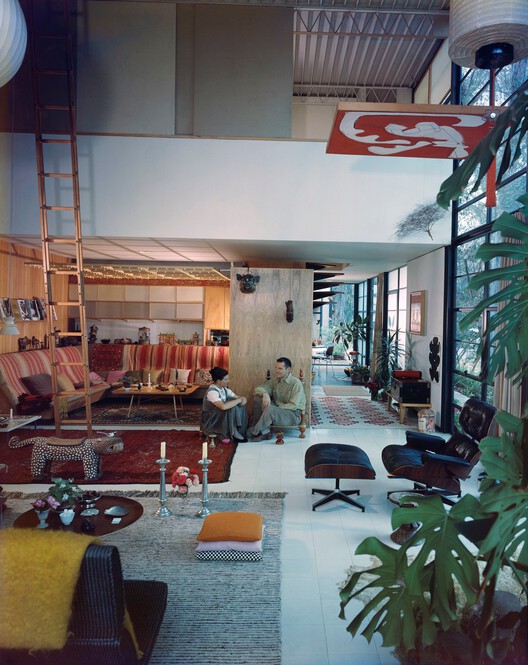
Sitting on low benches, casually talking, dressed in comfortable clothes, and surrounded by books, design objects, and works of art, Charles and Ray Eames appear in one of the most emblematic images of postwar modern domesticity in the United States. The house does not appear as an explicit architectural manifesto, but rather as an inhabited, appropriated, everyday space. Still, nearly everything in that scene functions as the condensation of a carefully constructed ideal: modern informality, the integration between architecture and daily life with the coexistence of industrial production. The photograph projects a way of living more than it represents a residence. And perhaps that was, from the very beginning, the central ambition behind the Case Study Houses.
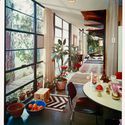
Launched in 1945 by Arts & Architecture magazine under the direction of John Entenza, the program brought together architects such as Charles and Ray Eames, Pierre Koenig, Craig Ellwood, Eero Saarinen, and Richard Neutra around the ambition of developing residential prototypes for postwar America. The initiative emerged amid growing concerns about the housing shortage expected with the return of American soldiers after World War II, when the country faced pressure to provide affordable and rapidly deployable housing for a growing middle class. Functioning as a kind of laboratory to investigate how architecture could absorb the technological and industrial advances developed during the war, it proposed houses that were efficient, affordable, and quick to build.
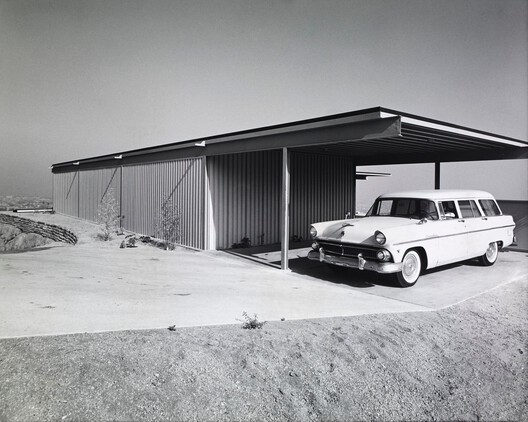
Made possible through partnerships with manufacturers and the availability of mass-produced components in the postwar context, the residences employed lightweight steel structures, standardized components, expansive glass surfaces, prefabricated panels, and modular systems originally associated with the aerospace and military industries. Entenza also developed what he called "Merit Specified Arrangements," agreements through which manufacturers supplied materials and building systems at significantly reduced costs in exchange for visibility in the magazine itself, where products, components, and companies were prominently featured alongside the houses and in the publication. Between 1945 and 1966, thirty-six proposals were developed, some unbuilt, with most constructed in California, especially in and around Los Angeles.
Related Article
How Did Materials Shape the Case Study Houses?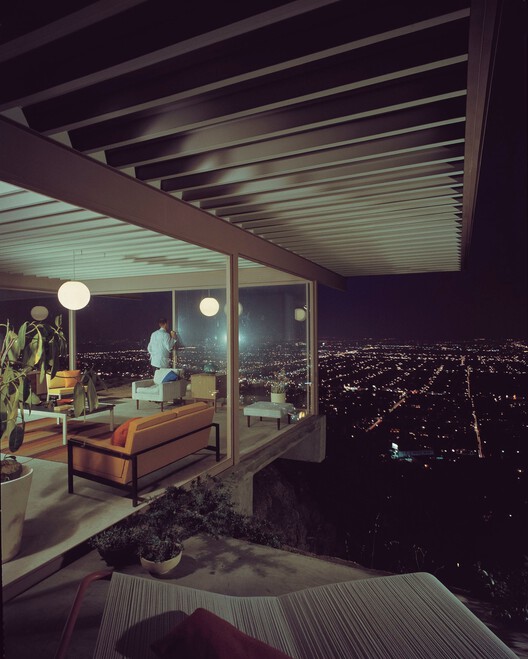
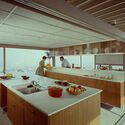
The architects explored open floor plans, blurred boundaries between interior and exterior, reduced partitions, flexible living arrangements, and new ways of inhabiting domestic space. Kitchens became integrated into social areas, while new household appliances promised to simplify domestic labor and modernize everyday life for the American housewife. Living spaces grew more fluid, and expansive glass enclosures connected everyday life to the surrounding landscape. There was also an explicit attempt to respond to the social transformations of the postwar period, including suburban expansion, the growth of the American middle class, increased industrial production, and the emergence of new family and consumption patterns. Published monthly in Arts & Architecture and widely photographed by figures such as Julius Shulman, the houses circulated internationally as exemplary representations of modern American architecture. Several of the completed houses were also opened to public visitation, attracting thousands of visitors eager to experience these prototypes of modern living firsthand. Together, the photographs, publications, and public tours helped transform the houses into cultural symbols of a desirable and seemingly universal modernity.
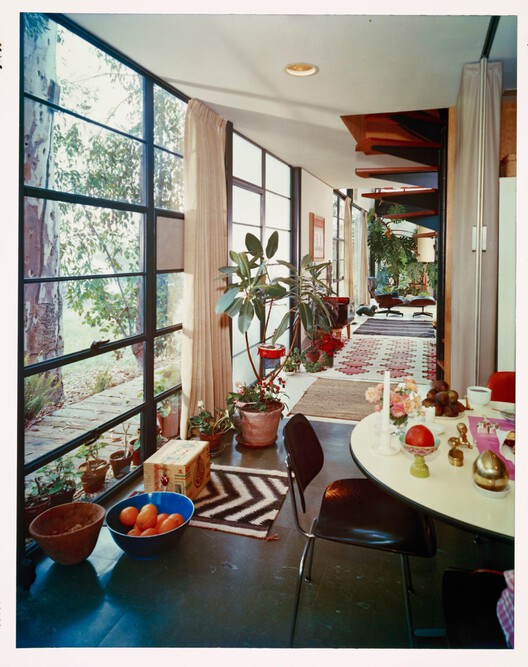
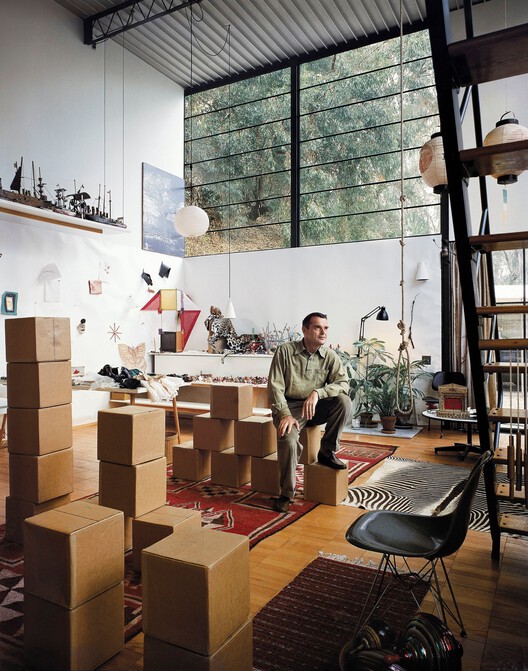
Eames House (Case Study House #8), completed in 1949 by Charles and Ray Eames in Pacific Palisades, was conceived as both the couple's residence and studio, occupying a narrow sloping site facing the Pacific Ocean. Nestled among eucalyptus trees and preserving much of the existing vegetation, the house is organized into two parallel rectangular volumes, one dedicated to living and the other to studio work, separated by a small courtyard. The exposed steel structure, composed of standardized industrial profiles, supports a modular composition filled with translucent panels, transparent glass, and colorful elements. Despite its industrial components, the house conveys a warm domestic atmosphere shaped by personal objects, textiles, books, plants, and collections accumulated over time, revealing a balance between structural rationality and everyday appropriation.
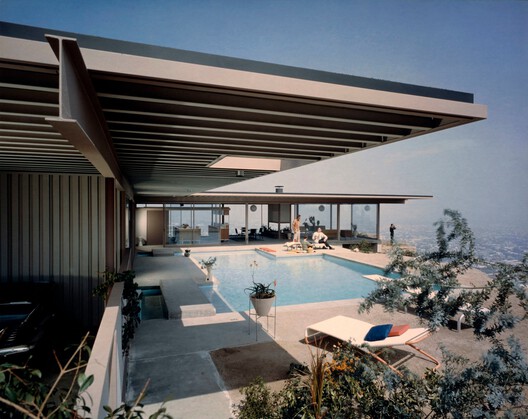
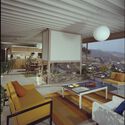
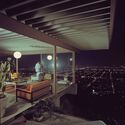
The Stahl House (Case Study House #22), designed by Pierre Koenig and completed in 1959, represents another emblematic moment within the program. Built on a steep site in the Hollywood Hills, the residence employs an extremely lightweight steel structure to create an L-shaped plan projecting toward panoramic views of the city. Extensive glass enclosures occupy nearly the entire facade facing the landscape, dissolving the boundaries between interior and exterior while transforming the illuminated city into part of the domestic environment. The swimming pool positioned along the edge of the site reinforces the sense of visual continuity and structural lightness. Internally, the Stahl House is relatively compact and rational. Social spaces are concentrated along the most open edge of the plan, while the bedrooms occupy the more private wing. The flat steel roof and exposed structural profiles reinforce the project's constructive clarity, emphasizing the influence of industrial architecture on residential language during the period.
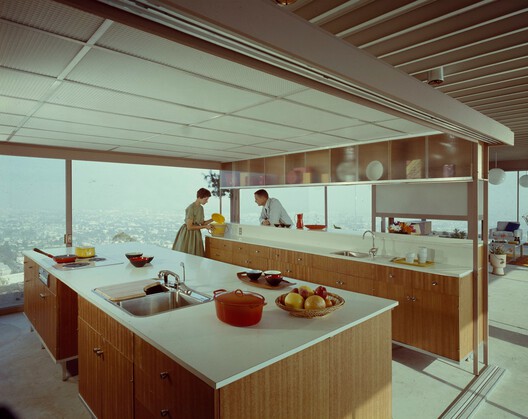
The apparent universality of these solutions concealed a strong dependence on the specific conditions of postwar California. Suburban expansion, abundant land availability, the growth of the aerospace industry, and access to mass-produced industrial materials created the ideal environment for the development of these residences. Many of the systems employed were directly derived from industrial and military technologies adapted for domestic architecture, revealing how the visual lightness of these projects paradoxically depended on a highly specialized technical infrastructure.
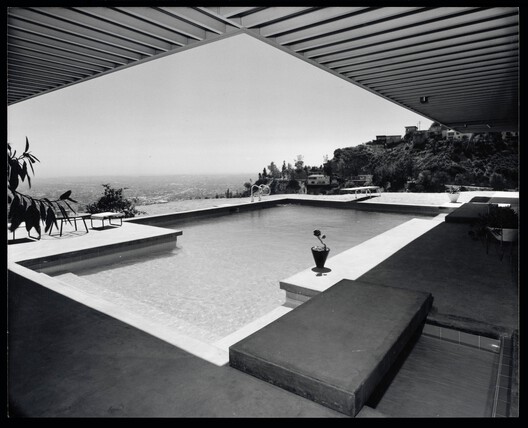
Another important aspect was the mild and dry climate of the Los Angeles region, which allowed for expansive glass surfaces and fluid relationships between interior and exterior without the thermal challenges found in tropical, desert, or extremely cold climates. Large suburban lots favored open horizontal layouts, something far less viable in denser or economically constrained urban contexts. Even the informality of the interiors reflected cultural patterns specific to the American postwar family.
In many parts of Latin America, for example, adapting modernist principles required significant transformations. Reinforced concrete often replaced industrialized steel due to its lower cost, wider availability, and compatibility with local construction practices. Shading devices such as deep overhangs, perforated screens, and ventilated facades became essential responses to tropical climates, where extensive glass surfaces could generate severe thermal discomfort. Local materials, including brick, ceramic blocks, stone, and tropical hardwoods also assumed a more central role.
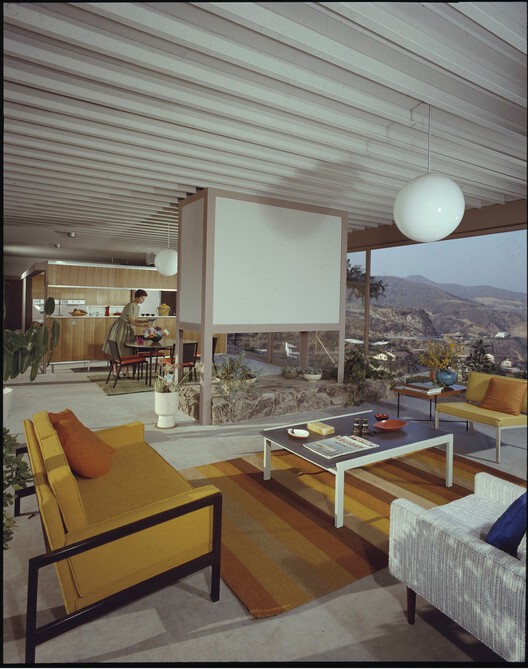
Perhaps this is precisely where one of the main limitations of the Case Study Houses resides: despite being presented as reproducible prototypes, few effectively became models for mass housing. Although the program promoted industrial rationalization and standardization as pathways toward scalable housing production, the promise of true replicability was never fully achieved. Many of the houses remained highly customized architectural experiments, dependent on privileged sites, specialized labor, and complex industrial supply chains that proved difficult to reproduce economically on a large scale. Many ultimately functioned less as scalable construction systems and more as aspirational images of modern living. Carefully composed photographs transformed these residences into cultural icons, often detached from the material, economic, and territorial conditions that made them possible.
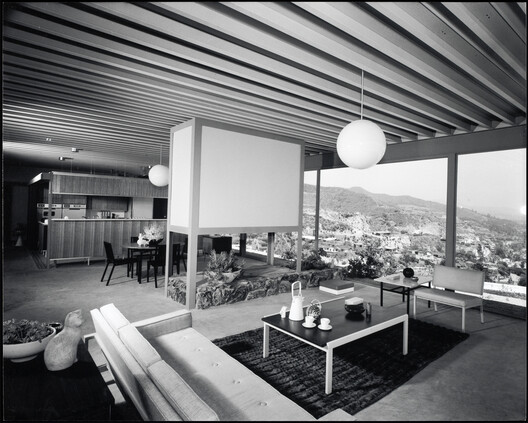
This does not diminish the architectural importance of the program. The Case Study Houses undoubtedly redefined relationships between industry and architecture, explored new forms of spatial flexibility, and deeply influenced twentieth-century domestic imaginaries. Yet perhaps their most significant legacy lies not in the universality of the solutions they proposed, but in revealing how architecture always depends on specific infrastructures, climates, economies, and cultural conditions, even when presented as a global language. These houses can be understood as highly localized responses that, through photography, publishing, and media circulation, came to embody universal promises of modern life.
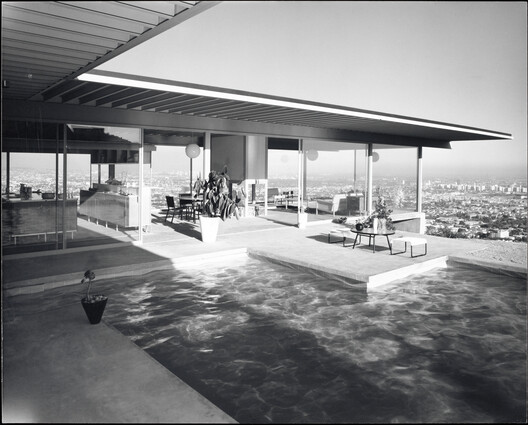
The program also participated in a broader form of American cultural soft power emerging from postwar United States of America. Long before social media or contemporary digital culture, their images circulated internationally alongside Hollywood films, advertising, consumer products, and popular music, helping disseminate an aspirational vision of modern domesticity: transparent, lightweight, technologically advanced, informal, and deeply Californian. Perhaps this is why the reference to "Californication" feels unexpectedly relevant here. In the Red Hot Chili Peppers' 1999 song, California appears as a territory capable of transforming lifestyles, desires, and fantasies into globally consumable images. Decades earlier, the Case Study Houses were already participating in this same symbolic machinery, helping transform a highly specific regional condition into an internationally desirable model of modern living.
This article is part of the ArchDaily Topic: 20th Century Design in Flux: A Global Reinterpretation of Architectural History. Every month we explore a topic in-depth through articles, interviews, news, and architecture projects. We invite you to learn more about our ArchDaily Topics. And, as always, at ArchDaily we welcome the contributions of our readers; if you want to submit an article or project, contact us.


