1. ArchDaily
  2. Logistics

Logistics: The Latest Architecture and News

"The Frustration Became a Design Brief": Why an Architect Left 20 Years of Practice to Map the World

 | Sponsored Content

Karl van Es spent twenty years as a practicing architect before walking away to solve a problem every architect faces: the resources to travel like a professional simply do not exist. Mainstream guidebooks and travel apps rarely highlight the buildings that truly matter to the architectural community. Åvontuura was born from that frustration — an independent publisher of illustrated architecture guides created by an architect, for architects. Its latest release, Madrid, maps 70 of the city's most significant buildings, representing a mission to bridge the gap between architectural interest and travel logistics.

Mapping the Technosphere: Architecture as an Interface Between Systems and Territories

Architecture can no longer be conceived as an isolated object, detached from the technical networks that sustain contemporary life — a condition that calls for new readings and approaches. It is within this context that, in March, ArchDaily’s monthly theme focused on The Technosphere, a topic both broad and inherently complex. Drawing on the concept of the technosphere, coined by geoscientist Peter Haff to describe the totality of human-made artifacts, a landscape emerges in which contemporary life is deeply intertwined with machines, data, and energy networks.

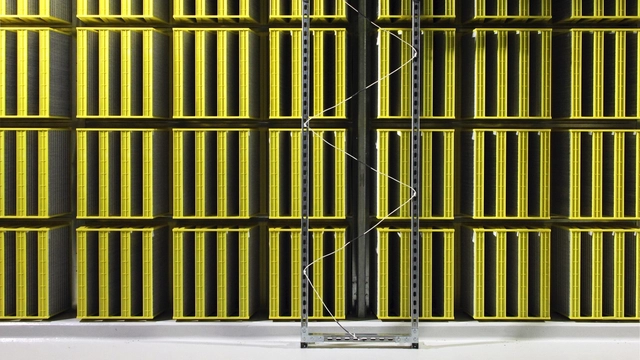
Mapping the Technosphere: Architecture as an Interface Between Systems and Territories - Image 1 of 4Mapping the Technosphere: Architecture as an Interface Between Systems and Territories - Image 2 of 4Mapping the Technosphere: Architecture as an Interface Between Systems and Territories - Image 3 of 4Mapping the Technosphere: Architecture as an Interface Between Systems and Territories - Image 4 of 4Mapping the Technosphere: Architecture as an Interface Between Systems and Territories - More Images+ 11

Logistics Landscapes: The Architecture of the 24-Hour Supply Chain

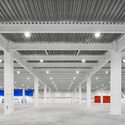
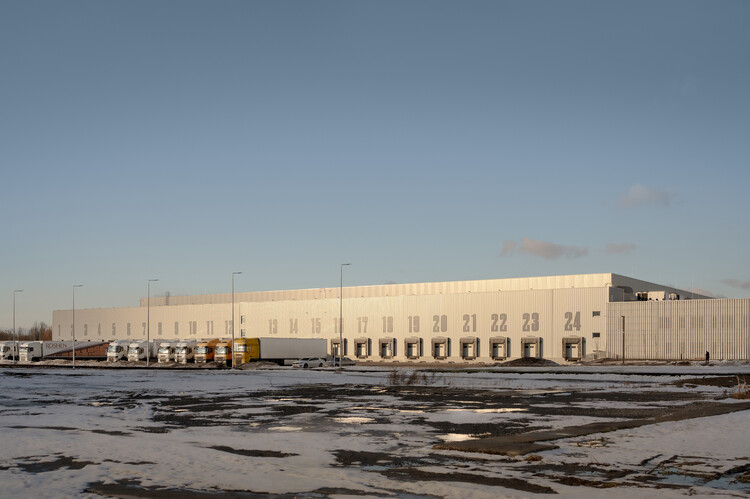
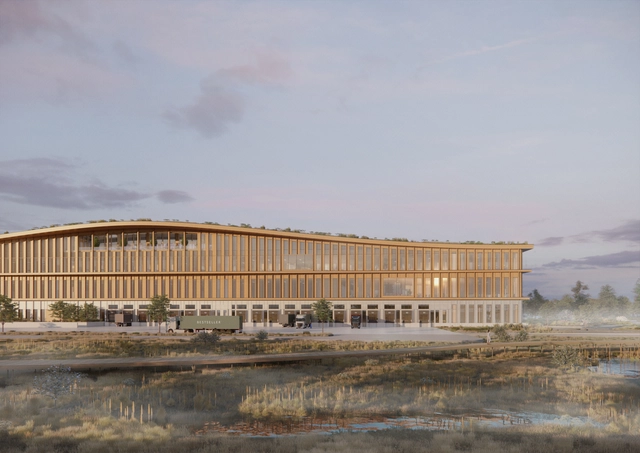
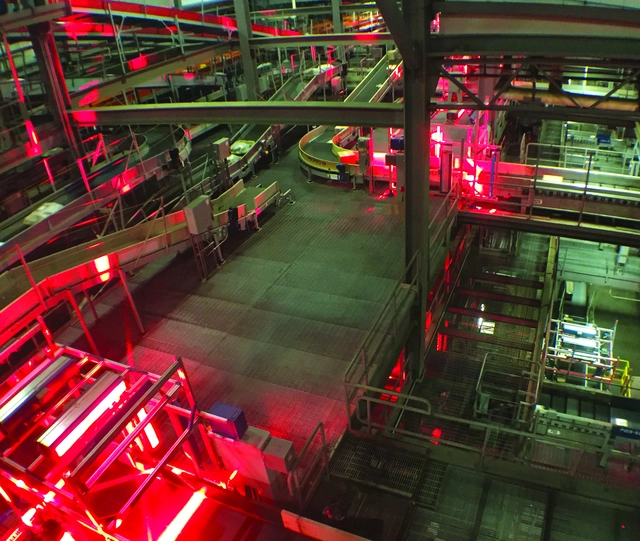
At the edge of most cities, beyond the ring roads and interchanges, a different kind of architecture is taking shape. It is not designed to be seen, visited, or remembered. It does not gather people; it moves things. Inside, thousands of parcels travel continuously, being sorted, lifted, scanned, and dispatched with minimal interruption. These buildings rarely enter architectural discourse, yet they are among the most consequential spaces of our time. The defining typology of the 21st century is increasingly the warehouse.
The scale of this transformation is difficult to grasp because it unfolds horizontally, across territories rather than skylines. Global warehouse space now exceeds tens of billions of square feet, expanding rapidly alongside the rise of e-commerce. During the COVID-19 pandemic, demand for logistics infrastructure accelerated by several years, compressing future growth into an already strained present. In India, the warehousing sector continues to grow at double-digit rates, reshaping peri-urban land into storage and distribution corridors. Logistics is no longer a background system; it is a territorial condition.

Logistics Landscapes: The Architecture of the 24-Hour Supply Chain - Image 1 of 4Logistics Landscapes: The Architecture of the 24-Hour Supply Chain - Image 2 of 4Logistics Landscapes: The Architecture of the 24-Hour Supply Chain - Image 3 of 4Logistics Landscapes: The Architecture of the 24-Hour Supply Chain - Image 4 of 4Logistics Landscapes: The Architecture of the 24-Hour Supply Chain - More Images+ 9

Carlo Ratti Associati Wins Competition to Design a Logistics Hub as Social Infrastructure in Alessandria, Italy

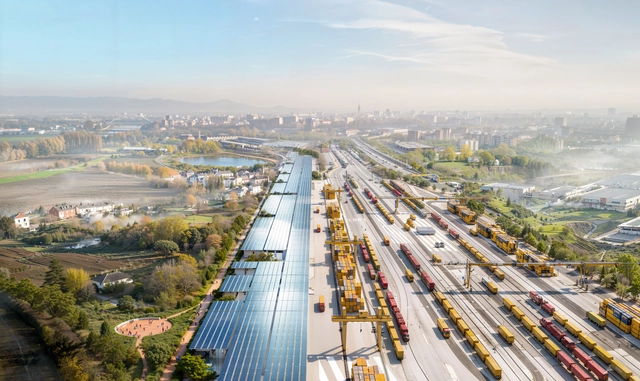
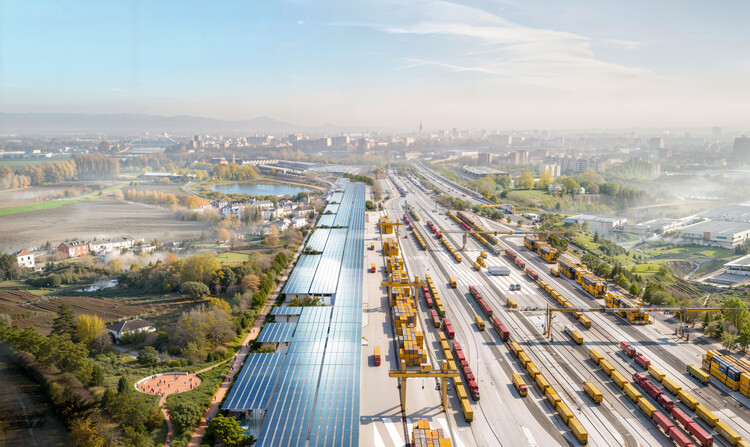
CRA-Carlo Ratti Associati, in collaboration with The Blossom Avenue Partners, has been announced as the winner of the international competition for the urban and architectural design of X-Change, a major multimodal logistics hub located on the site of a former railway yard in Alessandria, Italy. The project reimagines a traditionally introverted typology, rail distribution infrastructure by integrating logistics with energy production, ecological regeneration, and public life. Conceived as one of Southern Europe's largest intermodal hubs, X-Change is set to support Alessandria's evolving role as a backport to Genoa, leveraging future fast rail freight connections.

Carlo Ratti Associati Wins Competition to Design a Logistics Hub as Social Infrastructure in Alessandria, Italy - Image 1 of 4Carlo Ratti Associati Wins Competition to Design a Logistics Hub as Social Infrastructure in Alessandria, Italy - Image 2 of 4Carlo Ratti Associati Wins Competition to Design a Logistics Hub as Social Infrastructure in Alessandria, Italy - Image 3 of 4Carlo Ratti Associati Wins Competition to Design a Logistics Hub as Social Infrastructure in Alessandria, Italy - Featured ImageCarlo Ratti Associati Wins Competition to Design a Logistics Hub as Social Infrastructure in Alessandria, Italy - More Images

Architecture of the Cloud: The Data Center Footprint

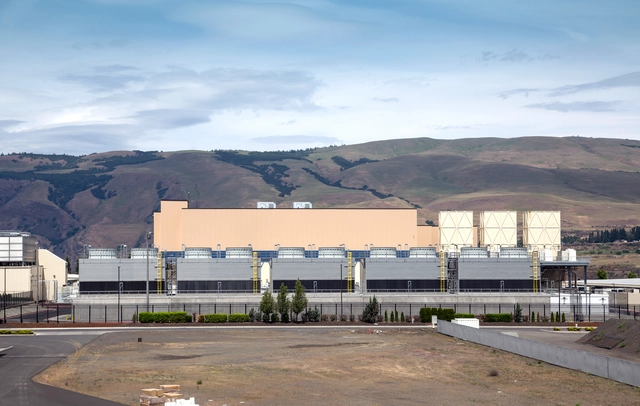
In the contemporary context, as has been said a multitude of times, we seem to be living in what is classified as a digital age. A worldwide pandemic has enhanced the popularity of digital avenues to communicate — such as Microsoft Teams and Zoom, and the multiplatform messaging app WhatsApp is reported to have over 2 billion active users. From an environmental standpoint, we see the migration of businesses to the “cloud” heralded as a sustainability win. In simplified terms and to pick out a specific example, companies can refrain from storing data on external hard drives, opting instead to store their data on online file hosting services.
Architecture of the Cloud: The Data Center Footprint - Image 1 of 4Architecture of the Cloud: The Data Center Footprint - Image 2 of 4Architecture of the Cloud: The Data Center Footprint - Image 3 of 4Architecture of the Cloud: The Data Center Footprint - Image 4 of 4Architecture of the Cloud: The Data Center Footprint - More Images+ 3

MAD Architects Reveals Design for the Mobility and Logistic Hub, MOLO, a Gateway Complex near Milan, Italy

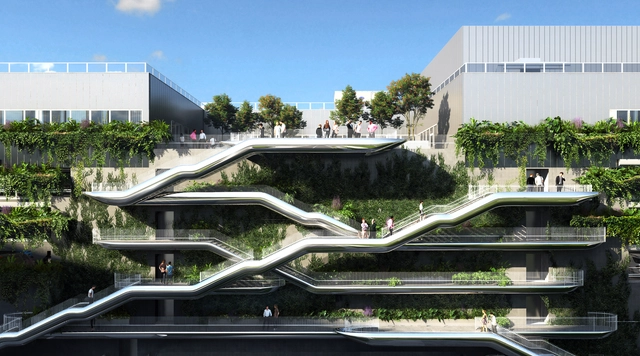
MAD Architects led by Ma Yansong, unveiled renderings of the MoLo, short for Mobility and Logistic hub, a new gateway situated along the western boundary of the Milano Innovation District (MIND). In collaboration with Architect Andrea Nonni, Open Project, and Progeca, the 28.5 meters high complex brings together several facilities across 68,700sqm of surfaces. Designed as an integration of nature and architecture, the MoLo “performs as a welcoming entrance and education space for issues related to mobility in which visitors can drop off their cars to explore the district on foot and see innovative transportation technology in person”.

MAD Architects Reveals Design for the Mobility and Logistic Hub, MOLO, a Gateway Complex near Milan, Italy - Image 1 of 4MAD Architects Reveals Design for the Mobility and Logistic Hub, MOLO, a Gateway Complex near Milan, Italy - Image 2 of 4MAD Architects Reveals Design for the Mobility and Logistic Hub, MOLO, a Gateway Complex near Milan, Italy - Image 3 of 4MAD Architects Reveals Design for the Mobility and Logistic Hub, MOLO, a Gateway Complex near Milan, Italy - Image 4 of 4MAD Architects Reveals Design for the Mobility and Logistic Hub, MOLO, a Gateway Complex near Milan, Italy - More Images