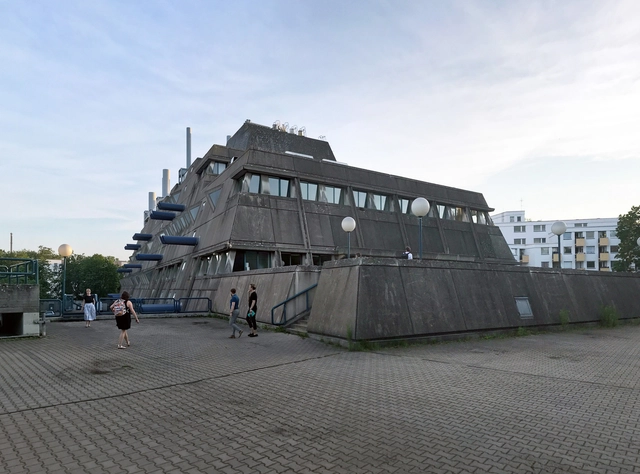
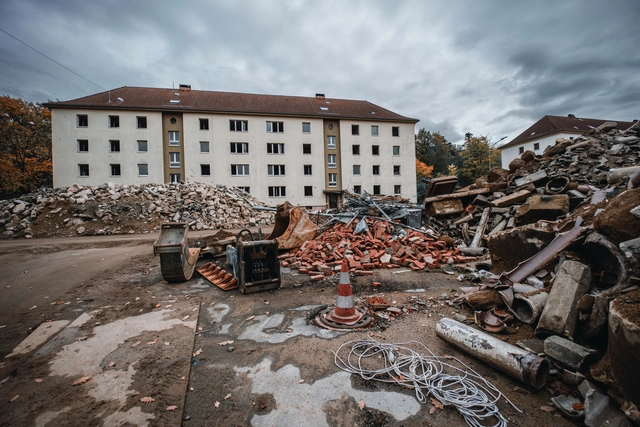
The former animal laboratories of the Charité in Lichterfelde, also known as the Mäusebunker building, have now been placed under monument protection, saving it from the threat of demolition that has been slated since 2010. The brutalist structure was designed by architects Gerd and Magdalena Hänska and built from 1971, and put into operation in 1982. While its strong image, combined with its function as a laboratory for animal tests, resulted in the general public’s distaste for it, the Brutalist building slowly gained acceptance and even a cult status among brutalist fans.
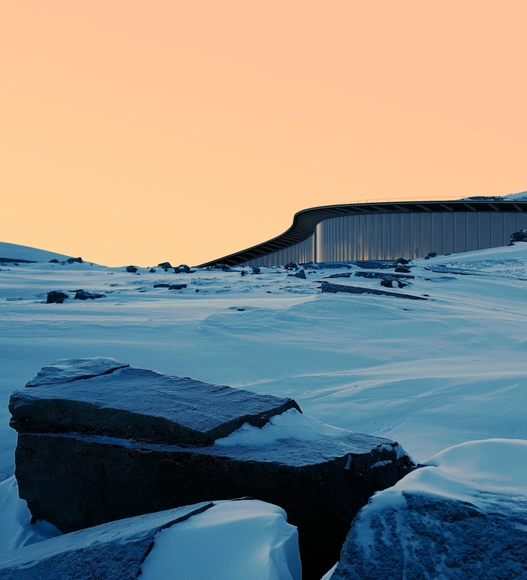
Following an international competition, Dorte Mandrup has been selected to design the new Inuit Heritage Centre in the territory of Nunavut in northern Canada. Designed together with Architect of Record Guy Architects, LEES+Associates, Adjeleian Allen Rubeli, EXP, Pageau Morel, Altus Group, and indigenous consultants Kirt Ejesiak and Alexander Flaherty, the new centre aims to become a sign of cultural conciliation and a symbol of the continuation of Inuit practices, traditions and values. By offering a place where Inuit can reconnect with their collective past through objects, stories, and activities, the centre will promote greater awareness of Inuit culture. The project is expected to be completed by 2027.
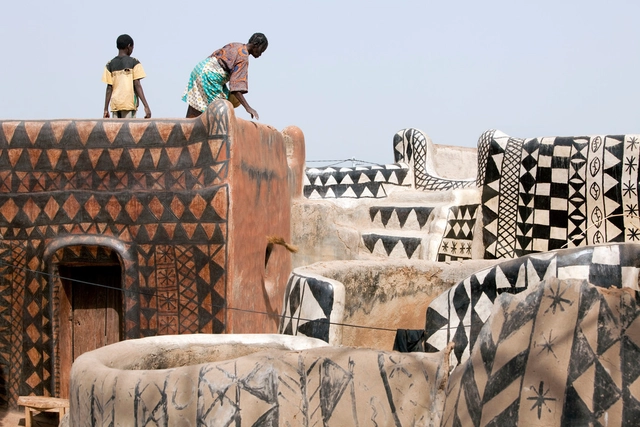
In the south of Burkina Faso, sharing borders with the northern environs of Ghana is Tiébélé; a small village exhibiting fractal patterns of circular and rectangular buildings, housing one of the oldest ethnic groups in West Africa; the Kassena tribe. With vernacular houses dating back to the 15th century, the village’s buildings strike a distinctive character through its symbol-laden painted walls. It is an architecture of wall decoration where the community uses their building envelope as a canvas for geometric shapes and symbols of local folklore, expressing the culture’s history and unique heritage. This architecture is the product of a unique form of communal collaboration, where all men and women in the community are tasked with contributing to the construction and finishing of any new house. This practice serves as a transmission point for Kassena culture across generations.
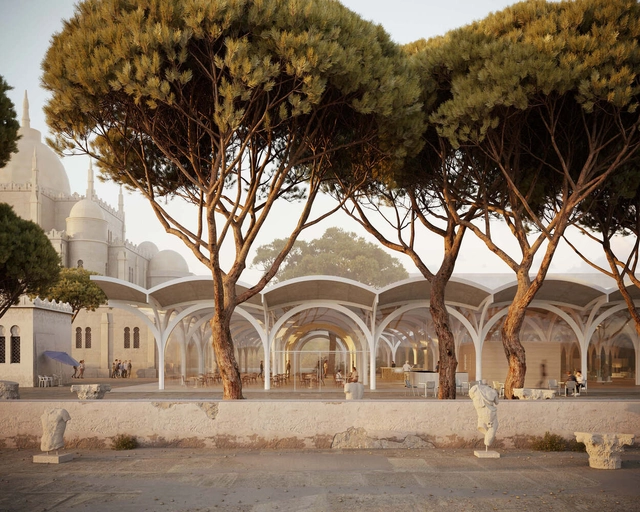
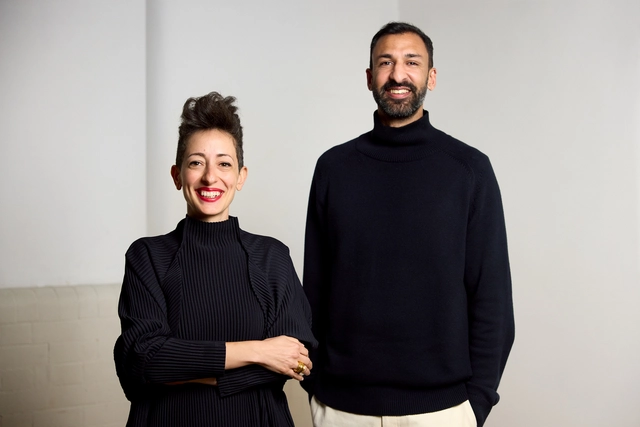
The Royal Commission for AlUla has appointed Lina Ghotmeh and Asif Khan as the lead architects for two upcoming museums to be added to the cultural oasis of AlUla, a destination in North-West Saudi Arabia displaying 7,000 years of continuous human history. Ghotmeh is set to design the contemporary art museum to house works by artists from the Red Sea, the Arabian Sea, and the Eastern Mediterranean in dialogue with their contemporaries from across the world. Asif Khan will design the Museum of the Incense Road, the first museum dedicated to the millennia-old network of major land and trading routes. The architects have been selected following an international competition.
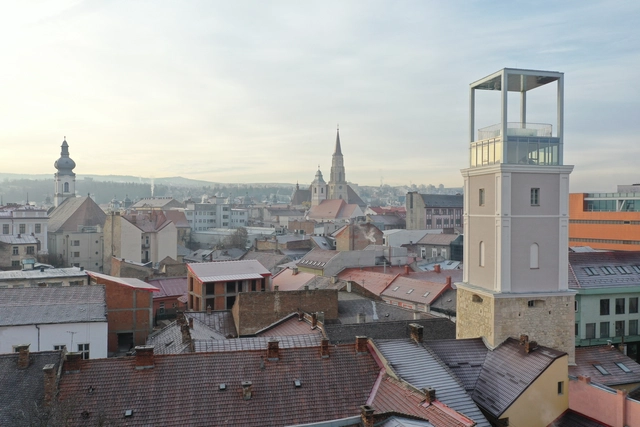
The skyline of Cluj-Napoca, a city located in the Transylvania region of Romania, is defined by a mosaic of historical and modern buildings, giving the city a unique and diverse appearance. Among the visible landmarks, the Firefighters' Tower, or "Turnul Pompierilor" in Romanian, stands out for its mixture of styles, from Medieval stonework to Baroque detailing and contemporary interventions. Despite it being a relatively small monument, with a ground floor area of just under 50 square meters, the tower holds layers of history narrating the evolution of its neighborhood and city, from its beginnings during Medieval times until the present day. Left derelict in recent years, a new intervention by Vlad Sebastian Rusu B.I.A and Octav Silviu Olănescu B.I.A. aims to restore the tower's position as a repository of local history and an attractive space for residents and visitors alike. This article explores the story behind the Firefighters' Tower both narratively and visually, through the lens of Cosmin Dragomir.
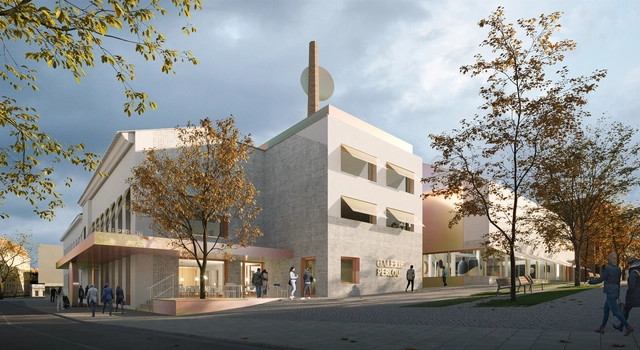
Pearl Gallery Renders. Image Courtesy of CHYBIK + KRISTOF
CHYBIK + KRISTOF architecture studio has been announced as the competition winners for a new cultural landmark that will transform and re-activate public space in Ústí nad Orlicí, Czech Republic. This former textile factory will be converted into a multifunctional cultural hub available to the public. The newly revitalized building will contribute to the existing cultural infrastructure, located near the main square of the city.
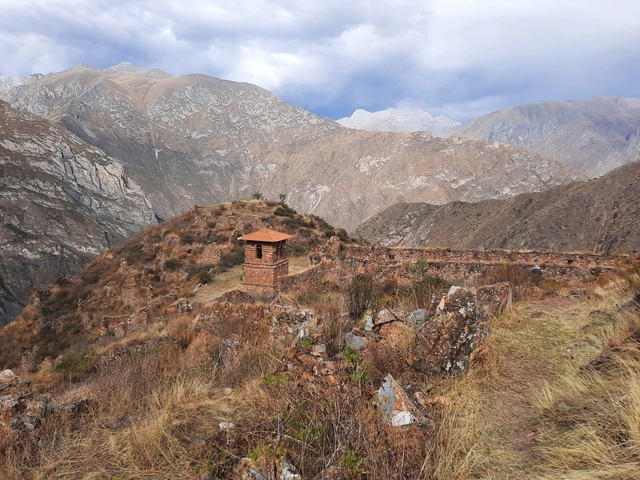
Yanacancha-Huaquis Cultural Landscape, Peru. Image Courtesy of World Monuments Fund
The World Monuments Fund (WMF) announced a commitment of more than US$10 million to go towards preservation projects to protect culturally significant places from around the globe in urgent need of intervention. The initiatives vary in scope, from winterization efforts at Ukrainian heritage sites to protecting remote archeological sites representative of Peru’s Chachapoyas Civilization. The suite of projects launching in 2023 aims to address and help mitigate the threats that heritage sites are facing: conflict, climate change, and underrepresentation.
Form and function. Terms that accompany several definitions that belong to architecture, but more is needed to summarize the practice in 2023. Nowadays, building involves understanding the cycles of materials and how each action can be linked to the extraction of natural resources and their damage to the environment. We live in an urgent need to review the way we produce built space. In this search for models that move away from linear systems and provide a constant process of transformation and redistribution of matter, strategies arising from the circular economy emerge as a possible path. Its application in architectural heritage – for maintenance or restoration – can incentive the necessary changes toward a more sustainable society.
Subject to the forces of capital, migrating populations, and political circumstances, our planet’s cities are constantly evolving. This continuous evolution is evident in the built fabric of settlements, as architects and planners build upon layers of the built environment, with some having the strenuous task of having to integrate the historic urban areas of cities successfully with contemporary architectural interventions and systems.
The cities of this category are frequently in an internal conflict — oftentimes having to grapple with the sometimes contradictory aims of both sustaining local populations and welcoming outside investment and national development projects.
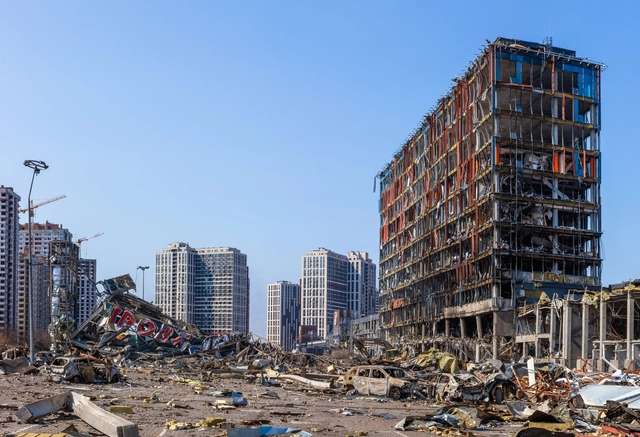
On 24 February 2022, Russia invaded Ukraine, a major escalation of the conflict dating since 2014. Now, a year later, the war is still ongoing. Both soldiers and civilians have fallen victim, while millions of others have become refugees, fleeing to safer areas across Europe or within Ukraine. What was instilled was a severe humanitarian and refugee crisis. The hostilities have also threatened Ukraine’s cultural and architectural heritage, as museums, monuments, and historical landmarks have become targets.
The implications are also reaching Europe and globally, as energy resources and food supplies become scarcer, damaging some economies. Still, Western countries remained unified in their support of Ukraine, as reported by international news outlets. Despite the economic difficulties, international support was mobilized through various initiatives in hopes of helping displaced people, protecting cultural heritage, and mapping a plan for reconstruction.
A major 7.8 magnitude earthquake hit central Turkey and north-west Syria this Monday, February 6, with a second 7.4 magnitude quake reported a few hours later in the same region, according to reports from the Guardian. Among the most affected areas is Gaziantep, located 150 miles from the border with Syria and 50 miles from the earthquake’s epicenter in Kahramanmaraş. Tremors were felt as far away as Lebanon, Greece, Israel, and the island of Cyprus. Authorities are still assessing the number of victims, as local and international rescue teams have been deployed to search for survivors. Early estimates report that over 1,700 buildings have collapsed or have been critically damaged, as confirmed by Turkey's Vice President Fuat Oktay.
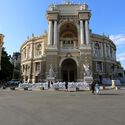
The World Heritage Committee decided to inscribe the Historic Center of the Port City Odesa, Ukraine, on the World Heritage List. The decision symbolizes the recognition of the outstanding value of the site and the commitment of the 194 States Party of the Convention not to undertake any deliberate step that may damage it and to help protect it. The site has also been inscribed on the List of World Heritage in Danger, which gives it access to international financial or technical assistance to ensure its protection and, if necessary, assist in its rehabilitation, according to UNESCO.
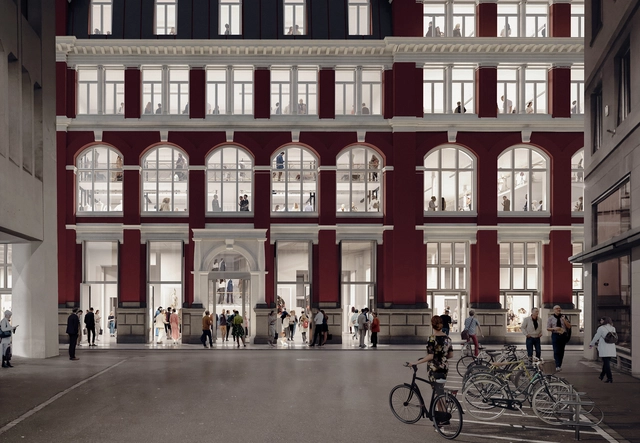
Christian Kerez was announced as the winner of the competition for the renovation of the Palazzo Rosso in St. Gallen, home to the Textile Museum St. Gallen, in eastern Switzerland. The project, titled “Das Schwere ist des Leichten Wurzelgrund,” or “The Heavy Is the Root of the Light,” responds to the goal of raising the profile of the Palazzo Rosso and increasing its visibility and attractivity. The proposal is currently undergoing further development by order of the Textile Museum Foundation for clarifying questions of feasibility and finance.
550 Madison Avenue (née the AT&T Building, more recently Sony Plaza) is among the more recognizable figures on New York’s skyline. Designed by architect-provocateur Philip Johnson, the 37-story skyscraper stands out thanks to its curious headgear: a classical pediment broken by a circular notch, inviting frequent comparisons to the top of a Chippendale grandfather clock. A singular, if largely inoffensive presence on today’s icon-heavy streetscape, the design was positively shocking on its debut in 1979, when Johnson himself appeared on the cover of Time holding a model of the project, then still four years from completion. The image heralded the arrival of something new in American architecture: the fading of the flat-crowned Modernist towers of the midcentury and the onset of the Postmodernist wave.
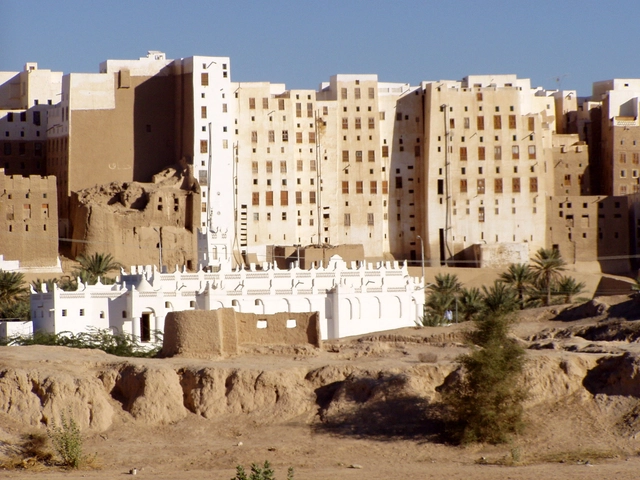
Skyscrapers are an unmissable characteristic of contemporary settlements. From São Paolo to New York, from Seoul to Dubai – these towering structures are a ubiquitous part of the urban fabric. The conventional image one has of these structures is of curtain-walled facades, but in Yemen – an ancient example goes against this trend. Central Yemen is home to the city of Shibam, surrounded by a fortified wall. It’s also home to a dazzling example of architectural ingenuity – tower houses that date back to the 16th century, stretching up to seven stories high.
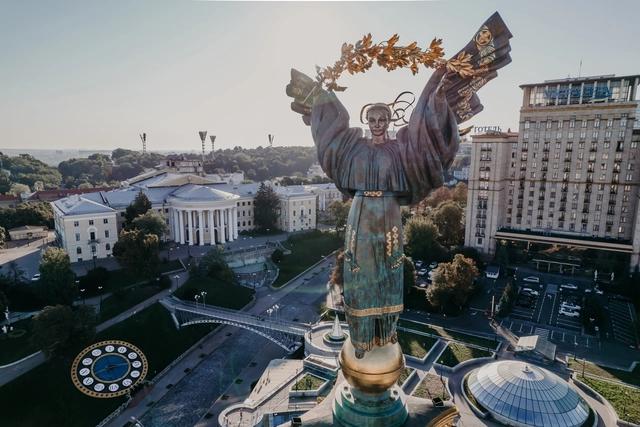
Kyiv, Ukraine, September 2021: Maidan Nezalezhnosti square - aerial drone view. Monument of Independence.. Image via Shutterstock
Friday, June 3, marks 100 days of war in Ukraine. One of the many devastating effects has been de destruction of urban and rural environments. Ukraine’s cultural and architectural heritage is under threat. As of 30 May, UNESCO has verified damage to 139 sites affected by the ongoing hostilities. The list includes 62 religious sites, 12 museums, 26 historic buildings, 17 buildings dedicated to cultural activities, 15 museums, and seven libraries. According to UNESCO, the most affected buildings included in the list are in Kyiv. Still, damages are also found in the regions of Chernihiv, Kharkiv, Zaporizhzhya, Zhytomyr, Donetsk, Lugansk, and Sumy. This represents a preliminary damage assessment for cultural properties done by cross-checking the reported incidents with multiple credible sources. The published data will be regularly updated.