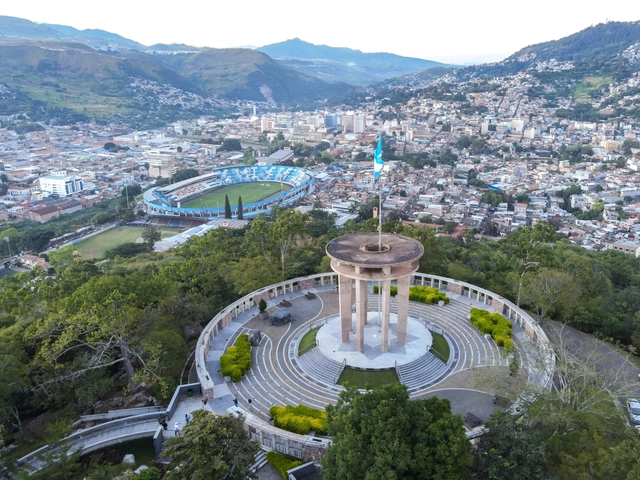
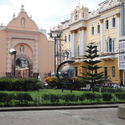
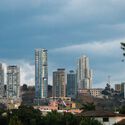
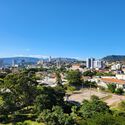
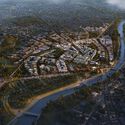
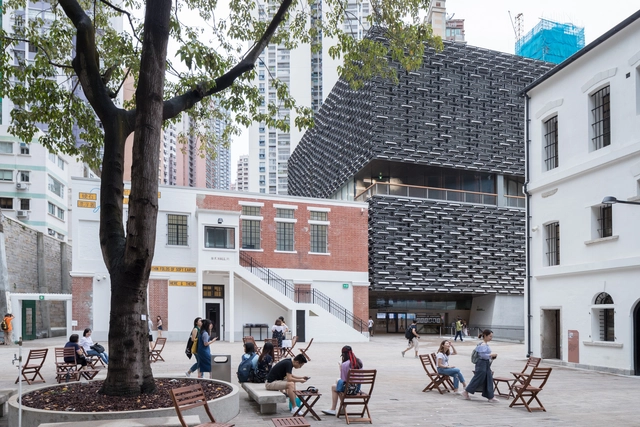
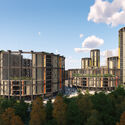
In the first decades of the XXI century, Honduras experienced higher levels of crime and violence compared to its other Central American neighbors. This situation caused the country to be largely avoided by most visitors and investors. However, it didn’t stop Tegucigalpa, its capital city, from experiencing an explosion of residential and office developments which are currently reshaping its skyline. Defined by a unique topography, and tropical weather, the city served as a testing ground for modernist urban principles that contributed to the transformation of a small mining town into one of the largest metropolises in Central America.
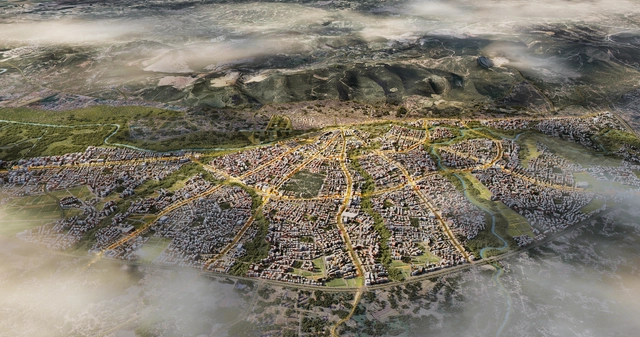
As part of a wider design-led revitalization process, Türkiye Design Council has announced a new urban plan for the revitalization of Antakya and the wider Hatay province in Türkiye, an area heavily affected by the Türkiye-Syria earthquake on 6 February 2023. The master plan has been developed by Foster + Partners, Buro Happold, MIC-HUB, along with Turkish practices DB Architects, and KEYM Urban Renewal Centre. The plan covers a 30-square-kilometer area of Antakya, the capital district of Hatay, and an important urban center of antiquity known as Antioch. Eight design principles have been outlined to guide the rebuilding efforts in an attempt to maintain the spirit of the city, which suffered extensive damages estimated at 80 percent.
As major cities continue to develop, we face intriguing challenges regarding the preservation and adaptive reuse of significant buildings, sites, and artifacts. This poses a complex question that involves political history, architectural theory, and cultural significance. Adaptive reuse extends beyond architectural and spatial designs; it allows cities and communities to reflect, reevaluate, and reinterpret their history from different perspectives. However, unlike books and words, buildings may not withstand the test of time themselves and serve as firsthand evidence of the stories they tell. How should we question ourselves on what to preserve and demolish? How can communities be involved in the active restoration or adaptation of historic buildings?
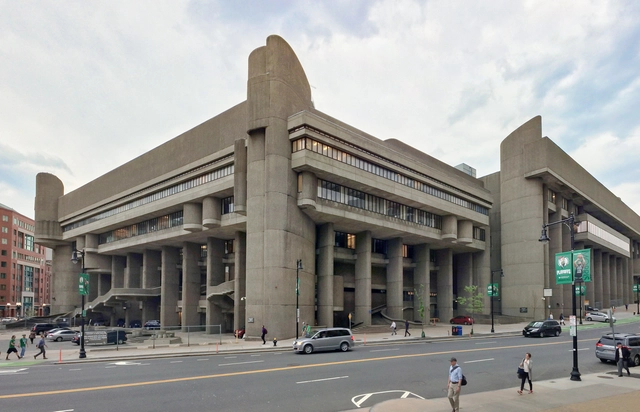
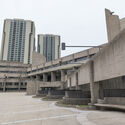
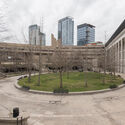
The Massachusetts administration, under Governor Maura Healey, has unveiled a new housing-centric proposal for the controversial Boston Government Service Center designed by Paul Rudolph and opened in 1971. Previously proposed to be redeveloped by the architecture office NBBJ with offices and commercial spaces, the updated vision aims to transform the Erich Lindemann and Charles F. Hurley buildings into housing facilities as part of the state’s goal to address the housing crisis while allowing for the historic preservation of the Brutalist structure.
In the whirlwind of daily life, a large majority of urban centers transform to accommodate new functions and/or needs demanded by their populations, seeking to improve, renovate, or update the infrastructures, equipment, networks, and spaces that enable community life. Although times change, and with them, many buildings that once served important protective or sheltering functions start to become obsolete. However, the heritage they leave behind reflects the passage of time and provides a living testimony of their history, contributing to the consolidation of identity and the recognition of a sense of belonging.
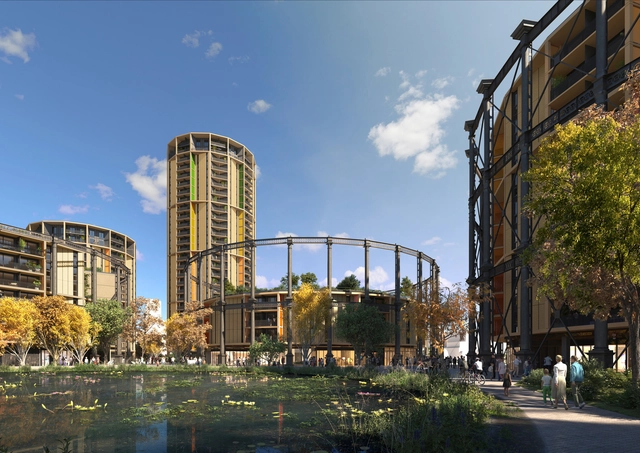
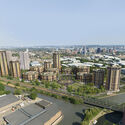
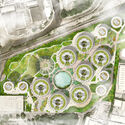
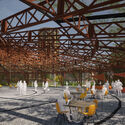
RSHP’s design proposal for the Bromley-By-Bow Gasworks regeneration project has just been approved by the London Borough of Newham’s Strategic Development Committee. The 23-acre site dates back to the 1870s, housing the largest collection of Victorian gasholders worldwide, making the project one of the largest regeneration proposals in the Lower Lea Valley in London. After three years of design development, the scheme reimagines the gas holders into a mixed-use development offering new high-quality residential architecture.
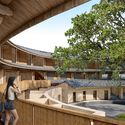
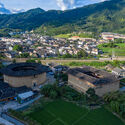
In the mountain valleys of China’s Fujian Province, thousands of large, rammed earth fortresses lay abandoned. Once used for both defense and collective housing, the tulou typology is an integral part of the region’s cultural heritage, with 46 of them being recognized by UNESCO as World Heritage Sites. Despite this, the rural communities surrounding them have struggled to find new roles and purposes for these buildings. Going beyond the need for conservation, architect Xu Tiantian of DnA_Design and Architecture set out to develop and adapt this heritage to reintroduce it into community life. The Fujian Tulou | Adaptive Reuse project recently won the Gold Prize of Holcim Awards 2023 for Asia-Pacific, recognized for creating “an exemplary model for building conservation initiatives.”In a video interview for ArchDaily, Xu Tiantian discusses the principles that underpin this initiative and the potential outcomes of adaptive reuse in rural communities.
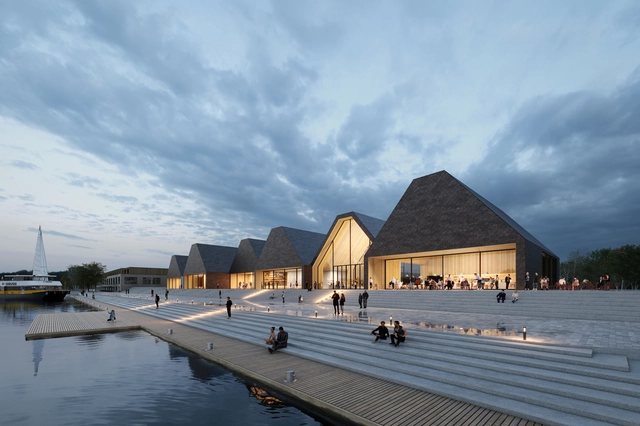
Squama Museum building from the Aura river. Image Courtesy of Sigge Architects
Finnish office Sigge Architects has been announced as the winner of the international competition for the design of the Museum of History and the Future in Finland's oldest city, Turku. The proposal, selected out of over 400 entries, creates a permeable structure along the waterfront, acting as a catalyst for the regeneration of the area. The museum aims to showcase the most innovative scientific research through a wide variety of exhibitions, audio-visual installations, and educational spaces. Construction is expected to start in 2027 and be completed by 2029, with a public opening scheduled for 2030.
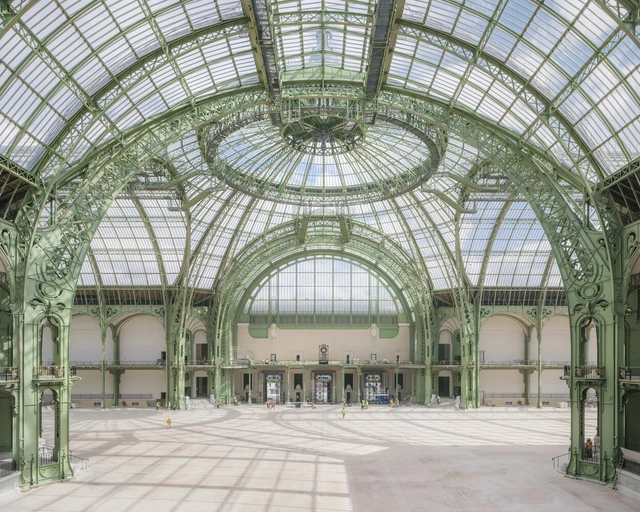
The Grand Palais, an iconic Parisian landmark, is set to play a significant role in the 2024 Paris Olympics following a major restoration by French studio Chatillon Architectes. The first images of the refurbished building, captured by Laurent Kronental, reveal the progress of the extensive project that began in 2021. While the full restoration is expected to be completed by 2025, the initial phase will be unveiled this summer, allowing the historic venue to host Olympic events, including the fencing and taekwondo competitions.
The Harvard Graduate School of Design (Harvard GSD) has announced the Class of 2025 Loeb Fellows. Ten practitioners and activists from around the world have been selected to join the Loeb Fellowship program to expand their careers and advance their programs and initiatives focused on equity, resilience, and collective action.
The ten selected practitioners are mid-career professionals coming from diverse backgrounds. Each one has been recognized for initiating practices that are transforming public spaces and urban infrastructures, addressing public health concerns and environmental injustices, as well as housing needs and efforts to preserve the cultural, natural, and architectural heritage of diverse regions from all continents.
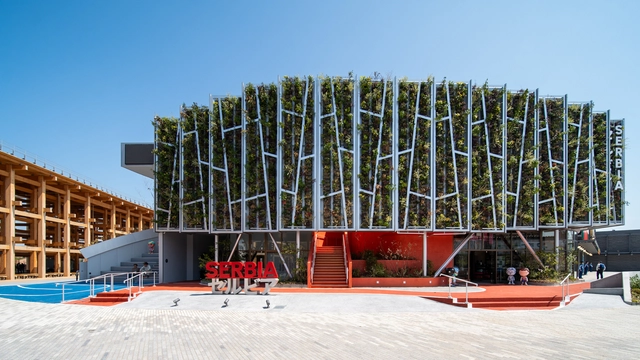
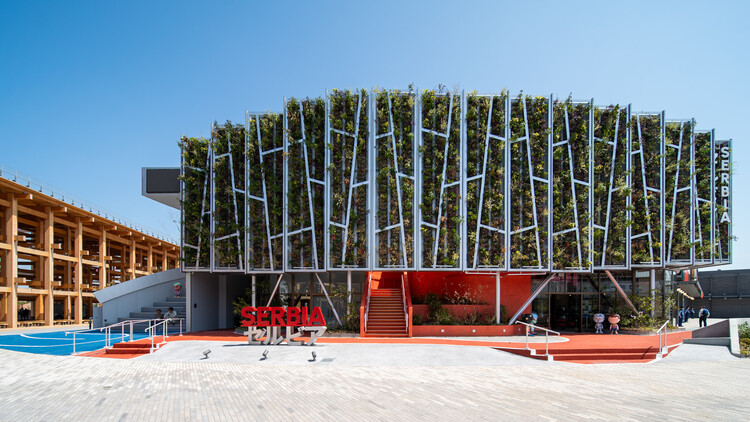
The Serbian Pavilion at Expo Osaka 2025 emerges as a compelling example of sustainable architecture infused with cultural storytelling, seamlessly integrating cutting-edge technology and emotional resonance. Designed by Aleatek Studio, the pavilion takes inspiration from Belgrade's protected Ratno Ostrvo (Great War Island) to realize the concept of a "Floating Forest." It stands out as the only Expo pavilion featuring a living façade, with over 95% of its materials recyclable and 80% intended for reuse in future construction. The design strategy also aligns with the theme "Play for humanity" of the upcoming Specialised Expo 2027 to be held in Belgrade.
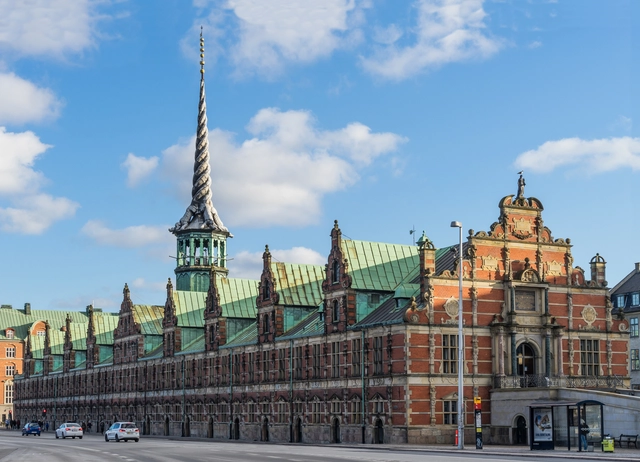
In the early morning of April 16, a fire broke out in the capital of Denmark, engulfing Copenhagen’s Old Stock Exchange, one of the oldest landmarks in the city. In the fire, the 56-meter-tall Dragon Spire, shaped as the tails of four entwined dragons, collapsed. In just a few hours after the fire begun, half of the 17th century Børsen building was destroyed according to authorities. The structure was undergoing renovation works at the time of the event. Emergency workers, staff members and passers-by collaborated to rescue the historic artworks housed in the former stock exchange.
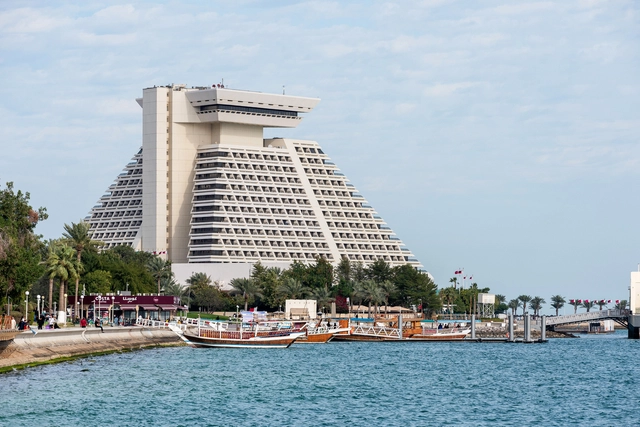
As part of the Design Doha 2024 Biennial, Glenn Adamson and Péter Tamás Nagy present the exhibition “Colors of the City: A Century of Architecture in Doha” investigating the architectural evolution of the capital of Qatar based on multiple global influences that characterize it. Running until March 30, 2024, the exhibition offers a journey through Doha's architectural history featuring various styles such as Classicism, Art Deco, and Modernism, contemplating the Qatari adaptations of these styles developed by architects from Europe, America, the Middle East, and South Asia.
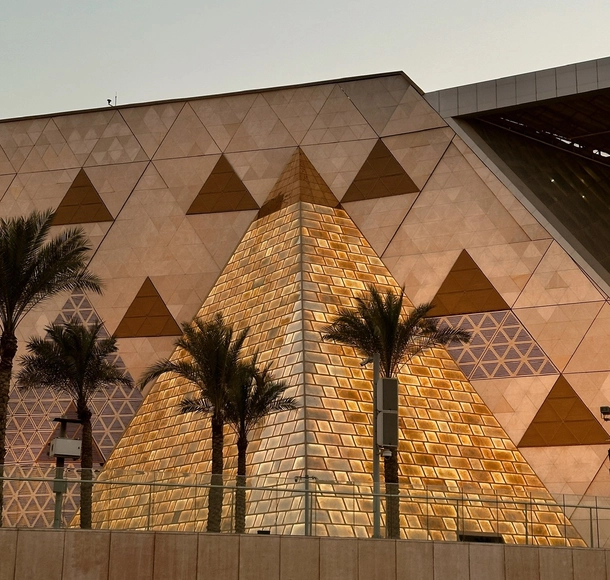
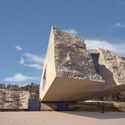
Showcasing millennia of Egyptian history and culture, the Grand Egyptian Museum is a monumental project in Cairo, Egypt, designed by the Irish firm Heneghan Peng Architects. Home to over 100,000 artifacts spanning Egypt’s storied past, the museum is on the brink of opening its doors to the public after multiple setbacks. Recent updates offer glimpses of the structure’s progress, with photographs captured by Egyptian photographer Farida Bustani providing sneak peeks of the architectural landmark.
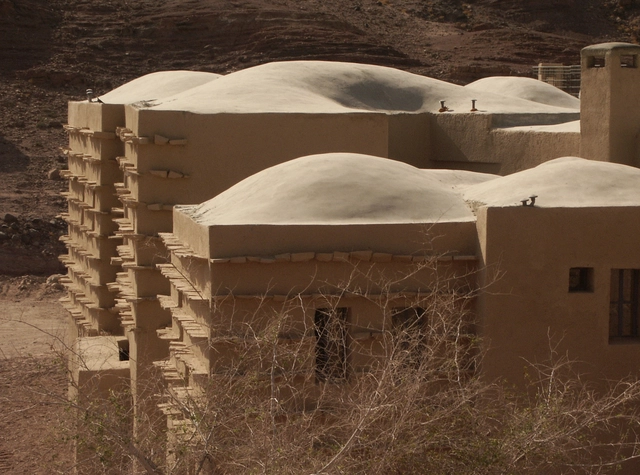
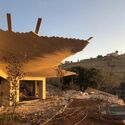
The Feynan Ecolodge project. Image Courtesy of Dongola DAS 01 | Notes on Formation and Ammar Khammash
Ammar Khammash is a Jordanian architect, designer, and artist best known for his approach that focuses on the preservation of cultural and natural heritage while crafting an architecture that engages with its surroundings. With deep admiration for nature and its ecosystems, Khammash trusts that "the site is the architect”, a statement for which he is renowned that underscores the profound influence of context on his architectural design. With over three decades of experience spanning various disciplines and across several Middle Eastern countries such as Jordan, Oman, Palestine, Egypt, Syria, and the UAE, Ammar Khammash has consistently attempted to preserve and enhance the symbiosis between human constructions and the natural environment. His contributions include the Royal Academy for Nature Conservation, the Wild Jordan Center, and the restoration of the Church of Apostles.
In 2022, he was featured in the first edition of the Dongola Architecture Series, a biannual publication that offers unique perspectives into Arab culture by highlighting prominent contemporary architects. The issue, titled “Notes on Formation: Ammar Khammash,” written by Raafat Majzoub, explores "architecture as a transdisciplinary tool of expression, and as a method of imagining and reimagining the future," encapsulating the ethos of the publication. ArchDaily had the opportunity to talk to Ammar Khammash and Sarah Chalabi, founder of Dongola Limited Editions, to delve into the architect’s perspectives on site, materiality, and culture, along with his philosophy, notions on academia, and insights into the future of the profession.
Last week, Japanese architect and social advocate Riken Yamamoto was announced as the 2024 Pritzker Architecture Prize Laureate, becoming the 9th Japanese architect honored with the profession's most prestigious award. Throughout the 45-year history of the Pritzker Prize, Japan stands out as the nation with the highest number of laureates. While geography is not a criterion in the selection of the laureates, Japanese architecture consistently impresses with its interplay of light and shadow, the careful composition of spaces, soft transitions between interior and exterior, and attention to detail and materiality. An ingrained culture of building also celebrates diverse designs and encourages global dialogue and the exchange of ideas and best practices. Read on to rediscover the 9 Japanese Pritzker laureates and glimpse into their body of work.