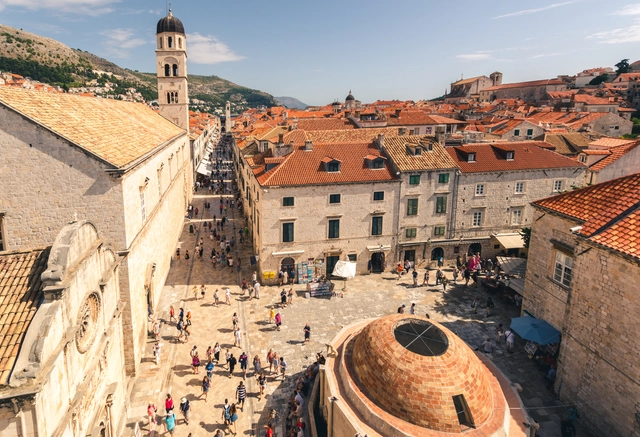
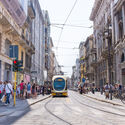
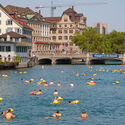
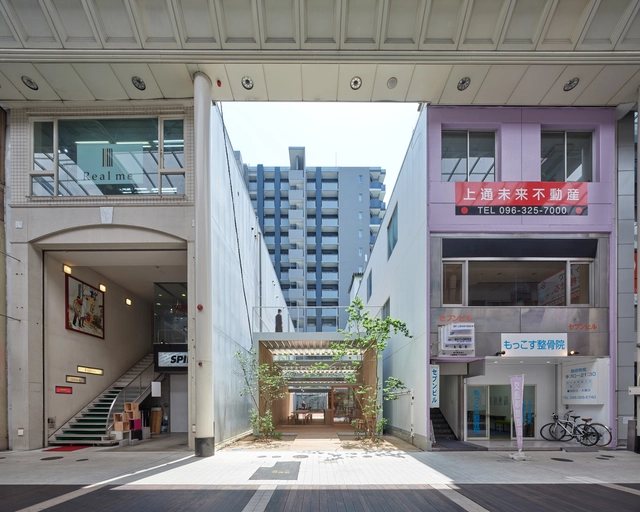
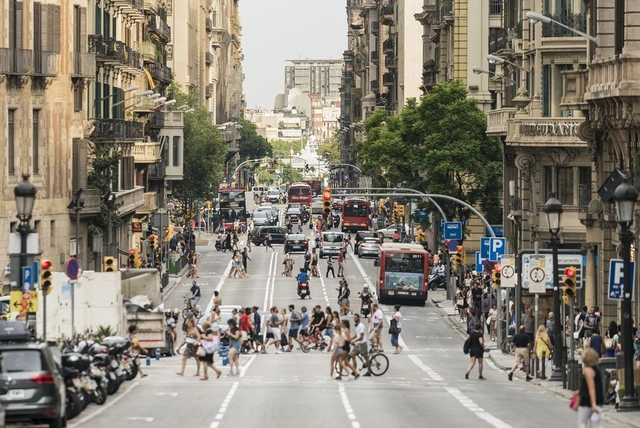
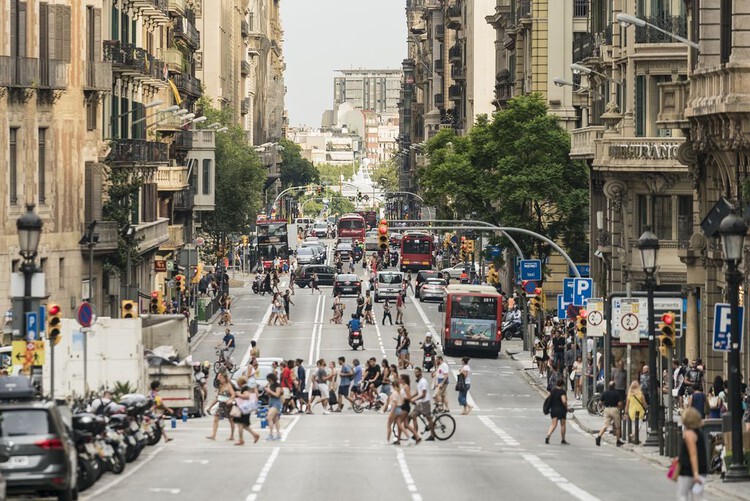
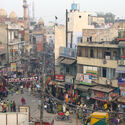
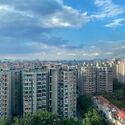
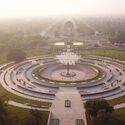
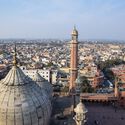
Eastern and Southern Europe is enduring a severe heatwave, with temperatures reaching over 40 degrees Celsius in many countries including Greece, Croatia, Macedonia, and Romania. Driven by hot air from North Africa, this prolonged heatwave has raised significant threats for residents and has strained the cities’ mechanisms for protection and climate mitigation. As the heatwaves expose the vulnerabilities of urban infrastructures, cities across Europe are striving to implement measures to address these challenges.
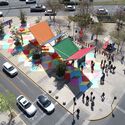
Cities constantly undergo infinite changes, leaving many spaces within the urban fabric forgotten and unused. Historic buildings are refurbished, and adaptive reuse explores new possibilities, but what happens with public spaces? Small interventions using simple resources and innovative solutions are the perfect way to bring these neglected alleys, plazas, and highways back to life and reincorporate them into the city.
Evolving theories in urban design seek to reframe how cities are built and experienced. As theory and practice grows more empathetic towards the needs of its diverse stakeholders, queer urban design brings a broad and holistic shift to understanding identity and community in publicly inhabited spaces. The approach challenges traditional - often rigid - methods of city planning by applying principles of queer theory to reflect fluidity and interconnectedness. On occasion of Pride Month 2024, ArchDaily investigates the building blocks of "queer urban design" to influence city planning practices to be more inclusive.
The relocation of a capital city is a complex urban decision with various dimensions and consequences for both the old and new capital. It can be driven by political, economic, societal, and other factors, and has urban and architectural implications for residents. These include factors such as location, planning, building design, the purpose of the old capital, climatic conditions, and separating the political/administrative hubs from cultural and economic cities.
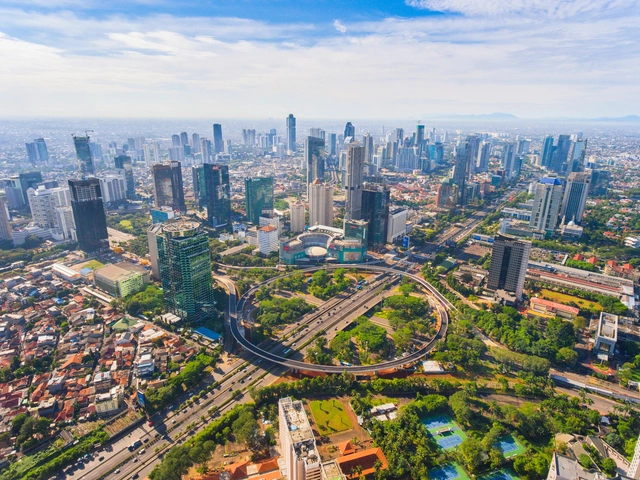
In light of the ongoing urban discourse, countries like Egypt are constructing a new capital city to alleviate population and urban stress on Cairo. Similarly, Indonesia is planning a new capital in response to challenges faced by Jakarta, such as pollution, traffic congestion, and rising sea levels. It is valuable to examine other countries in the global south that have relocated their capital cities, noting the architectural and urban lessons learned from their experiences.
The climate crisis has made heatwaves more likely and more intense around the world. Record-breaking high temperatures are being reported across the world. According to international data, the first week of July 2023 was the hottest week on record, putting millions of people in danger. All throughout this summer, recurring heatwaves have been affecting large portions of Asia, Europe, and the United States, priming the land for fires in places like Greece, Spain, and Canada, triggering unhealthy air warnings, evacuations, and heat-related deaths. The increasingly threatening effects of the climate crisis are also felt in cities worldwide, as extreme heat proves to be a rapidly growing health risk to millions of urban dwellers.
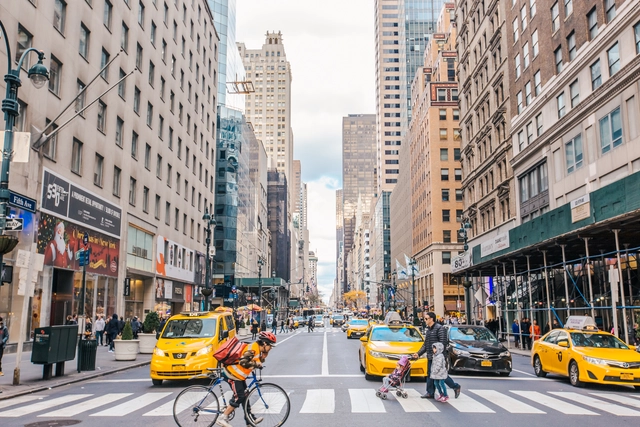
Cities are on the front lines of this public health emergency. People living in urban areas are among the hardest hit when heatwaves happen, partly because of urban heat islands. This is a phenomenon that occurs when cities replace the natural land cover with dense concentrations of surfaces that absorb and retain heat, like pavements and buildings. Heat risk levels also vary by neighborhood, with less affluent and historically marginalized sectors being the most affected due to the density of the population, limited access to cooling systems, and the limited availability of green urban spaces.
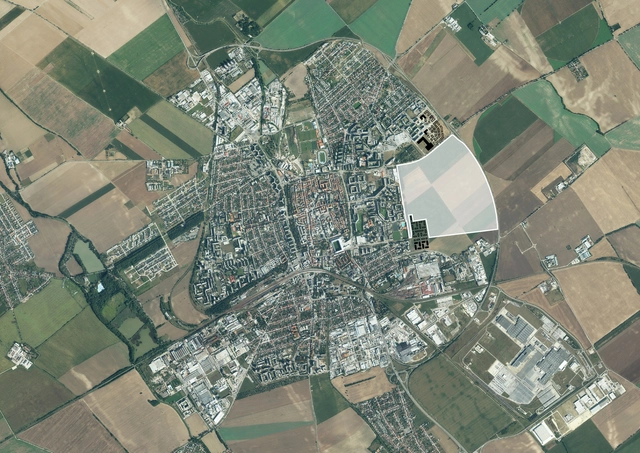
Trnava, the regional vision-having city of 62,000 inhabitants, launches an international two-stage urban design competition of an unprecedented scale across Slovakia. From the point of the history of the city ̓s development, this is a game-changer to be setting a new standard with respect to the preparation of The Land-use plan.
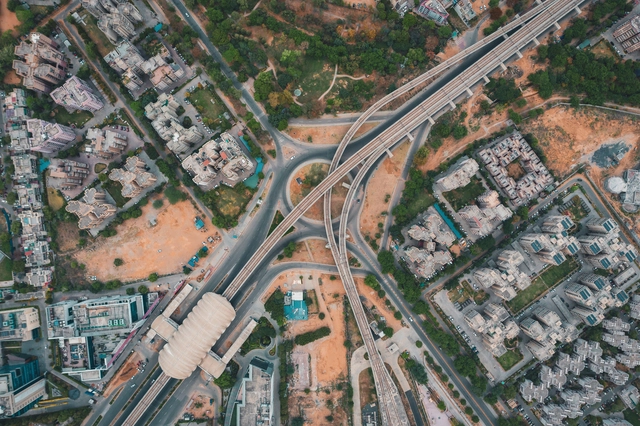
India has witnessed a surge in urbanization and population growth. As a result of natural population growth and migration, the megacities of India have experienced a continual increase in their residents. Standing as the most populous country in the world, India is at a critical junction, grappling with opportunities and challenges in molding its built environment. Population boom, however, is not a recent predicament but a persistent one that has spanned over a century. How have Indian cities dealt with population growth and the complexities it brings?
One of the principles of comedy is that you “punch up.” If you have to make fun of someone or something, make sure it’s more prominent than you, and deserving. You can’t get much higher than Santa Clara, California, and you can’t get much more deserving. Santa Clara is, arguably, the city at the heart of Silicon Valley, a globally famous urban region that is so ill-defined as to deny its own existence. Those ranch houses and corporate headquarters represent a distinctly 21st-century brand of power. And a distinctly 20th-century brand of urbanism.
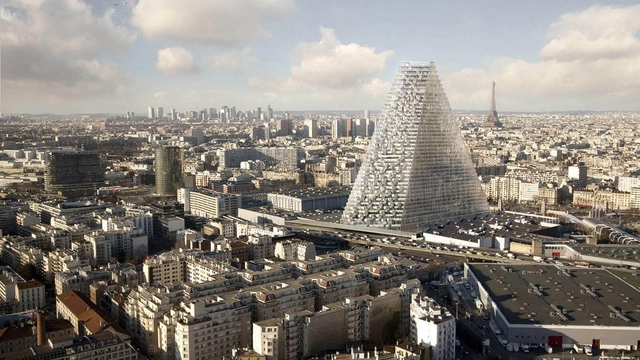
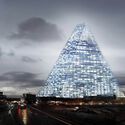
Tour Triangle . Image Courtesy of Herzog & de Meuron
The city of Paris has officially reinstated a rule that limits the height of new buildings in the French capital to 37 meters, or 12 storeys. Among the factors for the decision was the controversy surrounding the construction of the 180-meter-tall Tour Triangle, designed by Herzog & de Meuron, which began in 2021 after more than a decade of legal battles and backlash. The new urban planning regulation is introduced as part of Mayor Anne Hidalgo's Local Bioclimatic Urban Plan, which aims to reduce Paris' carbon emissions.
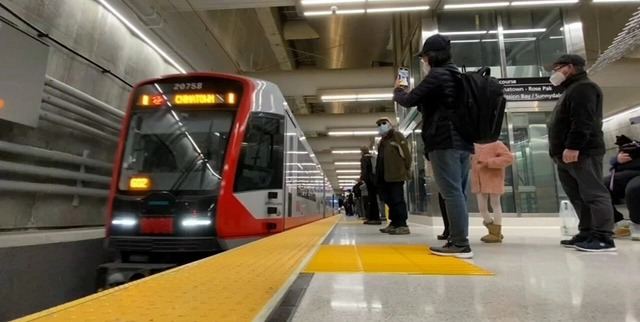
When San Francisco’s MUNI spent big money on a “central subway” to Chinatown, I was doubtful. One recent Saturday, though, I revived the gallery-hopping I did before the pandemic, taking the train from Berkeley into the city, walking to one gallery near Embarcadero Station, then taking a tram past the ballpark to the CalTrain Station, where I switched to another tram to head south to Minnesota Street’s Dogpatch cluster of galleries and artists’ studios.
https://www.archdaily.com/1001256/consider-the-15-mph-cityJohn J. Parman
There’s no shortage of slippery slopes in the architectural lexicon: “architectural” and “architectonic” hover near the top of the list. Problems invariably arise when the modifier supplants the modified. This happens more than you’d think, especially of late. A wholly separate issue arises when owing partly to a linguistic slight of tongue, architecture is understood as something distinct from the building, eschewing physical inhabitation.
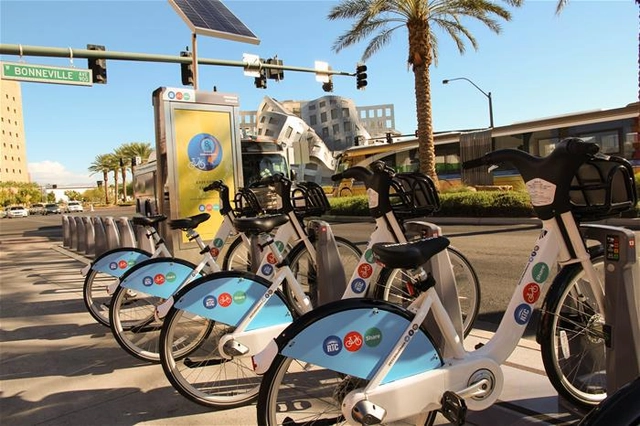
Over the last few years, bike share systems experienced a renaissance as the pandemic forced a hard decline in other forms of public transportation like trains and commercial flights where people wanted to avoid close contact with strangers. While ridership is now on a slow decline, since much of the “normal life” aspects have returned, many people continue to see bike shares as a viable means of transportation, lured by the ease and affordability of getting from place to place.
The Zaha Hadid-designed Business Stadium Central has been granted approval by the City of Vilnius. In collaboration with Lithuanian developer Hanner, the project seeks to become a new gathering place for the city, creating a variety of new public spaces and amenities with flexible workplaces as well as health and wellness facilities for everyone in Vilnius. Construction is scheduled for the second quarter of this year.
In the architectural world, unestablished practices are often overlooked, yet, by challenging the traditional dogmas of the industry, they can have a significant impact on the built environment. The Young European Architecture Festival (YEAH!) explores the work of these upcoming architectural offices, looking at how they share ideas visions and experiences at the European level. The event is divided in two sections: Habitats, exploring ideas of domesticity and the residential typology, and Hybrids, initiatives that are rethinking the traditional systems of city planning.
The following represents a selection of projects by emerging architectural practices selected by YEAH! For the Hybrids category. Many of these initiatives are challenging the ideas of public space, but in doing so, they are also shedding light on the larger social structures at play in these spaces. The selection includes community spaces, schools, transportation hubs, and even projects initiated by the architects themselves, who have noticed deficiencies in their environment and are working to not only correct them but to enhance their presence and empower the local community through them.
In recent years, the term “co-creation,” a buzzword in the business and management sector, has made its way into the architecture and urban planning discourse. The termis used to define a large concept that describes working intentionally with others to create something jointly. But architecture is already the result of a collaboration between multiple actors, architects, clients, investors, developers, and local administration, to name a few. Can the term still apply to this field, can it bring forth new forms of knowledge, and does it differ from the concept of participatory design?
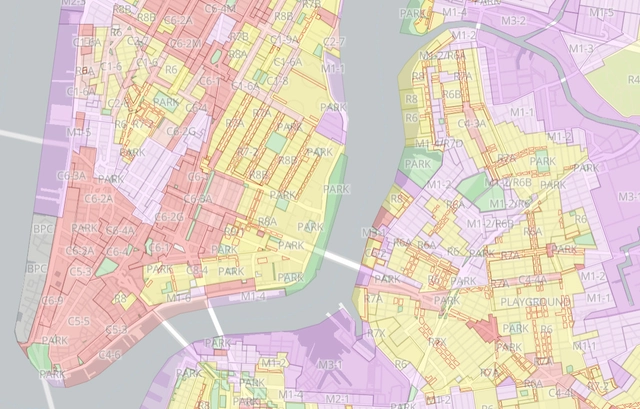
Land use and zoning laws have been a trending topic in recent years, gaining significant public attention across the United States. People are beginning to rethink the ways that our cities have been planned, seeking ways to improve their quality of life- and it often stems from codes and policies that dictate what can be built and where. Zoning that is too restrictive often makes it difficult for developers to build necessary projects such as multi-family housing. But when zoning is too loose, it creates neighborhoods that aren’t walkable and don’t have a strong sense of community.
The scene is almost identical, no matter which borough of New York City you’re in. Narrow sidewalks are lined by mountains of trash bags and other large objects, waiting for their turn to be taken away by the fleet of sanitary workers and trucks who will dispose of them. Large rodents seek shelter in their temporary plastic homes, feeding on discarded scraps, becoming a regular sighting for New York City residents. The City That Never Sleeps has a bigger problem than the flashing lights and noisy streets- it’s all of the trash that’s left to sit out on the sidewalks.
When the Aga Khan Award for Architecture (AKAA) announced its winners of the 2022 edition, 20 projects were selected for their excellence in the fields of contemporary design, social housing, community development, and preservation and improvement of the environment. Among them, one project in Jhenaidah, Bangladesh, managed to capitalize on the strength of the local community to reverse the ecological degradation of its riverscape and create a functional and socially inclusive public space along the riverbanks. ArchDaily’s Managing Editor, Christele Harrouk, had the chance to interview Suhailey Farzana, and Khondaker Hasibul Kabir co-founders of Co.Creation.Architects, and Rubaiya Nasrin from Platform of Community Action and Architecture, POCAA, part of the team behind the Co-creation of Urban Spaces by the Nobogonga River, in Bangladesh. The project also won the 5th category of the UIA 2030 Award for the Access to Green and Public Spaces.