The Land Art Generator Initiative is delighted to announce that LAGI 2016 will be held in Southern California, with the City of Santa Monica as site partner. This free and open call ideas competition invites individuals or interdisciplinary teams to design a large-scale site-specific work of public art that also serves as clean energy and/or drinking water infrastructure for the City of Santa Monica.
UC Berkeley's College of Environmental Design is now accepting applications from prospective participants in the 2016 Summer [IN]STITUTE in Environmental Design. This six week intensive summer program gives students the opportunity to test their enthusiasm for the material and culture of environmental design.
The Knight Foundation has announced the launch of the nonprofit Gehl Institute, led by Gehl Architects' Jeff Risom. With the Foundation's financial support, the Institute strives to boost urban livability by increasing public engagement and economic opportunity through the reformation of public space. A series of studies will investigate the behavioral effects of streets, parks, and plazas on their occupants. The results, coupled with community involvement in the planning process, will be applied toward developing “people-first” public spaces that respond to their unique contexts. Through this approach, the Gehl Institute hopes to foster a new design field that addresses the widening social and economic concerns that accompany urbanization. For more information, visit gehlinstitute.org.
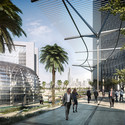
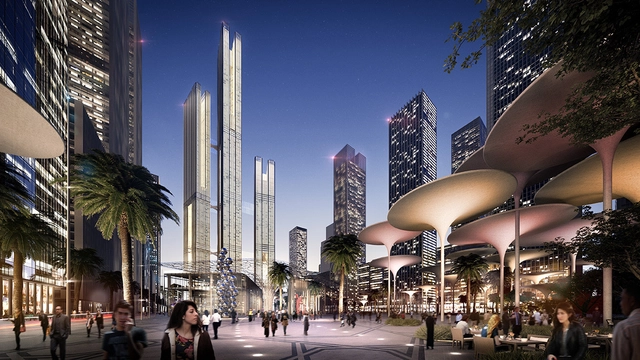
Skidmore, Owings and Merrill (SOM) has released a conceptual masterplan for Egypt's new capital city following its unveiling at the Egyptian Economic Development Conference. The 700-square-kilometer "Capital Cairo" hopes stimulate Egypt's ailing economy and alleviate Cairo's rising population density, while adhering to the cultural and climatic conditions of its site.
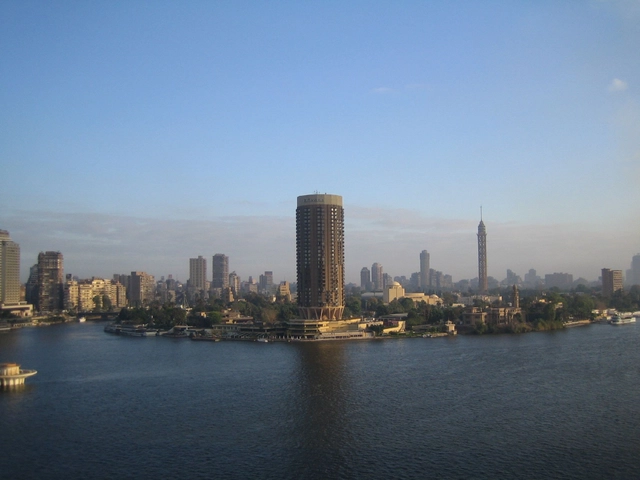
In an effort to combat the economic conditions that have plunged one-fourth of its population into poverty, Egypt's ambitious development plan for a massive new capital city is soon to be underway. Roughly the size of New Cairo, the privately-funded city hopes to become the new administrative center, as well as a bustling metropolis of shopping, housing, and tourist destinations to generate economic activity. Plans were solidified at a foreign investment conference where the official project details were unveiled on March 13 in Sharm el-Sheikh.
Read on after the break for more on the $45 billion plan.
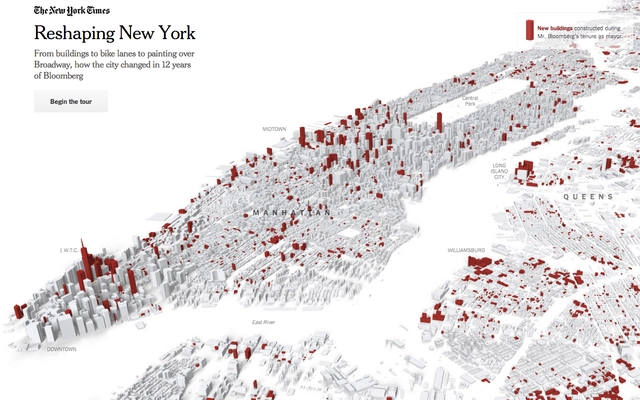
Since Mayor Bloomberg took office in 2001, the fabric of New York City has been in constant flux. In just 12 years, Bloomberg has lead an effort to rezone 37 percent of the city to create opportunities for high-density growth, as well as aided the construction 40,000 new buildings and 450 miles of bike lanes. Putting these efforts in perspective, the New York Times has released the interactive feature “Reshaping New York” that compares statistics with drastic ‘before and after’ comparisons. Check it out and read our report on Bloomberg’s lasting affect on the Empire State here.
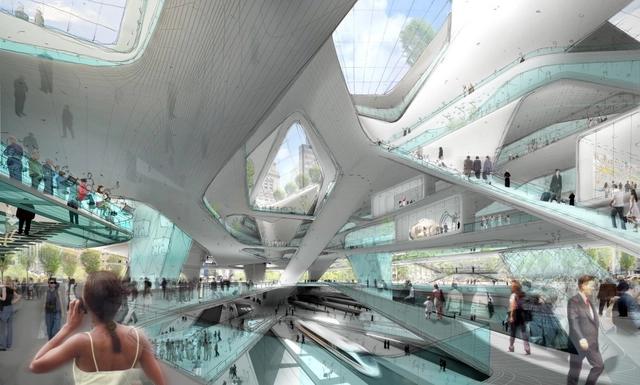
Diller Scofidio + Renfro's Competition Proposal for a New Penn Station
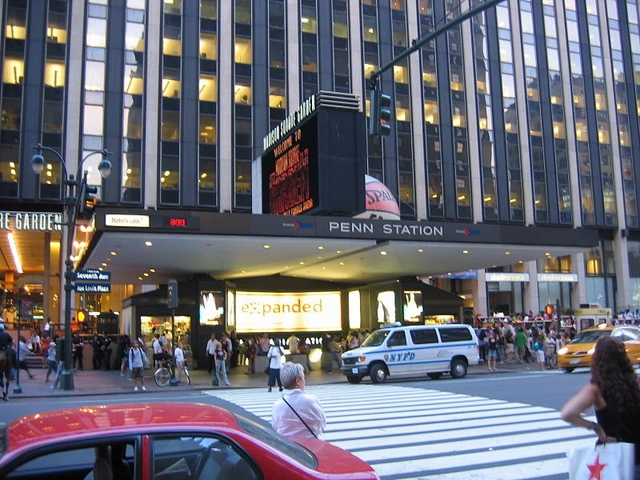
A landslide vote (47-1) by the New York City Council has limited the permit for Madison Square Garden to just 10 years. The decision comes after the property owner’s - MSG Company - 50 year permit expired earlier this year, sparking a heated debate on whether or not the city should deny the owners request to renew the permit in perpetuity and envision plans for a new Penn Station.
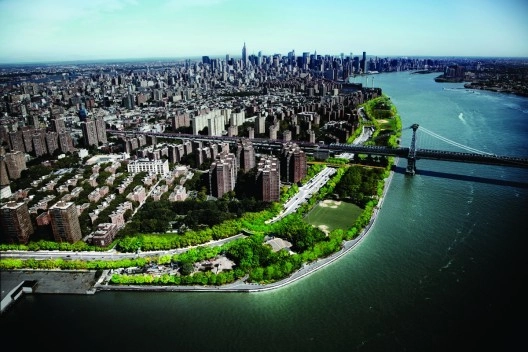
East River Blueway Plan proposed by WXY Studios provides a natural waterfront along the existing and vulnerable FDR in NYC's Lower East Side
Immediately after Hurricane Sandy hit the North American Eastern seaboard last October, NYC embarked on a debate on the ways in which the city could be protected from future storms that climate scientists predict will escalate in frequency. Engineers, architects, scientists from myriad disciplines came up with proposals, inspired by international solutions, to apply to this particular application. We were presented ideas of sea walls, floating barrier islands, reefs and wetlands. Diverse in scope, the ideas have gone through the ringer of feasibility. Should we build to defend or build to adapt?
On Tuesday, NYC Mayor Bloomberg announced a plan that includes $20 billion worth of both: a proposal of removable flood walls, levees, gates and other defenses that would be implemented with adaptive measures such as marshes and extensive flood-proofing of homes and hospitals. We have learned over the years that resilience must come with a measure of adaptability if we are to acknowledge that climatic and environmental conditions will continue to challenge the way in which our cities are currently being developed.
What does this plan entail and what can we imagine for the future of NYC? Find out after the break.
As part of its Question and Answer Series, Bettery Magazine, joined Peter Eisenman and P-A-T-T-E-R-N-S to discuss the development of cities on an urban scale and the recent diversion of this development into the small scale of individual neighborhoods. What follows is a discussion that essentially describes the urban condition as a constant dialogue between scale and function.
There is an unstoppable element of spontaneous development that is a result of the city's imposing forces as the scale of the individual and the immediate community. Running concurrently with these developments are municipalities' own agendas that may start off as heavy-handed, but eventually become molded by the will of affected neighborhoods. This dynamic nature of cities and their functionality is what makes their nature unique and in constant flux. In response to Eisenman's question: "Is neighborhood planning the new city planning?", P-A-T-T-E-R-N-S addresses the balance of these two scales of development and discusses the four morphological states that city development could take.
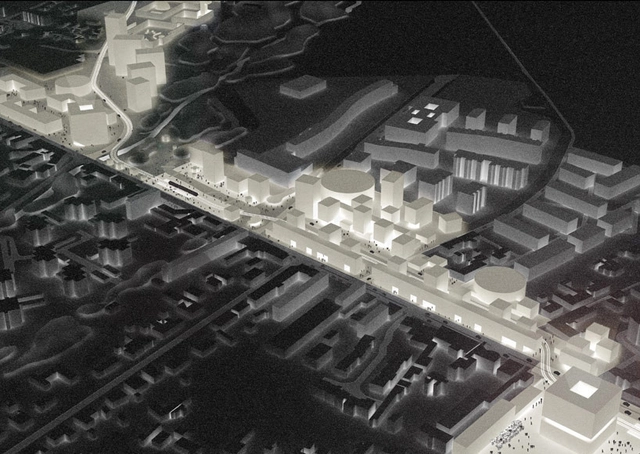
In order to accommodate the expansion of the local tram system, La Fabrique Métropolitaine de la Communauté Urbaine de Bordeaux has commissioned OMA to design a new major urban development in the southern district of Bordeaux, France. Over the next five years, the masterplan will regenerate the neighborhoods of Bègles and Villenave d'Ornon by forging new connections to Bordeaux's central station and unlocking the potential for both city development and public space.
This project is part of the new identity for the "Porte Sud de Bordeaux" (Bordeaux south gate) and continues OMA's intensive recent engagement in Bordeaux, as the office has been working since 2010 on the masterplan for 50,000 new housing units in the city.
More on OMA’s Bordeaux masterplan after the break...
In an effort to “unlock people’s imaginations” about Penn Station and Madison Square Garden, the Municipal Art Society (MAS) of New York has challenged Santiago Calatrava, Diller Scofidio + Renfro, SHoP Architects and SOM to propose four new visions that exemplify the potential of the highly disregarded area.
The challenge comes amidst a heated debate on whether or not the city should restrict Madison Square’s recently expired special permit to 10 years, rather than in perpetuity as the arena’s owners - the Dolan family - has requested. This would allow time for the city to “get it right” and come up with a viable solution for the arena and station that would not only “improve the safety and quality of life for millions of people but also benefit the economy”. Think Kings Cross in London. With a thoughtful mix of public and private investments, the crime-ridden transfor station was transformed into a thriving cultural destination.
Remember spending hours of your fleeting youth in front of the computer screen, building lively and complex towns with vibrant neighborhoods, schools, shopping centers, industry, power plants.. only to have them all destroyed by an unforeseen asteroid or UFO?
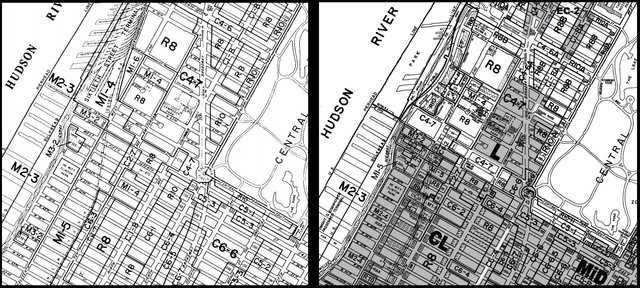
Let’s dump the word “zoning,” as in zoning ordinances that govern how land is developed and how buildings often are designed. Land-use regulation is still needed, but zoning increasingly has become a conceptually inappropriate term, an obsolete characterization of how we plan and shape growth. - Roger K. Lewis
Zoning, just over a century old concept, is already becoming an outdated system by which the government regulates development and growth. Exceptions and loopholes within current zoning legislation prove that city planning is pushing a zoning transformation to reflect the goals and needs of city building today and in the future. To determine how zoning and land use need to change we must first assess the intentions of future city building. Planners and architects, legislators and community activists have already begun establishing guidelines and ordinances that approach the goals of sustainability and liveability. The AIA has established Local Leaders: Healthier Communities through Design and has made a commitment to the Decade of Design: Global Solutions Challenge. NYC has come up with Active Design Guidelines: Promoting Physical Activity and Health in Design and its Zone Green initiative in regards to updating its zoning resolution. Philadelphia has augmented its zoning to include urban farms and community gardens. It is safe to assume that many other cities will follow this precedent.
Approaching zero-waste is a matter of changing the way our culture thinks about use and reuse. It's not an impossible task, and San Francisco is leading the march to establish a feasible means of enacting public policy, structuring programs and educating the public on what it means to be "zero-waste". With a goal set for 2020, SF hopes to keep 100% of its waste out of landfills. Mayor Ed Lee estimates that the leading waste management company "Recology" is diverting nearly 80% of trash from landfills to be recycled or turned into compost. This begins with a public policy that sets a standard and gains traction as citizens embrace the goals of the city. Support programs reinforce these guidelines that eventually become habits and a cultural response to treating our environment.
Read on after the break for more on San Francisco's road to "zero-waste".



![Call for Applications: Summer [IN]STITUTE in Environmental Design - Featured Image](https://snoopy.archdaily.com/images/archdaily/media/images/56b9/3371/e58e/ceb6/6800/0063/slideshow/open-uri20160209-24257-hr7uny.jpg?1454977894&format=webp&width=640&height=580)
.jpg?1427129017 "Train Station. Image © SOM")