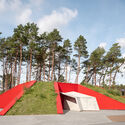
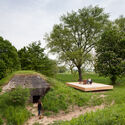
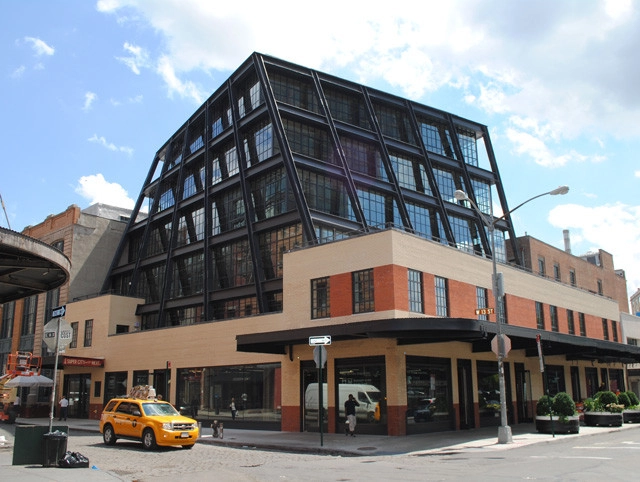
Vivos xPoint, USA. Image by VigilanteScout, CC BY-SA 4.0, via Wikimedia Commons
Inverting the conventional narrative, this story begins at the end. The day after the world's collapse. While almost the entire population struggles to survive flames and solar storms, a tiny fraction is greeted by a heavily armed guard at the entrance to the Survival Condo Project, a former missile silo in Kansas converted a few years ago into luxury apartments.
Forget, then, the hermit who stockpiles canned food in his basement or the end-times prophet. In recent years, survivalism has expanded into wealthier circles, taking root in Silicon Valley among technology executives and hedge fund managers. What could once be seen merely as an eccentricity has also become a way of thinking about the future and, for some, an investment.
One of the principles of comedy is that you “punch up.” If you have to make fun of someone or something, make sure it’s more prominent than you, and deserving. You can’t get much higher than Santa Clara, California, and you can’t get much more deserving. Santa Clara is, arguably, the city at the heart of Silicon Valley, a globally famous urban region that is so ill-defined as to deny its own existence. Those ranch houses and corporate headquarters represent a distinctly 21st-century brand of power. And a distinctly 20th-century brand of urbanism.
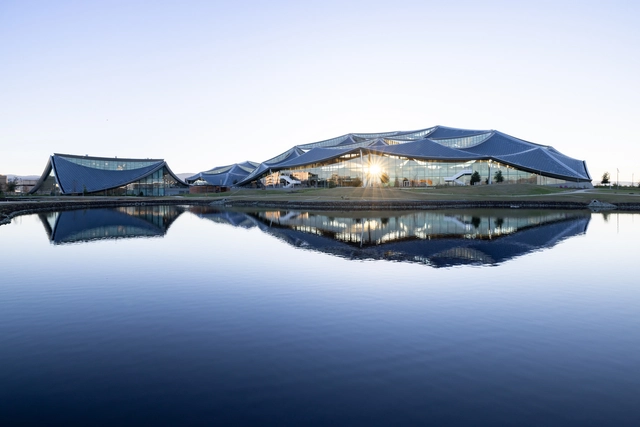
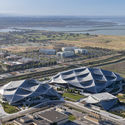
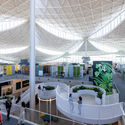
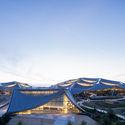
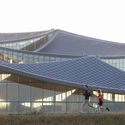
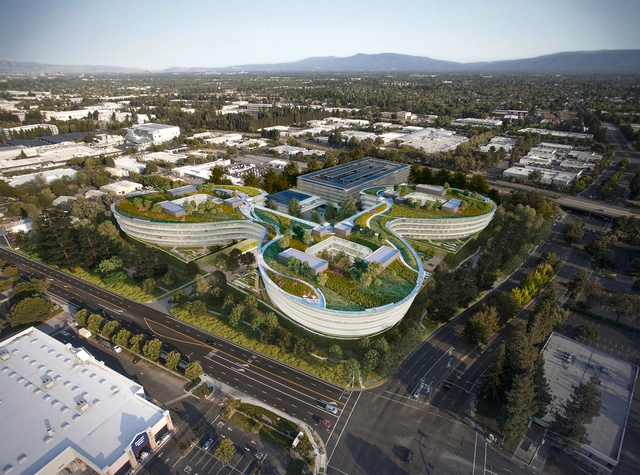
Google’s first ground-up campus, designed by BIG - Bjarke Ingels Group and Heatherwick Studios in collaboration with Google’s design and engineering teams, opened in Silicon Valley. The campus’ mission is to create a human-centric design for the future of Google’s workplace and set new global sustainability standards for construction and office design. The site aims to operate entirely on carbon-free energy by 2030; it integrates the most extensive geothermal pile system in North America and is net-water positive. The campus also includes 17 acres of high-value natural areas, including wet meadows, woodlands, and marsh.
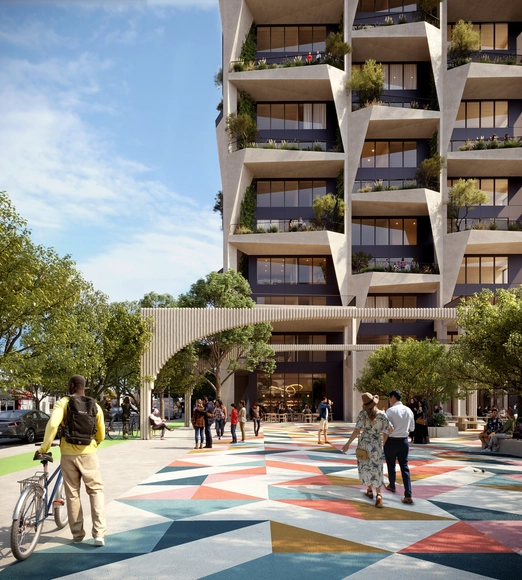
Danish architect Bjarke Ingels has joined forces with technology and real estate professionals Nick Chim and Roni Bahar to create Nabr, a new housing company that offers residents custom and sustainable apartments at scale with a path to ownership. The real estate tech startup has debuted its first development SoFA One in the heart of San Jose's South of First Area (SoFA) cultural district in Silicon Valley, and will allow residents to customize their space using Nabr's digital platform, and choose between different designs and financing packages.
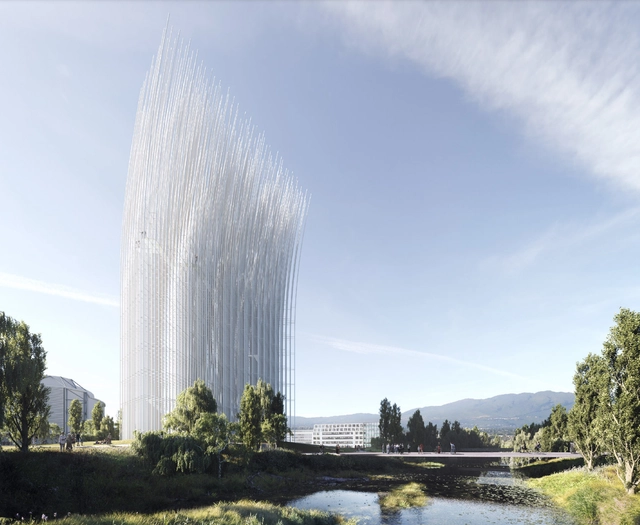
SMAR Architecture Studio has won the Urban Confluence competition to envision a new landmark for Silicon Valley. The Breeze of Innovation project is a forest of kinetic rods swaying in the wind creating a mesmerizing visual effect.
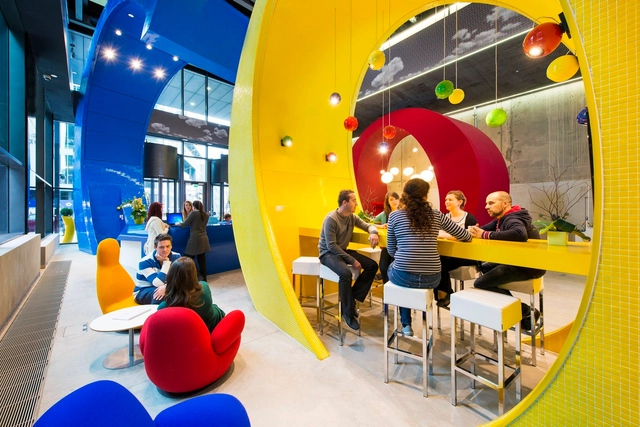
Architecture, unlike other aspects of culture (such as fashion or music), can only really be experienced and understood in person. For highly branded companies, designing a new building can be a prime opportunity to signal taste and values - but also creates an interesting architectural conundrum. While the buildings will be inhabited (nearly 24/7) by company employees, they’re also very much populated by the imaginations of people across the globe. What is it like to be in these places?
The AIASilicon ValleyDesign Awards program recognizes the outstanding achievements in architecture and design of Silicon Valley individuals and organizations as well as celebrates the distinguished work of architects and related professionals from afar who contribute to the framework of our local built environment. The program serves to inform the public of the breadth and value of architectural practice.
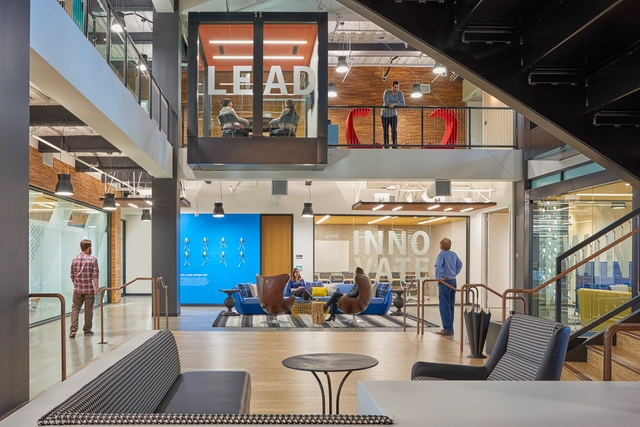
Symantec HQ - The building features a blend of natural materials, bold colouring, and branding. Image Courtesy of Little
Architecture continually evolves to meet societal demands. Recently, a global effort to tackle climate change, and to achieve optimum energy efficiency in buildings, has brought standards such as BREEAM and LEED to the fore. However, as scientific analysis and awareness of human mental health has increased, architects are once again required to place humans at the centre of the design process. This growing trend has led to the development of WELL Building Certification – considered the world’s first certification focused exclusively on human health and wellbeing.
In the beginning of 2010, Russian President Dmitri Medvedev announced the creation of a “Silicon Valley for Russia,” to be located in a southern suburb of Moscow, that would feature research facilities, university laboratories, start-ups, meeting hubs, and housing. After an international competition in 2011, each of the districts within this larger project was awarded to its own architect. After careful planning, Agence d’Architecture A. Bechu & Associés has unveiled its design for District 11 of the project.
Concentrating on ecological housing, this district will contain individual houses dedicated to researchers and their families, under the greater goal of positive social interactions.
Form4 Architecture’s project, Innovation Curve Technology Park, has been honored by the Green Good Design Awards presented by The European Centre for Architecture, Art, Design, and Urban Studies, in collaboration with The Chicago Athenaeum’s Museum for Architecture and Design.
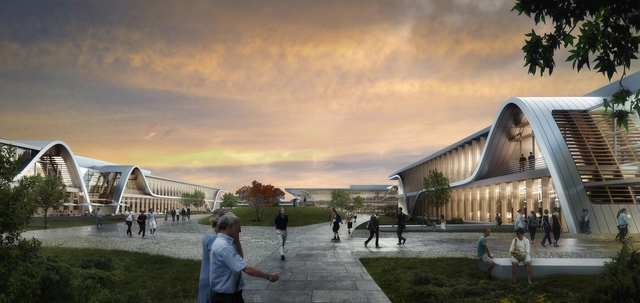
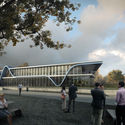
The project, which recently broke ground in Palo Alto, California, “celebrates the creative process of invention” through its sweeping metal curves, which represent the highs and lows of exploratory research and development. The tall, two-story curves “rise to represent the crescendo of the creative spark and pragmatic analysis of ideas, and descend to transition into long, horizontal bands symbolizing the implementation phase of invention.”
Plans for Apple's newest California "spaceship" has been unveiled. Named after its bordering streets, Central & Wolfe hopes to transform a 1970s office park in Sunnyvale into a "futuristic office campus." The 19 acre site, located just five miles from Apple's main Cupertino campus (currently underway), was designed by HOK and is currently under review.
If built, it will replace nine aging buildings with a clover-like design comprised of three interconnected structures - each rising six stories.
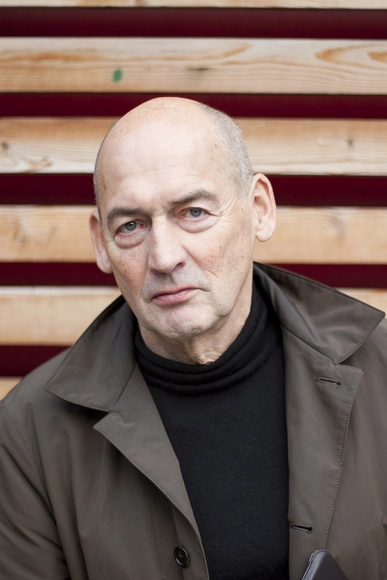
How will technology that began in Silicon Valley change global urbanism and the elements of architecture? In this video from the 2014 Venice Biennale, inventor, designer and entrepreneur Tony Fadell discusses technology and its emerging impact on architecture with Rem Koolhaas. As a co-founder of Nest Labs, Fadell played a major role in developing the first Apple iPod and has taken his knowledge of interactive user interface with him to change one of the most basic interface elements in our homes – the thermostat. With adaptive technologies becoming increasingly prevalent in our daily lives, Koolhaas discusses the potential ramifications of technological architecture with concerns ranging from privacy to individual freedoms and more.
837 Washington Street. ImageImage via New York YIMBY
For many architects, the chance to make an impression on the landscape of New York City is a sign of distinction, an indication that they have "made the big time." But it's not just architects who have this desire: for decades, the city's big industrial players have also striven to leave their mark. However in this article, originally posted on New York YIMBY as "How New York City is Robbing Itself of the Tech Industry’s Built Legacy," Stephen Smith examines where it's all gone wrong for the city's latest industry players.
Strolling through the streets of Manhattan’s business neighborhoods, you can pick out the strata of the city’s built commercial heritage, deposited over generations by industries long gone. From the Garment District’s heavy pyramidal avenue office towers and side street lofts, dropped by the garment industry in the 1920s, to the modernist towers like Lever House and the Seagram Building, erected on Park and Fifth Avenues during the post-war years by the country’s giant consumer goods companies, each epoch of industry left the city with a layer of commercial architecture, enduring long after the businesses were acquired and the booms turned to bust.
But 50 or 100 years into the future, when our grandchildren and great-grandchildren stroll through the neighborhoods of Midtown South that are today thick with technology and creative firms, they are not likely to find much left over from the likes of Facebook or Google. There will be no equivalent of Grand Central or Penn Station, Terminal City or the Hotel Pennsylvania, left over from the early 20th century railroad tycoons, or SoHo’s cast iron buildings, developed by speculators seeking to feed the growing textile and dry-goods trades of the late 19th century. Perhaps unique among New York’s large industries, the tech and creative tenants that have become the darlings of the current market cycle are leaving very little behind for future generations to admire.
https://www.archdaily.com/582049/why-are-there-still-no-built-traces-of-new-york-s-tech-industryStephen Smith
A first for the AEC Industry, the AEC Hackathon is a non-profit event that brings together teams of Silicon Valley technologists and industry stakeholders to help shape the future of our built environment. Formatted as a traditional "hack", the AEC Hackathon provides a playful, exploratory environment where disruption, innovation, and creative ideas are brought to life.
A render from Aditazz's entry to the Small Hospital, Big Idea competition. Image Courtesy of Aditazz
This article, originally posted in Metropolis Magazine as "Derek Parker's Third Act," tells the story of Aditazz, a Silicon Valley design startup founded by Deepak Aatresh, an entrepreneur with a background in silicon chip manufacturing. Now in collaboration with Derek Parker, a renowned veteran with six decades of experience in healthcare design, the pair could be set to revolutionize the way that hospitals are designed and built.
In June 2011, Derek Parker boarded a plane at San Francisco International Airport. The veteran health-care architect was headed to San Diego to deliver the most improbable presentation of his illustrious, six-decade-long career. For six months, he had worked as a consultant with a Silicon Valley design start-up called Aditazz. Shortly after Parker signed on, the new company had entered Small Hospital, Big Idea—a design competition launched by Kaiser Permanente. The first round, in which the firms remained anonymous, drew more than 400 entries. Eight of the nine shortlisted firms invited to San Diego were industry heavyweights. The ninth, to everyone’s surprise, was the unknown Aditazz.
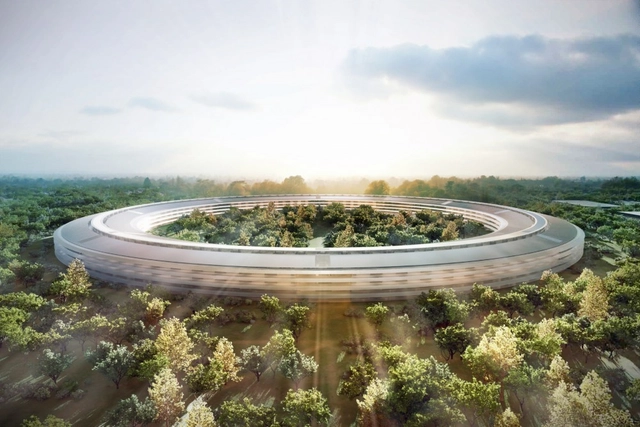
The estimated cost of Apple’s Cupertino City headquarters has escalated from an already hefty price of $3 billion to $5 billion (more than $1,500 per square foot), reportedly pushing back the original completion date to 2016. According to Bloomberg, Apple is working with lead architect Foster & Partners to shave $1 billion from the “ballooning budget”. Most of the cost is seemly due to Steve Job’s “sky-high requirements for fit and finish”, as the tech legend called for the 2.8 million square foot, circular monolith to be clad 40-foot panes of German concave glass, along with its four-story office spaces be lined with museum-quality terrazzo floors and capped with polished concrete ceilings.
Although lambasted for his ambitious plans and “doughnut-shaped” design, Steve Jobs wanted to create a masterpiece that looked as good as it functioned, just like his products. During a 2011 presentation to the Cupertino City Council, Jobs stated, “This is not the cheapest way to build something... there is not a straight piece of glass in this building.” He continued, “We have a shot... at building the best office building in the world. I really do think that architecture students will come here to see it.”