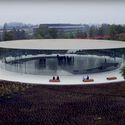
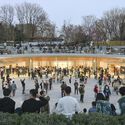
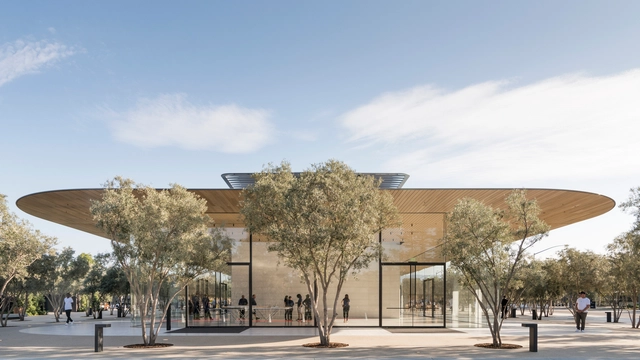
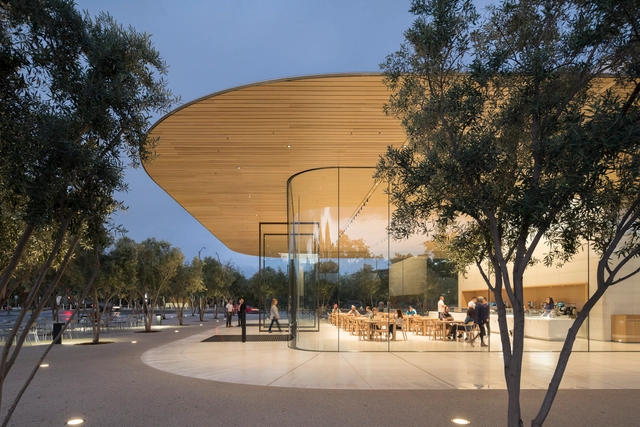
In 2026, Apple marked fifty years since its founding. Over the past two decades, Apple has developed a consistent architectural language that extends its brand into the built environment, transforming stores, workplaces, and public-facing spaces into active components of its identity. These environments guide movement, frame interaction, and condition the ways in which users encounter both products and the company itself.
From the handheld device to the urban interior, Apple has sought to maintain a high degree of control over form, material, and experience. Architecture becomes part of this system when the company begins to define how it is perceived and engaged with in physical space. Research on retail environments has shown how spatial layout, visibility, and circulation patterns can shape behavior and interaction, turning architecture into an interface between brand and user.
Apple has released updated plans revealing an ambitions solar installation for their proposed campus in Cupertino. Announced back in June, the campus will include an office, research and development building, research facilities, corporate auditorium, fitness center, a central plant and associated parking. Foster + Partners will collaborate with ARUP North America and local civil engineering firm Kier & Wright for the completion of the project.
Last week the Internet and architecture blogs went crazy after Steve Jobs presented the new Apple Campus to the city of Cupertino, California.
Rumors about Foster + Partners (an office with a high expertise on work environments) working with Apple on this new campus appeared on December last year on a Spanish newspaper, but there was never an official confirmation (or denial). But given that the actual project fits with the information we received from an anonymous tipster last December, it seems it could be right:
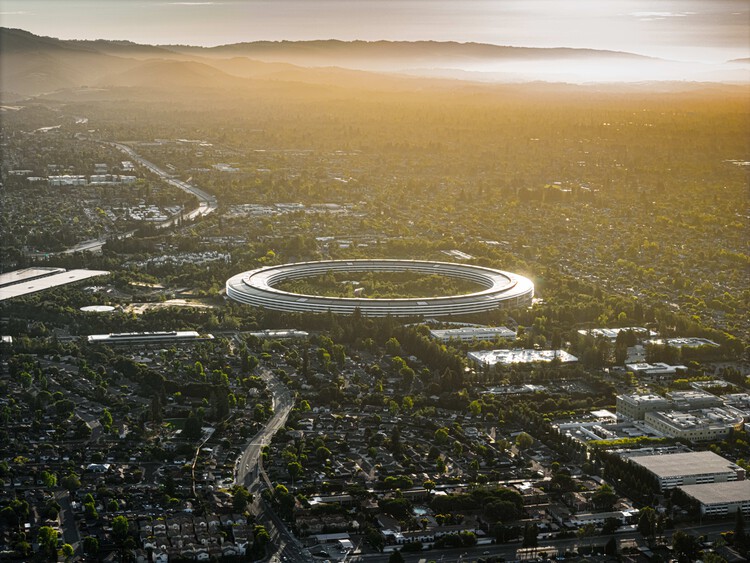
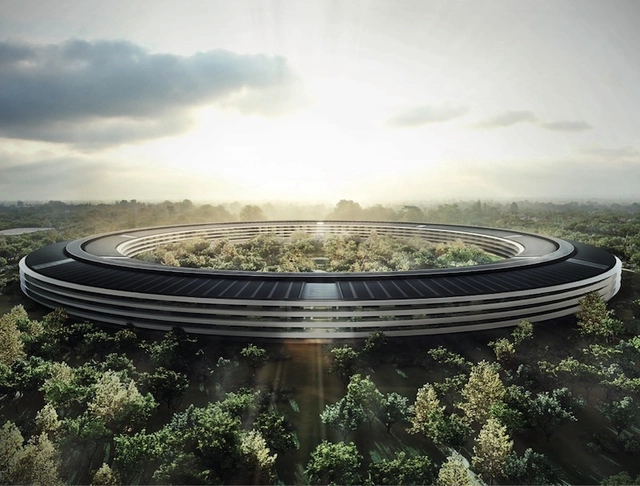
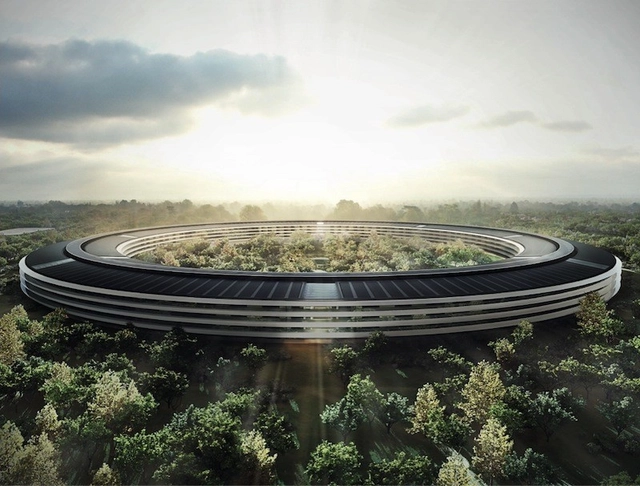
“I recently got a tour of Norman Foster’s office in London and saw some images of the Apple Campus design. I believe the main building will be a large donut shaped building with all the offices and labs surrounding a large garden. It was a very pure form which connects to some of the recent Apple stores, but I was surprised that it didn’t really scream Apple to me. Of course it could have been a very preliminary design that wasn’t fully resolved yet. Anyway, I just thought I would pass on some info.”
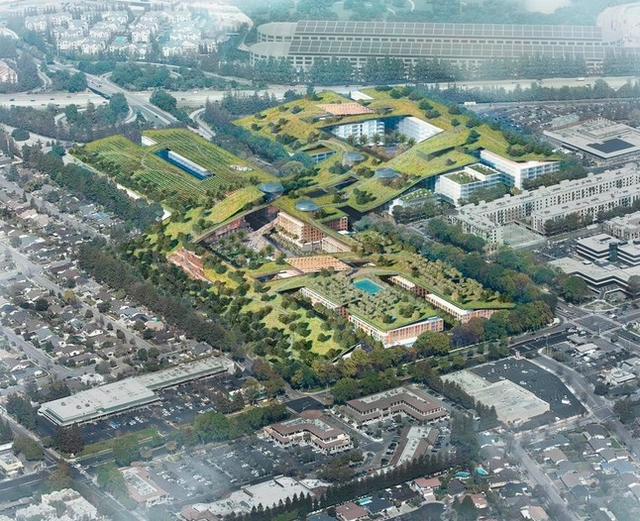
During Steve Job’s presentation to the city of Cupertino we could see this round building, and Jobs outlined several facts on how this new campus for 12,000 people will improve the 98-acre site, such as taking parking underground to reduce the footprint, increasing landscaping from 20% to 80%, and planting more trees (3,700 now, 6,000 in the future). It even includes its own natural gas based energy generation plant (as seen on the drawings) with the electrical grid as backup.
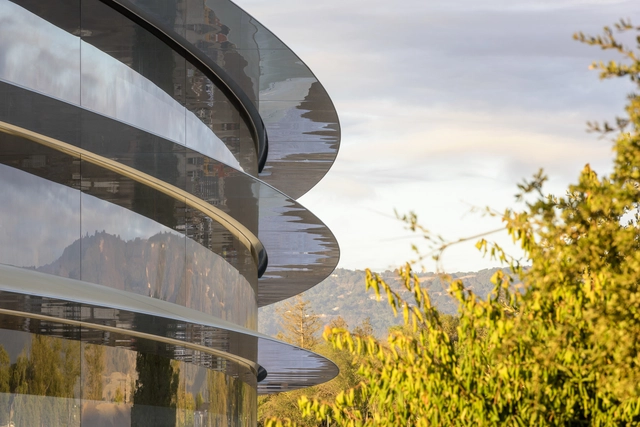
“It’s a pretty amazing building. It’s a little like a spaceship landed. It’s got this gorgeous courtyard in the middle… It’s a circle. It’s curved all the way around. If you build things, this is not the cheapest way to build something. There is not a straight piece of glass in this building. It’s all curved. We’ve used our experience making retail buildings all over the world now, and we know how to make the biggest pieces of glass in the world for architectural use. And, we want to make the glass specifically for this building here. We can make it curve all the way around the building… It’s pretty cool.”
We reached Steve Jobs over the past weekend to get more details about the project and he said that he wasn´t interested in presenting the project on ArchDaily at this time, possibly because the project still needs to be approved by the city. We hope to bring you more details later on, so you can have an informed opinion.
More images from the presentation after the break.