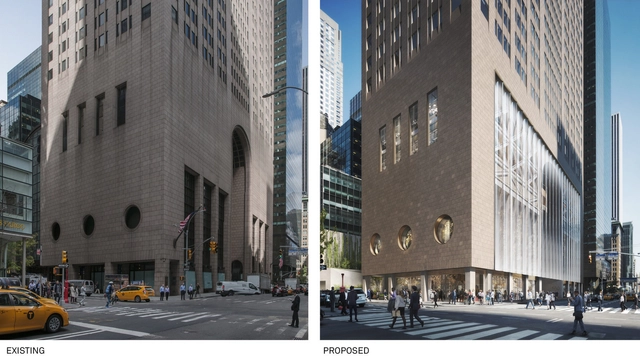
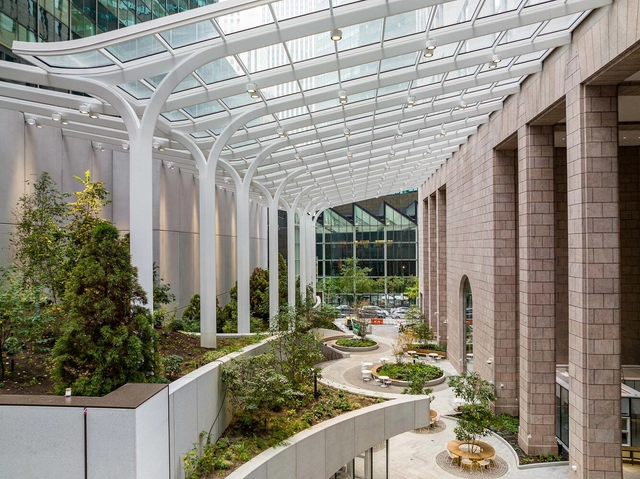
550 Madison Avenue (née the AT&T Building, more recently Sony Plaza) is among the more recognizable figures on New York’s skyline. Designed by architect-provocateur Philip Johnson, the 37-story skyscraper stands out thanks to its curious headgear: a classical pediment broken by a circular notch, inviting frequent comparisons to the top of a Chippendale grandfather clock. A singular, if largely inoffensive presence on today’s icon-heavy streetscape, the design was positively shocking on its debut in 1979, when Johnson himself appeared on the cover of Time holding a model of the project, then still four years from completion. The image heralded the arrival of something new in American architecture: the fading of the flat-crowned Modernist towers of the midcentury and the onset of the Postmodernist wave.
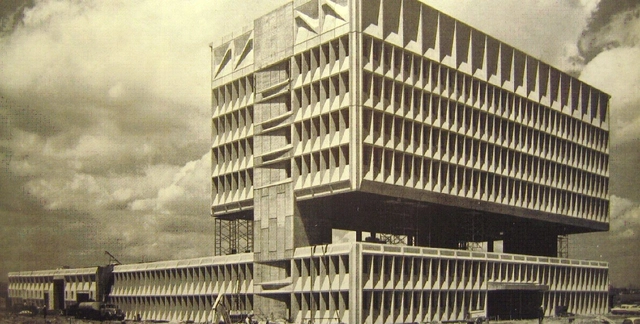
Theodore Prudon, the founding president of Docomomo US, recently stepped down as the organization’s head. (Robert Meckfessel is the new president.) “Docomomo” is shorthand for the group’s mission: the documentation and conservation of buildings, sites, and neighborhoods of the Modern movement. Prudon has had a storied career as a preservationist, architect, and educator, heading his own practice and teaching at Columbia University. In October, he was presented with the Connecticut Architecture Foundation’s Distinguished Leadership Award at the newly reborn Marcel Breuer building in New Haven, which began its life in 1970 as the Pirelli Tire Building and is now the Hotel Marcel (designed, planned, and developed by architect Bruce Redman Becker).
https://www.archdaily.com/992013/theodore-prudon-modernism-has-never-been-a-popular-movementMichael J. Crosbie
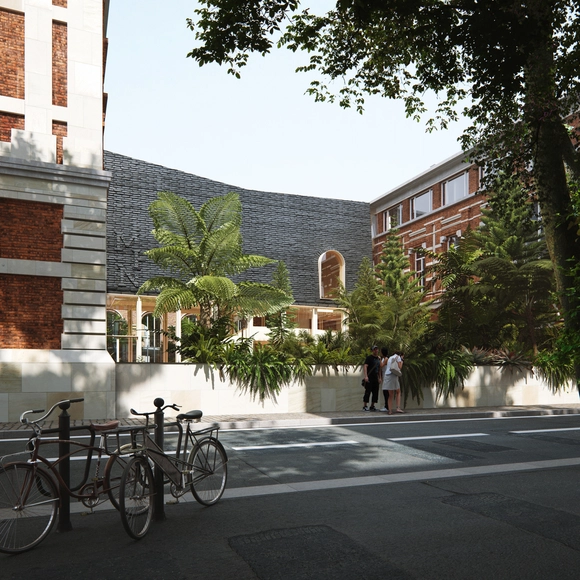
The Natural History Museum Of Lille in France will undertake a significant architectural transformation for its 200th anniversary. Snøhetta, selected to restore and modernize the complex, with a transdisciplinary team featuring the scenographer Adeline Rispal and the landscape architects of Taktyk, imagines a renovation that will support the city's ambition to combine urban renewal with the preservation of the city's historic architecture. Planned for completion in 2025 and with a total of 7,500 m², the restoration will accommodate flexible exhibition areas, more extensive storage, and gardens.
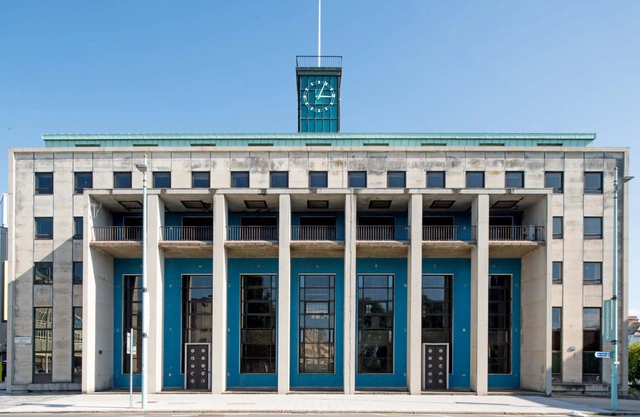
The National Provincial Bank in Plymouth, Southwest England, completed in 1959 and designed by the bank’s architecture department with BC Sherren serving as chief architect. . Image Courtesy of Elain Harwood
The term “mid-century modern” conjures up images of a sharp-suited Don Draper, slender teak cabinets, and suave chairs from Scandinavia. That is, at least, one perspective of the design movement and a view more of 1950s-era Manhattan offices than anything else. But in Britain, mid-century modernism manifested as something slightly different, coming in the form of schools, cathedrals, housing, and an era-defining festival, all eloquently described and illustrated by the prolific architectural historian Elain Harwood in Mid-Century Britain: Modern Architecture 1938-1963.
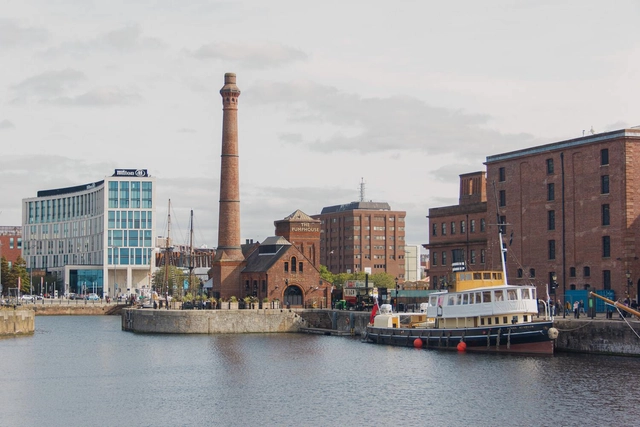
This month, UNESCO has announced a series of decisions concerning important heritage sites, giving rise to conversations around preservation and urban development. Last week, the World Heritage Committee decided to strip Liverpool of its heritage status, as the new developments are considered detrimental to the waterfront's integrity. These projects placed the city on the List of World Heritage in Danger in 2012, a designation which Venice managed to avoid earlier this week, due in great part to the recent ban on cruise ships.
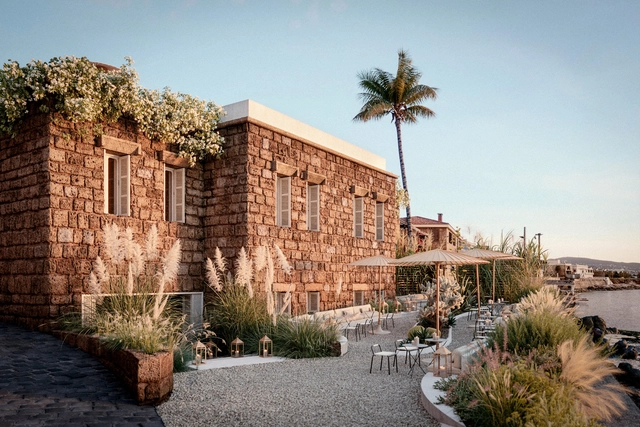
Batroun Boutique Hotel . Image Courtesy of Carl Gerges Architects
Last year, Archdaily inaugurated its first edition of Young Practices, an initiative meant to highlight emerging offices that pursue architectural innovation. Carl Gerges Architects is a Lebanese practice whose body of work is a careful consideration of culture, context, and heritage. Villa Nadia and Batroun Boutique Hotel are two of the studio’s unbuilt projects that showcase the assemblage of architectural tradition and contemporary design, informed by a poetic sensibility and a deep understating of the local social, environmental and historical landscape.
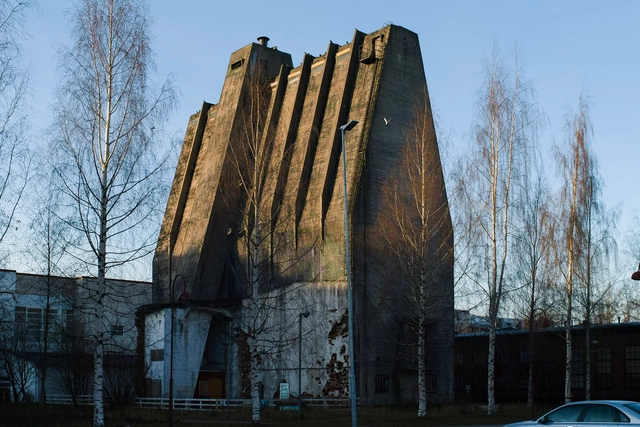
Skene Catling de la Peña and Factum Foundation are transforming Alvar Aalto’s iconic wood chip Silo into a research Centre promoting architectural preservation and re-use. The AALTOSIILO, a cathedral-like concrete structure “will become a point of focus for digitizing and communicating the importance of the industrial architecture of the north and – in turn - the impact industry has had on the environment”.
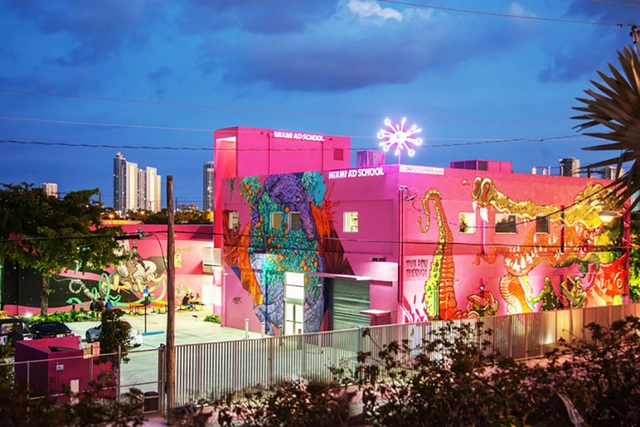
During the 20th century, Miami Beach reinvented itself several times, from Gilded Age mecca to Art Deco capital, to glamorous 1950s destination, only to become a faded has-been resort by the 1970s. The preservation movement that began in the 1970s and 1980s became its saving grace. By the 1990s Miami Beach, especially its South Beach neighborhood, was one of the hippest communities in the United States, drawing notable European residents like Gianni Versace.
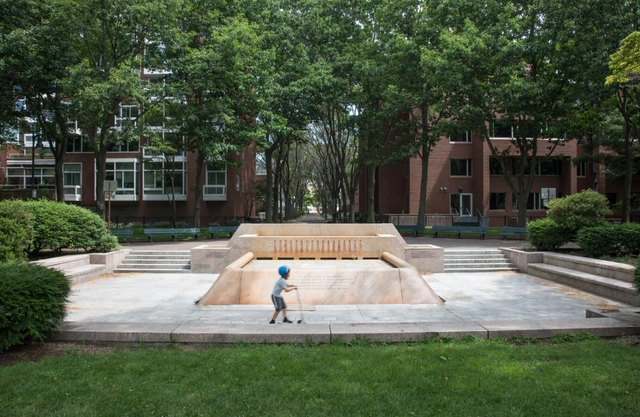
The Cultural Landscape Foundation (TCLF) has released its 2020 edition of Landslide, an annual in-depth report produced by the Washington, D.C.-based nonprofit that profiles—and raises awareness of—a geographically diverse number of at-risk American parks, gardens, horticultural features, working landscapes, and “and other places that collectively embody our shared landscape heritage.”
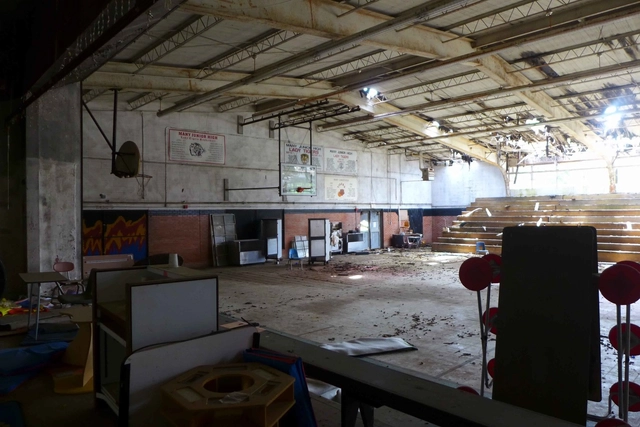
Throughout the south of the United States, hundreds of mid-century “equalization schools”—public schools built in the 1950s following Brown vs. Board of Education in a desperate effort to maintain segregated “separate but equal” schools in southern states—sit empty, abandoned, and crumbling.
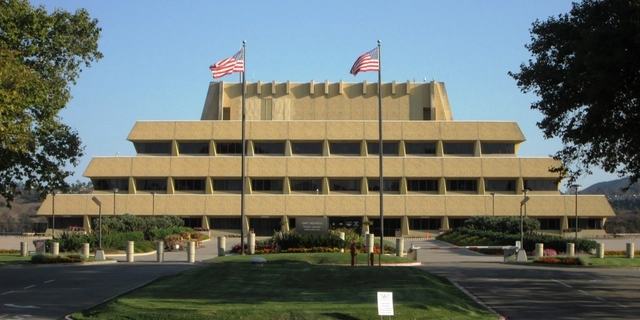
The Chet Holifield Federal Building in Laguna Niguel, California—better known to locals as the “Ziggurat” for obvious reasons—is reportedly at risk of demolition. The six-story, one-million-square-foot government services building is on the chopping block as the U.S. Public Buildings Reform Board, responsible for unloading federal facilities, will likely sell the structure as early as next year.
In the 20th Century, New York City became an epicenter of newly constructed buildings that quickly gained an iconic status. While they greatly influenced new ways that we think about aesthetics and space, many of them met their demise less than 60 years after their commissioning. It seems that in the modern age of mass development, and where a wrecking ball symbolizes progress forward, no building is safe. The tenacity to tear down even these structures deemed to be culturally significant speaks to how architects are quick to dismiss ideas about how long we plan for buildings to live and how we decide when its time for them to come down.
Exterior rendering of Menokin’s “The Glass House Project". Image Courtesy of Machado Silvetti
Menokin Foundation has begun construction on its “Glass House Project”, a new initiative in the preservation of historic landmarks. Protecting what remains from the 1769 house, the intervention will replace missing walls, floors, and sections of the roof with glass. Designed by Machado Silvetti, in collaboration with glass engineer Eckersley O’Callaghan, and landscape designer Reed Hilderbrand, the project will be developed in phases, to be completed in 2023.
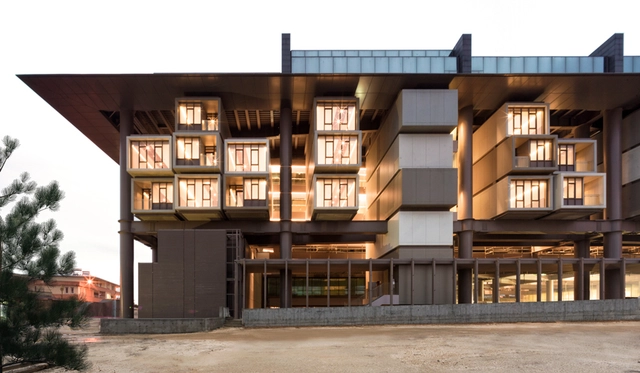
As its name implies, the Antakya Museum Hotel is an unlikely hybrid in its program and architecture. As to the latter, the structure combines prefabricated concrete blocks with steel—a lot of it.. Image Courtesy Cemal Emden
Designed by EAA–Emre Arolat Architecture, the 199-room hotel in Antakya, Turkey, features prefab modules slotted into a massive network of steel columns.
The urban surfaces we walk on, planed sidewalks cleared of debris or asphalt streets kept in good repair, are simply the topmost layers of human-churned earth extending sometimes hundreds of feet belowground. In some cities, digging downward exposes dense infrastructure networks, while in others—Antakya, Turkey, for one—construction workers can’t turn over a rock without uncovering priceless relics. The newly opened Antakya Museum Hotel, designed by the firm EAA–Emre Arolat Architecture, has turned one such discovery into a bold new strategy for historic preservation.
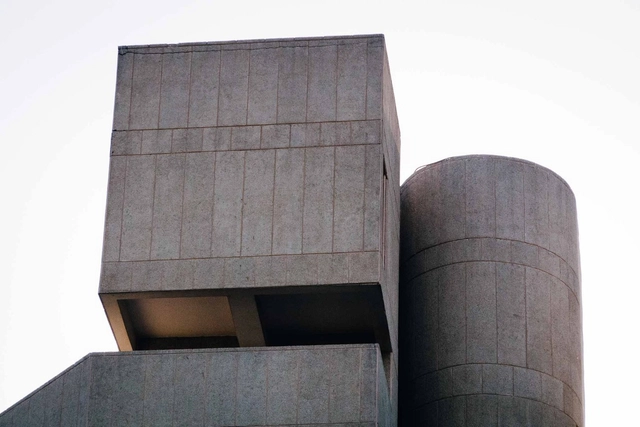
Brutalism is merely a basic equation of reinforced concrete + geometry, but while the result of this equation is rather minimal, the architecture movement remains as one of the most debatable styles, ranging between “fascinating structures” and “is it even worth preserving”.
While many perceive Brutalism as “ugly” or “incomplete”, 17 year-old Arhan Vohra found glory in these modernist structures and launched Brutal Delhi, a photography website of New Delhi’s Brutalist buildings, shot through his camera lens.
Notre-Dame Cathedral, one of the most beloved Gothic landmarks in Paris and Europe, is engulfed by flames this evening as a major fire broke out on the cathedral’s roof. As detailed by The Guardian, it is believed that the fire may be linked to restoration works currently underway. Video footage below shows the iconic spire of the 850-year-old Gothic building collapsing, with fears that the cathedral's wooden interior is under threat. In a glimmer of hope, fire officials have confirmed that the main structure has been "saved and preserved."
Facing plans for a major renovation that would significantly alter the street presence of the building, Philip Johnson’s Postmodern icon, 550 Madison (formerly AT&T Building) has now cleared the first stage in the process of becoming a designated New York City landmark.
Today, an application to schedule a hearing to landmark the building was approved unanimously by the city’s Landmarks and Preservation Commission (LPC). In a few months time, the LPC will hold a public forum for the building, followed by a deliberation on whether or not the tower deserves official landmark status.




















.jpg?1592208513&format=webp&width=640&height=580)






.jpg?1555354131&format=webp&width=640&height=580)
.jpg?1555354121 "© Erieta Attali")
.jpg?1555354162 "© Erieta Attali")

.jpg?1555356897 "© Erieta Attali")
.jpg?1555354131)