1. ArchDaily
  2. 550 Madison

550 Madison: The Latest Architecture and News

Cultivating “A Certain Warmth” Inside 550 Madison, One of Manhattan’s Quirkiest Towers

Subscriber Access | 

550 Madison Avenue (née the AT&T Building, more recently Sony Plaza) is among the more recognizable figures on New York’s skyline. Designed by architect-provocateur Philip Johnson, the 37-story skyscraper stands out thanks to its curious headgear: a classical pediment broken by a circular notch, inviting frequent comparisons to the top of a Chippendale grandfather clock. A singular, if largely inoffensive presence on today’s icon-heavy streetscape, the design was positively shocking on its debut in 1979, when Johnson himself appeared on the cover of Time holding a model of the project, then still four years from completion. The image heralded the arrival of something new in American architecture: the fading of the flat-crowned Modernist towers of the midcentury and the onset of the Postmodernist wave.


Cultivating “A Certain Warmth” Inside 550 Madison, One of Manhattan’s Quirkiest Towers - Image 1 of 4Cultivating “A Certain Warmth” Inside 550 Madison, One of Manhattan’s Quirkiest Towers - Image 2 of 4Cultivating “A Certain Warmth” Inside 550 Madison, One of Manhattan’s Quirkiest Towers - Image 3 of 4Cultivating “A Certain Warmth” Inside 550 Madison, One of Manhattan’s Quirkiest Towers - Image 4 of 4Cultivating “A Certain Warmth” Inside 550 Madison, One of Manhattan’s Quirkiest Towers - More Images+ 2

A Tale of Two Buildings: The Argument Behind Preservation and Reuse

In the 20th Century, New York City became an epicenter of newly constructed buildings that quickly gained an iconic status. While they greatly influenced new ways that we think about aesthetics and space, many of them met their demise less than 60 years after their commissioning. It seems that in the modern age of mass development, and where a wrecking ball symbolizes progress forward, no building is safe. The tenacity to tear down even these structures deemed to be culturally significant speaks to how architects are quick to dismiss ideas about how long we plan for buildings to live and how we decide when its time for them to come down.

New York City Grants Approval for Snøhetta's 550 Madison Garden

The New York City Planning Commission approved unanimously the design for 550 Madison Garden created by Snøhetta. The project that re-imagines the privately-owned public space will move forward, after also having received, earlier on, the approval from Manhattan Community Board.

Snøhetta to Transform 550 Madison, Philip Johnson's Iconic Postmodern New York Skyscraper

One of New York’s most iconic Postmodern skyscrapers, the Philip Johnson-designed 550 Madison (formerly AT&T Building) is set to receive a major renovation that will completely transform how the building base interacts with the street.

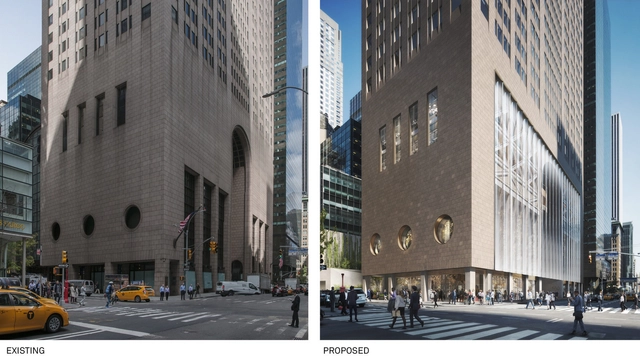
Designed by Snøhetta, the project centers on improving the transparency of its street presence. To do this, the stone facade at the building base will be replaced with a undulating glass curtain wall intended to be more inviting and attractive toward pedestrians, while the existing mid-block public passageway will be opened into a much larger outdoor landscape.

Snøhetta to Transform 550 Madison, Philip Johnson's Iconic Postmodern New York Skyscraper - Image 1 of 4Snøhetta to Transform 550 Madison, Philip Johnson's Iconic Postmodern New York Skyscraper - Image 2 of 4Snøhetta to Transform 550 Madison, Philip Johnson's Iconic Postmodern New York Skyscraper - Image 3 of 4Snøhetta to Transform 550 Madison, Philip Johnson's Iconic Postmodern New York Skyscraper - Image 4 of 4Snøhetta to Transform 550 Madison, Philip Johnson's Iconic Postmodern New York Skyscraper - More Images