This October, architecture across Latin America became a platform for exchange, bringing together discussions on inhabitation, cultural identity, emerging practices, and the relationship between the built environment and its wider context. From conversations on emerging architectural practices and material research at Design Week Mexico to new approaches to housing, landscape, and public space in Chile and Mexico, recent developments highlight how architecture responds to specific local conditions. Across the region, initiatives addressing climate adaptation and heritage recovery in the Dominican Republic and Colombia also bring attention to the changing responsibilities of cultural institutions and the built environment.

Architecture as a Platform for Exchange: Biennials, Design, and Emerging Practices Across Latin America
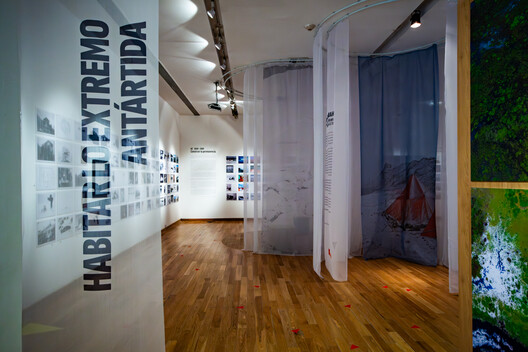
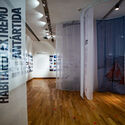
The 20th Buenos Aires International Architecture Biennial brought architecture into a broader conversation about inhabitation, examining how social, cultural, environmental, and political conditions shape the ways people live. Held under the curatorial theme INHABIT, the event brought together international lectures, exhibitions, and public activities across six main venues and partner institutions, with contributions from architects including Smiljan Radić, Solano Benitez, Andrés Jaque, and Marina Otero Verzier. Through discussions on memory, materiality, urban development, and the relationship between architecture and its context, the Biennial positioned inhabitation as a framework for understanding architecture's role in shaping contemporary societies. Its exhibitions and public program continued throughout October as part of Buenos Aires Design and Architecture Month, extending the exchange beyond the International Forum and into the city's cultural institutions.
Related Article
Buenos Aires Architecture City Guide: 31 Sites Between Heritage and the Contemporary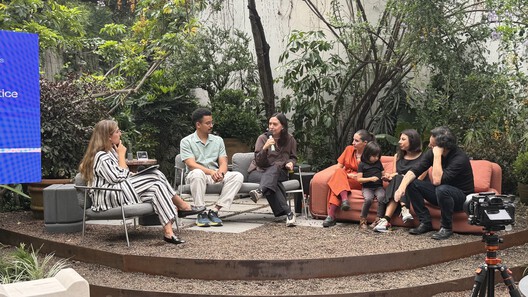
In Mexico City, Design Week Mexico 2026 explored the relationship between identity, craftsmanship, and contemporary design, with Chile participating as Guest Country of Honor and an ongoing collaboration between Mexican artisans and French designers continuing through its intercultural residency program. The event also provided the setting for ArchDaily's Next Practices Live in Mexico, hosted at Design House during the opening week of Design Week Mexico. Moderated by ArchDaily Editor-in-Chief Christele Harrouk, the conversation brought together 2026 Next Practices Awards winners MANUFACTURA, RAMA Estudio, and SOCA, alongside previous Mexican winners ASPJ and Palma, to discuss how emerging practices are expanding architecture's agency through material research, ecological knowledge, cultural engagement, and responses to specific social and environmental conditions.
Featured Projects
Santa Rosa Social Housing / FAR frohn&rojas
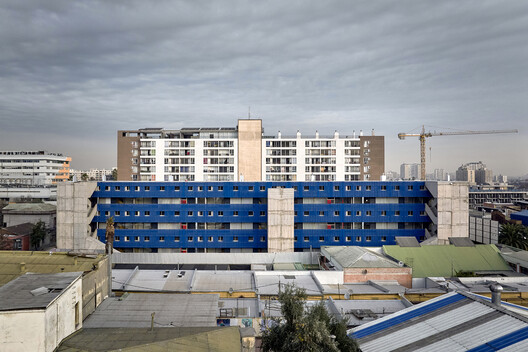
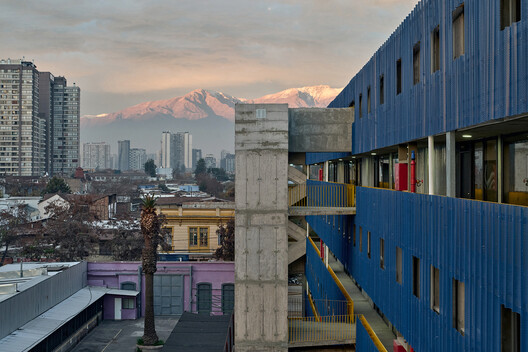
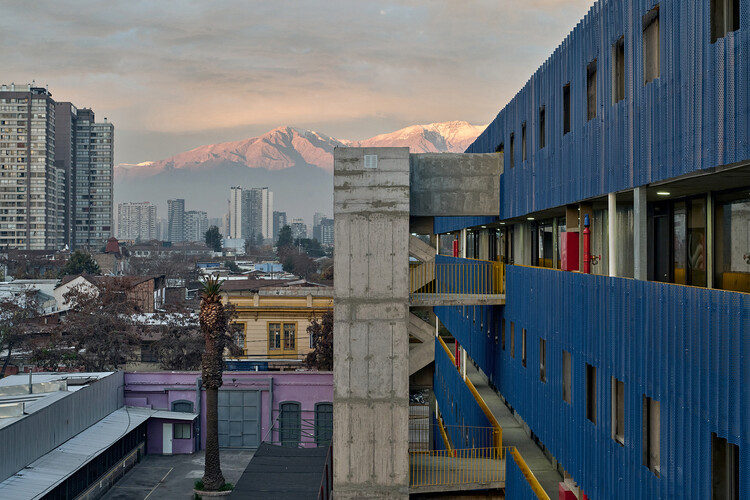
Located along Avenida Santa Rosa in central Santiago, Santa Rosa Social Housing by FAR frohn&rojas explores an alternative approach to social housing by integrating residential units into the city's existing transportation and social infrastructure. Completed in 2026, the 2,337-square-meter project occupies an exceptionally narrow site, measuring less than nine meters wide, which informed the development of a seven-story building organized around a slender concrete structure. Most apartments are duplex units accessed through shared galleries, with living spaces opening onto circulation areas and bedrooms positioned on the upper levels. A perforated blue metal screen provides shading while preserving the expression of the raw concrete structure, and shared verandas introduce communal outdoor spaces. Developed through Chile's DS-49 social housing program, the project also incorporates a strategy to support the long-term maintenance of shared amenities through advertising revenue generated by its north-facing façade.
Rancho del Abuelo / Mendiola Arregui
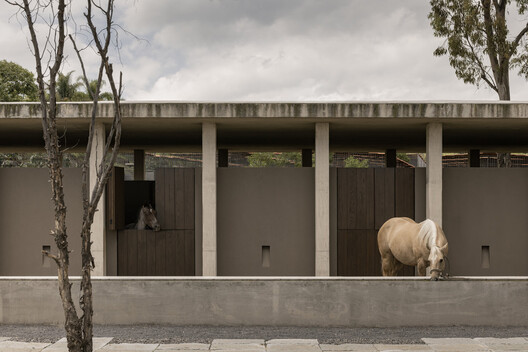
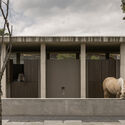
Located on the outskirts of Guadalajara, Mexico, Rancho del Abuelo by Mendiola Arregui is a 994-square-meter equestrian complex completed in 2026 that brings together facilities for horse care, recreation, and gathering within an existing landscape. The project is organized as a series of independent pavilions positioned in response to the site's existing conditions, with a shared architectural system connecting their different programs. Flat concrete roofs supported by columns establish a consistent structural framework, while independent walls define individual spaces and shape circulation, framing views of the landscape and surrounding trees. The separation between the roofs and walls allows natural light and ventilation to permeate the complex, creating a sequence of pathways, courtyards, and shaded areas.
Urban Mantle / Felipe Burgos Villablanca
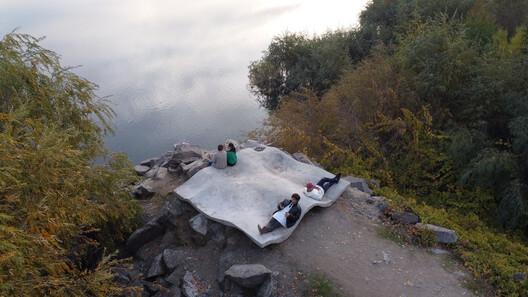
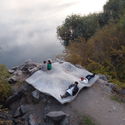
Located along the Loncomilla River in San Javier de Loncomilla, Chile, Urban Mantle by Felipe Burgos Villablanca is a 16-square-meter public installation that seeks to reconnect the city with its riverfront and historical landscape. Developed as a contemplative seating structure, the project responds to the site's former role in colonial maritime trade and its gradual disconnection from the urban fabric. A curved concrete surface accommodates different resting positions, transforming an informal riverside gathering area into a space for rest, meditation, and landscape observation. Drawing on the work of Enric Miralles and Anne Holtrop, the design combines an organic form with a material approach that embraces the construction process and its imperfections.
On the Radar
Santo Domingo Tests UNESCO Climate Action Toolkit for Historic Heritage
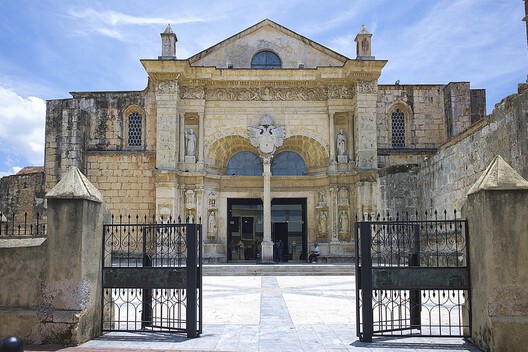
The Colonial City of Santo Domingo in the Dominican Republic became the first cultural World Heritage property in Latin America and the Caribbean to pilot UNESCO's Climate Action Toolkit. Held from October 5 to 9, the workshop brought together heritage conservation, urban planning, and disaster risk management specialists to assess how hurricanes, heavy rainfall, and flooding could affect the historic center. Developed by UNESCO alongside ICCROM, ICOMOS, and IUCN, the toolkit connects climate projections and local knowledge with heritage management and planning strategies. The pilot will contribute to the development of a climate action plan for the historic district, highlighting the importance of integrating climate preparedness into the conservation of living urban heritage.
Colombia Mobilizes Cultural Institutions to Support Post-Earthquake Heritage Recovery
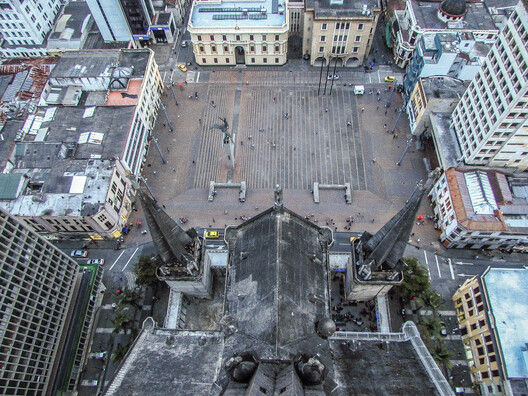
Following the August 10 earthquake, which affected cultural heritage across seven Colombian departments, several institutions launched initiatives in October to support recovery efforts. On October 6, the National Museum of Colombia, ICOM Colombia, and Universidad Externado de Colombia established a collection center in Bogotá to gather restoration materials for affected museums. The initiative followed reports of damage at 35 museums and museum institutions across 10 departments. Meanwhile, the District Institute of Cultural Heritage (IDPC) continued its volunteer program, carrying out architectural surveys, photographic documentation, and preliminary damage assessments in affected municipalities. These efforts form part of a broader recovery process led by cultural institutions and public authorities to assess damage, protect collections, and safeguard the country's architectural heritage.
This article is part of our Regional Focus series, bringing together recent architecture news, projects, and emerging developments from across Latin America. Explore more architecture news and projects from the region on ArchDaily.