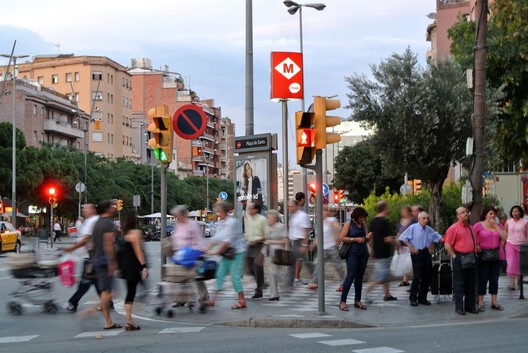
In Europe, cities are confronting the challenge of adapting existing urban conditions to a changing climate and warming summers while improving access to nature, quality public spaces, and the resources of everyday routines. ReGreeneration, a Horizon Europe initiative working across nine European cities, approaches this challenge through urban renaturing at the neighborhood scale. Combining strategies for complete neighborhoods, communal spaces, and nature-based solutions for cities, the Barcelona project examines how climate adaptation is embedded within residual, peripheral spaces of daily life. As part of a series following ReGreeneration across the participating cities, this article turns to Barcelona, where the project is working in the Trinitat Nova neighborhood to explore how small, often overlooked, urban spaces contribute to broader models of regeneration.
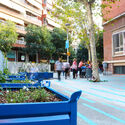


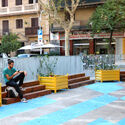
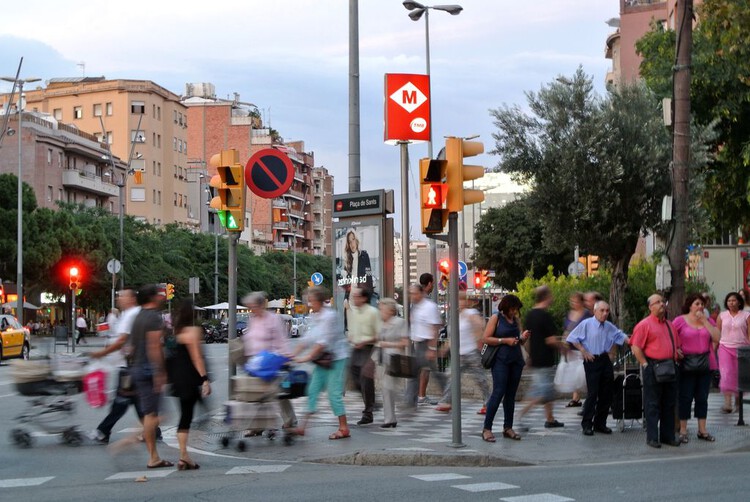
In Trinitat Nova, ReGreeneration provides an opportunity to implement site by site long-term policy at the neighborhood scale, with the ambition of scaling to other neighborhoods in the region. Located in the northern periphery, this area has undergone decades of investment in housing and the public realm, yet its steep topography and fragmented fabric have left a network of residual, underused spaces. Through ReGreeneration and the city's PEPI program, these residual spaces are being designed to play a greater role in everyday life and become part of a more connected system of green, accessible, and socially inclusive public spaces. The project is not an exercise in urban greening for Mediterranean cities, but provides a window into the delivery of a neighborhood vision rooted in urban design, municipal policy, and long-term planning.


