Filippo Brunelleschi and the dome of Santa Maria del Fiore, completed in 1436 in the Italian city of Florence, represent an important chapter in the history of architecture, often associated with the growing distance between drawing and building. This separation, gradually consolidated over time, finds a decisive turning point in the Renaissance. Drawing becomes an instrument for anticipating and asserting authority over construction. The building site, once a space for invention and decision-making, came to be understood primarily as a place of execution.
Over the following centuries, this distance becomes increasingly pronounced, particularly with modern construction. Industrialization, technical specialization, and corporate organization fragment the building process into increasingly distinct stages. Those who design rarely build; those who build do not always participate in decision-making; those who finance, manage, and inhabit occupy positions that are even further removed from one another. The efficiency of this model made it possible to build at scale, but it also concentrated knowledge and decision-making power in the hands of certain agents.

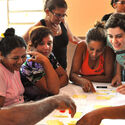
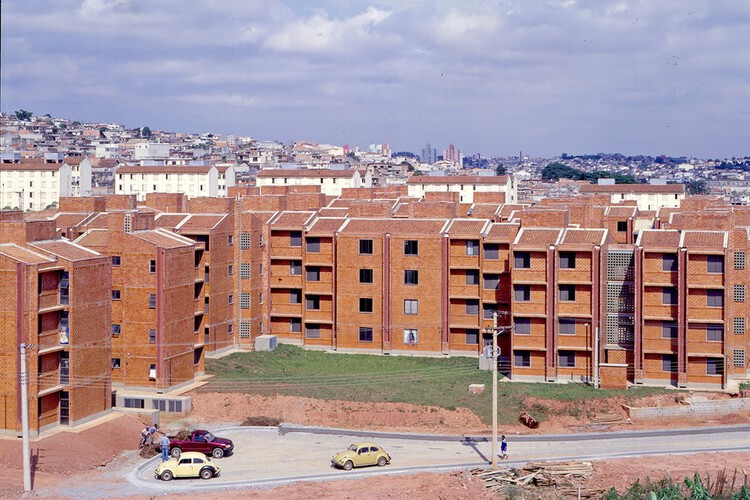
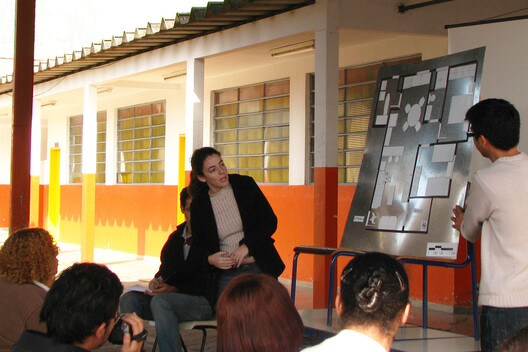
Faced with this fragmentation, contemporary experiences of collective construction take on renewed relevance. Mutirões (collective self-build), cooperatives, and self-managed processes do not imply a rejection of technique or planning, nor a return to some supposed unity once lost between the craftsperson and architecture. Their significance lies in making the building process itself a space for learning and collective production.
From this perspective, the experience of USINA — Centro de Trabalhos para o Ambiente Habitado (USINA CTAH) offers a compelling case; for more than three decades, the group has worked on social housing and self-management in Brazil.
Origins and Consolidation: Participation Beyond Labor
USINA emerged in São Paulo in the early 1990s, amid Brazil's redemocratization and the reorganization of housing movements. Architects, engineers, and social scientists came together to form the group, driven by concerns surrounding technical assistance, social movements, and housing production.
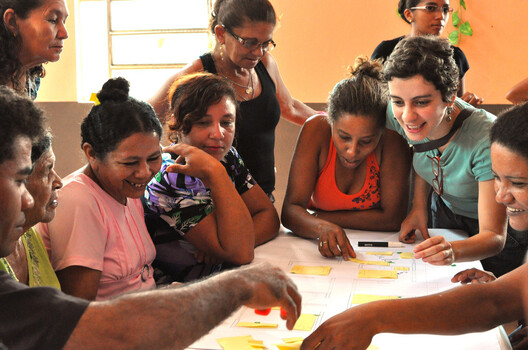
In practice, the model developed by USINA over the years allows future residents to participate, to different degrees, in the decisions and processes involved in producing their own homes, actively engaging in the struggle for housing. This approach also requires a rethinking of different roles, including that of the architect. The technical team no longer works exclusively on a finalized design, but instead operates within an ongoing process of negotiation. Information about materials, costs, and construction solutions is translated and discussed collectively, so that technical knowledge, while essential, does not remain restricted to specialists.
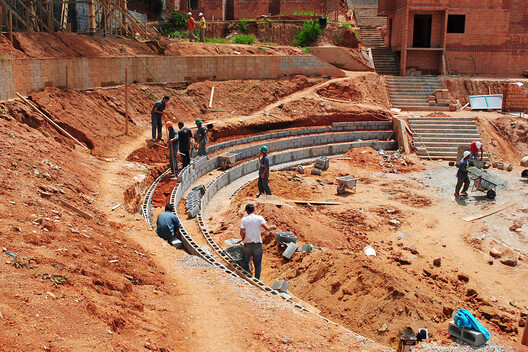
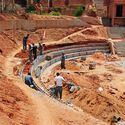
On the building site, this organization takes shape through the mutirões. Families who work in other occupations during the week devote part of their time to construction on weekends or during collective workdays. While some people work directly on the building site, others take on roles involving organization, food preparation, childcare, material management, or administration.
More than simply transferring to future residents the labor typically carried out by a construction company, the mutirão expands their ability to learn, make decisions, and shape the course of the project through self-managed processes. This distinction is fundamental to ensuring that participation is not reduced to simply providing labor.
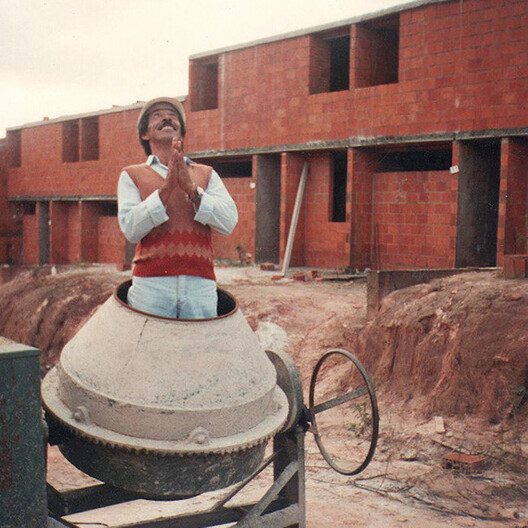
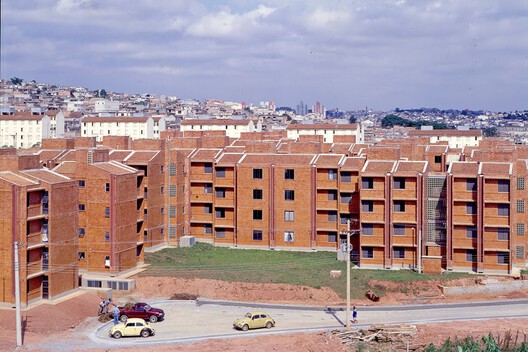
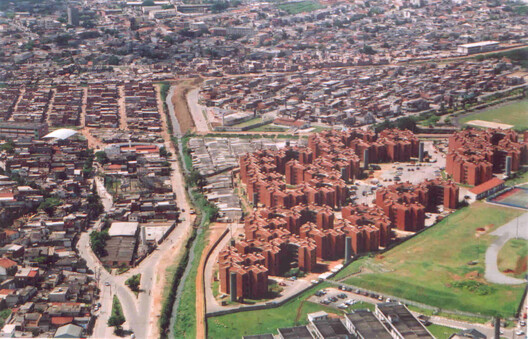
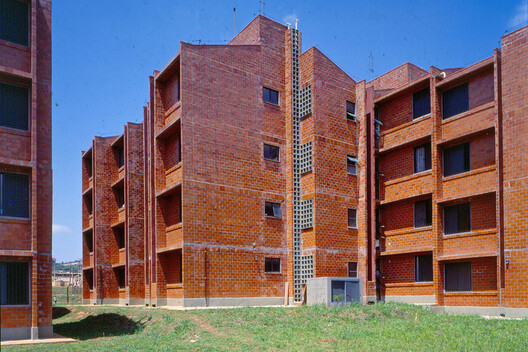
Within this model, USINA has enabled the design and construction of more than 5,000 housing units, as well as community centers, schools, and daycare facilities in different cities and rural settlements. Much of this production has taken place on a large scale, challenging the common association between craft-based work and small-scale construction. COPROMO, in Osasco, for example, comprises 1,000 apartments distributed across fifty buildings. Built over eight years using self-supporting ceramic blocks, the buildings did not require vertical structural frames, making construction through mutirão possible, since most participants had no previous experience in construction.
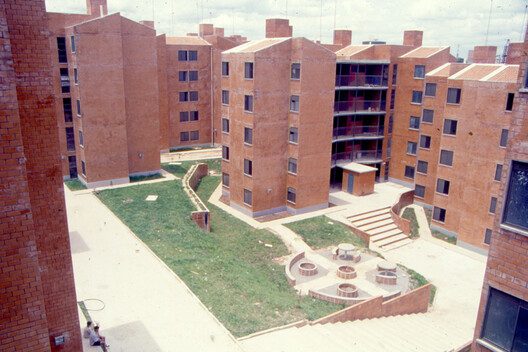
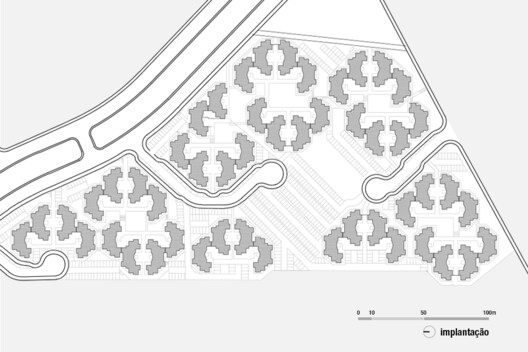
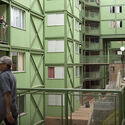
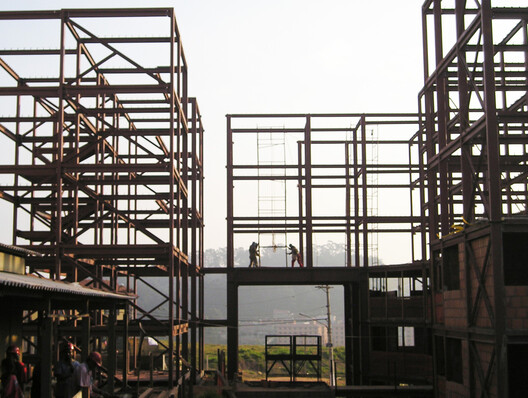
These are therefore not small, isolated experiments in self-construction. They are complex developments, involving infrastructure, financing, technical coordination, and problems of scale comparable to those found in other forms of housing production. In another USINA project, the Mutirão Paulo Freire, the pairing of advanced technology — including multi-level steel structures — with occasionally rudimentary procedures unsettles the common, and prejudiced, assumption that these building sites lack technical sophistication.
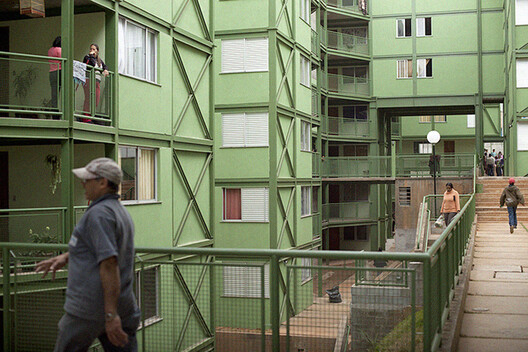
There is also a symbolic dimension to appropriating technologies usually associated with high-cost construction. By incorporating them into a self-managed building site, the aim is to shift their meaning and place them at the service of social housing. In practice, the intention was to ensure greater quality, expand collective spaces, reduce physical strain on workers, and accelerate their path to homeownership.
Craft and Construction: Knowledge Between Matter and Practice
In mutirões, specialization continues to exist, but technical knowledge can circulate among more people and remain within the group after construction is complete. At COPROMO, for example, the mutirantes themselves decided to establish a metalworking workshop to manufacture the buildings' metal staircases, reducing their dependence on an external company. The decision emerged from an economic and organizational need. But its effects went beyond reducing costs; knowledge that would previously have been purchased as a service became something participants could learn and share.
This is an important point for understanding the craft dimension of collective construction. In this context, craft should not be understood as a return to pre-industrial manual production, or as a celebration of imperfection simply because something is made by hand. Its craft dimension lies in the relationship between knowledge and matter. Those involved in the process experience the resistance of materials, identify errors, adapt procedures, and learn from solutions that were not entirely anticipated.
After the Building: Knowledge, Bonds, and Autonomy
Under this model, construction progresses more slowly than in a conventional housing development. Dependence on participants' labor, financing difficulties, and the need for collective decision-making can generate delays and conflicts. But evaluating the process only in terms of speed also reveals a limitation of the conventional model. When a project is measured by schedule, cost, and the number of units delivered, important aspects of the process disappear, including the knowledge acquired, the support networks formed, and the collective capacity to deal with complex processes.
In this context, the effects of the process do not end when construction is completed. At Mutirão União da Juta, for example, the construction of community facilities and spaces expanded the scale of collective action, connecting housing production to the development of the neighborhood itself. During this period, participants acquired technical knowledge in electrical work, plumbing, metalworking, and other construction activities, which, for some, later became a source of paid employment. Others gained experience in resource management, group organization, and conducting assemblies. The building site thus also functioned as a space for practical training.
Other Ways of Producing Housing in Latin America
The Brazilian experience is part of a broader history of cooperative housing in Latin America. In Uruguay, for example, the Federación Uruguaya de Cooperativas de Vivienda por Ayuda Mutua (FUCVAM), founded in 1970, currently represents nearly 750 affiliated cooperatives and has produced more than 35,000 homes through mutual aid, a model recognized internationally and awarded the World Habitat Award in 2012.
In Brazil, groups such as USINA approach this question by rejecting the idea that professional knowledge is the only legitimate form of construction knowledge. This refusal is also a political practice, bringing together different agents and forms of knowledge and creating the conditions for collective projects to become possible. In this sense, mutirões challenge conventional models of labor. They are not necessarily faster, simpler, or more sustainable, but they introduce questions that industrial production tends to push aside: who controls the knowledge necessary to build? And what can a building process produce beyond the building itself?
In USINA's experiences, these questions remain open because the process is part of the construction itself. The house ceases to be merely the final result of a chain of labor and instead carries within it the relationships, knowledge, and decisions that produced it. What is ultimately at stake is also another way of understanding who can produce architecture and what forms of knowledge sustain that production.
This article is part of the ArchDaily Topic: The Architecture of Craft: Handmade Stories in a Digital Age. Every month we explore a topic in-depth through articles, interviews, news, and architecture projects. We invite you to learn more about our ArchDaily Topics. And, as always, at ArchDaily we welcome the contributions of our readers; if you want to submit an article or project, contact us.


