1. ArchDaily
  2. self construction

self construction: The Latest Architecture and News

Building as Political Practice: USINA and the Legacy of Collective Construction in Brazil

Audio available

Filippo Brunelleschi and the dome of Santa Maria del Fiore, completed in 1436 in the Italian city of Florence, represent an important chapter in the history of architecture, often associated with the growing distance between drawing and building. This separation, gradually consolidated over time, finds a decisive turning point in the Renaissance. Drawing becomes an instrument for anticipating and asserting authority over construction. The building site, once a space for invention and decision-making, came to be understood primarily as a place of execution.

Over the following centuries, this distance becomes increasingly pronounced, particularly with modern construction. Industrialization, technical specialization, and corporate organization fragment the building process into increasingly distinct stages. Those who design rarely build; those who build do not always participate in decision-making; those who finance, manage, and inhabit occupy positions that are even further removed from one another. The efficiency of this model made it possible to build at scale, but it also concentrated knowledge and decision-making power in the hands of certain agents.
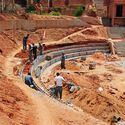
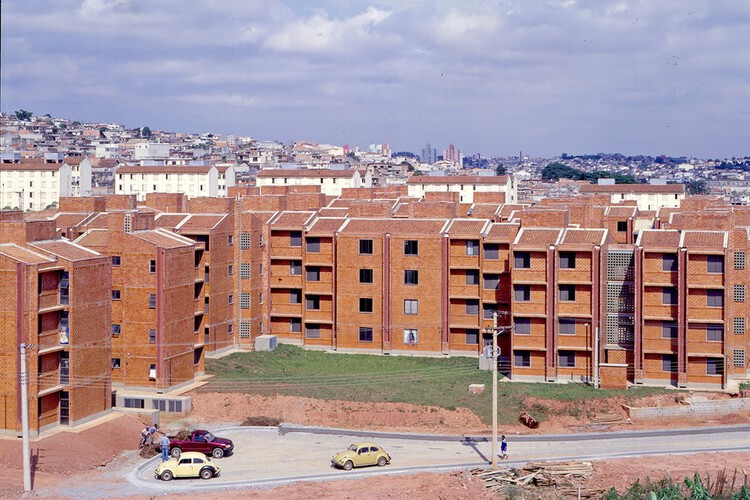
Building as Political Practice: USINA and the Legacy of Collective Construction in Brazil - Image 17 of 4Building as Political Practice: USINA and the Legacy of Collective Construction in Brazil - Image 2 of 4Building as Political Practice: USINA and the Legacy of Collective Construction in Brazil - Image 1 of 4Building as Political Practice: USINA and the Legacy of Collective Construction in Brazil - Image 4 of 4Building as Political Practice: USINA and the Legacy of Collective Construction in Brazil - More Images+ 18

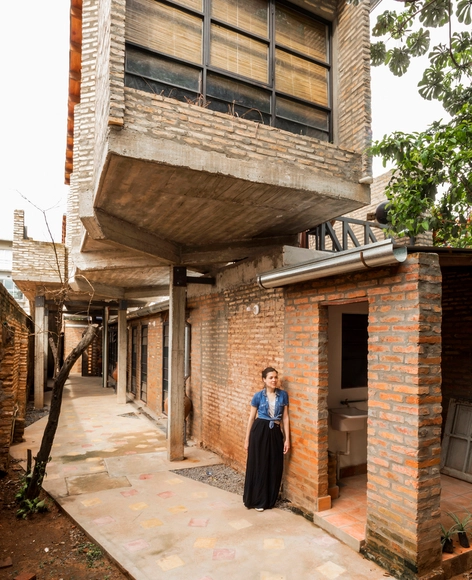
Unpolished Narratives: Exposed Materials in Latin American Affordable Housing

Subscriber Access | 

What makes a building architecture? The eternal debate over what distinguishes architecture from mere utilitarian construction has often included affordable and social housing as an influential topic, sparking different points of view. This question is particularly significant in the Latin American context, where unique conditions go beyond cost concerns, whether imposed or unavoidable. Limited access to financing, the prevalence of self-construction, and the spread of informal settlements are interconnected factors shaping the built environment. These dynamics foster an aesthetic that, for some, challenges notions of good architecture, manifesting in urban landscapes where exposed materials become a defining feature.

Arquitectura Libre: Capturing Mexico's Self-Built Custom Works of Architecture with Adam Wiseman

Subscriber Access | 

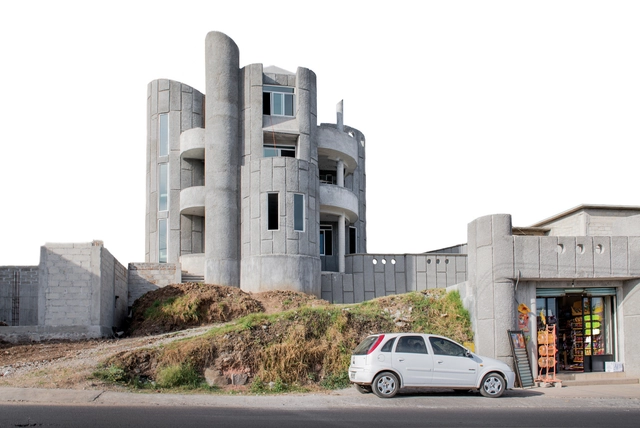
Arquitectura Libre: Capturing Mexico's Self-Built Custom Works of Architecture with Adam Wiseman - Image 1 of 4Arquitectura Libre: Capturing Mexico's Self-Built Custom Works of Architecture with Adam Wiseman - Image 2 of 4Arquitectura Libre: Capturing Mexico's Self-Built Custom Works of Architecture with Adam Wiseman - Image 3 of 4Arquitectura Libre: Capturing Mexico's Self-Built Custom Works of Architecture with Adam Wiseman - Featured ImageArquitectura Libre: Capturing Mexico's Self-Built Custom Works of Architecture with Adam Wiseman - More Images+ 29

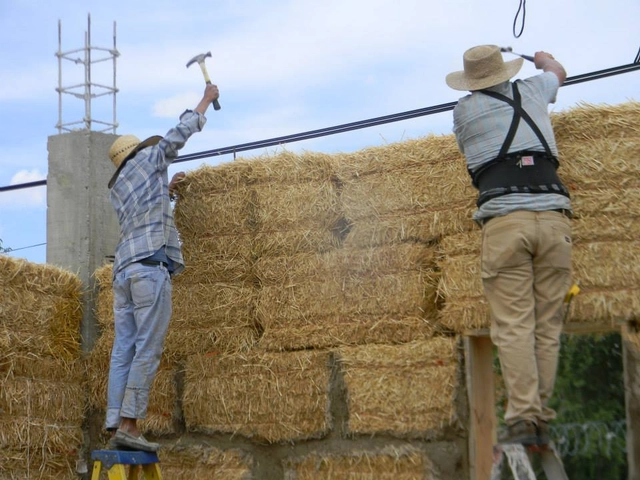
In Mexico, self-construction has been a topic heated debate between its advocates and opponents; however, this doesn't diminish its prevalence throughout Mexico and the world. Over the past few years, initiatives on the part of architects have driven the creation of instruction manuals for do-it-yourself builders as a way to promote health and safety in self-construction and to also provide insight into building materials and techniques. In many ways, the initiative has improved the self-construction process, a fact evident in the increasingly visible creations seen throughout Mexico.

Call for Students: Hypogean Dreams Workshop [Architecture + SelfConstruction]

In Mazara, an unexpressed heritage is sleeping.
QUARRIES occupy an area of ​​about two hundred thousand square meters: a system divided into galleries, gardens, open-air spaces. Not all are visible: some rest beneath the ground, guarding precious traces of the past. As ECO, a two-thousand-square-meters hypogean quarry discovered last year, by the founders of Periferica, during survey work for Evocava - the future museum of Mazara quarries.

Periferica Workshop: The Open Museum [Architecture + SelfConstruction]

Periferica is an international festival of urban regeneration that will take place in Mazara del Vallo, Sicily, from 1 to 10 August 2019. Every year, Periferica brings together associations, universities and businesses to rethink a disused area with students, creative people and inhabitants, through a program of workshops and events. Since 2013, more than 300 students from different parts of Europe have so far participated.

Social Design Work in Mexico Brings Community, Solidarity and Local Materials Together

Subscriber Access | 

This project emerged during the summer of 2015, when CHOPEkE Collective, together with Paúl Pérez, a seminarian and active member of the group, visited the community of Santa Luisa de Marillac, located in the central periphery of Ciudad Juárez. At the time, members of the community had an "unworthy" space -as they called it- for their meetings and spiritual activities.