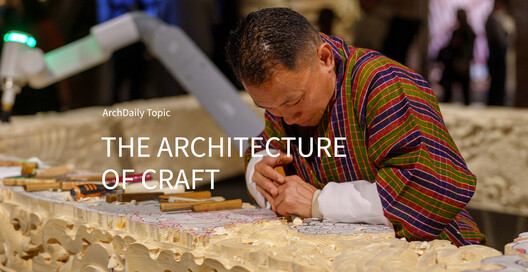
The Architecture of Craft

ArchDaily Topic

A curated selection of articles, interviews, and essays exploring handmade stories in a digital age.

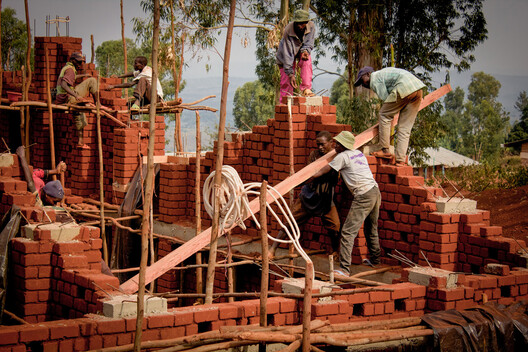
Building as Political Practice: USINA and the Legacy of Collective Construction in Brazil
Building as Political Practice: USINA and the Legacy of Collective Construction in Brazil

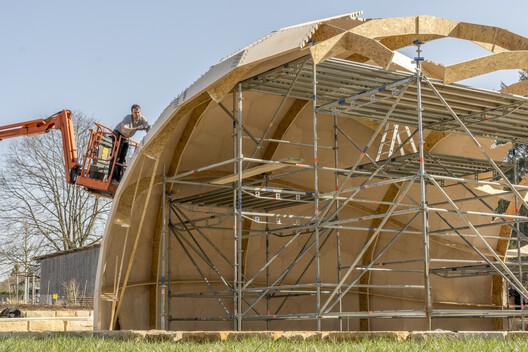
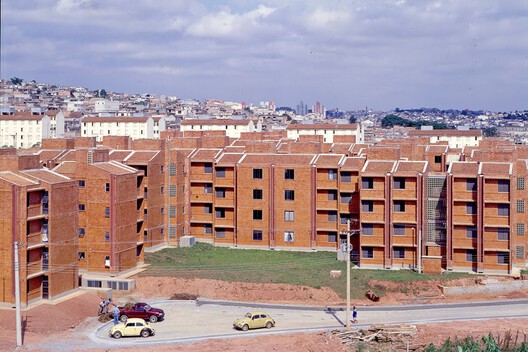
Filippo Brunelleschi and the dome of Santa Maria del Fiore, completed in 1436 in the Italian city of Florence, represent an important chapter in the history of architecture, often associated with the growing distance between drawing and building. This separation, gradually consolidated over time, finds a decisive turning point in the Renaissance. Drawing becomes an instrument for anticipating and asserting authority over construction. The building site, once a space for invention and decision-making, came to be understood primarily as a place of execution.

Read more »
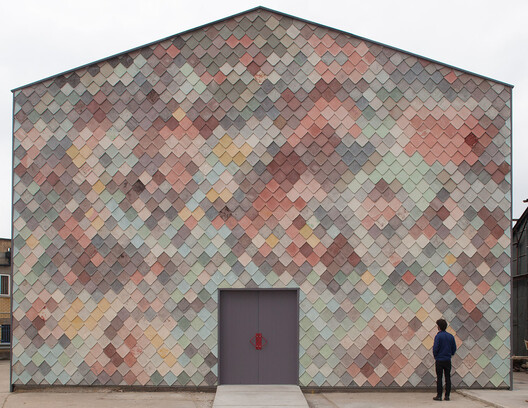
Thinking Through the Hand: Atelier CRAFT on Design and Making

Thinking Through the Hand: Atelier CRAFT on Design and Making

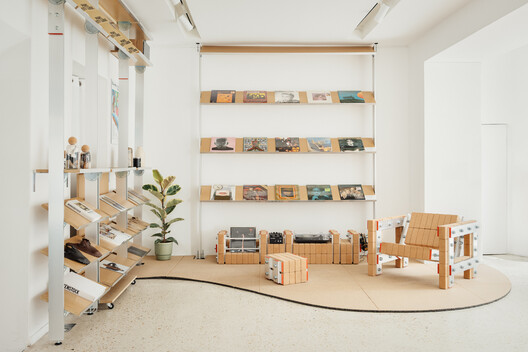
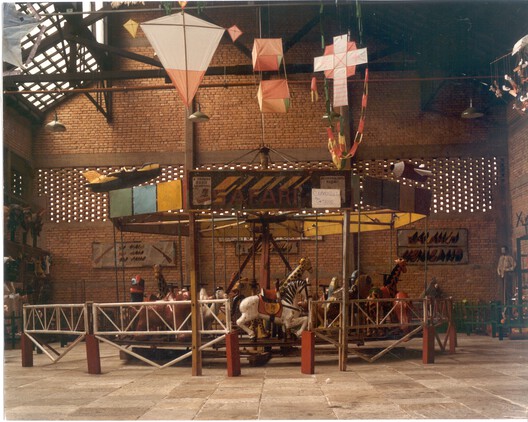
What narratives do materials carry, and how can the visible "traces" of artisans engage in a dialogue with manufacturing processes and industrialization? Between design and construction, the act of thinking through making can become a guiding principle for a design philosophy. Combining wood, industrial materials, and reused objects, Atelier CRAFT's approach is rooted in reversible architecture, guided by its manifesto: "Transform design through making." Based in Saint-Ouen, Paris, the practice explores the relationships between humans and materials, the act of making, and manufacturing processes.

Read more »

Lina Bo Bardi and Popular Making: Craft and Accessibility in Design

Lina Bo Bardi and Popular Making: Craft and Accessibility in Design

In an era where digital fabrication and automation are increasingly present in architectural practice, manual craft is often seen as a luxury item—restricted to high-end projects whose clients can afford extended deadlines and collaborative processes requiring constant dialogue with artisans. This scenario might have sounded contradictory a few decades ago, when Lina Bo Bardi denounced that a process of "deculturation" was underway and that an appraisal of "popular" Brazilian civilization was urgently needed to confront totalizing universalisms and *folklore*—the latter viewed by her as an instrument of state alienation designed to neutralize the subversive and transformative character of popular culture:

Read more »

How Labor Shortages Are Reshaping Architecture

How Labor Shortages Are Reshaping Architecture

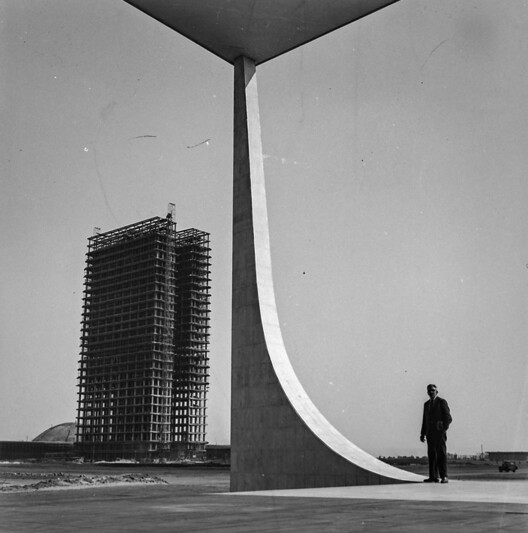
Building a city from scratch is no easy task. It never has been, and it never will be. The very idea of creating something that would otherwise develop and grow gradually demands resources, organization, and, above all, labor. This was the case in 1958, when Brazil's Central Plateau became one of the largest construction sites of the 20th century for the building of Brasília. Tens of thousands of candangos (migrants coming predominantly from northeastern Brazil, many without prior technical training) arrived to build an entire capital in just over three years, under then-president Juscelino Kubitschek's motto of achieving "fifty years of progress in five." Oscar Niemeyer's architecture and Lúcio Costa's plan would not have been possible without the assumption that enough workers were available and willing to endure low wages and extremely harsh conditions to transform concrete and curves into a national symbol.

Read more »

The Prototype as a Method: TAKK, salazarsequeromedina, and Ensamble Studio

The Prototype as a Method: TAKK, salazarsequeromedina, and Ensamble Studio

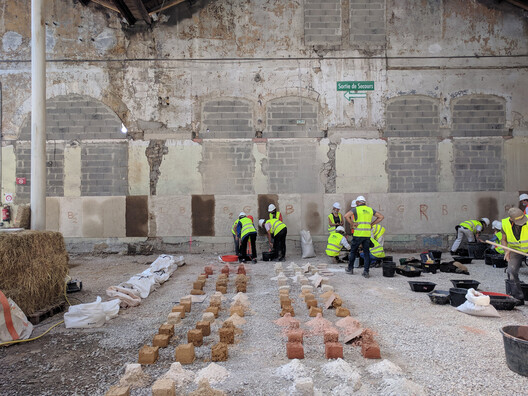
Architectural prototypes are often used to test decisions before construction begins. But in some practices, prototyping begins while those decisions are still taking shape. Moving an idea from drawing into matter introduces questions that depend on making itself: how a material can be cut or joined, how much a piece weighs, how an assembly comes together, whether parts can be reused, or even what form the project should take.

Read more »

From Tent to Terminal: Bedouin Craft in Contemporary Infrastructure

From Tent to Terminal: Bedouin Craft in Contemporary Infrastructure

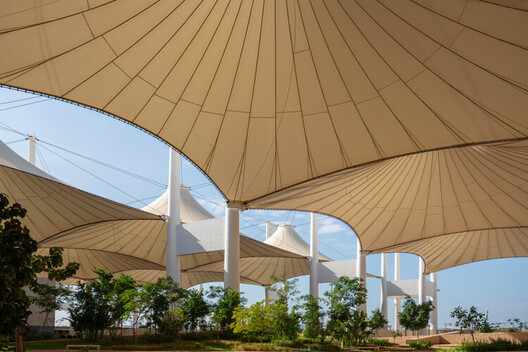
Across the Gulf, Bedouin heritage often enters architecture first as an image. Airport terminals recall tent silhouettes, visitor centres incorporate woven screens, and pavilions reinterpret traditional textiles as decorative façades. These references have become a familiar visual language for expressing regional identity. They also risk reducing one of the world's most sophisticated vernacular building traditions to an architectural motif. Long before the Bedouin tent became a cultural symbol, it was an environmental technology: a lightweight, adaptable structure capable of creating comfort in one of the planet's most demanding climates. What contemporary infrastructure may inherit is not the tent's silhouette, but the construction intelligence woven into it.

Read more »

Beyond the Handmade Aesthetic: Why Craft Needs New Construction Economies

Beyond the Handmade Aesthetic: Why Craft Needs New Construction Economies

There has never been a more celebrated moment for craftsmanship in architecture. Across magazines, awards, and international exhibitions, handmade brick, lime plaster, carved stone, woven bamboo, and rammed earth have re-emerged as symbols of environmental responsibility, cultural continuity, and architectural authenticity. Beyond these carefully documented projects lies another reality. The overwhelming majority of buildings constructed today, from apartment blocks and office towers to public housing and commercial developments, continue to rely on industrialized systems that leave little room for skilled artisans. Craft has become increasingly visible at the very moment it has become increasingly uncommon. In countries such as India, the contrast is difficult to ignore. Centuries-old building traditions continue alongside one of the world's fastest-growing construction industries. To reframe the question of why craftsmanship is returning, perhaps the intrigue is why it now appears primarily where construction budgets, timelines, and clients can afford it.

Read more »

How the Arts and Crafts Movement Still Shapes Contemporary Architecture

How the Arts and Crafts Movement Still Shapes Contemporary Architecture

The Arts and Crafts movement is often remembered as an architectural style defined by handcrafted details, an intimate scale, natural materials, and a rejection of excess and industry. Its influence is frequently traced through visual characteristics that continue to appear in contemporary architecture and interiors, from exposed timber and crafted joinery to an emphasis on texture and permanence, yet reducing the movement to an aesthetic vocabulary overlooks its far more significant contribution. For William Morris, Philip Webb, John Ruskin, and their contemporaries, architecture was a question of how things were made, who made them, and whether the process of making could cultivate dignity, meaning, culture, and beauty.

Read more »

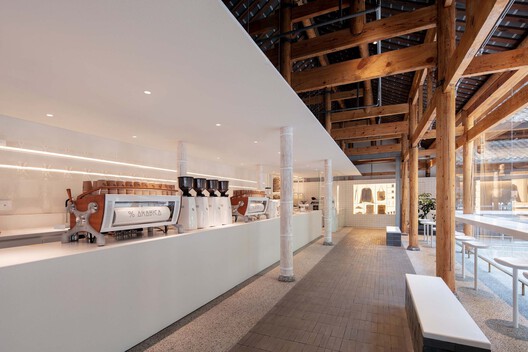
The Handmade Surface: Imperfection, Texture, and Craft in Contemporary Chinese Interiors

The Handmade Surface: Imperfection, Texture, and Craft in Contemporary Chinese Interiors

Craft in contemporary interiors is increasingly valuable in the way materials are joined and brought into relation with one another. As the appetite for fast, inexpensive, and profitable retrofitting grows, there is also a parallel desire for interiors that feel thoughtfully resolved: spaces where details are integrated, material assemblies are considered, textures transition with intention, and hardware is treated as part of the architectural language rather than an afterthought. In many contemporary Chinese interiors, craft operates quietly through the treatment of surfaces and structures: timber that retains its irregularity, terrazzo that records aggregate and handwork, or finishes that reveal the care of their making. 

Read more »

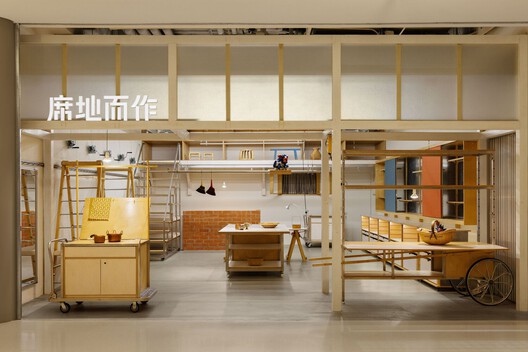
Reworking Everyday Objects and Industrial Production: The Work of Amass

Reworking Everyday Objects and Industrial Production: The Work of Amass

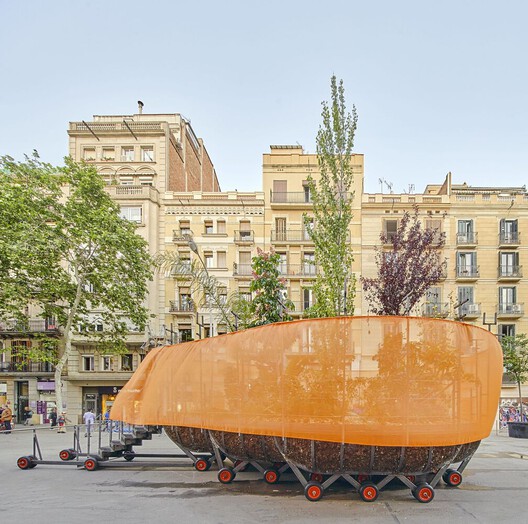
Craftsmanship carries the traces of those who shaped it, revealing how materials respond to different techniques and even offering clues about the tools used to create them. Within the architectural experience, however, craftsmanship can be expressed not only through materials and structures but also through space itself. Seeking to deepen and learn from the connections between design and execution, amass studio has explored the translation of informal, everyday construction methods into spatial systems across several of its projects. By integrating mechanisms, materials, structures, and furniture, the studio creates new spatial narratives in which the dialogue between the handcrafted and the industrial becomes mutually reinforcing. Beyond craftsmanship itself, then, why not make visible the processes that bring it into being?

Read more »

Craft in the Age of 3D-Printed Earth: Can Digital Tools Create a New Kind of Artisan?

Craft in the Age of 3D-Printed Earth: Can Digital Tools Create a New Kind of Artisan?

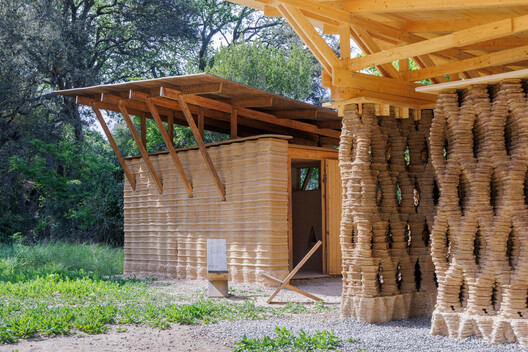
In 2021, a collaboration between the Italian architecture studio Mario Cucinella Architects and WASP, an Italian 3D-printing company, led to the development of TECLA: a house 3D-printed entirely from raw earth. Five years later, the technology behind it has grown, quietly spreading across several continents and design practices. By controlling the speed, angle, and path of the extruder nozzle, architects are able to create more than just walls. Throughout the years, they have been experimenting with how to shape the 3D-printed material into detailed surface motifs, reintroducing relief, texture, and intricate patterns directly into the structure. In this way, they are attempting to bridge earth-building traditions with digital computation, in an era where code is starting to influence form and material expression in architecture.

Read more »

Craft After Conflict: Why Rebuilding Cities Begins with Rebuilding Knowledge

Craft After Conflict: Why Rebuilding Cities Begins with Rebuilding Knowledge

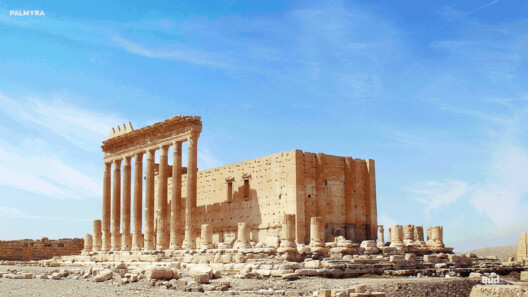
A war can erase a skyline overnight. Roofs collapse, streets become impassable, and landmarks that once oriented everyday life are reduced to rubble. The most profound loss often remains invisible. Buildings can be surveyed, photographed, scanned, and, eventually, rebuilt. The knowledge that produced them is far more fragile. It survives in the hands of stonemasons who understand how a limestone vault carries its load, carpenters who know how timber joints respond to seasonal movement, plasterers who mix lime by memory rather than measurement, and residents whose everyday rituals keep these buildings in use. When these people are displaced, killed, or forced to abandon their trades, reconstruction inherits a problem that no drawing or digital model can solve. Stone can always be quarried again. Recovering the knowledge to shape it takes much longer.

Read more »

Workmanship and Imperfection: 10 Projects Between Hand and Machine

Workmanship and Imperfection: 10 Projects Between Hand and Machine

In 1968, the furniture designer and RCA professor David Pye published The Nature and Art of Workmanship, a book built around a distinction between "workmanship of risk" and the "workmanship of certainty." Pye was not writing about architecture, and despite how the phrase gets used today, he was not really writing about hands versus machines either. He pointed out that a printing press, entirely mechanical, still depends on someone judging the ink and the register, while a woodturner working a lathe by hand can follow a template closely enough that almost nothing is left to chance.

Read more »

The Architecture of Craft: ArchDaily's August Editorial Focus

The Architecture of Craft: ArchDaily's August Editorial Focus

When Francis Kéré set out to build a school in his home village of Gando, Burkina Faso, he chose clay, a material his own community associated with scarcity, not architecture. To prove it could hold, he built test bricks and submerged one in water for five days before showing his neighbors it hadn't failed. Then he trained the villagers themselves to raise the walls, rather than bringing in a construction crew from the city. More than 200 people from Gando have since worked as builders because of that choice. The school carries something a materials list alone cannot: the trace of the hands that will go on living in the village long after the scaffolding came down.

Read more »