This week in architecture, discussions around the lifespan of buildings, the evolution of cultural institutions, and climate-responsive design highlighted how contemporary practice increasingly extends beyond the moment of construction. From debates over demolition and adaptive reuse to new museums that integrate landscape and environmental performance, the week's developments reflect shifting priorities around permanence, transformation, and public value. Alongside these projects, major institutional announcements, from the RIBA Stirling Prize shortlist to the election of a new UIA leadership, offer insight into the architectural agendas shaping the profession across different scales and geographies.

Architecture Beyond Completion: Demolition, Adaptation, and Long-Term Legacy
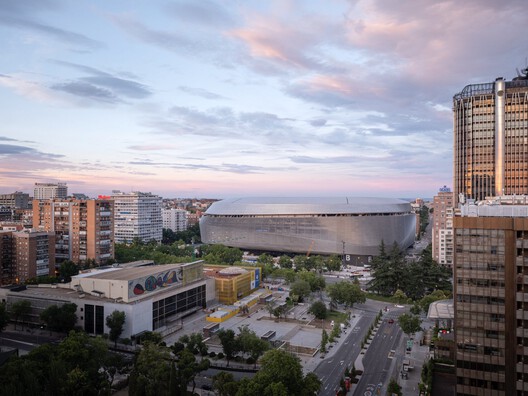
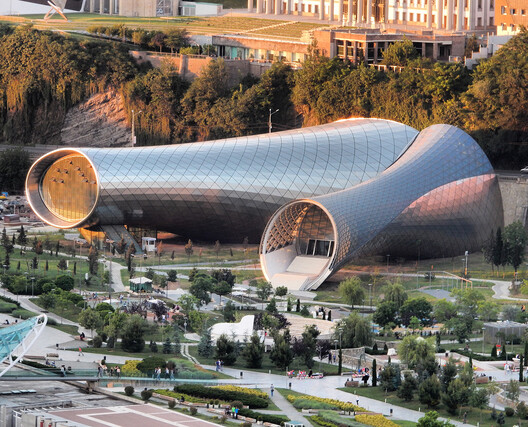
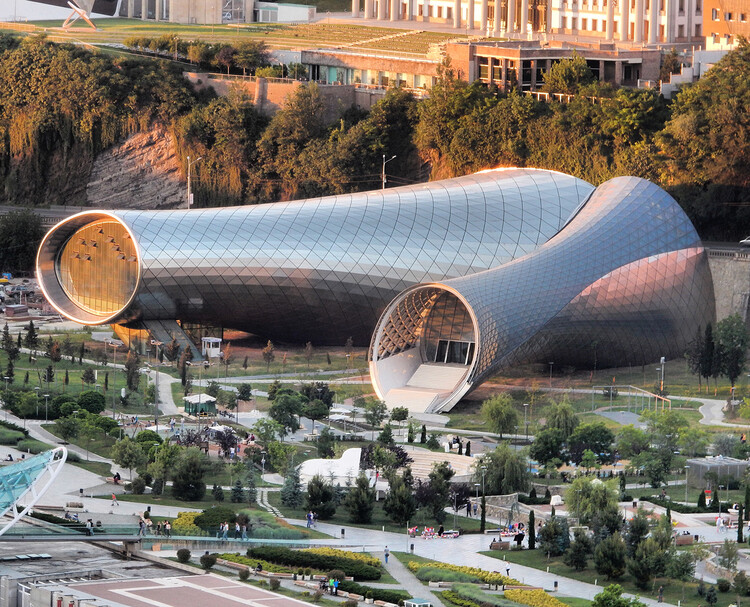
This week highlighted how architecture continues to evolve long after construction is complete, as questions of demolition, adaptation, and long-term relevance shaped several major stories. In Tbilisi, Studio Fuksas' Rike Park Music Theater & Exhibition Hall received formal approval for demolition after remaining unused since its completion in 2012. The decision brings an end to years of uncertainty surrounding one of Georgia's most recognizable contemporary buildings while reigniting debates over architectural heritage, political symbolism, and the reuse of existing structures. Similar questions emerge at a different scale in the review of the FIFA World Cup's architecture. Looking back at the recently concluded 2026 tournament and ahead to preparations for 2030, the feature examines how international sporting events are increasingly relying on the adaptation and modernization of existing stadiums rather than large-scale new construction, reflecting broader shifts toward extending the life of existing infrastructure and redefining architectural legacy through transformation instead of replacement.
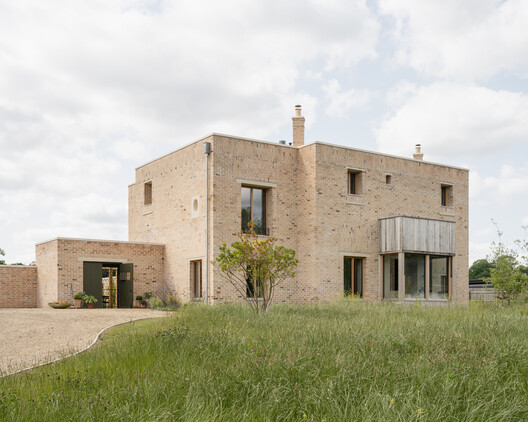
The Royal Institute of British Architects also announced the six shortlisted projects for the 2026 Stirling Prize, marking the award's 30th anniversary. This year's selection spans housing, higher education, civic infrastructure, adaptive reuse, and residential architecture, showcasing a wide spectrum of contemporary practice across the United Kingdom. Rather than emphasizing a single architectural language, the shortlist highlights projects that respond to their historical, environmental, and social contexts through strategies including deep retrofit, heritage interventions, landscape integration, and low-carbon construction.
New Cultural Institutions Explore Sustainability, Landscape, and the Museum Experience
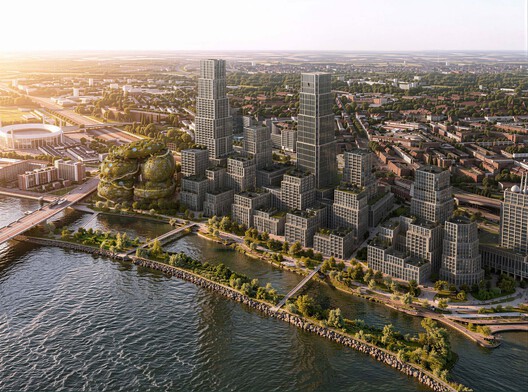
Several newly announced cultural projects this week demonstrate how museums and public institutions continue to expand beyond conventional exhibition spaces by integrating architecture, landscape, education, and environmental performance. In Rotterdam, MVRDV's winning proposal for the Shift Embassy combines exhibition spaces, hospitality, ecological infrastructure, and public amenities within a vertically layered landscape intended to function as both a cultural destination and a testing ground for circular construction and environmental innovation. Meanwhile, in Massachusetts, Selldorf Architects unveiled the design for the Clark Art Institute's new Aso O. Tavitian Wing, extending the museum through a series of carefully proportioned galleries connected to the surrounding Berkshire landscape by Reed Hilderbrand's landscape design. Although differing significantly in scale and expression, both projects reflect a broader evolution of cultural architecture toward institutions that balance collections and exhibitions with public engagement, and relationships with their surrounding landscapes.
On the Radar
Foster + Partners' Two World Trade Center Breaks Ground as American Express Headquarters
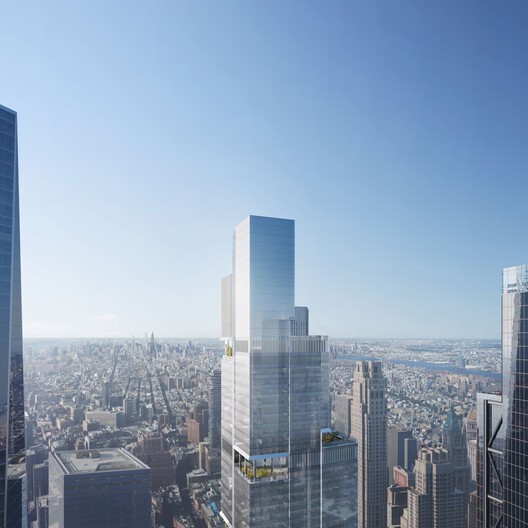
Construction has officially begun on Foster + Partners' Two World Trade Center, marking the start of the final commercial tower within the World Trade Center redevelopment in Lower Manhattan. Developed by Silverstein Properties, the 373-meter-tall, 55-story skyscraper will become the global headquarters of American Express, accommodating up to 10,000 employees within nearly two million square feet of office space. Featuring a stepped composition of glazed volumes with landscaped terraces and more than one acre of outdoor space, the fully electric tower is designed to pursue LEED certification while strengthening connections to the surrounding World Trade Center campus. Expected to open in 2031, the project represents the final chapter in the site's commercial redevelopment nearly 25 years after the rebuilding process began.
CRA and GS E&C Unveil Climate Adaptive Tower for Seoul
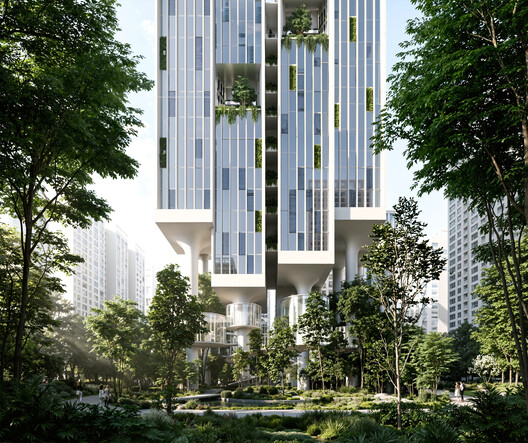
CRA-Carlo Ratti Associati, in collaboration with South Korean construction firm GS E&C, has unveiled a proposal for a climate-adaptive residential tower in Seoul designed to address increasing risks related to flooding and rising temperatures. Rising 140 meters above the ground on slender structural supports described as "high heels," the tower preserves the site's permeability by allowing water, vegetation, and public activity to continue beneath the building. Following a sponge city approach, the design incorporates stormwater management strategies, existing tree preservation, and publicly accessible landscape areas, while elevated refuge floors are transformed into shared gardens and social spaces. The tower's adaptive facade responds to different orientations, combining photovoltaic panels on the south side with shading elements on the east and west facades to improve environmental performance and reduce overheating.
UIA Elects New Council for the 2026–2029 Term
The International Union of Architects (UIA) has elected its new Council for the 2026-2029 term during its General Assembly held in Barcelona. Li Zhang from China was elected as the organization's new President, succeeding his previous role as Vice President of Region IV, while Teresa Táboas Veleiro from Spain was appointed Secretary General and Marco Vergara Vázquez from Mexico was elected Treasurer. The newly formed leadership will oversee the organization's activities for the next three years, following the UIA World Congress of Architects and the Assembly's discussions on the future direction of the global architecture community.
This article is part of our new This Week in Architecture series, bringing together featured articles this week and emerging stories shaping the conversation right now. Explore more architecture news, projects, and insights on ArchDaily.