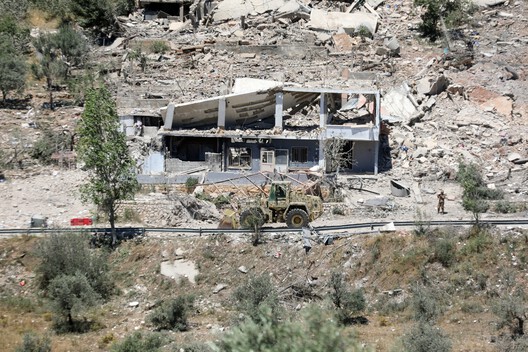
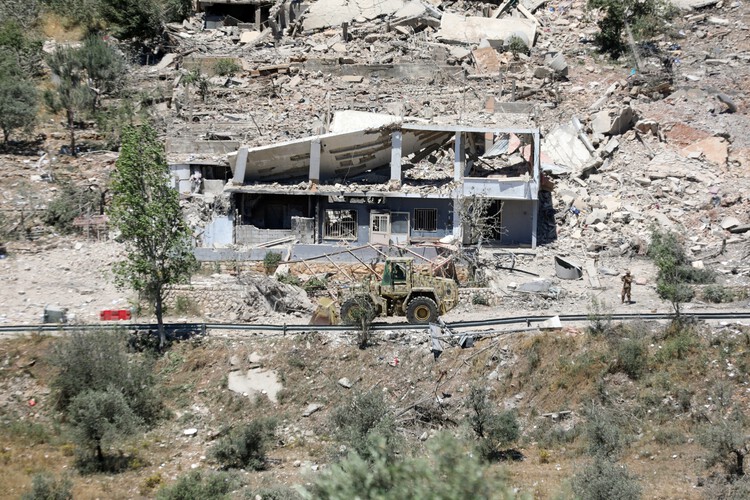
Within a 36-hour window between June 24 and June 25, four significant earthquakes struck three different regions of the world. A magnitude 7.2 earthquake shook Japan's northeastern coast, a magnitude 5.6 event was recorded in Northern California, and two major earthquakes measuring magnitudes 7.2 and 7.5 occurred just 39 seconds apart along Venezuela's northern coast. Although their close timing prompted speculation online, seismologists confirmed that the events were unrelated, occurring independently along different tectonic plate boundaries.
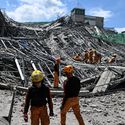
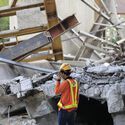


What linked these earthquakes was not their geological origin but the contrasting ways cities and buildings responded to them. While the Venezuelan earthquakes left hundreds dead, thousands injured, and many more displaced as entire residential buildings collapsed, the earthquake in Japan, despite producing severe ground shaking, caused comparatively limited physical damage. California, meanwhile, experienced only minor impacts while relying on an extensive seismic monitoring network. The four events offer a reminder that earthquakes expose not only geological conditions but also decades of decisions regarding urban planning, building regulations, infrastructure investment, and architectural design.
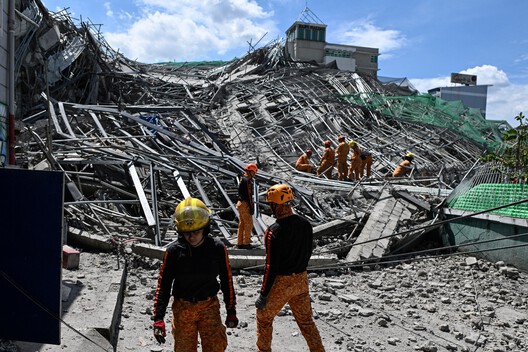
According to the U.S. Geological Survey (USGS), the Venezuelan earthquakes occurred as a seismic doublet near the boundary between the Caribbean and South American tectonic plates. The two shallow earthquakes struck near Yumare in Yaracuy State, triggering widespread damage across La Guaira, Caracas, Miranda, Carabobo, and surrounding regions. Search-and-rescue operations continued throughout June 25 as authorities searched collapsed buildings for survivors while casualty figures continued to rise. Residential buildings, hospitals, transportation infrastructure, and public services sustained extensive damage, leaving thousands of residents displaced and entire neighborhoods without access to essential services. More than thirty aftershocks further complicated emergency response efforts, while the government declared a national state of emergency, and international humanitarian assistance was mobilized.
Initial assessments from UNICEF and Venezuelan authorities indicate that many of the collapsed structures were located in densely populated urban areas, where older buildings and infrastructure sustained significant damage. Airports, healthcare facilities, water networks, and telecommunications systems were also affected, illustrating how seismic events disrupt not only individual buildings but interconnected urban systems. Beyond the immediate collapse of structures, damage to infrastructure directly influences rescue operations, healthcare access, and the ability of communities to recover.
Just hours earlier, northeastern Japan experienced a magnitude 7.2 earthquake off the coast of Iwate Prefecture. The earthquake reached an intensity of upper 6 on the Japan Meteorological Agency's seismic intensity scale in parts of Aomori Prefecture. Despite the intensity, authorities reported no tsunami threat, no immediate fatalities, and no abnormalities at nearby nuclear facilities. Railway services were temporarily suspended for inspections, while emergency teams were rapidly deployed to assess infrastructure.
Japan's response reflects decades of investment in seismic resilience following major earthquakes such as the 1995 Great Hanshin (Kobe) Earthquake and the 2011 Great East Japan Earthquake. Successive revisions to seismic building regulations, together with widespread adoption of base isolation systems, energy-dissipating devices, structural reinforcement, and nationwide earthquake early warning systems, have fundamentally influenced the country's architectural and engineering practices. Rather than attempting to prevent buildings from moving during earthquakes, contemporary seismic design increasingly focuses on allowing structures to deform in controlled ways while preserving their structural integrity and protecting occupants.
Northern California's magnitude 5.6 earthquake produced comparatively minor impacts, yet it similarly demonstrated the role of preparedness beyond structural design. California's dense network of seismic sensors, operated through the USGS ShakeAlert system, provides automated warnings that can stop trains, slow transportation systems, and notify residents seconds before strong shaking arrives. Alongside mandatory seismic provisions in building codes and ongoing retrofit programs for vulnerable structures, these technologies illustrate how resilience increasingly depends on both physical construction and digital infrastructure.
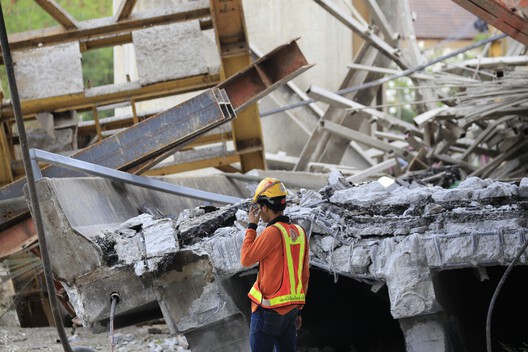
The contrast between these three contexts highlights an important architectural question. Earthquake magnitude alone does not determine the scale of a disaster. Population density, construction quality, enforcement of building regulations, maintenance of existing structures, and investment in emergency infrastructure all influence how cities experience seismic events. Building regulations continue to evolve following major earthquakes. Japan's building standards have undergone multiple revisions after catastrophic events, incorporating increasingly sophisticated performance-based seismic design principles. California has similarly expanded retrofit requirements for vulnerable building types while advancing structural monitoring technologies. In many earthquake-prone regions worldwide, however, aging building stock, informal construction, limited retrofit programs, and uneven regulatory enforcement continue to increase vulnerability.

Alongside regulation, technological innovation is increasingly reshaping seismic resilience. Structural health monitoring systems equipped with sensors can assess building performance immediately after earthquakes, while satellite observations, artificial intelligence, and digital modeling allow engineers to evaluate damage more rapidly and prioritize inspections. Early warning systems continue to expand globally, providing valuable seconds for infrastructure operators, public transportation systems, hospitals, schools, and residents to prepare before seismic waves arrive. These technologies do not eliminate seismic risk. Instead, they shift the focus from emergency response toward preparedness, enabling architects, engineers, planners, and governments to better understand how buildings behave before, during, and after earthquakes.

The four earthquakes recorded illustrate how similar natural phenomena can produce profoundly different urban outcomes. While seismic activity cannot be prevented, its consequences are shaped through architectural decisions made long before the ground begins to move. Building codes, structural innovation, investment in infrastructure, maintenance of existing buildings, and public preparedness collectively determine whether earthquakes become humanitarian disasters or manageable emergencies. As cities continue to grow in seismically active regions, these events underscore the role of architecture not only in designing buildings that withstand earthquakes, but also in contributing to safer, more resilient urban environments.