1. ArchDaily
  2. Theory and History

Theory and History: The Latest Architecture and News

Breaking Barriers: 11 Profiles to Celebrate 80 Years of Women in Finnish Architecture

As early as the 20th century, women in Finland were already involved in the field of architecture. In fact, Signe Hornborg (1862-1916), a Finnish architect, was the first woman in Europe to graduate as an architect in 1890. Pirkko-Liisa Schulman, in her essay on The Changing Careers of Women Architects, notes that Hornborg was granted special permission to study at the Polytechnic Institute of Helsinki. After her, several other women such as Inez Holming, Signe Lagerborg, Bertha Enwald, Wivi Lönn, and Albertina Östman also pursued careers in architecture, with eighteen women having already trained as architects by the time the Polytechnic Institute became a university in 1908.

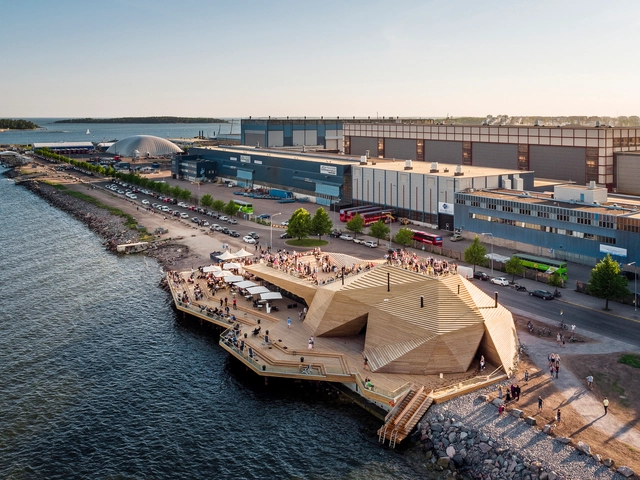
Wivi Lönn (1872-1966) established and ran her own architectural office in Finland, becoming the first woman to do so. Lönn designed a number of significant public facilities and received widespread professional recognition, serving as a role model for aspiring female architects. And in May 1942, while a group of female architects gathered to commemorate Wivi Lönn's 70th birthday, they founded Architecta, the Finnish Association of Women Architects. At that point, up to a hundred women architects had already graduated in Finland. To celebrate the 150th birthday of architect Lönn and the 80th anniversary of the organization, Architecta commissioned interviews that highlight the different types of careers pursued by women in the field. Discover the profiles of 11 female Finnish architects with texts by Paula Holmila, journalist and architecture critic at Helsingin Sanomat, translated by Pirkko-Liisa Schulman.

Breaking Barriers: 11 Profiles to Celebrate 80 Years of Women in Finnish Architecture - Image 1 of 4Breaking Barriers: 11 Profiles to Celebrate 80 Years of Women in Finnish Architecture - Image 2 of 4Breaking Barriers: 11 Profiles to Celebrate 80 Years of Women in Finnish Architecture - Image 3 of 4Breaking Barriers: 11 Profiles to Celebrate 80 Years of Women in Finnish Architecture - Image 4 of 4Breaking Barriers: 11 Profiles to Celebrate 80 Years of Women in Finnish Architecture - More Images+ 12

Away From Old Architecture: What Le Corbusier Really Meant

This article was originally published on Common Edge.

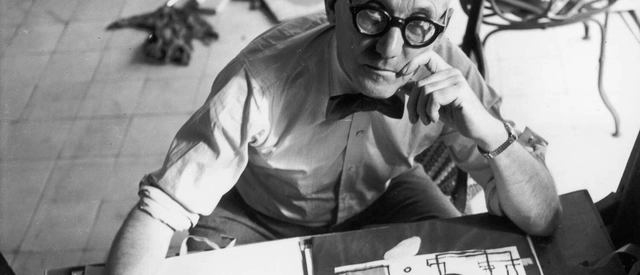
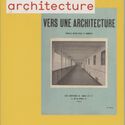
This year marks the centennial of the first edition of Vers Une Architecture, Le Corbusier’s epoch-making book. Though a new English translation appeared in 2007 to much acclaim, most other practicing architects read the first English edition that appeared in 1928, entitled Towards a New Architecture. Comparing the three editions is instructive, particularly in one crucial respect: the insertion of the word “new” in the title. The book wasn’t really about new architecture, because very little of it showed buildings in the International Style. Instead, it was in many respects a clever diatribe intended to convince Europeans that they had no choice but to renounce every kind of architecture that had been built before the Great War and begin anew. It was remarkably successful in fulfilling that aim.

Away From Old Architecture: What Le Corbusier Really Meant - Image 1 of 4Away From Old Architecture: What Le Corbusier Really Meant - Image 2 of 4Away From Old Architecture: What Le Corbusier Really Meant - Image 3 of 4Away From Old Architecture: What Le Corbusier Really Meant - Image 4 of 4Away From Old Architecture: What Le Corbusier Really Meant - More Images

Why are Scale Models So Appealing?

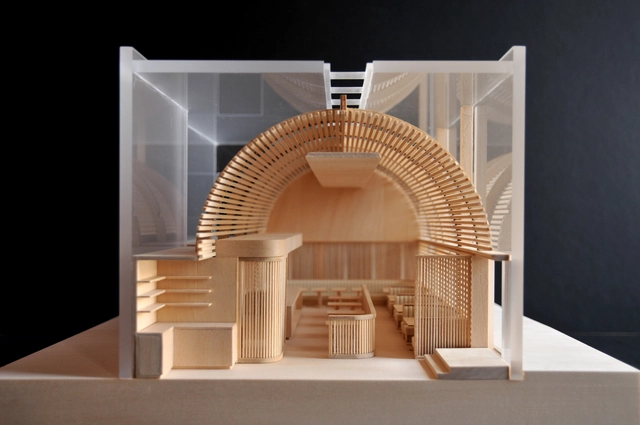
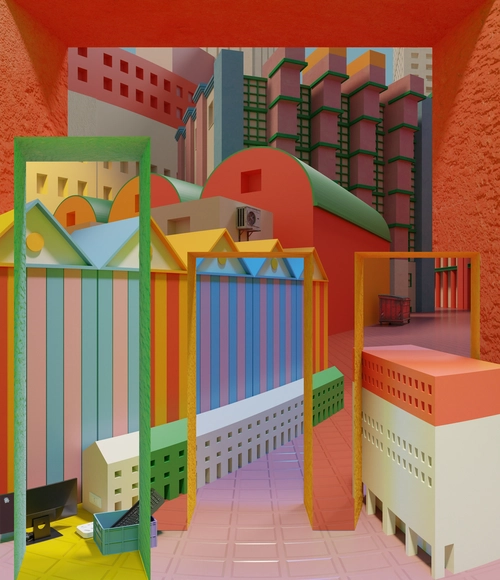
Ambitious and diverse, models are representative tools non-exclusive to architects. Peculiar fascination with miniatures – and what they tell us about our larger world- extends to all ages, cultures, and purposes. From scaled temples of clay from 200 B.C. found in Mexico, ceramic models carried during medieval Islamic journeys, Victorian doll houses, and LEGOS, models are more than baby buildings. Miniatures unveil the essentials, explain much larger concepts, contain intimate and historical data, and invite us to challenge our known selves and perspective.

Why are Scale Models So Appealing?  - Image 1 of 4Why are Scale Models So Appealing?  - Image 2 of 4Why are Scale Models So Appealing?  - Image 3 of 4Why are Scale Models So Appealing?  - Image 4 of 4Why are Scale Models So Appealing?  - More Images+ 2

Color, Composition, and Scale: Analyzing Brutalist Photography

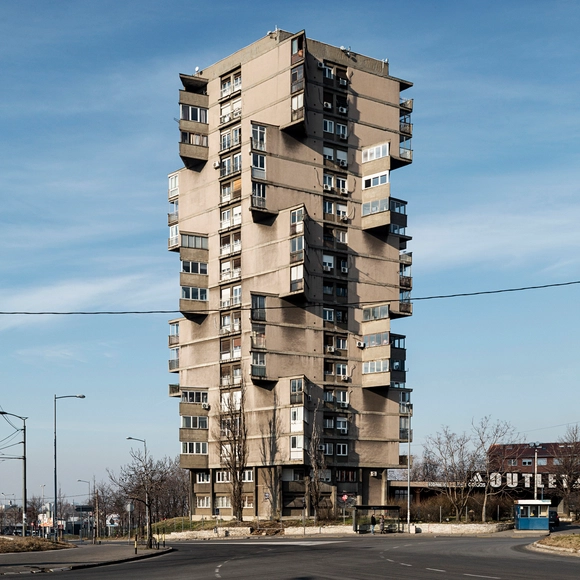
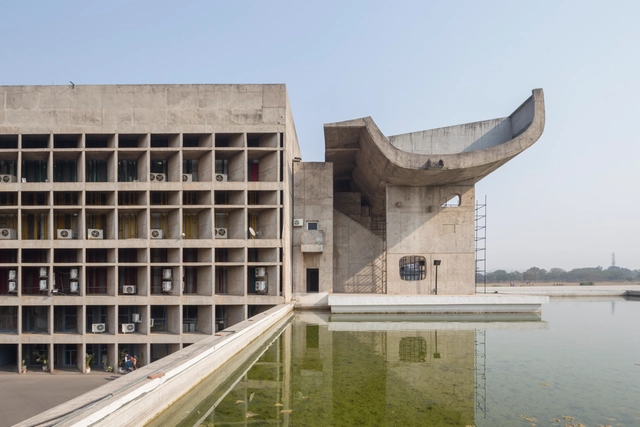
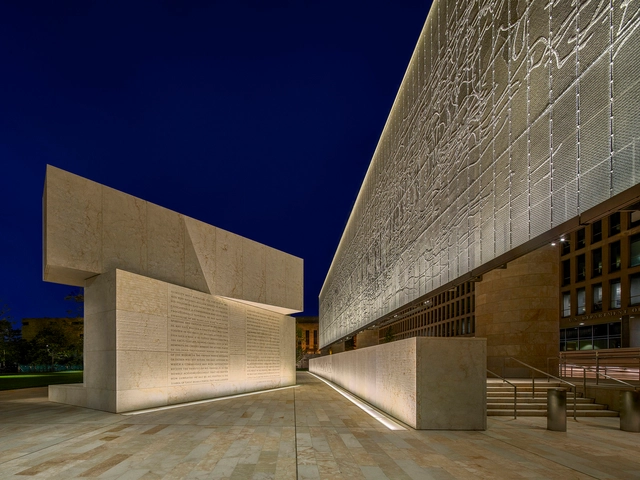
Sometimes sculptural and expressive, sometimes monolithic and monotonous, the Brutalist architectural style is equal parts diverse and divisive. From its origins as a by-product of the Modernism movement in the 1950s to today, Brutalist buildings, in architectural discourse, remain a popular point of discussion. A likely reason for this endurance is — with their raw concrete textures and dramatic shadows, brutalist buildings commonly photograph really well.
Color, Composition, and Scale: Analyzing Brutalist Photography - Image 1 of 4Color, Composition, and Scale: Analyzing Brutalist Photography - Image 2 of 4Color, Composition, and Scale: Analyzing Brutalist Photography - Image 3 of 4Color, Composition, and Scale: Analyzing Brutalist Photography - Image 4 of 4Color, Composition, and Scale: Analyzing Brutalist Photography - More Images+ 17

The Safety of Light: A Short History of Light in Public Spaces

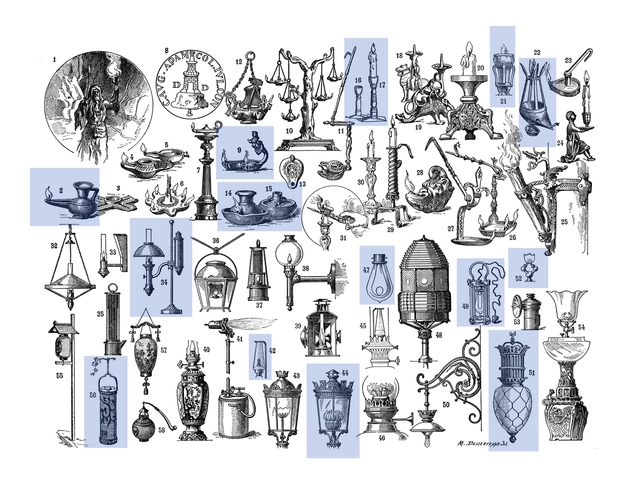
The simple activity of taking a walk in the evening can easily turn from a relaxing leisurely activity to a dangerous endeavor by removing just one element from the streetscape: public lighting. While not often recognized as defining aspect of urban environments, artificial illumination has played an essential role in defining the character of modern cities. Crime control, the appeal of nightlife, the rise of the shop window, revolutionary movements, utopias, and ideals of social equity are all concepts whose development is tightly linked to the history of public lighting. Technological advancements over the past centuries have continuously shaped the appearance and symbolism of streetlamps. Still, the this element has remains a constant throughout its history.

The Safety of Light: A Short History of Light in Public Spaces - Image 1 of 4The Safety of Light: A Short History of Light in Public Spaces - Image 2 of 4The Safety of Light: A Short History of Light in Public Spaces - Image 3 of 4The Safety of Light: A Short History of Light in Public Spaces - Image 4 of 4The Safety of Light: A Short History of Light in Public Spaces - More Images+ 7

The Architecture of Countercultures: Utopian Movements in the United States and Berlin, Germany

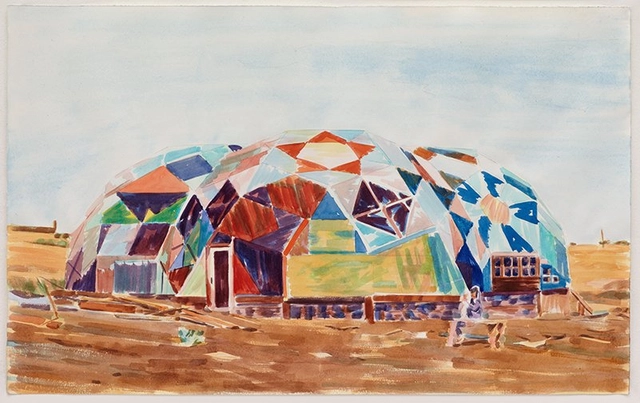
The Law of Polarity holds good in relation to human society and cultures as well - everything has an opposite. Countercultures have erupted as condemnations of “the ways of the world”. A countercultural movement expresses the ethos and aspirations of a population during a specific time. As new lifestyles are explored, supporting architecture evolves to satiate the utopian ideals of new societies. Architecture is a product of the culture it is designed for.

The Architecture of Countercultures: Utopian Movements in the United States and Berlin, Germany - Image 1 of 4The Architecture of Countercultures: Utopian Movements in the United States and Berlin, Germany - Image 2 of 4The Architecture of Countercultures: Utopian Movements in the United States and Berlin, Germany - Image 3 of 4The Architecture of Countercultures: Utopian Movements in the United States and Berlin, Germany - Image 4 of 4The Architecture of Countercultures: Utopian Movements in the United States and Berlin, Germany - More Images

Bucky Fuller’s Most Complex Invention May Have Been Himself

This article was originally published on Common Edge.

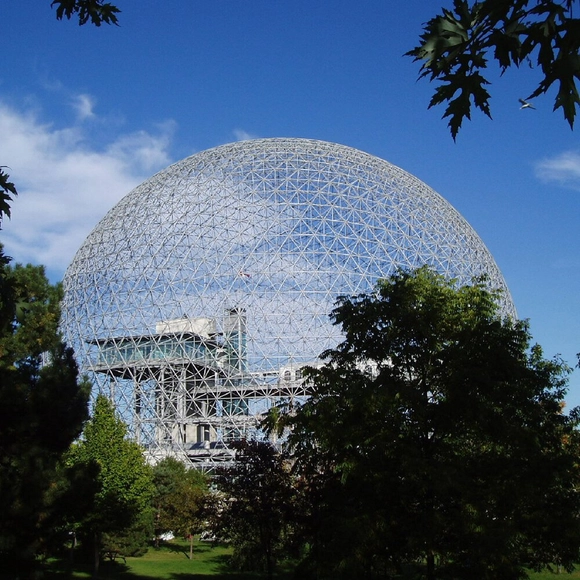
Today we know R. Buckminster Fuller primarily through his oeuvre of iconic objects and ideas created over the arc of a nearly 90-year life. Born in the last decade of the 19th century, Fuller lived long enough to hang out with Steve Jobs. He’s variously described as a “systems thinker,” perhaps the first “futurist,” a visionary, engineer, geometer, and architect (he won the AIA Gold Medal in 1970). But “inventor” is probably the most accurate description. Historian and writer Alec Nevala-Lee’s 2022 biography, aptly titled Inventor of the Future: The Visionary Life of Buckminster Fuller (Dey St. Books), tells a nuanced story of the man known for geodesic domes; space frames; “Spaceship Earth”; the Dymaxion map, house, and car; and concepts such as tensegrity, synergy, and “ephemeralization” (“doing everything with nothing at all,” as he described it).

The Legacy of Jane Drew: A Trailblazer for Women in Architecture

In 1950, the famous Le Corbusier was asked to design the new state capital of Chandigarh for Punjab following its separation and recent independence. The opportunity to create a new utopia was unparalleled- and is now seen as one of the greatest urban experiments in the history of planning and architecture. The city employed grid street patterns, European-style thoroughfares, and raw concrete buildings- the zenith of Corbusier’s ideals throughout his career. But what is lesser known about the ideation and realization of Chandigarh, was the woman who brought her experience of designing social housing across Africa to the project. For three years, working alongside Corbusier, and helping him design some of the best-known buildings in Chandigarh, was Jane Drew.

The Language of Lighting: How to Read Light and Shadow in Architecture

Imagine if light would not only provide optimum visibility for tasks but convey meanings as well. Standards with recommended lux levels for various visual tasks have led to a quantitative understanding of lighting. However, lighting can also be used to contribute to emotion in rooms and to structure architecture. Would it be adequate to regard lighting as language sent by architects or interior designers and being received by inhabitants and citizens? Adding a semiotic perspective can help to recognize how light and shadow contributes to the meaning of the built environment.

A Brief History of The International Style

When people describe the modernist movement as a whole, they broadly reference the steel and glass skyscrapers which dot many of our cities’ skylines, or more specifically, the International Style that once emerged from Europe after World War I. The International Style represented technological and industrial progress and a renaissance of social constructs that would forever influence the way that we think about the use of space across all scales. Often designed as politically charged buildings seeking to make a statement towards totalitarian governments, many architects who influenced the style moved to the United States after World War II, paving the way for some of the most iconic buildings and skyscrapers to be built in the 20th century.

Architects and Designers Should Take the Lead in Creating Immersive Environments

For the past year, I have been in conversation with architects and designers who are involved in the creation of immersive environments. They see themselves as naturally responsible for leading the construction of these environments, and this should serve as a reminder that architects have the potential to take on this role. 

Despite how obvious it might sound, the metaverse has mostly been designed by developers and graphic designers, Therefore, it should work as a wake-up call for architects to be involved since they have skills particularly apt for it.

Whether the metaverse can be utilized as a narrative to claim a changing role for architects remains to be seen, but 2023 could be the year.

Architects and Designers Should Take the Lead in Creating Immersive Environments - Image 1 of 4Architects and Designers Should Take the Lead in Creating Immersive Environments - Image 2 of 4Architects and Designers Should Take the Lead in Creating Immersive Environments - Featured ImageArchitects and Designers Should Take the Lead in Creating Immersive Environments - Image 3 of 4Architects and Designers Should Take the Lead in Creating Immersive Environments - More Images

Michael Kimmelman Unfolds Our Understandings of Communities in Uncertain Things Podcast

The hosts and producers of the Uncertain Things podcast, Adaam James Levin-Areddy, and Vanessa M. Quirk, conduct interviews with experts with a variety of experiences to answer the question, “Now what? How did we get here and what is next?”. In this episode with Michael Kimmelman, they touch upon many interesting subjects, namely, The New York Times institution and its evolution, Kimmelman’s new book the Intimate City, and our overall understanding of communities in cities.

The Long and Tangled History of Architectural Style

This article was originally published on Common Edge.

In the late 1960s, Ben Bradlee, the storied executive editor of The Washington Post from 1965 until 1991, confronted making the paper more appealing to younger readers. He ditched Lifestyle as the name of a new, updated section, which he found irksome; instead, he chose Style. As he explained in his memoir: “I liked the word ‘Style’ … I like people with style, with flair, with signature qualities.” After 50 years as Style, and nine years after Bradlee’s death, the section has been renamed Lifestyles. The editorial change notwithstanding, Bradlee used “style” as most non-architects think of it and much in keeping with how Duo Dickinson seems to frame it in a recent Common Edge piece: “Wrestling With Architectural Style in a Post-Style World.” Yet in matters architectural, at least historically, it’s long been another thing altogether.

Copyrights for Architectural Imagery in the AI Era

Architecture is a referential discipline. From ziggurats, machines for living, to contemporary biophilic high-rises designs, it is impossible to know whether ideas are genuinely novel or whether they have been conceptualized before. Artificial intelligence has ignited the conversation on intellectual property (IP) even more. As millions generate unique graphic work by typing keywords, controversies have arisen, specifically concerning protecting creative work and the Copyright of architects in their creations. Therefore, understanding the scope of what is protected helps determine whether licenses are sufficient, whether trademark registration's long road is worth it; or perhaps a graphic piece cannot be protected and belongs to the public domain.

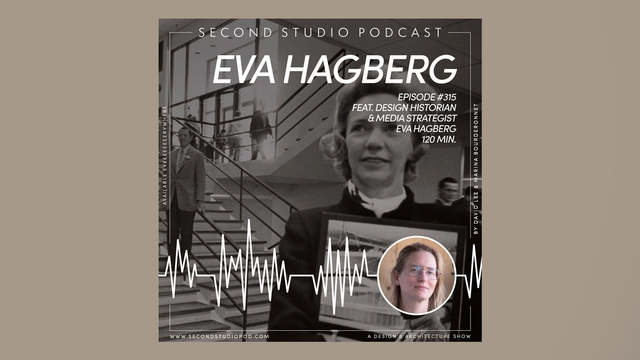
The Second Studio Podcast: Interview with Eva Hagberg

The Second Studio (formerly The Midnight Charette) is an explicit podcast about design, architecture, and the everyday. Hosted by Architects David Lee and Marina Bourderonnet, it features different creative professionals in unscripted conversations that allow for thoughtful takes and personal discussions.

A variety of subjects are covered with honesty and humor: some episodes are interviews, while others are tips for fellow designers, reviews of buildings and other projects, or casual explorations of everyday life and design. The Second Studio is also available on iTunes, Spotify, and YouTube.

More Lessons From the Father of Postmodernism, Charles Moore

This article was originally published on Common Edge.

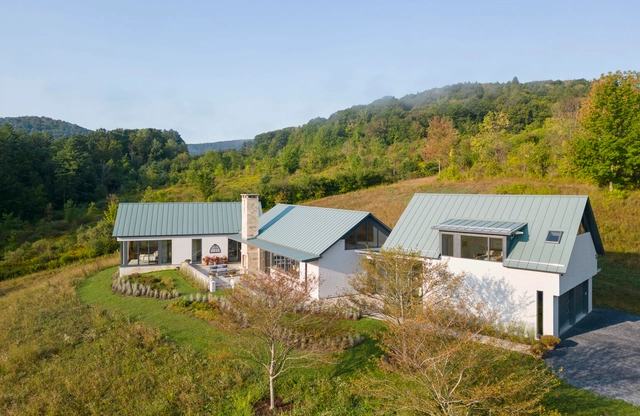
About 50 years ago, the renowned architect, educator, and author Charles Moore was hired by Frederick and Dorothy Rudolph to design a vacation house on Captiva Island, Florida, and about a decade later, in the late 1970s, they hired him again to design their permanent residence in Williamstown, Massachusetts.

Moore was often called the father of Postmodernism and was a prolific proponent through such books as The Place of Houses. With the exception of his small houses, however, I was never a big fan of his work. But I still have a tattered copy of that book, because when I read it, it was the first time that someone had articulated the process of designing a house, including a programmatic checklist to follow.

Reading Architecture in the Works of Venturi and SANAA

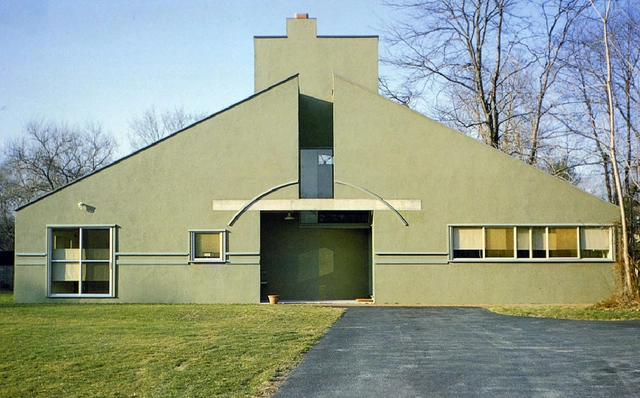
Architecture is never an accident. It is a carefully planned out scheme of patterns and styles that respond to natural surroundings, celebrate materiality, and/or are referential of stylistic movements throughout history- all a means of understanding why things are the way that they are. There are different ways to understand how to analyze architecture, through the use of diagrams, patterns, relationships, and proportions to name a few. To both architects and laypeople alike, there’s a subconscious desire for a decision-making structure in design. As a result, architecture has become an exercise in self-positioning- a microcosmic reflection of the world around us as seen in the designs we build.

Reading Architecture in the Works of Venturi and SANAA - Image 1 of 4Reading Architecture in the Works of Venturi and SANAA - Image 2 of 4Reading Architecture in the Works of Venturi and SANAA - Image 3 of 4Reading Architecture in the Works of Venturi and SANAA - Image 4 of 4Reading Architecture in the Works of Venturi and SANAA - More Images+ 3

Space Popular Adapts Aldo Rossi’s Concepts of Urbanism to the Virtual Realms of the Metaverse

Through the “Search History” exhibition at MAXXI Museum in Rome, Lara Lesmes and Fredrik Hellberg, directors of the architecture and art studio Space Popular, set out to explore the work of Also Rossi and to translate his notions of “urban fact” and “analogous city” to the virtual realm. The installation is a reflection on the proliferation of metaverse platforms and the concept of virtual urbanism. The exhibition is part of the fifth edition of Studio Visit, a partnership between Alcantara and the MAXXI Museo nazionale delle arti del XXI secolo, which challenges designers to put forward a personal reinterpretation of the works of the masters in the MAXXI Architecture Collections.

Space Popular Adapts Aldo Rossi’s Concepts of Urbanism to the Virtual Realms of the Metaverse - Image 1 of 4Space Popular Adapts Aldo Rossi’s Concepts of Urbanism to the Virtual Realms of the Metaverse - Image 2 of 4Space Popular Adapts Aldo Rossi’s Concepts of Urbanism to the Virtual Realms of the Metaverse - Image 3 of 4Space Popular Adapts Aldo Rossi’s Concepts of Urbanism to the Virtual Realms of the Metaverse - Image 4 of 4Space Popular Adapts Aldo Rossi’s Concepts of Urbanism to the Virtual Realms of the Metaverse - More Images+ 29