1. ArchDaily
  2. Theory and History

Theory and History: The Latest Architecture and News

Brazil Congress Attack: The Symbolic Consequences of the 2023 January Invasion

Few places in the world have an overlap of complexities as intense as Brasília. Even so, its architecture symbolizes the Republic and democracy of Brazil, and any act of attack on these symbols carries meanings and consequences for Brazilian memory and cultural heritage. The terrorist acts of January 2023 destroyed part of the heritage and raised questions beyond objects and architecture, touching on education, culture, and national political capital.
The Origins of Cemeteries as Public Parks

In the 19th century, many Americans living in up-and-coming cities and towns oftentimes found themselves strolling through the winding paths of curated gardens, stopping to rest under the shade of a tree and share a picnic with family and friends. Dotted across the grassy areas were headstones, marking the burial locations of those who were laid to rest. While the concept of relaxing in a graveyard seems a bit taboo in the present day, it was sometimes the only option for people to find space for recreation and leisure and was one of the earliest examples of a public park. Many of the parks we have today were actually caused by the evolution and planning of historic cemeteries.

Witold Rybczynski on The Story of Architecture

This article was originally published on Common Edge.

Witold Rybczynski’s latest book—he’s written 22 now, at last count—is The Story of Architecture (Yale University Press), and it’s as comprehensive as the title implies. The author of Home and A Clearing in the Distance starts with the ancients, works his way chronologically through the movements, buildings, and architects, and into the present day. It’s done, he concedes, through his own prism. “I have not given equal attention to all parts of the world,” he writes in the book’s Note to the Reader. “This is primarily although not exclusively the story of the Western canon. That is not to slight regions that often have their own unique architectural accomplishments … but I have chosen examples that best convey the principal thrust of the strain of architectural thought that has most influenced me.” Recently I talked with Rybczynski about the genesis for the book, what architecture lost when it abandoned ornamentation, and where we are today.

Witold Rybczynski on The Story of Architecture - Image 1 of 4Witold Rybczynski on The Story of Architecture - Image 2 of 4Witold Rybczynski on The Story of Architecture - Image 3 of 4Witold Rybczynski on The Story of Architecture - Image 4 of 4Witold Rybczynski on The Story of Architecture - More Images

On Community Preservation with Vishaan Chakrabarti in Urban Roots Podcast

Vishaan Chakrabarti
https://uncertain.substack.com/p/vishaan-chakrabarti-rough-transcript

On Community Preservation with Vishaan Chakrabarti in Urban Roots Podcast - Image 1 of 4On Community Preservation with Vishaan Chakrabarti in Urban Roots Podcast - Image 2 of 4On Community Preservation with Vishaan Chakrabarti in Urban Roots Podcast - Image 3 of 4On Community Preservation with Vishaan Chakrabarti in Urban Roots Podcast - Image 4 of 4On Community Preservation with Vishaan Chakrabarti in Urban Roots Podcast - More Images

PAU’s Vishaan Chakrabarti on How Progressives Ruin Cities in Uncertain Things Podcast

Adaam James Levin-Areddy and Vanessa M. Quirk, the hosts and producers of the Uncertain Things podcast, interview people from diverse backgrounds and a wide range of expertise to ask the question: “now what? What is happening and how did we get here?”. In this episode, they talk with urbanist, architect, and professor Vishaan Chakrabarti, founder of Practice for Architecture and Urbanism, to seek to understand how the cities got so expensive. Together they delve into the affordability crisis, the detrimental effect of progress, and what we need to do to have better cities.

PAU’s Vishaan Chakrabarti on How Progressives Ruin Cities in Uncertain Things Podcast - Image 1 of 4PAU’s Vishaan Chakrabarti on How Progressives Ruin Cities in Uncertain Things Podcast - Image 2 of 4PAU’s Vishaan Chakrabarti on How Progressives Ruin Cities in Uncertain Things Podcast - Image 3 of 4PAU’s Vishaan Chakrabarti on How Progressives Ruin Cities in Uncertain Things Podcast - Image 4 of 4PAU’s Vishaan Chakrabarti on How Progressives Ruin Cities in Uncertain Things Podcast - More Images+ 1

Make No Little Plans: A Brief History of Chicago Architecture

Chicago, The Windy City, Chi-Town, or The Second City. It’s a place that is known by many names, but to architects and urban planners alike, it’s famous for its history which has given us some of the best-known buildings and important advancements that have helped to shape other cities across the United States. From its inception, Chicago has long served as an architectural hub for innovation.

Make No Little Plans: A Brief History of Chicago Architecture - Image 1 of 4Make No Little Plans: A Brief History of Chicago Architecture - Image 2 of 4Make No Little Plans: A Brief History of Chicago Architecture - Image 3 of 4Make No Little Plans: A Brief History of Chicago Architecture - Image 4 of 4Make No Little Plans: A Brief History of Chicago Architecture - More Images+ 1

Whom Does Architecture Serve Today?

In 1969, ‘The Architects' Resistance’, a collective of students from Yale University, Columbia University, and the Massachusetts Institute of Technology (MIT), published a manifesto titled ‘Architecture: whom does it serve?’

With this manifesto, the group sought to place the practice of architecture in a broader economic, social and environmental context than the one taught in their university lecture rooms. In just two and a half pages, we find a powerful call to reclaim a more social and ecologically conscious architecture. It unambiguously denounces the role architecture played during those years as a practice in service to those in power while adding that “the architect's submission to the system begins with the belief that they possess special skills and knowledge that are inaccessible to the general public.”

Hidden Figures: The Historic Contributions of Black Architects in the United States

This article was originally published on Common Edge.

Designer Paul Wellington, based in Milwaukee, United States, is the author of Black Built: History and Architecture in the Black Community, a book that documents more than 40 works of architecture around the country by Black architects that have had a direct impact on communities of color. He’s now working on a new book that will focus on Black women architects in a field dominated by white males. I spoke with Wellington about the new book, what he learned through his research on Black architects and their work, and the future of increasing the ranks of Black architects in the U.S.

Graham Foundation Announces the Names of 2022 Individual Grant Recipients

The Graham Foundation has announced the award of 56 new grants to individuals exploring ideas that expand contemporary understandings of architecture. The recipients have been selected from an open call that resulted in nearly 500 submissions. The selected projects are led by 81 individuals with diverse backgrounds. The funded projects, including exhibitions, publications, films, and podcasts, among other formats, encourage experimentation and foster critical discourse in architecture.

Graham Foundation Announces the Names of 2022 Individual Grant Recipients - Image 1 of 4Graham Foundation Announces the Names of 2022 Individual Grant Recipients - Image 2 of 4Graham Foundation Announces the Names of 2022 Individual Grant Recipients - Image 3 of 4Graham Foundation Announces the Names of 2022 Individual Grant Recipients - Image 4 of 4Graham Foundation Announces the Names of 2022 Individual Grant Recipients - More Images

How the Renaissance Influenced Architecture

After a prolonged period known as the Middle-Ages, a growing desire to both study and mimic nature itself began to emerge, with an inclination to discover and explore the world. Between 1400-1600 A.D. Europe was to witness a significant revival of the fine arts, painting, sculpture, and Architecture. The ‘Renaissance’, meaning ‘rebirth’ in French typically refers to this period of European history, although most closely associated with Italy, countries including England and France went through many of the same cultural changes at varying timescales.

Prior to the dawn of the Renaissance, Europe was dominated by ornate and asymmetrical Gothic Architecture. Devoured by the plague, the continent lost approximately a third of its population, vastly changing society in terms of economic, social and religious effect. Contributing to Europe’s emergence into the Renaissance, the period ushered in a new era of architecture after a phase of Gothic art, with the rise of notions of ‘Humanism’. The idea of attaching much importance to the essence of individualism. The effect of Humanism included the emergence of the individual figure, greater realism and attention to detail, especially in depictions in art.

How the Renaissance Influenced Architecture  - Image 1 of 4How the Renaissance Influenced Architecture  - Image 2 of 4How the Renaissance Influenced Architecture  - Image 3 of 4How the Renaissance Influenced Architecture  - Image 5 of 4How the Renaissance Influenced Architecture  - More Images+ 7

Creating Architectural Value through Aesthetics

Humans try very hard to make the inexplicable understood. Our spirituality becomes religion. Fairness becomes law. And what delights us becomes aesthetics, and aesthetics are dumbed down to “style” in fine arts and architecture. The description, then definition, of aesthetics enables us to judge, and hopefully, control what thrills us: "Styles may change, details may come and go, but the broad demands of aesthetic judgement are permanent". -- Roger Scruton

But the instant delight we sometimes feel when we hear, taste, think or see parts of our experience is unreasoned in its apprehension. We try to create value in our outcomes by defining them beyond experience – that is aesthetics.

Copycat: Why Is Copying a Style Bad for Cities?

CopyCat is the act of emulating something that's already been created and using it in a different context. Copycats can exist in music, arts and design; but they are not exactly a design inspiration or a style reference, but rather a literal copy with almost no modification of the original work.

In architecture, it is as if you were inspired by an emblematic work from another space-time and placed it somewhere unconnected with the original roots of the work-style.

The History of the Penrose Stair and its Influence on Design

Stairs in architecture are oftentimes a design focal point- the heavyhandedness in creating something that moves us from one level to the next, up and down repeatedly, something so simple and familiar with a twist is what makes the experience of traversing a stair so unique. Our obsession with stairs and the level of illusion that they create in architecture perhaps stems from the way that they’re able to twist the optics and perceptions of space. We understand that they transport us in one direction or another, but can stairs ever be circular? Is it possible to go up and down for eternity? 

The Space Age Aesthetic: Influencing Architecture and Interiors

The dawn of nuclear power, dramatic advances in rocketry, and the desire to be the first to put men into space and on the moon, kick-started an era known as the ‘Space Age’. Upon the closure of WW2, both the Soviets and the Allies found themselves in a state of antagonism, as they both began to struggle to make advancements in space exploration before the other, a race for space. The era would give way to rapid advancements in technology and huge accomplishments including the moon landing in 1969. The Space Age aesthetic completely changed the way designers visualized the new world and left a dramatic impression on architecture and interiors. A new vision of futurism and prosperity.

The Space Age Aesthetic: Influencing Architecture and Interiors - Image 1 of 4The Space Age Aesthetic: Influencing Architecture and Interiors - Image 2 of 4The Space Age Aesthetic: Influencing Architecture and Interiors - Image 3 of 4The Space Age Aesthetic: Influencing Architecture and Interiors - Image 4 of 4The Space Age Aesthetic: Influencing Architecture and Interiors - More Images+ 1

Tactical Urbanism: What are its Limits in the Public Realm?

Today, one of the most popular initiatives regarding public space, participatory design and activism in the city is the so-called citizen urbanism or tactical urbanism. The approach proposes to trigger, through limited and low-cost interventions, long-term changes in public space, i.e. short-term action, long-term change (Street Plans, 2013).

The strategy used is to create temporary scenarios that make visible a specific problem and the formation of specific interventions to solve it, seeking to incorporate the community to give it relevance and promote its sustainability over time and, in this way, raise the discussion about the benefits of the projects for the quality of life in the context in which they are inserted.

Why Francis Kéré Won the Pritzker Prize?

Why Francis Kéré Won the Pritzker Prize? - Image 1 of 4
Francis Kéré, 2022 Pritzker Prize Laureate . Image © Lars Borges

Last Tuesday, March 15, Francis Kéré became the first African architect to win the Pritzker Prize, the most important award in the architecture discipline.

The election of Kéré is not only symbolic in a time of identity demands, where the institutions that make up the mainstream are required to more faithfully represent the social, cultural, and sexual realities that make up our societies, but it also confirms the recent approach of the Pritzker Prize jury.

Why Francis Kéré Won the Pritzker Prize? - Image 2 of 4Why Francis Kéré Won the Pritzker Prize? - Image 3 of 4Why Francis Kéré Won the Pritzker Prize? - Image 5 of 4Why Francis Kéré Won the Pritzker Prize? - Image 6 of 4Why Francis Kéré Won the Pritzker Prize? - More Images+ 3

Architecture Criticism: Cultivating An Understanding on the Practice

Architecture Criticism: Cultivating An Understanding on the Practice - Featured Image
The Library Stanbridge Mill by Crawshaw Architects. Image © Ingrid Rasmussen

Michael Sorkin used to regard criticism as "a service profession", highlighting the field's ability to shape public opinion and the direction of architecture at large. Intellectually expansive architecture criticism not only evaluates the merits and shortcomings of a project but reveals how buildings are situated in relation to history and theory and how they contribute to current economic, social and environmental dilemmas. The following explores the field of architecture criticism, highlighting some of its key figures while reflecting on how this role has changed with the emergence of digital media.

Architecture Criticism: Cultivating An Understanding on the Practice - Image 1 of 4Architecture Criticism: Cultivating An Understanding on the Practice - Image 2 of 4Architecture Criticism: Cultivating An Understanding on the Practice - Image 3 of 4Architecture Criticism: Cultivating An Understanding on the Practice - Image 4 of 4Architecture Criticism: Cultivating An Understanding on the Practice - More Images

The Building That Moved: How Did They Move an 11,000-Ton Telephone Exchange Without Suspending Its Operations?

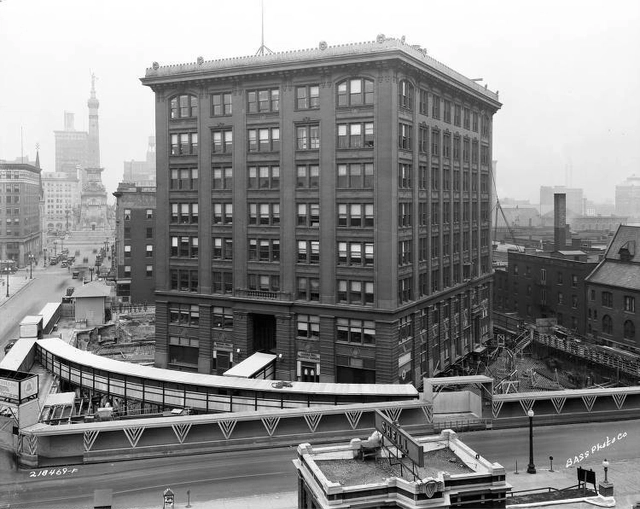
In November 1930, in Indiana, United States, one of the great feats of modern engineering was executed: a team of architects and engineers moved an 11,000-ton (22-million pound) telephone exchange without ever suspending its operations either basic supplies for the 600 employees who worked inside.