1. ArchDaily
  2. Social justice

Social justice: The Latest Architecture and News

Design as Repair: How Architecture Is Advancing Environmental Justice

Subscriber Access | 

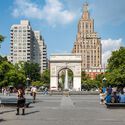
Environmental justice confronts a simple but uncomfortable truth: the benefits and burdens of the environment are not shared equally. Marginalized communities bear a disproportionate share of polluted air, unsafe water, toxic land uses, extreme heat, and the accelerating risks of climate change in cities around the world. These are the consequential products of decades of policy decisions, investment patterns, exclusionary planning practices, and planning choices that have consistently favored certain communities over others.

In cities and landscapes alike, these injustices are written into the physical fabric of places, even revealing extreme differences in environmental conditions between neighborhoods and districts. Dense neighborhoods with little tree canopy, for example, absorb and hold heat, exposing residents to higher rates of heat-related illness. Highways, industrial corridors, ports, and waste facilities cluster near low-income neighborhoods and communities of color, shaping conditions of health, air and soil quality, and long-term safety.

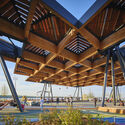
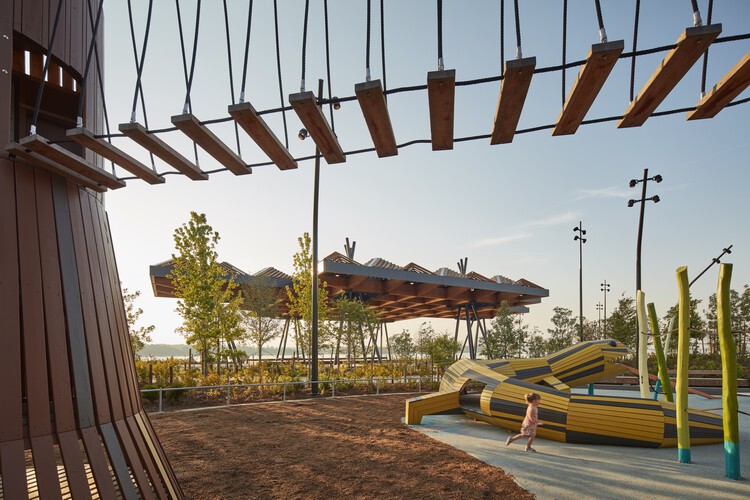
Design as Repair: How Architecture Is Advancing Environmental Justice - Image 1 of 4Design as Repair: How Architecture Is Advancing Environmental Justice - Image 2 of 4Design as Repair: How Architecture Is Advancing Environmental Justice - Image 3 of 4Design as Repair: How Architecture Is Advancing Environmental Justice - Image 4 of 4Design as Repair: How Architecture Is Advancing Environmental Justice - More Images+ 35

Mobility Justice: Urban Equity in an Era of Innovation

Subscriber Access | 

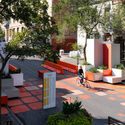
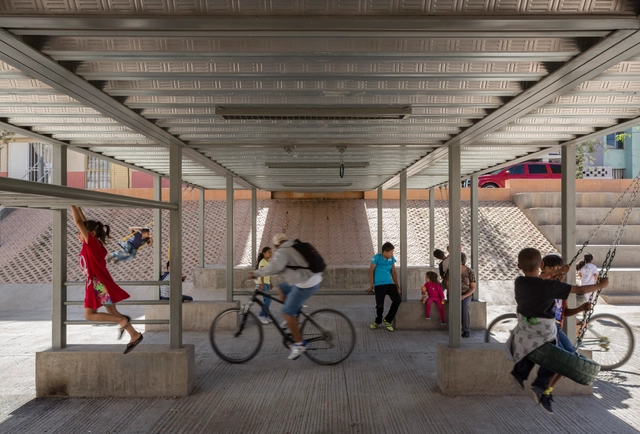
Every city contains two transportation systems. One is the visible network of roads, rail lines, sidewalks, and bus routes mapped in planning documents. The other is the invisible geography of privilege and exclusion embedded within it: the neighborhoods that received highways instead of parks, the communities whose bus routes were cut, the sidewalks that abruptly end at the edge of a district. For many years, built-environment professionals have treated infrastructure as a technical challenge. Mobility justice insists it is, fundamentally, a political one.

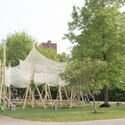
Mobility Justice: Urban Equity in an Era of Innovation - Image 1 of 4Mobility Justice: Urban Equity in an Era of Innovation - Image 2 of 4Mobility Justice: Urban Equity in an Era of Innovation - Image 3 of 4Mobility Justice: Urban Equity in an Era of Innovation - Image 4 of 4Mobility Justice: Urban Equity in an Era of Innovation - More Images+ 25

World Day of Social Justice 2026: Labor Rights, Spatial Equity, and Resource Governance

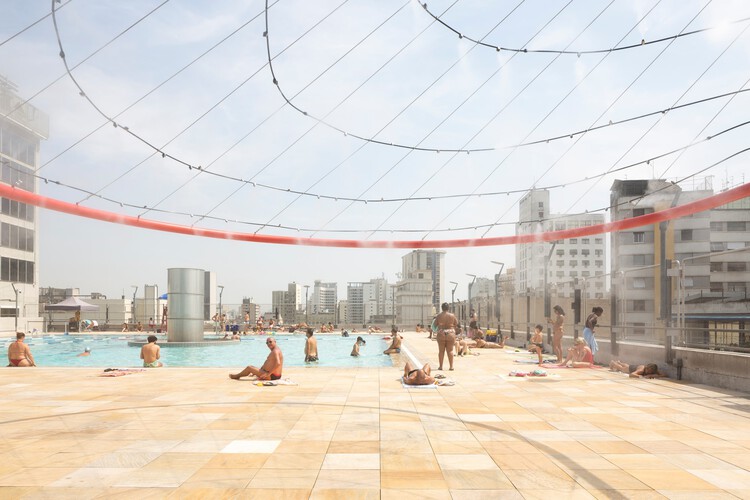
Today, 20 February, the United Nations marks World Day of Social Justice under the theme "Renewed Commitment to Social Development and Social Justice." This year's observance takes place in the aftermath of the Second World Summit for Social Development in Doha and the adoption of the Doha Political Declaration, renewing the commitments first articulated in the 1995 Copenhagen Declaration: poverty eradication, full and productive employment, decent work for all, and social inclusion as interdependent pillars of development. At a moment defined by widening inequalities and accelerating environmental and technological transitions, the 2026 commemoration calls for translating political affirmation into measurable, cross-sectoral implementation.

World Day of Social Justice 2026: Labor Rights, Spatial Equity, and Resource Governance - Image 1 of 4World Day of Social Justice 2026: Labor Rights, Spatial Equity, and Resource Governance - Image 2 of 4World Day of Social Justice 2026: Labor Rights, Spatial Equity, and Resource Governance - Image 3 of 4World Day of Social Justice 2026: Labor Rights, Spatial Equity, and Resource Governance - Image 4 of 4World Day of Social Justice 2026: Labor Rights, Spatial Equity, and Resource Governance - More Images+ 13

How Amsterdam Uses the Doughnut Economics Model to Create a Balanced Strategy for Both the People and the Environment

In 2020, in the midst of the first wave of lockdowns due to the pandemic, the municipality of Amsterdam announced its strategy for recovering from this crisis by embracing the concept of the “Doughnut Economy.” The model is developed by British economist Kate Raworth and popularized through her book, “Doughnut Economics: Seven Ways to Think Like a 21st-Century Economist”, released in 2017. Here, she argues that the true purpose of economics does not have to equal growth. Instead, the aim is to find a sweet spot, a way to balance the need to provide everyone with what they need to live a good life, a “social foundation” while limiting our impact on the environment, “the environmental ceiling.” With the help of Raworth, Amsterdam has downscaled this approach to the size of a city. The model is now used to inform city-wide strategies and developments in support of this overarching idea: providing a good quality of life for all without putting additional pressure on the planet. Other cities are following this example.

How Amsterdam Uses the Doughnut Economics Model to Create a Balanced Strategy for Both the People and the Environment - Image 1 of 4How Amsterdam Uses the Doughnut Economics Model to Create a Balanced Strategy for Both the People and the Environment - Image 2 of 4How Amsterdam Uses the Doughnut Economics Model to Create a Balanced Strategy for Both the People and the Environment - Image 3 of 4How Amsterdam Uses the Doughnut Economics Model to Create a Balanced Strategy for Both the People and the Environment - Image 4 of 4How Amsterdam Uses the Doughnut Economics Model to Create a Balanced Strategy for Both the People and the Environment - More Images+ 5

Designing for All: Exploring Empathy, Inclusivity, Accessibility and Spatial Equity in Architecture

The concept of inclusive architecture has gained prominence as the built environment evolves to reflect and address the diverse needs of humanity. This approach prioritizes empathy, accessibility, and equity, striving to create spaces that resonate with individuals across a spectrum of demographics, abilities, and cultural contexts. It moves beyond merely meeting accessibility standards or incorporating universal design elements; instead, it embodies a paradigm shift that humanizes architecture and aligns it with fundamental social values. Through this lens, inclusive architecture fosters connections, embraces diversity, and ensures that physical spaces contribute to collective well-being.

This article explores four interrelated themes — Empathy, Inclusive Architecture, and Spatial Equity and Accessibility— through selected articles published in 2024. Together, these themes reveal how architecture can respond to societal challenges and aspirations, illustrating its potential as a catalyst for social change. From designing for emotional connection to addressing spatial inequalities, the lessons of 2024 emphasize the responsibility of architects to create spaces that transcend functionality, champion inclusivity at every scale, and foster environments where everyone feels seen, valued, and empowered.

Designing for All: Exploring Empathy, Inclusivity, Accessibility and Spatial Equity in Architecture - Image 1 of 4Designing for All: Exploring Empathy, Inclusivity, Accessibility and Spatial Equity in Architecture - Image 2 of 4Designing for All: Exploring Empathy, Inclusivity, Accessibility and Spatial Equity in Architecture - Image 3 of 4Designing for All: Exploring Empathy, Inclusivity, Accessibility and Spatial Equity in Architecture - Image 4 of 4Designing for All: Exploring Empathy, Inclusivity, Accessibility and Spatial Equity in Architecture - More Images+ 11

Exploring Indigenous Wisdom: A Journey through Architecture Rooted in Tradition and Community

According to the United Nations, indigenous people are "place-based" ethnic cultures that have not migrated from their initial homeland. In today's world, with human-caused climate change driving extreme weather events and a growing demand for authenticity and cultural diversity, architects are increasingly turning to indigenous knowledge systems not only as sources of inspiration but as viable solutions to adapt and respond to local and global challenges. As traditional custodians of the land, Indigenous communities possess a profound understanding of their ecosystems, locally available materials, cultural norms, and social constraints. This knowledge holds insights valuable for shaping contemporary architecture, helping it adapt to both the people and their environments.

Vernacular and indigenous practices are emerging as a foundation for architectural reimagining, informing spatial lays, the choice of materials, and building techniques while also allowing for the integration of innovation and contemporary expression. This careful blend of tradition and modernity can have a significant impact in terms of sustainability, as architects who adopt the indigenous approach to harnessing available resources can not only create structures rooted in their context but also minimize the ecological impact of the construction. Additionally, collaborating directly with Indigenous communities leads to projects that prioritize community participation, cultural sensitivity, and sustainable development.

Understanding Urbanism: Harmony, Justice, and Poetry in Cities

Cities are vibrant systems that hold meaning and move with the rhythm of the human life that powers it. In the fabric of urban landscapes, architects and urban designers collaborate to create spatial harmonies that extend beyond aesthetics and towards social justice and poetic expression. Citizens engage, becoming active participants in the ongoing narrative of the city - the metropolitan melody. 

In 2023, ArchDaily wrote about the poetics of urbanism, exploring a future where cities meet its people’s social and emotional needs: 

Understanding Urbanism: Harmony, Justice, and Poetry in Cities - Image 1 of 4Understanding Urbanism: Harmony, Justice, and Poetry in Cities - Image 2 of 4Understanding Urbanism: Harmony, Justice, and Poetry in Cities - Image 3 of 4Understanding Urbanism: Harmony, Justice, and Poetry in Cities - Image 4 of 4Understanding Urbanism: Harmony, Justice, and Poetry in Cities - More Images+ 2

The Landscapes of the Black Atlantic World

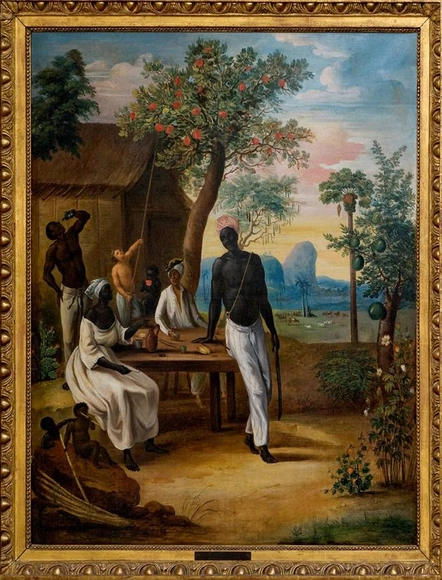
The institution of slavery shaped landscapes on both sides of the Atlantic Ocean. And in turn enslaved and free Africans and their descendants created new landscapes in the United States, the Caribbean, and Sub-Saharan Africa. African people had their own intimate relationships with the land, which enabled them to carve out their own agency and culture.

At Dumbarton Oaks in Washington, D.C., a symposium — Environmental Histories of the Black Atlantic World: Landscape Histories of the African Diaspora — organized by N. D. B. Connolly, a professor at Johns Hopkins University, and Oscar de la Torre, a professor at the University of North Carolina at Charlotte, sought to highlight those forgotten relationships between people and their environment.

The Landscapes of the Black Atlantic World - Image 1 of 4The Landscapes of the Black Atlantic World - Image 2 of 4The Landscapes of the Black Atlantic World - Image 3 of 4The Landscapes of the Black Atlantic World - Image 4 of 4The Landscapes of the Black Atlantic World - More Images

10 Structural Installations by Snøhetta, MADWORKSHOP, and others at the ECC's 'Time Space Existence' Exhibition at Venice

Subscriber Access | 

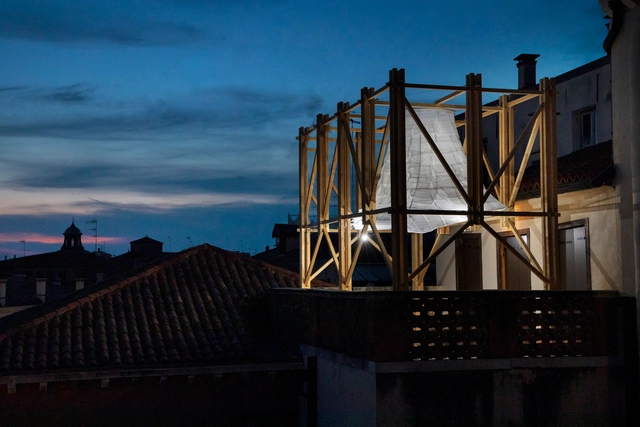
In parallel to this year's Venice Architecture Biennale, The European Cultural Centre (ECC) presented the sixth edition of its extensive architecture exhibition titled Time Space Existence. The 2023 iteration of the group show draws attention to expressions of sustainability in its numerous forms, ranging from a focus on the environment and urban landscape to the unfolding conversations on innovation, reuse, community, and inclusion. A total of 217 projects by established participants like Snøhetta or MADWORKSHOP and emerging players such as Urban Radicals or ACTA are currently on show through the 26th of November, 2023, at Venice's Palazzo Bembo, Palazzo Mora, and Marinaressa Gardens.

In response to climate change, the installations on show investigate new technologies and construction methods that reduce energy consumption through circular design and develop innovative, organic, and recycled building materials. Participants also address social justice by presenting living solutions envisioned for displaced communities and minorities, while others examine the tensions between the built urban environment and the nature surrounding it to identify opportunities for coexistence.

10 Structural Installations by Snøhetta, MADWORKSHOP, and others at the ECC's 'Time Space Existence' Exhibition at Venice  - Image 1 of 410 Structural Installations by Snøhetta, MADWORKSHOP, and others at the ECC's 'Time Space Existence' Exhibition at Venice  - Image 2 of 410 Structural Installations by Snøhetta, MADWORKSHOP, and others at the ECC's 'Time Space Existence' Exhibition at Venice  - Image 3 of 410 Structural Installations by Snøhetta, MADWORKSHOP, and others at the ECC's 'Time Space Existence' Exhibition at Venice  - Image 4 of 410 Structural Installations by Snøhetta, MADWORKSHOP, and others at the ECC's 'Time Space Existence' Exhibition at Venice  - More Images+ 9

Overcoming Barriers: Social Justice in Latin American Architecture

Subscriber Access | 

February 20th marks a new edition of the World Day of Social Justice. The theme, "Overcoming barriers and unlocking opportunities", is a perfect occasion to reflect on the importance of equity in all areas of society - and especially from architecture and urbanism. And yes: they both have a fundamental role in building accessible cities and are important tools for addressing the challenges of economic inequality and social exclusion.

The Fetishization of Architecture: the Object Above the Subject and Processes

Subscriber Access | 

The philosopher and sociologist Henri Lefebvre coined the notion of "production of space" in 1974, breaking with the vision of space as a container or scenario of objects and social relations, to move towards space understood as a process. From this vision based on the Marxist tradition, space is a product and a producer of social relations and processes.

The Fetishization of Architecture: the Object Above the Subject and Processes - Image 1 of 4The Fetishization of Architecture: the Object Above the Subject and Processes - Image 2 of 4The Fetishization of Architecture: the Object Above the Subject and Processes - Image 3 of 4The Fetishization of Architecture: the Object Above the Subject and Processes - Image 4 of 4The Fetishization of Architecture: the Object Above the Subject and Processes - More Images+ 9

It’s Time for Africa to Chart Its Own Climate Change Agenda

This article was originally published on Common Edge.

Last November, the annual climate conference COP 27 came to a close in Sharm el-Sheikh with a tentative agreement, reached at the last moment, to set up a “loss and damage” climate fund for Africa and other developing countries. For Africans, this was cause for muted celebration, because for generations the continent has built its climate change agenda almost exclusively around the pursuit of climate justice, a desire to enforce liability on the industrialized nations responsible for the bulk of global carbon emissions. All of this has unfolded, in a sort of willful blindness, while a majority of Africans struggled with the most prosaic challenges: inefficient urban sanitation; poor stormwater management; a paucity of water, sanitation, and hygiene facilities; willful and unabated deforestation; and environmental degradation.

Los Angeles Selects Finalists to Design a Memorial to the Victims of the 1871 Chinese Massacre

The city of Los Angeles has selected six finalists for the competition to design a new memorial dedicated to the victims of the 1871 Chinese Massacre. In one of the darkest chapters in the city’s history, on 21 October 24, roughly ten percent of the city’s Chinese population at the time, at least 18 residents, were murdered by a mob of rioters. The memorial seeks to raise public awareness of the 1871 racially motivated mass killing while simultaneously addressing contemporary concerns regarding race, intolerance, and violence. The memorial was first announced in April 2021, and it is set to be built near the site of the massacre and the Chinese American Museum.

Los Angeles Selects Finalists to Design a Memorial to the Victims of the 1871 Chinese Massacre - Image 1 of 4Los Angeles Selects Finalists to Design a Memorial to the Victims of the 1871 Chinese Massacre - Image 2 of 4Los Angeles Selects Finalists to Design a Memorial to the Victims of the 1871 Chinese Massacre - Image 3 of 4Los Angeles Selects Finalists to Design a Memorial to the Victims of the 1871 Chinese Massacre - Image 4 of 4Los Angeles Selects Finalists to Design a Memorial to the Victims of the 1871 Chinese Massacre - More Images+ 15

"I Grew Up Where Architecture Was Designed to Oppress": Wandile Mthiyane on Social Impact and Learning from South Africa

Subscriber Access | 

Design justice is grounded in personal experience and built through everyday actions. Wandile Mthiyane is an architectural designer that embodies this idea, an activist that grew up in Durban, South Africa during the Apartheid. From an early age he was drawn to building and design, a background directly tied to his childhood. He realized he wanted to build a better future by working to undo the architectural effects of institutionalized racial segregation. Today, Wandile has become recognized for creating social impact, including his work to transform his hometown of Durban.

"I Grew Up Where Architecture Was Designed to Oppress": Wandile Mthiyane on Social Impact and Learning from South Africa - Arch Daily Interviews"I Grew Up Where Architecture Was Designed to Oppress": Wandile Mthiyane on Social Impact and Learning from South Africa - Arch Daily Interviews"I Grew Up Where Architecture Was Designed to Oppress": Wandile Mthiyane on Social Impact and Learning from South Africa - Arch Daily Interviews"I Grew Up Where Architecture Was Designed to Oppress": Wandile Mthiyane on Social Impact and Learning from South Africa - Arch Daily InterviewsI Grew Up Where Architecture Was Designed to Oppress: Wandile Mthiyane on Social Impact and Learning from South Africa - More Images+ 10

BOGDAN & VAN BROECK and BC ARCHITECTS & STUDIES Design Centre for Drug Users in Brussels

BOGDAN & VAN BROECK and BC ARCHITECTS & STUDIES Design Centre for Drug Users in Brussels - Featured Image
© BOGDAN & VAN BROECK and BC ARCHITECTS & STUDIES

The two Belgian practices BOGDAN & VAN BROECK and BC Architects & Studies are currently designing a care centre for drug users in Brussels, which would provide this vulnerable group with a safe and welcoming environment accessible 24/7. Featuring temporary residencies and community spaces, the building neighbouring the city’s port functions as a contemporary version of an inn, bringing a domestic character to an underwise sterile institutional program.

BOGDAN & VAN BROECK and BC ARCHITECTS & STUDIES Design Centre for Drug Users in Brussels - Image 1 of 4BOGDAN & VAN BROECK and BC ARCHITECTS & STUDIES Design Centre for Drug Users in Brussels - Image 2 of 4BOGDAN & VAN BROECK and BC ARCHITECTS & STUDIES Design Centre for Drug Users in Brussels - Image 3 of 4BOGDAN & VAN BROECK and BC ARCHITECTS & STUDIES Design Centre for Drug Users in Brussels - Image 4 of 4BOGDAN & VAN BROECK and BC ARCHITECTS & STUDIES Design Centre for Drug Users in Brussels - More Images+ 10

Six Initiatives Model Ways to Practice True Design Justice

Subscriber Access | 

In this week's reprint from Metropolis, author Leilah Stones explores how across the globe, architects, designers, and planners are redefining what it means to be an advocate in the design profession, listing 6 initiatives that practice design justice.

"Architecture is Vital to Native Culture": Sam Olbekson on Indigenous Design and Social Justice

Subscriber Access | 

Social justice begins with building understanding and community. For Sam Olbekson, Principal of Native American Design at Cuningham Group and Founder of Full Circle Indigenous Planning, community holds a deep relationship to local cultures and traditions. As a member of the White Earth Nation of Ojibwe, Sam brings the perspective of a tribal member who grew up in Native communities, both on and off the reservation. Today, he's using design to reflect contemporary social values and build for future generations.

"Architecture is Vital to Native Culture": Sam Olbekson on Indigenous Design and Social Justice - Arch Daily Interviews"Architecture is Vital to Native Culture": Sam Olbekson on Indigenous Design and Social Justice - Arch Daily Interviews"Architecture is Vital to Native Culture": Sam Olbekson on Indigenous Design and Social Justice - Arch Daily Interviews"Architecture is Vital to Native Culture": Sam Olbekson on Indigenous Design and Social Justice - Arch Daily InterviewsArchitecture is Vital to Native Culture: Sam Olbekson on Indigenous Design and Social Justice - More Images+ 11

AIANY Calls on American Architects to Stop Designing Unjust Spaces of Incarceration

The Board of Directors of AIA New York has recently released a statement discouraging the design of criminal justice facilities that uphold the current system. Taking a stand against designing unjust, cruel, and harmful spaces of incarceration, AIA NY solicited architects to reflect on the broader social implications of their work.