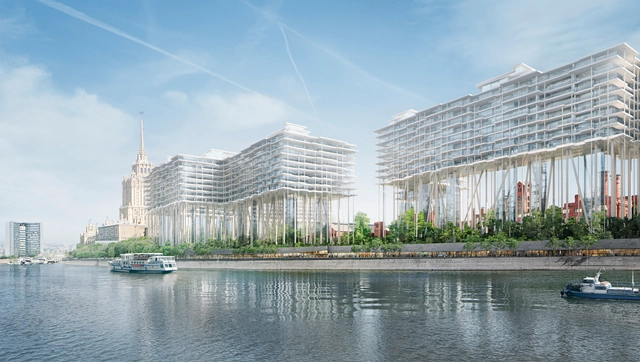
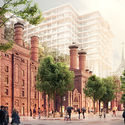
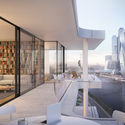
Herzog & de Meuron has released images of their proposed scheme for the redevelopment of an old brewery site on the banks of the Moscow River. The Badaevskiy Brewery project will see the transformation of a largely abandoned cluster of historic, industrial buildings, a delicate restoration project contrasting with the contemporary addition of a residential “Horizontal Skyscraper.” With this bold addition elevated on tall, slender stilts, a new ground-level public park is created to strengthen ties between the brewery site and adjacent river.
https://www.archdaily.com/891128/herzog-and-de-meuron-designs-horizontal-skyscraper-above-historic-moscow-breweryNiall Patrick Walsh
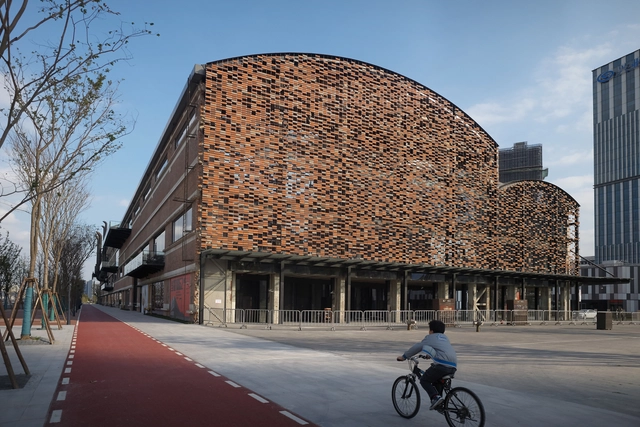
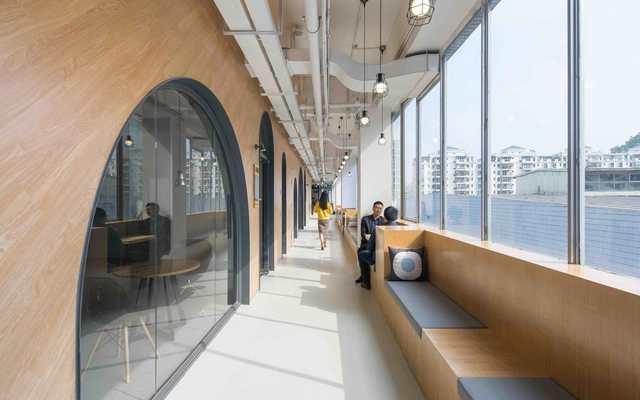
In the Lujiazui financial district in Pudong, Shanghai, Kengo Kuma has reimagined a 1972 shipyard into a new 9,000-square-meter multi-use complex, named Shipyard 1862. Behind original, rugged brick walls, the old shipyard was once defined by a 12 by 30-meter grid, which allowed for massive interior spaces to hold ships. In this industrial-styleadaptive reuse project, Kuma was careful to preserve the building’s structural and material integrity. These photographs provided by Julien Lanoo show how the industrial shell has been transformed by the refurbishment project.
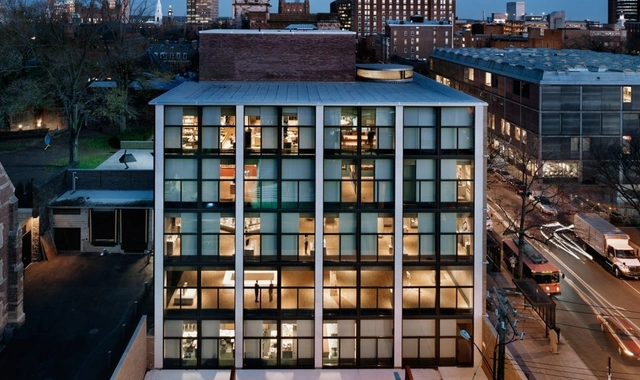
I have a distinct memory from my days as an architecture student at the University of California Berkeley in the late ‘80s. During an architectural survey class taught by Spiro Kostof, Louis I Kahn’s Yale University Art Gallery popped up in the slideshow. “Nice building,” I thought, “but what’s with those windows?”
Fifteen years later at Polshek Partnership (now Ennead Architects), I would become the project architect for the construction phase overseeing the rehabilitation of that classic building—the most challenging aspect of which was to replace “those windows.” I came to understand, intimately, how the double-paned window wall had failed almost as soon as construction was complete. Condensation accumulated between the panes, creating the foggy effect that marred my first impression of this groundbreaking building.
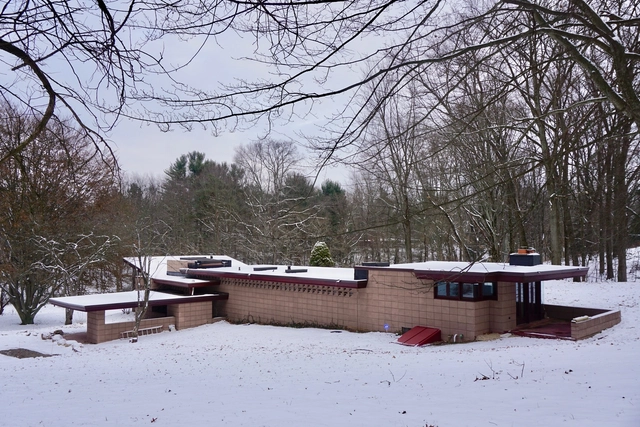
Ever wanted to spend the night in a classic Frank Lloyd Wright house? Here’s your chance.
The Eppstein House, one of Wright’s Usonian designs built in 1953, has been restored to its original beauty by owners Marika Broere and Tony Hillebrandt and is now accepting visitors for a limited time through Airbnb. Located in Galesburg, Michigan, the house was originally designed as part of a planned Usonian community intended to contain 21 homes, though just four ended up being built.
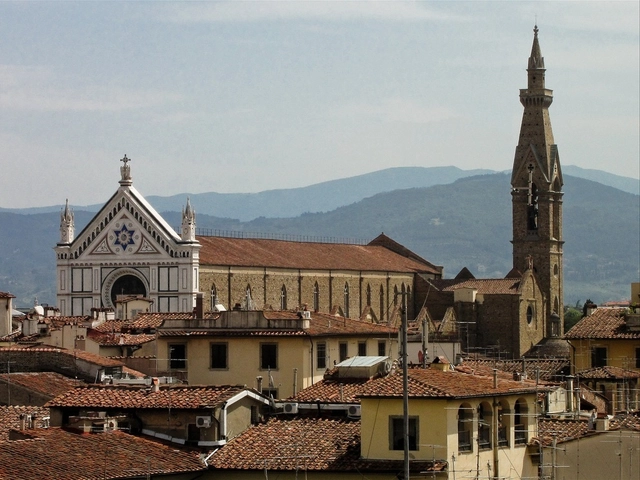
A Spanish tourist has been killed by a piece of falling masonry in the Basilica of Santa Croce in Florence, Italy. As reported by The Guardian, the 52-year old victim was hit by "a piece of decorative stone that fell from a height of 20 metres (66 ft) as he visited the religious building with his wife." Reports suggest that the fragment was around 15cm by 15cm (6 by 6 inches) in size; according to Yahoo, the fragment "had supported a beam in the right transept of the Basilica."
Following the incident, the attraction has been closed to visitors indefinitely.
https://www.archdaily.com/881997/falling-masonry-kills-tourist-in-florences-deteriorating-basilica-di-santa-croceAD Editorial Team
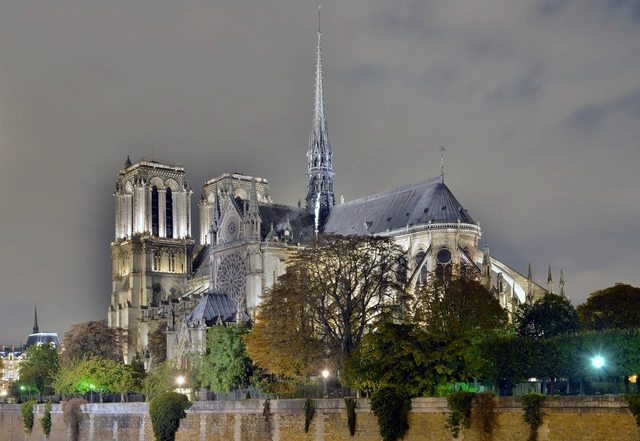
Broken gargoyles and fallen balustrades replaced by plastic pipes and wooden planks. Flying buttresses darkened by pollution and eroded by rainwater. Pinnacles propped up by beams and held together with straps.
According to the Friends of Notre-Dame de Paris, the iconic Parisian cathedral is in "desperate need of attention." Perhaps more concerningly, the holy site and French national monument is also in "a worrisome state of preservation." Built of limestone—a material notoriously susceptible to erosion—the building is in an accelerating state of wear-and-tear, demanding renewed funding efforts and expertise to secure its immediate and long-term future. From the lead roof to the stone buttresses, the world-renowned gargoyles to the stained glass windows, every inch of the structure requires differing levels of attention.
https://www.archdaily.com/881238/iconic-and-revered-notre-dame-de-paris-faces-an-uncertain-futureAD Editorial Team
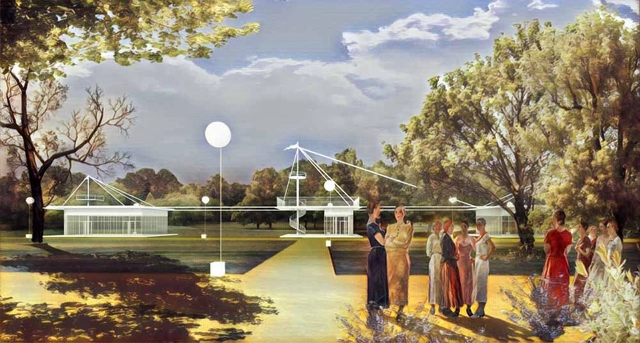
Kleinewelt Architekten in partnership with Citizenstudio / Gorozhane Group, created a re-design proposal for the Northern River Boat Station Park, also known as the Park of Five Seas, in Moscow. Built in the 1930’s, the current park is supposed to act as the city’s gateway to the five seas: the White, Baltic, Black, Azov, and Caspian Sea. However, the park is removed from city life and separates Moscow from it’s historic waterways.
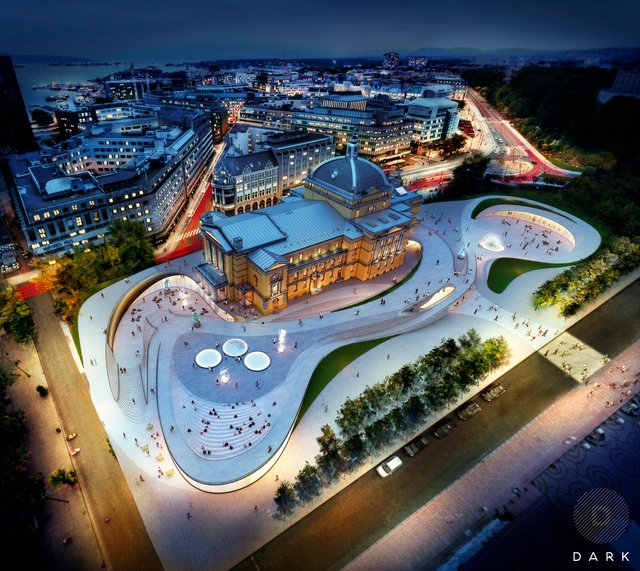
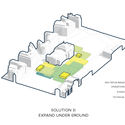
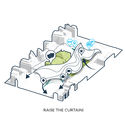
Oslo-based architecture firm Dark Arkitekter hopes to jumpstart the revitalization of the city’s cultural center with their proposed rehabilitation of the National Theatre and redevelopment of the surrounding public space. The government is currently planning to renovate the 118-year-old structure, but Dark Arkitekter was unimpressed with the minimal-effort plan and so put forth their design on behalf of the Theatre.
Against the backdrop of an ever-increasing number of its farmers committing suicides, and its cities crumbling under intensifying pressure on their water resources—owing to their rapidly growing populations—India has revived its incredibly ambitious Interlinking of Rivers (ILR) project which aims to create a nation-wide water-grid twice the length of the Nile. The $168 billion project, first envisioned almost four decades ago, entails the linkage of thirty-seven of the country’s rivers through the construction of thirty canals and three-thousand water reservoirs. The chief objective is to address India’s regional inequity in water availability: 174 billion cubic meters of water is proposed to be transported across river basins, from potentially water-surplus to water-deficit areas.
As Mies van der Rohe’s adopted city, Chicago and its surrounding area are home to more of the Modernist architect’s projects than anywhere else in the world, from Crown Hall to Federal Center to the Farnsworth House. Perhaps for that very reason, the McCormick House, located in the Chicago suburb of Elmhurst, is one of the lesser known projects in the architect's’ oeuvre – despite being one of just three single-family homes in the United States completed by Mies.
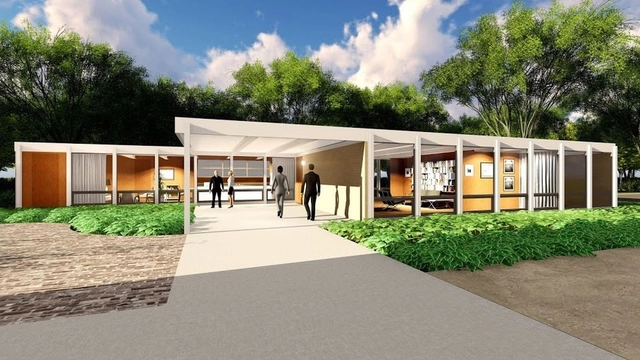
Built in 1952 for Robert McCormick Jr. – the owner of the land where Mies' 860-880 N. Lake Shore Drive was constructed – the house was moved down the street in 1994, where it was attached to the newly built Elmhurst Museum of Art via a 15-foot-long corridor. While its relocation allowed the building to remain in good care over the next 23 years, it also obscured the home’s front facade, “camouflaging one of the most prized objects in the museum's collection.”
But that’s all about to change, thanks to an upcoming restoration that will remove the offending corridor, allowing the original architecture to shine once again.
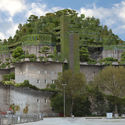
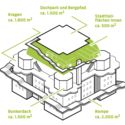
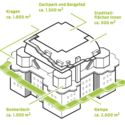
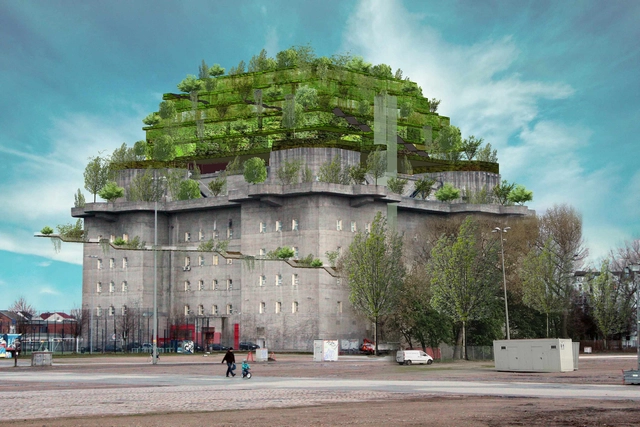
A team of local residents and architects in Hamburg’s neighborhood of St. Pauli have been granted planning permission for a proposal to repurpose a war bunker dating back from the 1940s. Coined Hilldegarden, the proposal seeks to create a “green mountain” garden atop the disused roof of the bunker along with a range of mixed-use projects that increase its height by several stories. “We are rebuilding what we inherit.” The project’s initiative states, “Adding something to history while dealing with it and thereby reshaping history itself.”
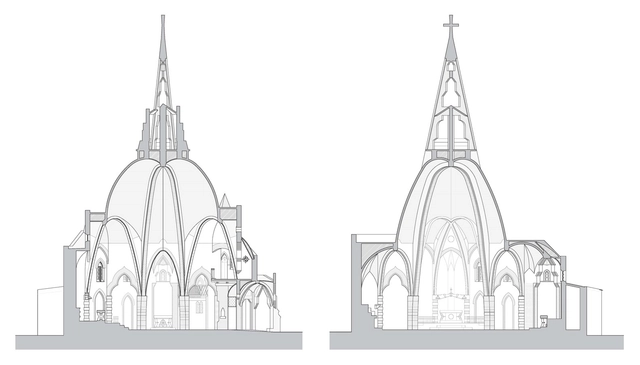
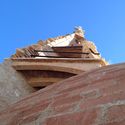
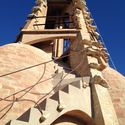
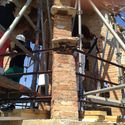
The object of this architectural restoration is the Church of the Sacred Heart of Jesus, in Vistabella, the work of Catalan architect Josep Maria Jujol (16 September 1879 – 1 May 1949). The original design dates from 1917 with the construction completed in 1923. The building is a magnificent and personal work of Catalan architecture.
The simplicity of the materials used—basically brick, mortar, and stone—contrasts with the spectacular formal richness of the structural solutions: columns, arches, and vaults that generate a complex, rich, and surreal interior space typical of the mysticism of Jujol.






























.jpg?1495571322 "via PLANUNGSBÜRO BUNKER")