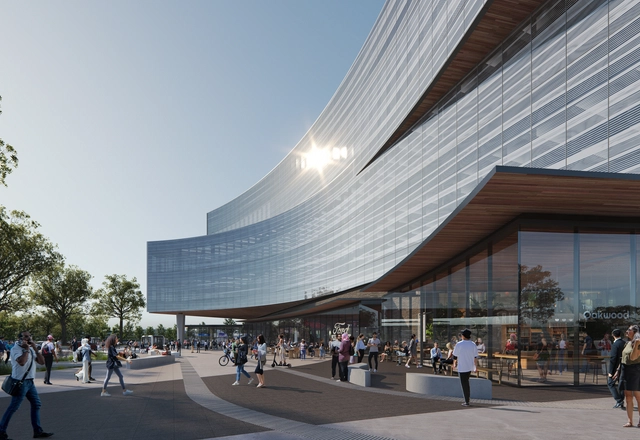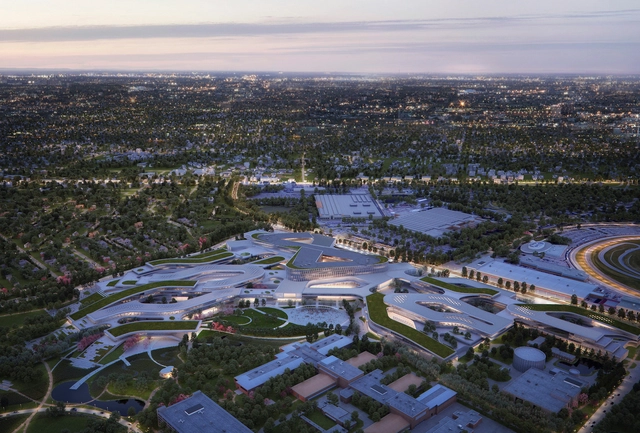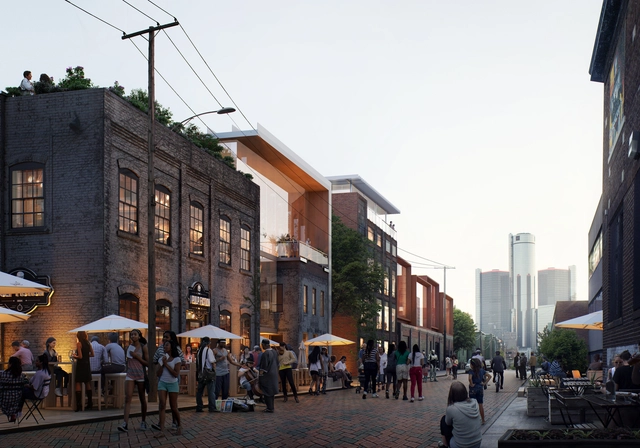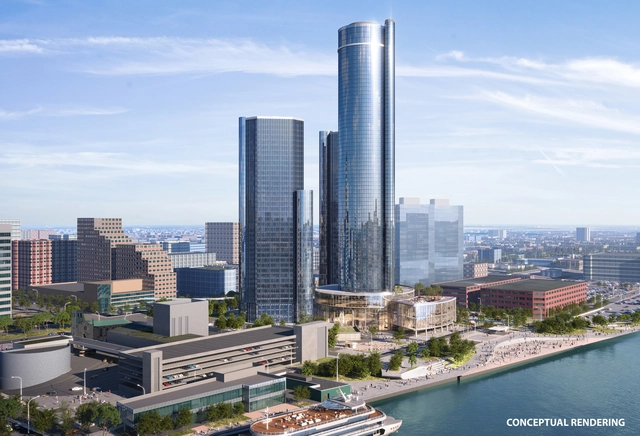
General Motors and Bedrock have unveiled a bold $1.6 billion proposal to reimagine Detroit's iconic Renaissance Center and 27 surrounding acres along the Detroit riverfront. The plan aims to transform the 1970s landmark into a dynamic mixed-use complex focused on housing, offices, and entertainment while preserving the essence of Detroit's skyline. The redevelopment includes the demolition of two 39-story towers in the five-skyscraper complex, freeing up valuable riverfront space for redevelopment while preserving the city's skyline.
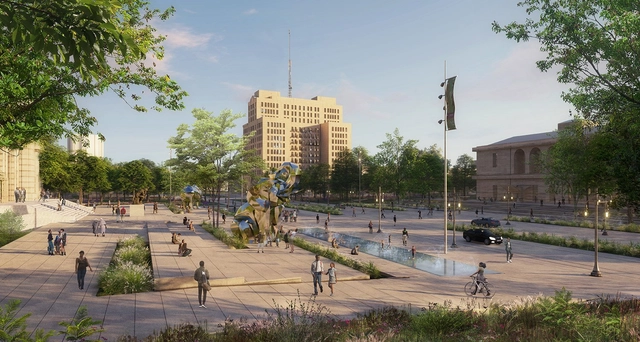
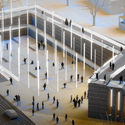
Woodward Avenue, between the Detroit Institute of Arts and the Detroit Public Library, serves as a public mediating ground on the nation's first paved road.. Image Courtesy of Agence Ter - Akoaki
The Detroit Cultural District has announced an ambitious initiative to reshape its urban landscape. This multi-phased project led by the Detroit Cultural Center Association (DCCA) in partnership with Design Leads Akoaki and Agence Ter, will transform the district's character, creating a more vibrant and accessible environment for residents and visitors alike. The project builds upon a comprehensive master plan, outlining a 15-year vision for the 80-acre campus in Detroit, Michigan. The plan's guiding principles focus on unifying the district's twelve institutions, improving pedestrian flow, and fostering a stronger sense of community.
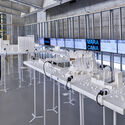
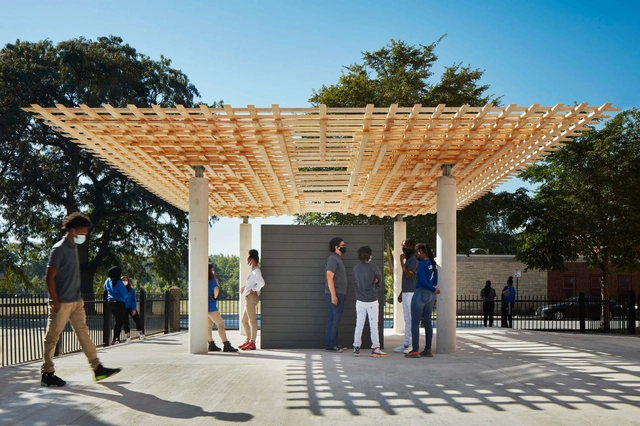
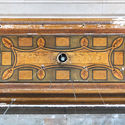
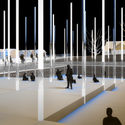
Stock catalog, 2015.Courtesy of stock-astudio. Image Courtesy of The Architectural League of New York
The Architectural League of New York has announced the winners of the 41st cycle of the annual Architectural League Prize for Young Architects + Designers. Open to young architects and designers ten years or less out of a bachelor’s or master’s degree program, the award seeks to recognize visionary work by young practitioners and encourage the development of talented young architects and designers.
Tsz Yan Ng is a Michigan-based firm principal, professor, researcher, and artist whose interdisciplinary and collaborative work seeks to challenge and improve upon modern fabrication and manufacturing practices. “We haven’t changed the way we build in so long,” Ng said. “We need to think of it more productively—not just economically—but as a collection of different voices. Architecture is a global ecosystem of people, where the sum is greater than the parts.”
Snøhetta has unveiled a new Central Campus Building for Ford Motor Company, part of the transformation of its Research & Engineering (R&E) Campus in Dearborn, Michigan. As the result of a 3-year research and planning process, the project was created in collaboration with IBI Group as the Architect of Record, Ghafari as the Engineer of Record, and Arup leading sustainability and engineering.
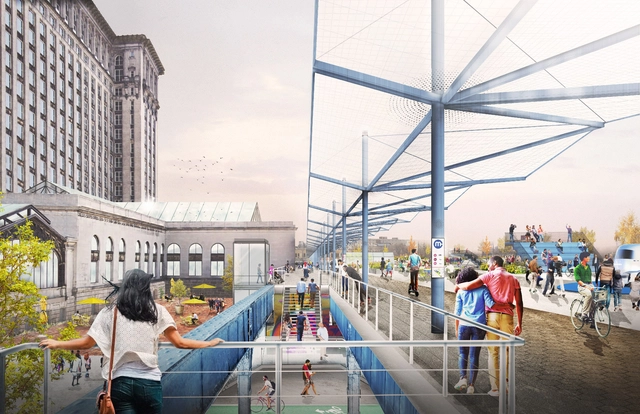
The Ford Motor Company has released a new plan for an innovation and mobility district in Corktown, Detroit’s oldest neighborhood. Designed by the Practice for Architecture and Urbanism (PAU), the "Michigan Central" plan involves a multiyear development that includes the restoration of the iconic Michigan Central Station. Gensler is reimagining the Book Depository building, while PAU is master planning the Michigan Central development as a whole. The vision is an open platform for startups and entrepreneurs to develop, test and launch new mobility solutions.
Design Core Detroit is launching the 10th annual Detroit Month of Design in September. The event will recognize Detroit’s designation as the first and only UNESCO City of Design in the United States, and will include more than 175 participants presenting over 65 events and special projects. The programming will explore design solutions to the challenges faced by Detroit and the global community since the start of 2020.
The Master Plan imagined by Snøhetta aims to transform Ford's Research & Engineering center in southeast Michigan. After a process that lasted 2 years, the architecture firm established a project that highlights the Dearborn campus as “Ford’s global epicenter”, ensuring an innovative and vibrant workplace for people.
ODA New York has been selected as the Design Architect for the rehabilitation of Detroit's iconic Book Tower. Working with real estate company Bedrock, the team will create a mix of residential, hospitality, retail and office space in the tower. ODA plans to update and expand on Book Tower’s programming and existing structures with nearly 500,000 square feet of downtown programming. The restoration of the 38-story landmark aims to create a cohesive civic vision for Washington Boulevard.
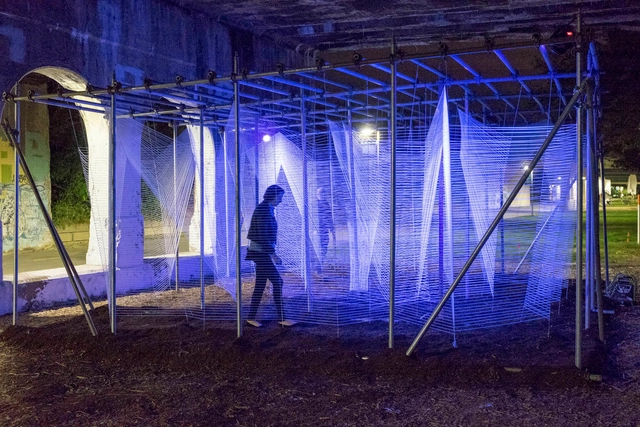
U-M architect and an associate professor at the University of Michigan's Taubman College of Architecture and Urban Planning, Sean Ahlquist with MSU playwright Dionne O'Dell created a sensory theater experience for children with autism spectrum disorder (ASD) challenges. Ahlquist has sought out solutions to help initially his daughter with her autism, by learning more about her specific needs, and the way that she interacts with the world around her.
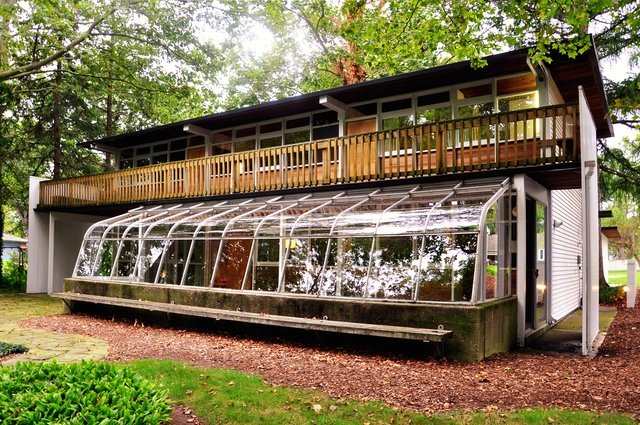
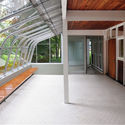
Herman Miller GreenHouse (interior), William McDonough, Holland, Michigan, 1995. Image Courtesy of Herman Miller Archives
While the United States’ green-building industry was still relatively slow in the early 1990’s, Herman Miller, who are known for their architectural experimentation, decided to construct a new facility for Simple, Quick, Affordable (SQA), a company that bought used office furniture to refurbish them and sell them to smaller businesses. To do so, they chose to build sustainably, a design approach that was not yet utilized in the region.
Designed by New York architect William McDonough, the 295,000 sq ft building (approx. 90,000 sqm) was built in Holland, Michigan in 1995. The facility’s design qualities, such as storm-water management, air-filtering systems, and 66 skylights, helped set the standards for the U.S. Green Building Council LEED Certification.
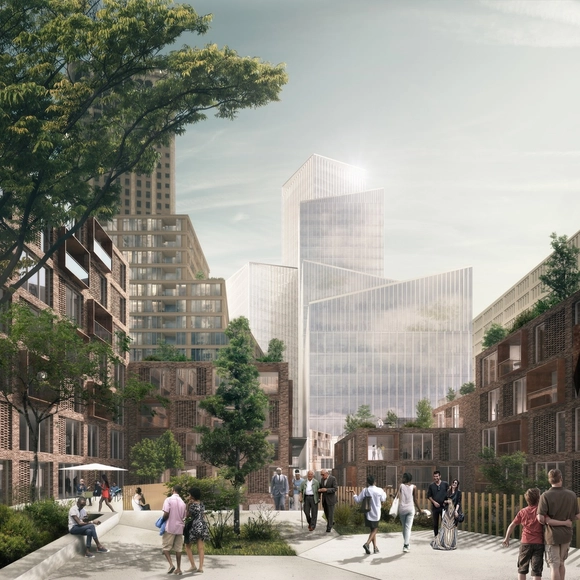
Schmidt Hammer Lassen Architects has unveiled the design of their first-ever project in the United States: the Monroe Blocks, a new mixed-use development that will become an iconic symbol of the rejuvenation and future development of downtown Detroit. Prioritizing public access both indoors and out, SHL’s scheme will consist of Detroit’s first new highrise office tower in decades, more than 480 residential units and a network of new public plazas and green spaces.
Cairo-based architect Mohamed Elgendy has won an international competition for the design of a new community pavilion in Roseville, Michigan. The Pavilion at Utica Junction competition, organized by the Roseville DDA, sought to attract proposals for a public pavilion on the site of an old tavern, creating a gathering space for residents and visitors to stage events, socialize, and play. The vision behind Elgendy’s winning scheme was for a dialogue between three elements – a plaza, a ramp, and an indoor pavilion.
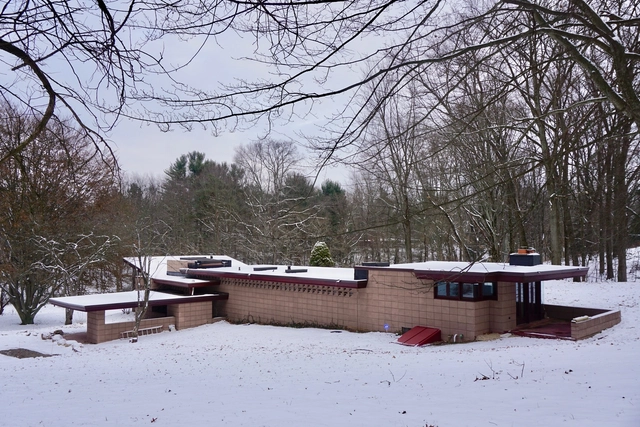
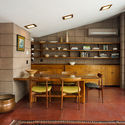
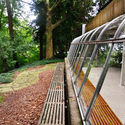
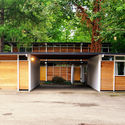
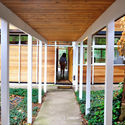
The Eames are mainly known for their furniture and their house in Pacific Palisades, which they also used as an office. Few people are aware of the Max and Esther De Pree House, a rare venture into residential architecture by the Eames.
The Historic Stone Soap Building will be upgraded to a mixed-use development, increasing density and activity along the riverfront. Image Courtesy of City of Detroit
Chicago-based SOM’s plans for the redevelopment of the East Riverfront in Detroit, Michigan have been unveiled. The Detroit RiverFront Conservancy, Detroit Economic Growth Corporation, and City of Detroit Planning and Development Department will work together to deliver SOM’s plan to revitalize the former blighted industrial area. The framework plan involves improving community access to the riverfront, the design of a new riverfront parkland, and the conversion of a historic riverfront structure into a mixed-use development.
https://www.archdaily.com/806465/soms-inclusive-riverfront-set-to-revitalise-detroitNiall Patrick Walsh
For nearly 100 years, the JL Hudson's Department Store in downtown Detroit stood as a mecca of shopping – the 25-story structure at one point holding the record for world’s tallest retail building. Then in 1983, following a downturn of the Detroit economy, the department store was closed. Its implosion followed in 1998. In the years since, the important site has laid mainly vacant, save for an underground parking structure inserted into the store’s former underground retail levels. But now, plans have been revealed to return the site to its former glory.
Announced yesterday by Detroit-based development group Bedrock, the site is set to receive a brand new 1.2 million-square-foot development designed by SHoP Architects and consisting of a nine-story retail podium and a 52-story, 734-foot tower that would claim the title of Detroit’s tallest building.
Aiming to create a riverfront like none other in the world, landscape architect Matthew Edward Getch and architect Maciej Woroniecki shared with us their proposal in the Detroit by Design 2012 competition where they received the 2nd overall prize and the first prize for the People’s Choice Award. The goals of their proposal were born from Detroit’s apparent weakness. They established linear interventions which recognized the severed parks and green networks and utilized them to reconnect the citizens of Detroit back to the riverfront through pedestrian friendly portals. More images and architects’ description after the break.
Brad Feinknopf, a nationally recognized architectural photographer, kindly shared with us his recent photographic work on Zaha Hadid‘s Eli & Edythe Broad Art Museum at Michigan State University. Known for his traditional, yet cutting edge approach to photography, his quality work here emphasizes the unique exterior and interior spaces of the building created by Hadid’s investigation into the lines of circulation and visual connections. Photographed during the day and night, he also captures its interface between city and campus. Additional images by Feinknopf can be viewed after the break.