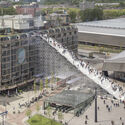
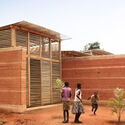
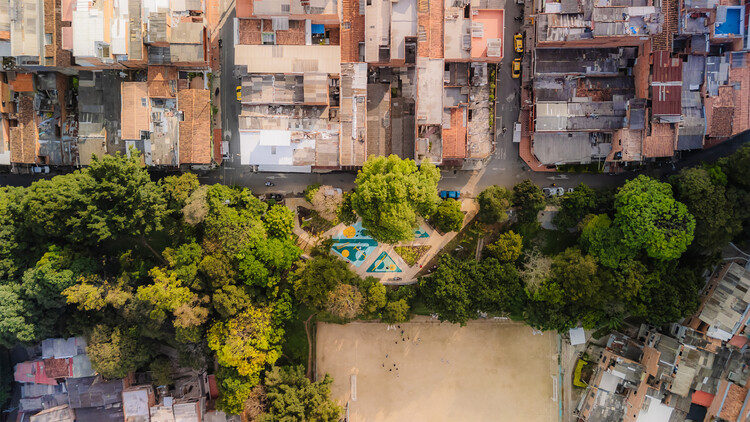
Obsolete buildings. Image Courtesy of Matt Van der Velde
Sustainability in architecture is often discussed as though it were a universal standard—and, in principle, it should be. Buildings are increasingly evaluated through energy performance, embodied carbon, certification systems, material efficiency, biodiversity, and whole-life impact. Yet the rules determining what must actually be done remain highly local. A project designed in London, New York, or Copenhagen may be shaped by stringent energy codes, environmental review, disclosure requirements, planning controls, and increasingly ambitious carbon targets. The same practice working elsewhere may encounter a very different regulatory landscape.
This creates a difficult question for international architecture: when sustainability is not enforced to the same degree by law, what standards should architects carry with them?
Architecture across Latin America this month reflects an ongoing negotiation between environmental challenges, cultural heritage, and changing approaches to public and professional life. From Colombia's earthquake and its impact on historic architecture to new cultural projects in Argentina and environmentally responsive design in Ecuador and Medellín, recent developments highlight how architecture continues to respond to both regional conditions and broader global challenges. Questions of heritage and infrastructure also remained prominent, as UNESCO raised concerns over the impacts of the Tren Maya on Mexico's Calakmul World Heritage site, while new initiatives in Chile and Costa Rica explored ecological design and sustainable practice. The month's stories point to a regional architectural landscape shaped by resilience, adaptation, and the relationship between built environments and their wider social and natural contexts.
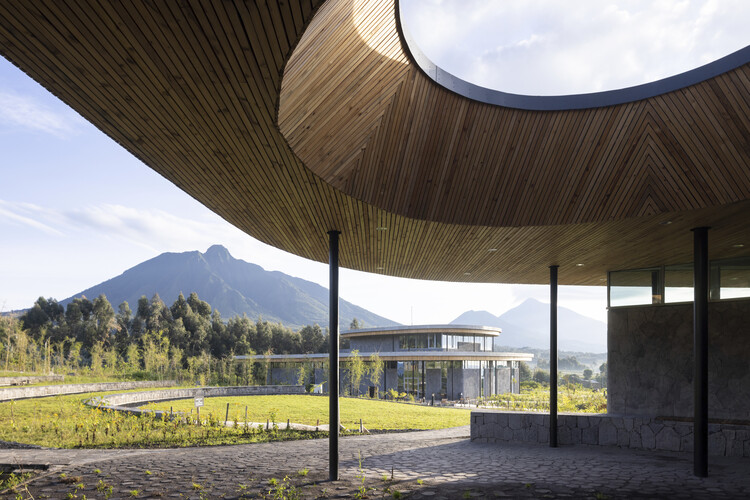
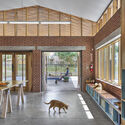
At the time of writing, an article by Martyn Evans asked 'Is Architecture in Crisis?' In the same year, Reinier de Graaf published the book 'Architecture Against Architecture,' where he set out fourteen problems with the profession and discipline. The question of a crisis in architecture is a perennial one. Referring to architecture as a profession, it rears its head especially when economic downturns are expected or in full swing. Simultaneously, there are ongoing questions regarding the effectiveness of architecture at dealing with the pressing matters of the globe and society—housing, climate change, and human development. One venture that attempts to address these questions is MASS, established in Rwanda not long after the 2008 financial crisis. The clue is in the name, which stands for Model of Architecture Serving Society. MASS was created as a different way of practicing architecture.
The architect's role has traditionally been relatively well-defined: design a building, direct the project, coordinate logistics, and guide construction through to completion. As specialised fields have proliferated, together with a rapidly changing social economy, the practice of architecture has diversified, opening multiple paths for how architects can contribute to society.
Since the 1980s, one of the most consistent shifts may have been the separation between the "design architect" and the "architect of record." Where a single office once carried a project from concept to completion, internationalisation—alongside cross-border work, licensure regimes, procurement models, and liability structures—has encouraged a split. Design teams increasingly set the conceptual and schematic direction, then hand over the design development to local record architects for technical detailing, approvals, and site execution. The model has clear advantages—sharper expertise, efficiency, and often profitability (or services offered at reduced fees)—but it also segments the profession and can distance authorship from delivery.
What, then, might the next shift be, and what new synergies could redefine the architect's role? How should architects adapt to the changing professional climate? One promising trajectory is a turn from singular, permanent objects toward ongoing placemaking—iterative, context-specific programmes that prototype, test, and refine spatial ideas in public. Rather than producing one large, iconic work that fixes a site for decades, this model privileges cycles of making, use, evaluation, and adjustment at the community scale.
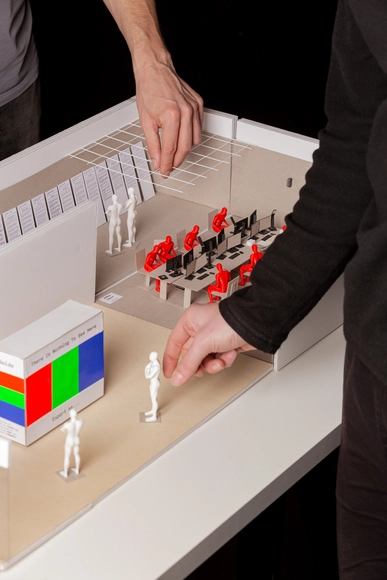
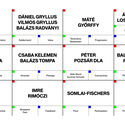
"There Is Nothing to See Here" is the title of the exhibition hosted in the Hungarian Pavilion at the Venice Architecture Biennale 2025. Since 2015, the Ludwig Museum of Contemporary Art has managed and organized both the temporary exhibition and the building. This year, it presents an alternative vision for the future of the profession. Curated by creative director and assistant professor Márton Pintér, in collaboration with Ingrid Manhertz, András Graf, and Júlia Böröndy, founder of the platform Women in Architecture (WIA), the exhibition will showcase the work of 12 architecture professionals who apply their expertise in fields beyond the profession.
Architecture has long been framed as the work of singular visionaries, yet Beatriz Colomina, a leading theorist, historian, and curator, challenges this notion, arguing that architecture is inherently a collaborative endeavor. She critically examines how the myth of the lone genius—almost always depicted as male—has erased the contributions of countless women and entire teams involved in the design process. For Colomina, rethinking architecture means recognizing the complexities of collective work and dismantling the historical biases that have shaped the discipline's narratives.