1. ArchDaily
  2. Lu Wenyu

Lu Wenyu: The Latest Architecture and News

Venice Biennale 2027's "Do Architecture" and an Earth-Built Cinema in Ghana: This Week’s Review

This week's stories reveal a growing focus on reconnecting design with physical reality, whether through construction, landscape, public space, or collective participation. From the curatorial direction of the upcoming Venice Architecture Biennale 2027 to internationally recognized projects addressing flood resilience, affordable housing, and ecological restoration, many of the week's discussions challenged architecture's increasing detachment from material, environmental, and social conditions. At the same time, major cultural interventions, temporary structures, and public forums explored how institutions and civic spaces can become more accessible, adaptable, and engaged with everyday urban life.

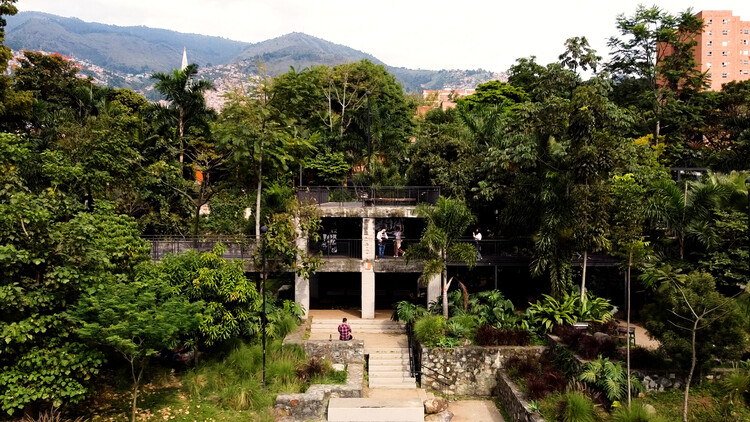
Venice Biennale 2027's "Do Architecture" and an Earth-Built Cinema in Ghana: This Week’s Review - Image 1 of 4Venice Biennale 2027's "Do Architecture" and an Earth-Built Cinema in Ghana: This Week’s Review - Image 2 of 4Venice Biennale 2027's "Do Architecture" and an Earth-Built Cinema in Ghana: This Week’s Review - Image 3 of 4Venice Biennale 2027's "Do Architecture" and an Earth-Built Cinema in Ghana: This Week’s Review - Image 4 of 4Venice Biennale 2027's Do Architecture and an Earth-Built Cinema in Ghana: This Week’s Review - More Images+ 9

"Do Architecture": Wang Shu and Lu Wenyu Announce Theme and Title for 2027 Venice Architecture Biennale

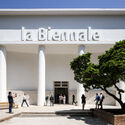
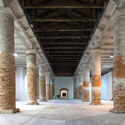
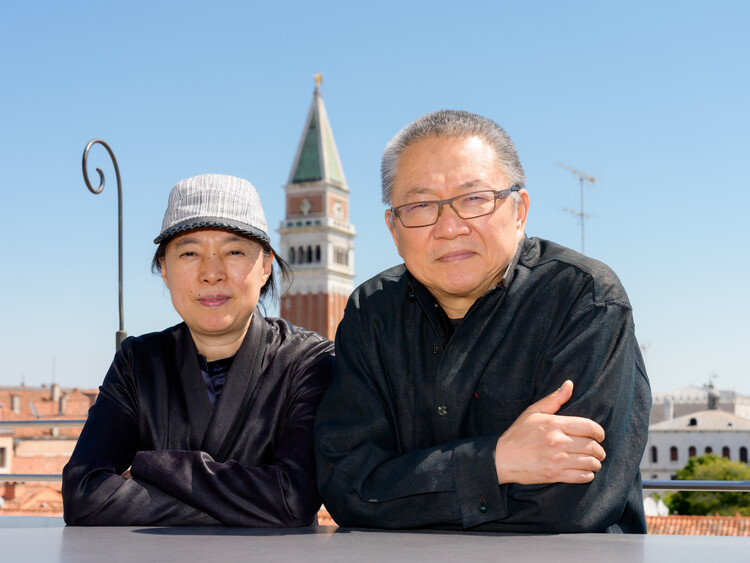
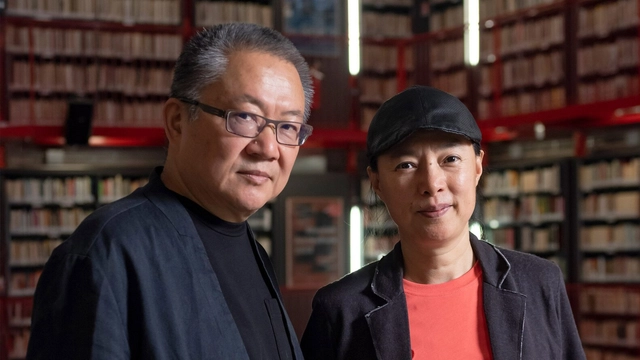
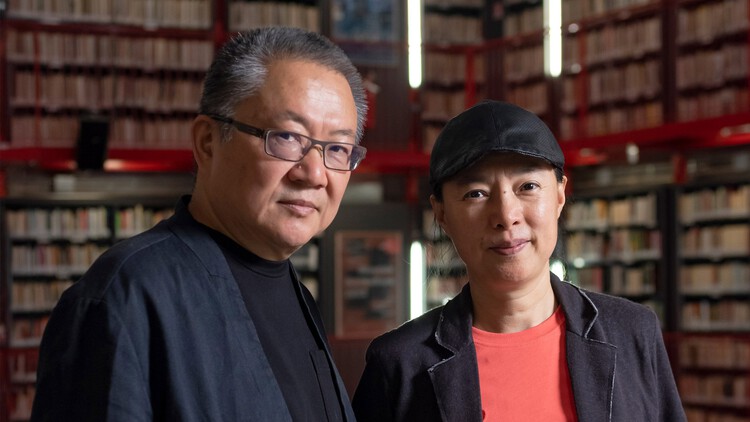
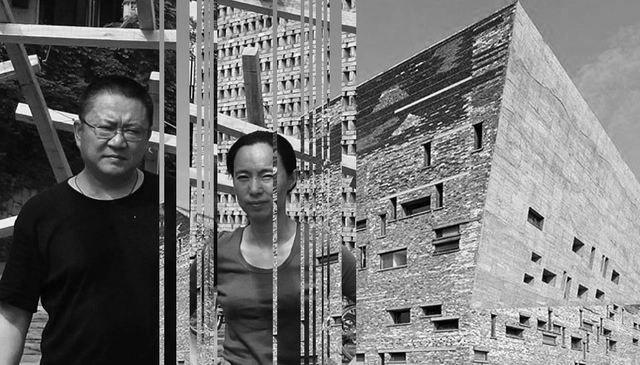
Wang Shu and Lu Wenyu, curators of the 20th International Architecture Exhibition of La Biennale di Venezia, have unveiled the first details of the highly anticipated 2027 edition. Titled "Do Architecture - For the Possibility of Coexistence Facing a Real Reality," the exhibition will take place from May 8 to November 21, 2027, across the Giardini, the Arsenale, and throughout Venice.

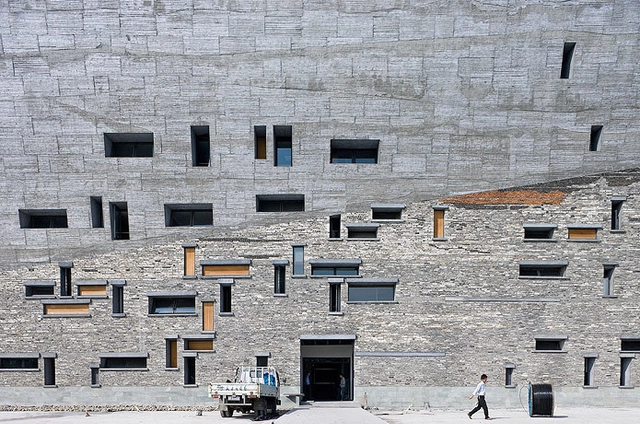
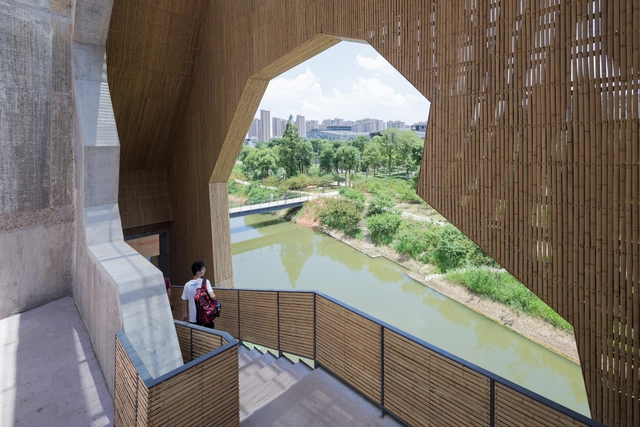
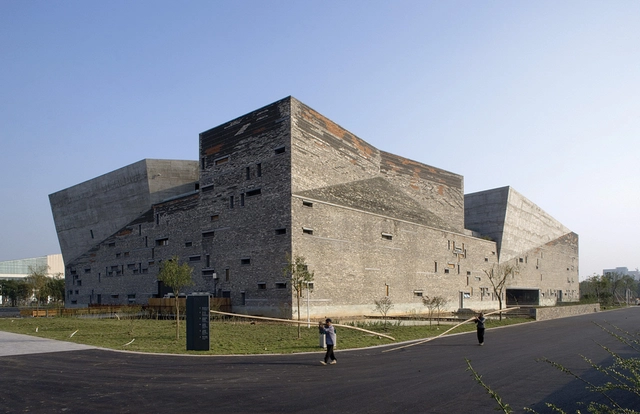
The curatorial direction reflects many of the ideas developed through the work of Amateur Architecture Studio, founded by Wang Shu and Lu Wenyu in 1997. Their projects have consistently explored the reuse of salvaged materials, regional construction techniques, and the continuity between historic and contemporary forms of building. Across both urban and rural contexts, the studio's work often emphasizes craft traditions, collective memory, and the spatial qualities embedded within everyday environments.

"Do Architecture": Wang Shu and Lu Wenyu Announce Theme and Title for 2027 Venice Architecture Biennale - Image 1 of 4"Do Architecture": Wang Shu and Lu Wenyu Announce Theme and Title for 2027 Venice Architecture Biennale - Featured Image"Do Architecture": Wang Shu and Lu Wenyu Announce Theme and Title for 2027 Venice Architecture Biennale - Image 2 of 4"Do Architecture": Wang Shu and Lu Wenyu Announce Theme and Title for 2027 Venice Architecture Biennale - Image 3 of 4Do Architecture: Wang Shu and Lu Wenyu Announce Theme and Title for 2027 Venice Architecture Biennale - More Images+ 3

Lu Wenyu: Quiet Radicalism and the Practice of Repair

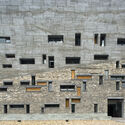
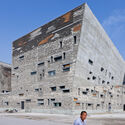
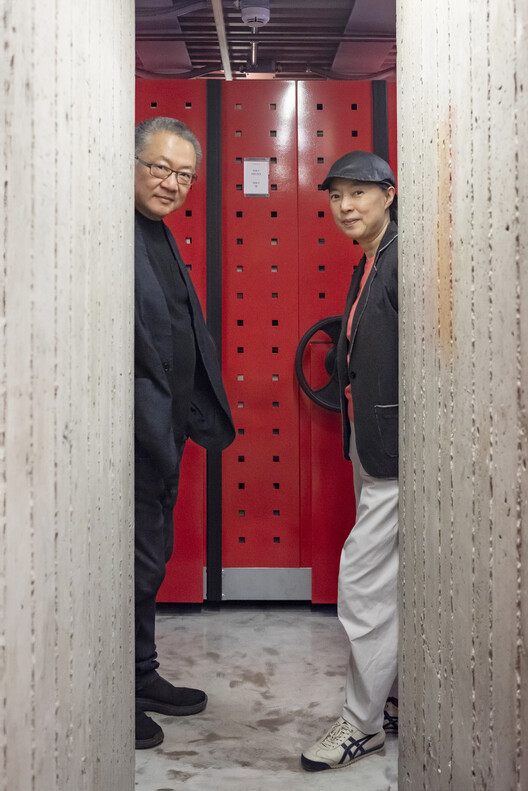
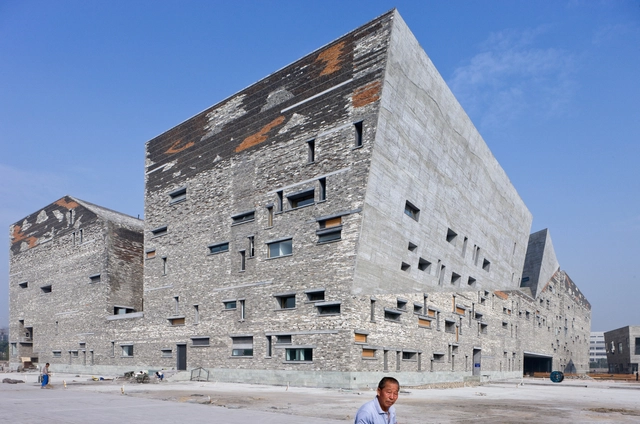
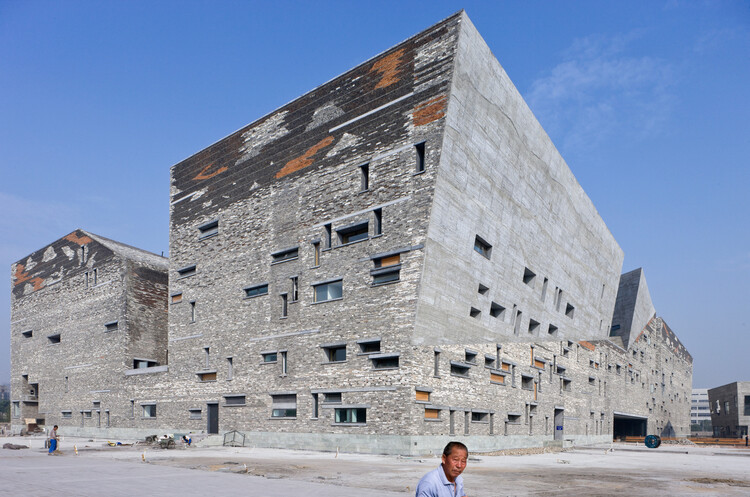
Lu Wenyu—co-founder of Amateur Architecture Studio with Pritzker laureate Wang Shu—has shaped many of the practice's most emblematic works across China, including the Ningbo History Museum and the Xiangshan Campus of the China Academy of Art in Hangzhou. Often working outside the spotlight, her leadership is unmistakable in the discipline of execution and the roles she has assumed: in 2003, together with Wang Shu, she established the Architecture Department at the China Academy of Art, where she also serves as Director of the Sustainable Construction Center. Her practice and teaching form a reciprocal loop: research conducted in studios at the China Academy of Art continually folds back into construction strategies on site, while lessons learned in the field return to the classroom as material intelligence rather than abstract theory.

Lu Wenyu: Quiet Radicalism and the Practice of Repair - Image 1 of 4Lu Wenyu: Quiet Radicalism and the Practice of Repair - Image 2 of 4Lu Wenyu: Quiet Radicalism and the Practice of Repair - Image 3 of 4Lu Wenyu: Quiet Radicalism and the Practice of Repair - Image 4 of 4Lu Wenyu: Quiet Radicalism and the Practice of Repair - More Images+ 12

Global Urban Transformation and Climate-Responsive Design from Venice to Rio: This Week’s Review

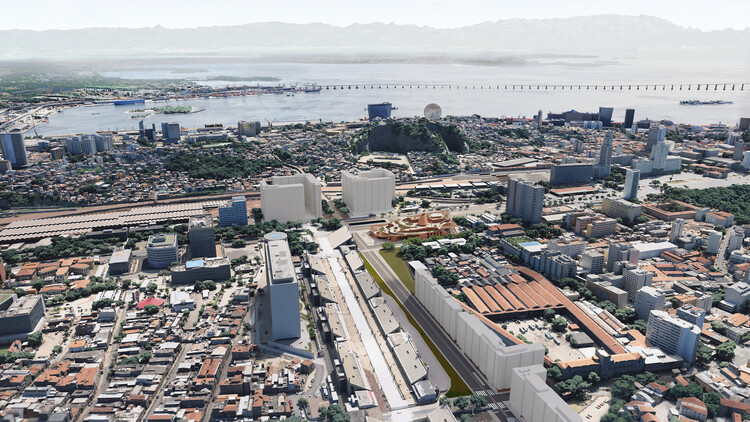
Amid ongoing global discussions on climate adaptation and resilient urban development brought into sharper focus by the outcomes of COP30, this week's architecture news illustrates how cities worldwide are rethinking their built environments. From Venice, where the 19th Architecture Biennale concluded with debates on material use and long-term cultural impact, to international awards foregrounding regenerative and socially responsive design, the conversation around architecture is increasingly intertwined with planetary priorities. Major urban interventions, from Thessaloniki's seafront redevelopment and Rio de Janeiro's new public library, to Abu Dhabi's Natural History Museum and a civic stadium in Birmingham, demonstrate how multiple cities are addressing mobility, heritage, density, and climate resilience. Additional plans, such as Mantua's ecological urban strategy, Utrecht's elevated landscape above transport networks, and Amsterdam Airport Schiphol's redesigned landside mobility system, further reflect a transition toward integrated, people-centred urban frameworks that prioritize environmental performance, public space, and long-term territorial stewardship.

Global Urban Transformation and Climate-Responsive Design from Venice to Rio: This Week’s Review - Image 1 of 4Global Urban Transformation and Climate-Responsive Design from Venice to Rio: This Week’s Review - Image 2 of 4Global Urban Transformation and Climate-Responsive Design from Venice to Rio: This Week’s Review - Image 3 of 4Global Urban Transformation and Climate-Responsive Design from Venice to Rio: This Week’s Review - Image 4 of 4Global Urban Transformation and Climate-Responsive Design from Venice to Rio: This Week’s Review - More Images+ 24

Wang Shu and Lu Wenyu Named Curators of the Venice Architecture Biennale 2027

La Biennale di Venezia has announced that architects Wang Shu and Lu Wenyu will curate the 20th International Architecture Exhibition, opening in May 2027. Founders of Amateur Architecture Studio and leading voices in contemporary practice, the duo is known for an approach rooted in craftsmanship, material reuse, and deep engagement with place. Their appointment brings renewed attention to vernacular knowledge, construction cultures, and the social realities shaping architecture today.

Wang Shu and Lu Wenyu Named Curators of the Venice Architecture Biennale 2027 - Image 1 of 4Wang Shu and Lu Wenyu Named Curators of the Venice Architecture Biennale 2027 - Image 2 of 4Wang Shu and Lu Wenyu Named Curators of the Venice Architecture Biennale 2027 - Image 3 of 4Wang Shu and Lu Wenyu Named Curators of the Venice Architecture Biennale 2027 - Image 4 of 4Wang Shu and Lu Wenyu Named Curators of the Venice Architecture Biennale 2027 - More Images+ 1

Radical Social Housing Project in Barcelona Wins the 2024 RIBA International Prize

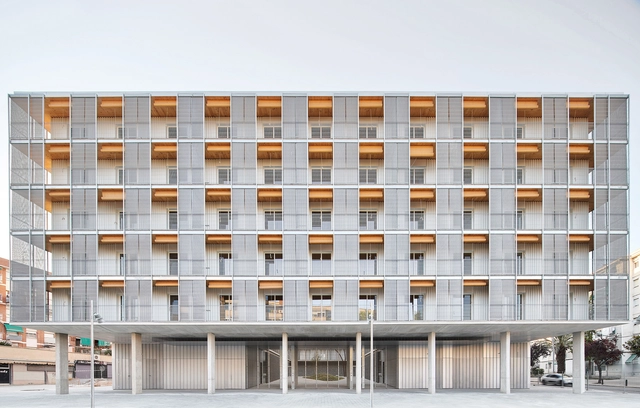
The Royal Institute of British Architects (RIBA) awarded its 2024 International Prize to Modulus Matrix, an 85-unit social housing development in Cornellà, near Barcelona. Designed by Peris + Toral Arquitectes, the six-story timber-framed building is a notable example of innovative social housing design. Its modular structure, based on a 3.6m x 3.6m grid inspired by traditional Japanese homes, creates a flexible and adaptable living space. The design prioritizes cross-ventilation, dual orientation, and a central communal courtyard, fostering social interaction and community building.

Radical Social Housing Project in Barcelona Wins the 2024 RIBA International Prize - Image 1 of 4Radical Social Housing Project in Barcelona Wins the 2024 RIBA International Prize - Image 2 of 4Radical Social Housing Project in Barcelona Wins the 2024 RIBA International Prize - Image 3 of 4Radical Social Housing Project in Barcelona Wins the 2024 RIBA International Prize - Image 4 of 4Radical Social Housing Project in Barcelona Wins the 2024 RIBA International Prize - More Images+ 7

MAXXI Museum Celebrates Female Architects Through "Good News. Women in Architecture" Exhibition

MAXXI Museum Celebrates Female Architects Through "Good News. Women in Architecture" Exhibition - Featured Image
© Musacchio, Ianniello & Pasqualini courtesy of Fondazione MAXXI

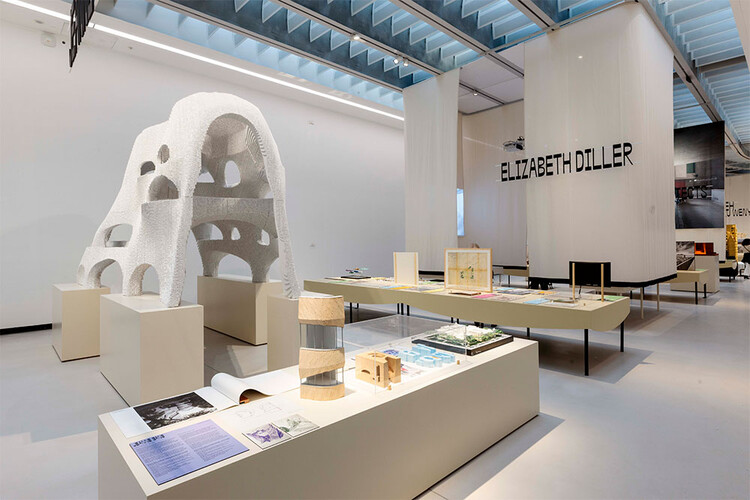
MAXXI Museum celebrates women in architecture in a new exhibition that documents the transformative role of female architects in the profession's evolution over the last century. Curated by Pippo Ciorra, Elena Motisi, Elena Tinacci, and with exhibition design by Matilde Cassani, Good News. Women in Architecture weaves together in four thematic sections the history of women in architecture, with the work of contemporary practitioners and the voices of young collectives, telling the stories of over eighty female architects.

MAXXI Museum Celebrates Female Architects Through "Good News. Women in Architecture" Exhibition - Image 1 of 4MAXXI Museum Celebrates Female Architects Through "Good News. Women in Architecture" Exhibition - Image 2 of 4MAXXI Museum Celebrates Female Architects Through "Good News. Women in Architecture" Exhibition - Image 3 of 4MAXXI Museum Celebrates Female Architects Through "Good News. Women in Architecture" Exhibition - Image 4 of 4MAXXI Museum Celebrates Female Architects Through Good News. Women in Architecture Exhibition - More Images+ 1

Witnessing the Growth of Xiangshan Campus of China Academy of Art: 2007 vs 2021

Subscriber Access | 

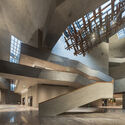
The Xiangshan campus of China Academy of Art was designed by the recipient of the 2012 Pritzker Architecture Prize, Shu Wang and Wenyu Lu from Amateur Architecture Studio. The studio was responsible for the overall project completion from master planning to architectural design and landscape design. On the north side of Xiangshan is the first phase of the campus. It was designed in 2001 and completed in 2004. It is a complex of ten buildings and two bridges, with a construction area of about 70,000 square meters. The second phase of the campus is located on the south side of Xiangshan, and it was designed in 2004 and completed in 2007. It consists of ten large buildings and two small buildings with a construction area of nearly 80,000 square meters.

The construction period of the two phases was 14 months each. A large number of craftmanship during the construction has produced many problems that could only be solved on-site, therefore the site was repeatedly touched and shaped by countless hands. In 2007, the photographer Iwan Baan recorded the campus after completion. In 2021, photographer Sai Zhao used the lens of original focal length to take pictures of the campus at the same location. Over the course of more than ten years, green plants have covered and sheltered the structure, and the building now has its own life.

Amateur Architecture Studio’s Works on Contemporary Chinese Architecture with Recycled Materials

Over the past two centuries, cities in China have multiplied and expanded on a large scale, under accelerated urbanization. Mass demolition of the old city fabric, occurring everywhere, is leaving industrial debris and fragmented cultural artifacts buried forever, under shiny new skyscrapers. As old Chinese cities are collapsing and new urban centers are outspreading, a part of the city was lost, the old demolished landscape. Wang Shu and Lu Wenyu, the first Chinese citizens to win the Pritzker Architecture Prize, responded to this past-present relation by working with recycled materials and traditional know-how. In the following, we explore some of this couple's renowned works such as Ningbo History Museum, Ningbo (2008), Xiangshan Campus of China Academy of Art, Hangzhou (2004), and Ningbo Contemporary Art Museum (2005), to examine his humanistic approach to the city.

Wang Shu: "Architecture is Not Just an Object That You Place in the Environment"

Subscriber Access | 

[Architecture can] change the life of people and give them a new one right away. This is not a job for normal people to do. This should be the work of God.

Kenneth Frampton On The Work of Wang Shu and Lu Wenyu

Subscriber Access | 

Until April 30th, the Louisiana Museum of Modern Art in Denmark is exhibiting the work of Wang Shu. The first in a new series of monographic exhibitions collectively titled "The Architect's Studio," this show of the work of the 2012 Pritzker Prize winner features an exhibition catalog that includes essays from Kenneth Frampton, Ole Bouman, Yiping Dong and Aric Chen. The following excerpt from the exhibition catalog, written by Kenneth Frampton, is republished here with the permission of the author and publisher.

The work of the Amateur Architecture Studio has come into being in categorical opposition to the recent, rapacious development that has engulfed large tracts of the Chinese continent, and which was first set in motion by Deng Xiaoping’s 1983 decision to open up the People’s Republic of China to foreign trade, first with special economic zones and later with regard to the entire country. Based in Hangzhou, Wang Shu and Lu Wenyu have witnessed firsthand the juggernaut of maximizing Chinese modernization from its impact on their own city. Three decades ago, Hangzhou had been expressly chosen by them as a desirable place in which to live and work, largely because of its venerable artistic traditions and its harmonious report with nature, symbolized for them by the virtually sacred West Lake, set in the very heart of the city and traversed, then as now, by the flat-bottomed boats plying across its surface. Wang Shu’s unique sensibility takes as its point of departure the equally panoramic tranquility of traditional Chinese painting. As Wang Shu has written:

“I am always amazed by these paintings when I see that the trees, the buildings and mountains are not just placed haphazardly... every building is laid out in a certain way in relation to the landscape and the trees, the direction it faces depending on the light and the features of the location, which make it suitable for human habitation.”

Material Masters: The Traditional Tiles of Wang Shu & Lu Wenyu

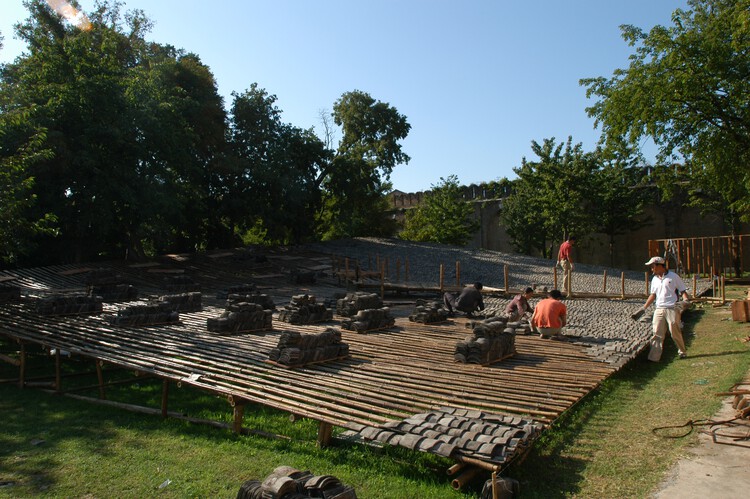
Wang Shu and Lu Wenyu of Amateur Architecture Studio are known for their distinctly contextual attitudes towards design which prize tradition and timelessness above anything else. In many cases, their use of materials is governed by local availability of salvaged building elements. Tiles, in particular, represent a material used repeatedly by Amateur Architecture studio and for Wang Shu, who won the 2012 Pritzker Prize, they offer a political as well as an architectural message.

Material Masters: The Traditional Tiles of Wang Shu & Lu Wenyu - Image 4 of 4

An Interview with Lu Wenyu, Amateur Architecture Studio

An Interview with Lu Wenyu, Amateur Architecture Studio - Featured Image
Hangzhou Xiangshan Campus Phase 2. Image © Evan Chakroff

“Every couple of years a new manifesto appears, but how long can it last? We need more people doing instead of talking. [At Amateur Architecture Studio] we spend an enormous amount of time experimenting, trying to resurrect the craftsmanship that is almost lost. We use a method that is passed on, hand-to-hand, to re-establish tradition instead of talking about abstract but empty concepts.”
- Lu Wenyu, Hangzhou, 2013

Pier Alessio Rizzardi: “A house instead of a building” is a really famous phrase of Amateur Architecture Studio. What is the meaning behind this concept?

Lu Wenyu: Once, Wang Shu said: “we only make houses, we don’t make architecture.” The house and architecture here have their own meanings. Making a house means making it for the people, making it more tranquil, or closer to nature, more humanized. Instead, architecture is an abstract concept, so many designs nowadays are actually architecture. So this sentence, from almost 20 years ago, “making houses, not architecture”, is about not making that abstract concept, but to make something really concrete and tangible, something that you can touch or that is made with your own hands… so when you see this house, you feel differently.

An Interview with Lu Wenyu, Amateur Architecture Studio - Image 1 of 4An Interview with Lu Wenyu, Amateur Architecture Studio - Image 2 of 4An Interview with Lu Wenyu, Amateur Architecture Studio - Image 3 of 4An Interview with Lu Wenyu, Amateur Architecture Studio - Image 4 of 4An Interview with Lu Wenyu, Amateur Architecture Studio - More Images+ 19

Thom Mayne, Wang Shu and Lu Wenyu among the RIBA's 2015 Fellowships

The Royal Institute of British Architects (RIBA) has announced 13 Honorary Fellowships and 11 International Fellowships which it will award at an event on February 3rd, along with the recently announced RIBA Royal Gold Medal.

Among others, the Honorary Fellowships include Director of Architecture at the British Design Council Vicky Richardson and academic Dalibor Vesely; the International Fellowships include Pritzker Prize Winners Thom Mayne and Wang Shu and his Partner Lu Wenyu. The Honorary and International Fellowships entitle winners to use the initials 'Hon FRIBA' and 'Int FRIBA,' respectively after their names.

Read on after the break for the full Fellowship lists

Wang Shu's Partner Lu Wenyu: I Never Wanted a Pritzker

In an interview with Spanish newspaper El País, Lu Wenyu defends her husband Wang Shu for solely receiving the Pritzker Prize in 2012. Despite the fact that the couple co-founded Amateur Architecture Studio and have worked side by side ever since, Wengyu maintains that her husband would have shared the Prize with her - she just didn't want it.

She confides to El País: "In China, you lose your life if you become famous. I want a life and I prefer to spend it with my son. Over there I don't accept interviews. And not in English-speaking countries either [...] I'm happy to be able to do architecture that I believe helps our towns and cities to be better. I'm convinced that to talk about this awakens interest in others - not being famous." Read the full interview at El País