1. ArchDaily
  2. Michael Kimmelman

Michael Kimmelman: The Latest Architecture and News

The Architect as Writer: Expanding the Discipline Beyond Buildings

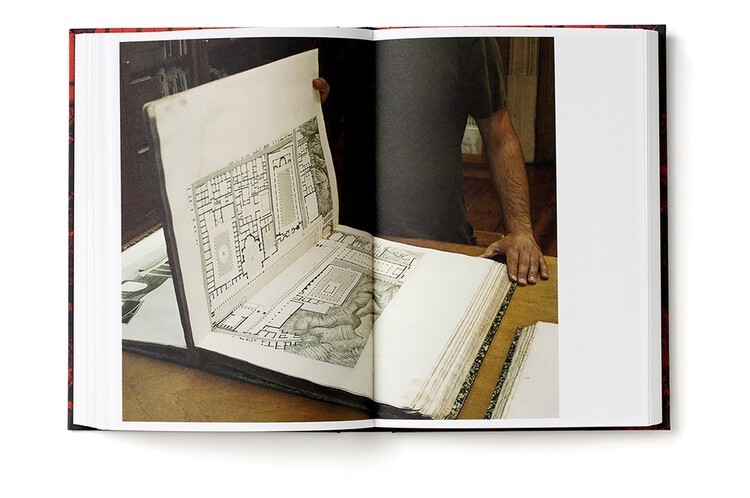
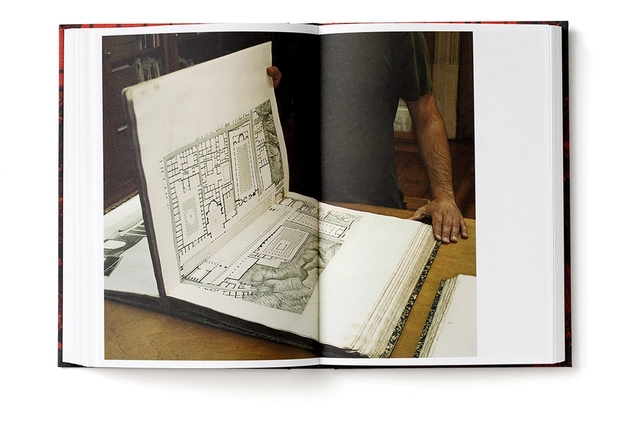
Architecture has always been more than bricks and mortar. It is equally constructed through words, ideas, and narratives. From ancient treatises to radical manifestos, from technical manuals to poetic essays, the written word has served as a spatial, pedagogical, and political tool within the field. Writing shapes how architecture is conceptualized, communicated, and critiqued — often long before, or even in the absence of, physical construction.

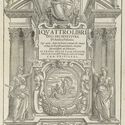
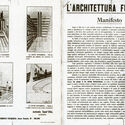
Historically, figures such as Vitruvius, Alberti, and Palladio employed writing to codify principles, project ideals, and legitimize architecture as a discipline. In the modern era, Le Corbusier, Adolf Loos, and Lina Bo Bardi wrote prolifically to expand the scope of architecture beyond form and function, often using publications as tools for persuasion and experimentation. The postwar period gave rise to new editorial strategies, as evident in the manifestos of Archizoom and Superstudio, and the polemical publications of Delirious New York and Oppositions, where writing served as both critique and project.
The Architect as Writer: Expanding the Discipline Beyond Buildings - Image 1 of 4The Architect as Writer: Expanding the Discipline Beyond Buildings - Image 2 of 4The Architect as Writer: Expanding the Discipline Beyond Buildings - Image 3 of 4The Architect as Writer: Expanding the Discipline Beyond Buildings - Image 4 of 4The Architect as Writer: Expanding the Discipline Beyond Buildings - More Images+ 31

The Second Studio Podcast: Interview with Michael Kimmelman

The Second Studio (formerly The Midnight Charette) is an explicit podcast about design, architecture, and the everyday. Hosted by Architects David Lee and Marina Bourderonnet, it features different creative professionals in unscripted conversations that allow for thoughtful takes and personal discussions.

A variety of subjects are covered with honesty and humor: some episodes are interviews, while others are tips for fellow designers, reviews of buildings and other projects, or casual explorations of everyday life and design. The Second Studio is also available on iTunes, Spotify, and YouTube.

This week David and Marina of FAME Architecture & Design are joined by architecture critic of The New York Times, Michael Kimmelman, to discuss his background; the role of a critic; New York City; the evolution of the profession; the housing crisis; social housing; the value of architecture; and more!

Michael Kimmelman Unfolds Our Understandings of Communities in Uncertain Things Podcast

The hosts and producers of the Uncertain Things podcast, Adaam James Levin-Areddy, and Vanessa M. Quirk, conduct interviews with experts with a variety of experiences to answer the question, “Now what? How did we get here and what is next?”. In this episode with Michael Kimmelman, they touch upon many interesting subjects, namely, The New York Times institution and its evolution, Kimmelman’s new book the Intimate City, and our overall understanding of communities in cities.

Architecture Critic Michael Kimmelman on His Socially Conscious Work as a Writer-Activist

Subscriber Access | 

On the latest episode of Time Sensitive podcast, produced by the New York-based “conscious entertainment” media company The Slowdown, co-host Spencer Bailey speaks with New York Times architecture critic Michael Kimmelman. The two discuss Kimmelman’s lesser-known talents as a pianist; his 30-plus years writing at The New York Times(he started working at the paper as its chief art critic in 1990, a post he held until 2007, when he relocated to Berlin as the “Abroad” columnist for four years); and his goal as architecture critic to build a greater discourse around designing cities that are better, healthier, and simply fairer for all.

Critical Round-Up: Hudson Yards

New York City’s Hudson Yards has opened its doors to the public, and the reviews are flooding in. Built on Midtown Manhattan’s West Side, the project is New York’s largest development to date and the largest private real estate venture in American history, covering almost 14 acres of land with residential towers, offices, plazas, shopping centers, and restaurants. A host of architecture firms have shaped the development, including BIG, SOM, Diller Scofidio + Renfro, Rockwell Group, and many others.

Read on to find out how critics have responded to Hudson Yards so far.

Critical Round-Up: Hudson Yards - Image 1 of 4Critical Round-Up: Hudson Yards - Image 2 of 4Critical Round-Up: Hudson Yards - Image 3 of 4Critical Round-Up: Hudson Yards - Image 4 of 4Critical Round-Up: Hudson Yards - More Images+ 10

Changing Climate, Changing Cities: The New York Times Launches Series on the Urban Effects of Climate Change

Contrary to some beliefs, climate change is not simply some unidentifiable threat perpetually on the horizon, but a phenomenon that has already had real impact on real world places. To illustrate the effects of our changing environment, the New York Times has launched a new multi-media series called “Changing Climate, Changing Cities,” written by architecture critic Michael Kimmelman, that aims to expose how climate change is “challenging the world’s urban centers.

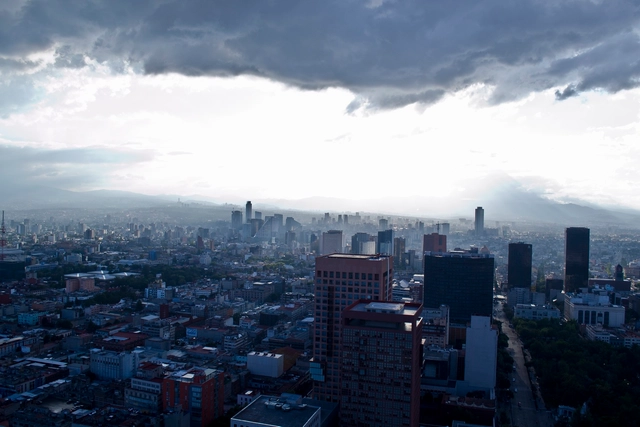
The first installment takes a look Mexico City, where environmental issues that have already wreaked havoc for centuries, such as water shortage and ground subsidence, are beginning to see their effects multiplied by the city’s changing climate. The piece explains the root of these problems, and their effect of an already fragile infrastructure and social fabric.

New York City Mayor Threatens to Remove Times Square

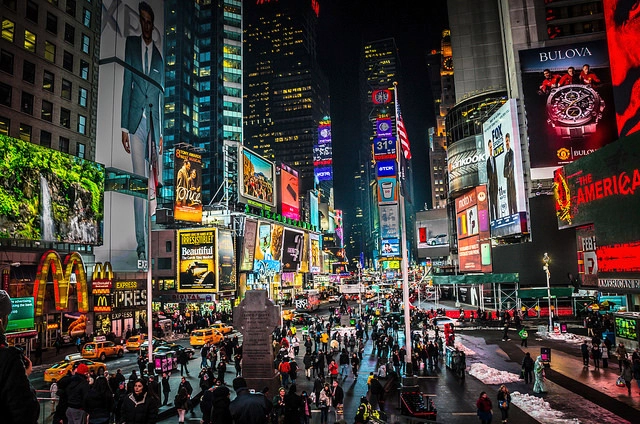
Frustrated with the congestion of panhandlers, Mayor Bill de Blasio has shocked New York City dwellers by threatening to remove their beloved Times Square. As New York Times' architecture critic Michael Kimmelman reports, this comes at a time when dwellers fear that quality of life is declining in the city: "Entertaining the demolition of the plazas, the mayor sends a message that New York can’t support the sort of great pedestrian hubs that thrive in competing cities around the globe." Blasio said he will look into the "pros and cons" of returning Times Square to traffic. Read Kimmelman's full report on Blasio's threats, here.

How Bjarke Ingels is Reshaping New York City's Architecture

Bjarke Ingels has become know for his “promiscuous hybrids" that are reshaping skylines worldwide. Now, after news of BIG's redesign of the 2 World Trade Center, Ingels is being credited for single-handedly transforming New York City's architecture. At the New York Times' Cities of Tomorrow conference last week, architecture critic Michael Kimmelman sat down with the 40-year-old Danish architect to discuss just how BIG is changing New York.

Why 2015's Most Important Design In Architecture Isn't A Building, But A New York Times Article

Subscriber Access | 

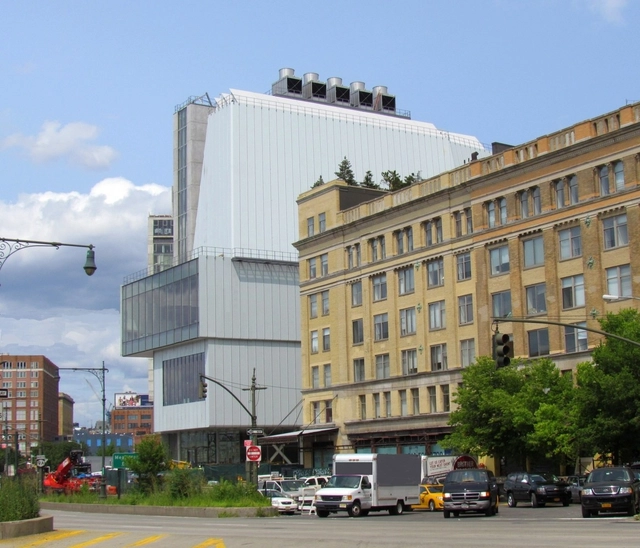
Looking towards the uppermost floors of the new Whitney Museum of American Art, thick clouds roll diagonally across the sky behind. Reflected in the ample window of the museum’s main gallery they dash in a different direction, while the building’s white facade flashes light and dark in response to the changing light conditions. Superimposed over this scene, bold all-caps lettering pronounces the title of an article: the simple but dramatic “A New Whitney.”

This is the sight that greeted readers of Michael Kimmelman’s review of the Whitney in The New York Times last Sunday. Scroll down just a little, and the first thing you encounter is a list of credits: Jeremy Ashkenas and Alicia Desantis produced the article; graphics were contributed by Mika Gröndahl, Yuliya Parshina-Kottas and Graham Roberts; and videos by Damon Winter (the editor behind the entire endeavor, Mary Suh, is not mentioned).

Before even reading the article’s opening words, one thing is clear: this is not your average building review. As a matter of fact, it might even be the most important article in recent architectural memory.

Critical Round-Up: Renzo Piano's Whitney Museum

Subscriber Access | 

Depending on how you measure it, Renzo Piano's new building for the Whitney Museum of American Art in New York (designed in collaboration with New York practice Cooper Robertson) could be the most long-awaited museum of the 21st century. At just a fraction under seven years since the first designs of the building were released, the incubation period has been long enough on its own - but in fact the project has its roots in a scrapped 1981 design by Michael Graves, when the Whitney was instead planning an extension to their previous home in Marcel Breuer's 1966 masterpiece on Madison Avenue. With such a highly anticipated building, the Whitney could hardly have a better man for the job; Piano is one of the most prodigious museum builders of our time. Yet despite this, since construction began in 2011 the design has been beset by criticism for its ungainly external appearance.

Ahead of the Whitney's grand opening on May 1st, this past Sunday saw a slew of reviews from New York's many reputable art and architecture critics, who attempted to make sense of the institution's long-overdue move from their idiosyncratic but endearing former home. We've rounded up some of the best of them, after the break.

Critical Round-Up: Renzo Piano's Whitney Museum - Image 1 of 4Critical Round-Up: Renzo Piano's Whitney Museum - Image 2 of 4Critical Round-Up: Renzo Piano's Whitney Museum - Image 3 of 4Critical Round-Up: Renzo Piano's Whitney Museum - Image 4 of 4Critical Round-Up: Renzo Piano's Whitney Museum - More Images+ 1

Twitter Critics React to Frei Otto's Posthumous Pritzker

Subscriber Access | 

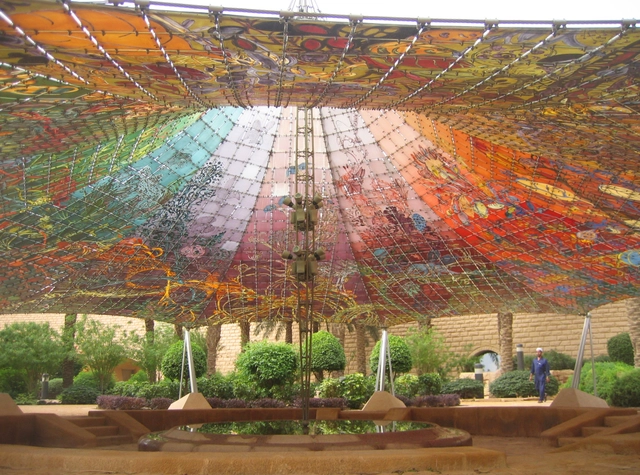
The sudden and unexpected announcement of the Pritzker Prize yesterday evening sent shockwaves through the architecture world. With the sad death of the Prize's latest laureate Frei Otto on Monday, the Pritzker made the unprecedented decision to announce the winner two weeks early, ensuring that Otto's final, crowning achievement would make its way into the obituaries of this great man.

Of course, despite the sudden nature of the announcement, the many critics on Twitter were on hand to lend their initial thoughts in what was an interesting mix of congratulations, sadness and nostalgia. Read on after the break for all the reactions.

Michael Kimmelman Discusses The Importance Of Advocacy In Architectural Criticism

In an interview with Erika Allen for The New York Times, Michael Kimmelman discusses "architecture criticism and the dangers of demolition." Kimmelman, the NYT's architecture critic, has built a reputation as someone who advocates for buildings under threat, his most well known "fight" being against renovation plans drawn up by Foster + Partners for the New York Public Library in Manhattan. Referencing his latest column, in which he shows support for the threatened Orange County Government Centre, Kimmelman elaborates on his critical position and why he believes that speaking out for buildings at risk is "necessary."

Fate of Paul Rudolph’s Orange County Government Center to be Decided Tomorrow

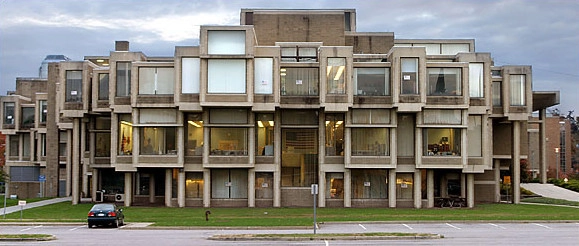
Tomorrow legislators are due to decided the fate of Paul Rudolph’s Orange County Government Center. The midcentury icon, listed on the World Monuments Fund’s global watch list, has been the center of a prolonged debate challenging its right to be preserved.

Kimmelman on MASS Design Group's Open-Air Clinics in Haiti

“Architecture and health are inseparable,” says Haitian doctor and founder of Gheskio in Michael Kimmelman’s latest New York Times piece In Haiti, Battling Disease With Open-Air Clinics. Recounting the devastating images of medical dysfunction that have circulated the internet since the Ebola epidemic, Kimmelman presents MASS Design Group’s nearly complete Port-au-Prince health clinics as a potential model for healthcare architecture worldwide. Combating cholera and tuberculosis with a modest, practical layout and open-air design, the new clinics will serve one of the city’s largest slums. Learn why Kimmelman declares them “handsome” and believes they will help eradicate disease in Haiti, here.

Kimmelman Reviews the One WTC: An Emblem of New York’s “Upside-Down Priorities”

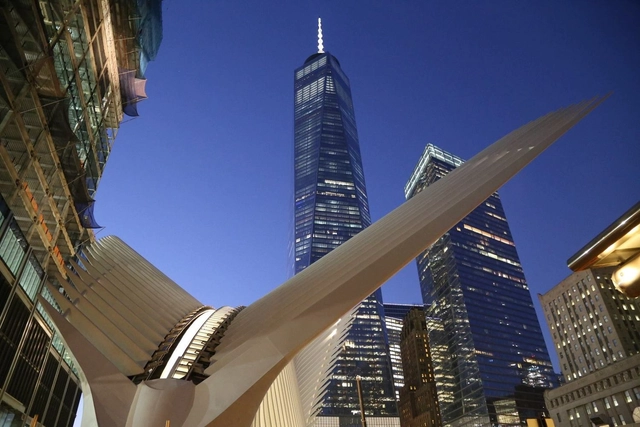
Nearly a month since the official (and somewhat mundane) opening of New York’s One World Trade Center, New York Times architecture critic Michael Kimmelman has published a scathing review of the SOM-designed tower, claiming it to be a “flawed” emblem of the city’s “upside-down priorities.”

Trading Parking Lots for Affordable Housing

The cost of living in New York has skyrocketed over the years, causing one of Mayor Bill de Blasio’s biggest challenges to be the integration of affordable housing. Considering this, architecture critic Michael Kimmelman has spotlighted a plan that suggests trading parking lots for micro housing units. Envisioned by three young architects at the Institute for Public Architecture, the “9x18” scheme has the potential to transform the city by capitalizing on outdated zoning regulations that would unleash more than 20.3 million square feet of usable space. Read more here on the New York Times.

Are the Palisades Too Pure for LG's Headquarters?

Responding to the bevy of critics slamming LG Electronics for building their new headquarters in the Palisades in New Jersey (half an hour north from NYC), Lee Rosenbaum, the Palisades-resident and architecture blogger known as CultureGrrl, maintains that "When it comes to preserving the 'pristine Palisades,' the boat has already sailed." Since LG's planned strip will be located on what is, according to Rosenbaum, already "a very commercial strip," she suggests that "that the incensed defenders of the purportedly unspoiled beauty of the Palisades [...] haven’t actually set eyes on them." Check out the images of her neighborhood as well as her very interesting Twitter tussles with The New York Times' Michael Kimmelman, Vanity Fair's Paul Goldberger, and New York Magazine's Justin Davidson at her blog, and let us know what you think of the debate in the comments below.

Unpublished / CLOG

Subscriber Access | 

Each edition of CLOG poses a particular challenge to the reader: by showcasing such a variety of distinct view points, teasing out the central, connective themes is far from an easy task. It requires analysis, thought, and most of all time - which is, of course, entirely the point. CLOG seeks to “slow things down” so that the greater issues of architectural discourse are mulled over and explored.

The latest CLOG, however, Unpublished, has two central points that quickly, easily emerge. Pick up CLOG: Unpublished if you want to learn two things: (1) about how and why certain publications choose the architecture they publish (ArchDaily included); or (2) about works that have, for their geographical location or problematic nature, been forgotten from the “idealized narratives” of architecture