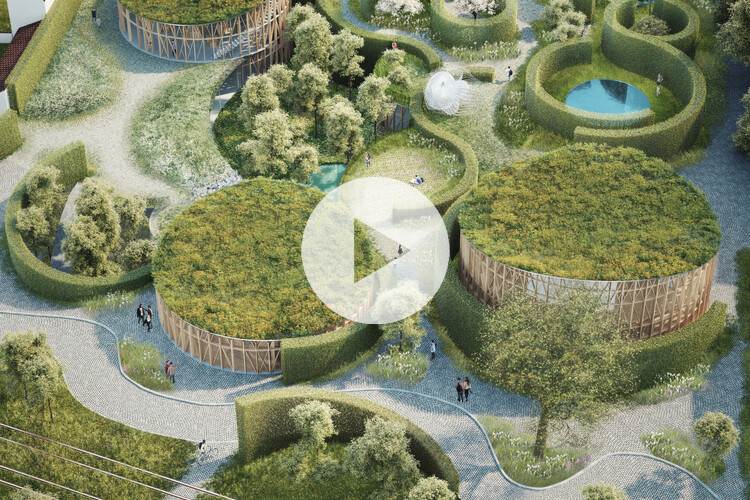
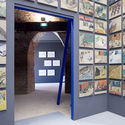
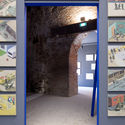
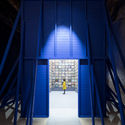
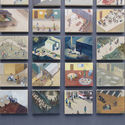
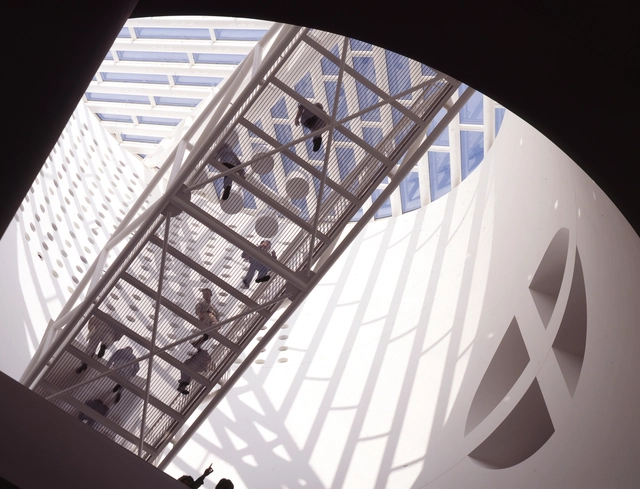
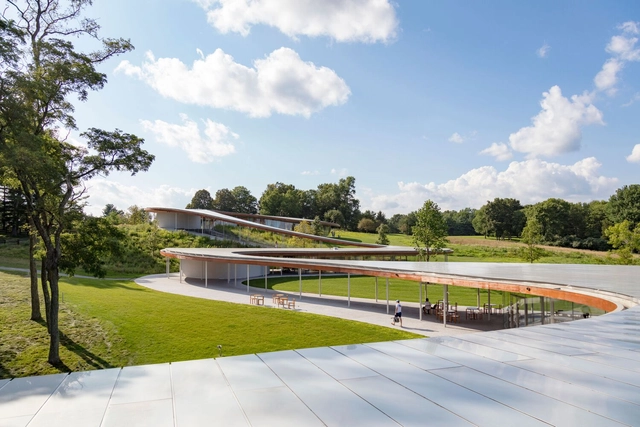
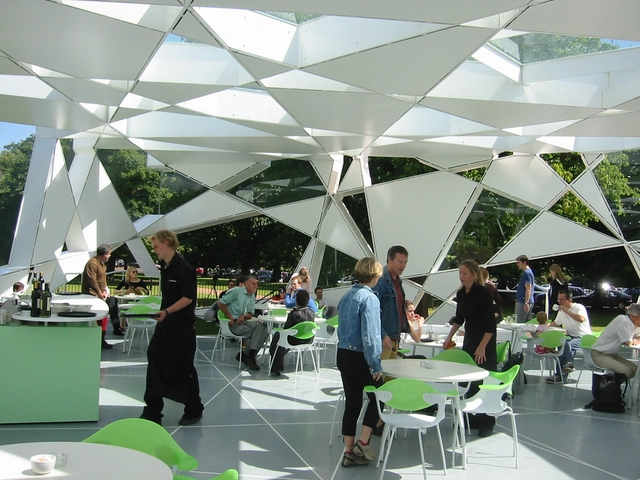
Serpentine Gallery Pavilion. Image Courtesy of Toyo Ito & Associates, Architects
Examining the work of Tokyo architect Toyo Ito (b. 1941) – particularly his now seminal Sendai Mediatheque (1995-2001), Serpentine Gallery (London, 2002, with Cecil Balmond), TOD's Omotesando Building (Tokyo, 2004), Tama Art University Library (Tokyo, 2007), and National Taichung Theater (2009-16) – will immediately become apparent these buildings’ structural innovations and spatial, non-hierarchical organizations. Although these structures all seem to be quite diverse, there is one unifying theme – the architect’s consistent commitment to erasing fixed boundaries between inside and outside and relaxing spatial divisions between various programs within. There is continuity in how these buildings are explored. They are conceived as systems rather than objects and they never really end; one could imagine their formations and patterns to continue to evolve and expand pretty much endlessly.
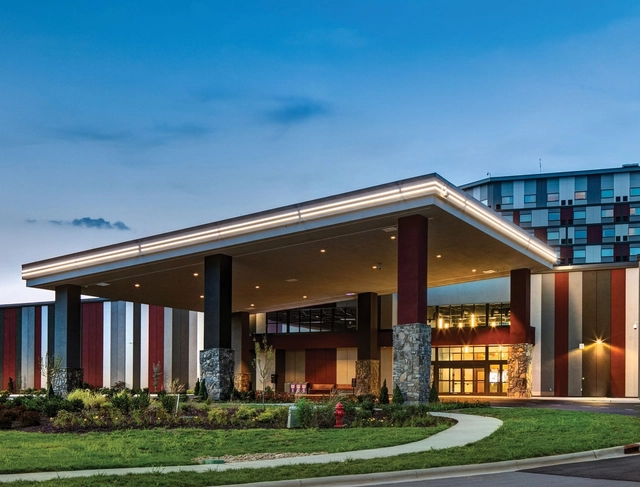
Social justice begins with building understanding and community. For Sam Olbekson, Principal of Native American Design at Cuningham Group and Founder of Full Circle Indigenous Planning, community holds a deep relationship to local cultures and traditions. As a member of the White Earth Nation of Ojibwe, Sam brings the perspective of a tribal member who grew up in Native communities, both on and off the reservation. Today, he's using design to reflect contemporary social values and build for future generations.
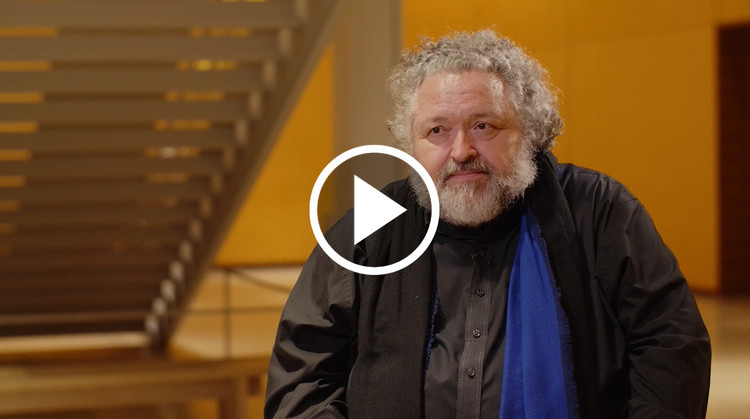
In a recent interview with Louisiana Channel, graphic designer-turned-architect Bruce Mau explains how design is a mindset "of optimism and action". The designer talks about how architecture and design can influence and give form to the world we are sharing, and explains how we are the ones who design the outcomes of life, leaving no room for cynicism.
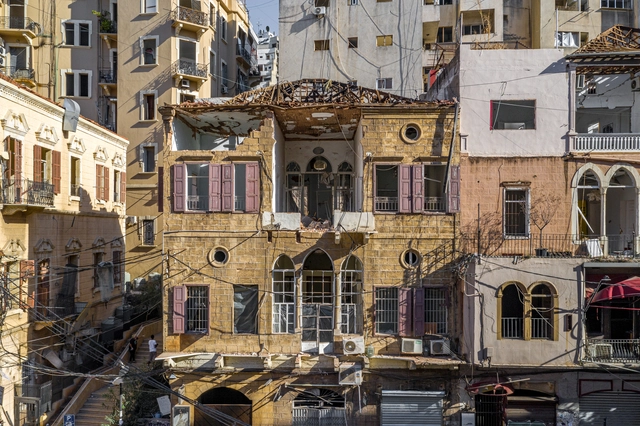
For Design and the City's sixth episode - a podcast by reSITE on how to make cities more liveable, the team interviewed Christele Harrouk, Archdaily's Managing Editor and Salim Rouhana, Senior Urban Governance and Resilience Task Team Leader at the World Bank Group. The two Beirut natives talk about the devastating explosion in August last year and share their perspectives on what rebuilding the city could look like.
"We all have to change our way of thinking now. I want to change my architecture to be even more kind to nature," says Kengo Kuma in this Louisiana Channel interview, where he shares his thoughts on the pandemic's impact on architecture and the environment. The architect discusses the collective responsibility towards nature and the importance of designing buildings and cities that allow for and encourage outdoor activities.
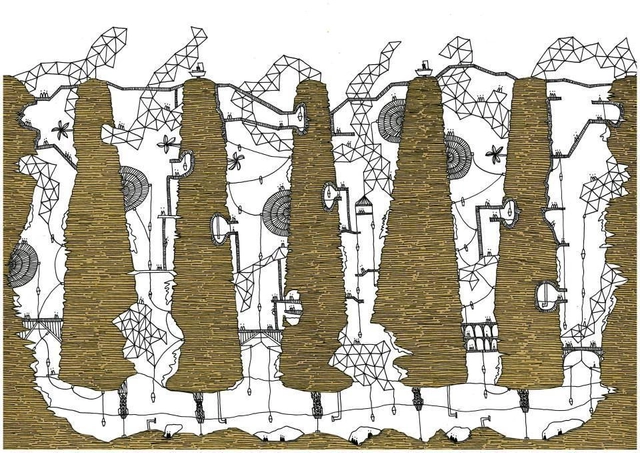
Talking to the Louisiana Channel, Danish architect Mikkel Frost, talks about how he visualises his ideas and represents his architectural concepts - through the mediums of pen, ink and watercolours. Frost views his use of drawing as different from other architects, who "think as they draw". Frost, on the other hand, "prints" the image he already has in his mind, saying "I'm many steps ahead of what I draw, basically printing the whiteboard in my mind."
Among the many topics explored at the 17th Venice Architecture Biennale, the idea of community has been at the forefront, with several national pavilions exploring its many manifestations, evolution, and its relationship with the future of built environments. ArchDaily met with the curators of Testimonial Spaces, Emilio Marín and Rodrigo Sepúlveda, the Chilean Pavilion at the Biennale, and discussed how the project tackled the question of the future of living together and how they bridged the stories from Santiago to Venice. The interview was conducted in Spanish but is provided with English subtitles.
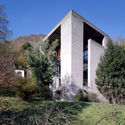
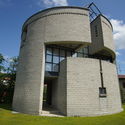
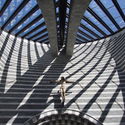
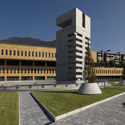
Swiss architect Mario Botta is known for his geometrically imposing, spatially captivating structures that are invariably dressed in zebra-like horizontal stripes in either black and white or red and white combinations. These both traditional and strikingly modern villas, chapels, wineries, schools, libraries, museums, company headquarters, banks, and residential blocks are scattered throughout towns and mountainous villages in the architect’s native Ticino region in southern Switzerland, extend all over Europe and can be encountered in places as far away as China, India, South Korea, Japan, and the USA.
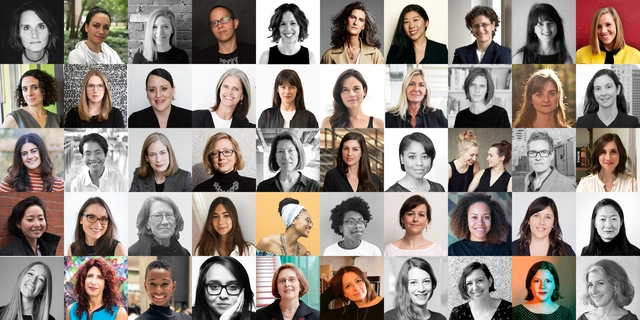
Madame Architect, the platform dedicated to the built environment and to the empowerment, advancement, and visibility of the women who work in it, has just reached a milestone, publishing over 250 interviews with the females who shape our world. “Designed to break the architect’s mold”, the website was founded 3 years ago by Julia Gamolina, an architect that shaped her own path in the field, becoming Director of Strategy at Trahan Architects, focusing on the business, its development, growth, and evolution.
Archdaily's Christele Harrouk had the chance to speak to Julia Gamolina, Founder, Editor-in-Chief of Madame Architect, and one of Professional Women in Construction's "20 Under 40", to discuss her career choices, the online magazine, the business of architecture and communication.
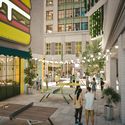
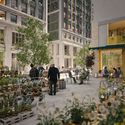
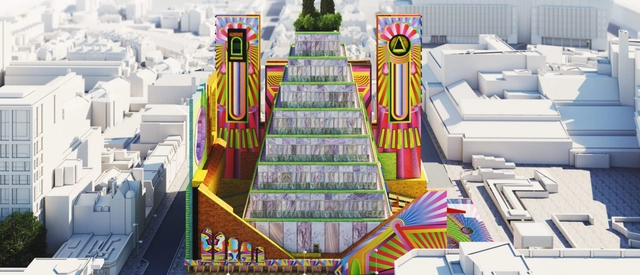
ODA has just launched its latest project, an urban vision for the future of the streets of New York. The project titled Beyond the street- Reimagining the flower district proposes to transform a city block from the outside in, altering the pedestrian experience and introducing new zoning changes that would give landowners air rights or tax credits in exchange for handing over their inner courtyards to be transformed into public/private spaces.
ArchDaily had the chance to talk with Eran Chen, founding principal and executive director of ODA, about the firm’s very special proposal that seeks to improve our urban environment. Check the interview and watch ODA’s explanatory movie.
The Second Studio (formerly The Midnight Charette) is an explicit podcast about design, architecture, and the everyday. Hosted by Architects David Lee and Marina Bourderonnet, it features different creative professionals in unscripted conversations that allow for thoughtful takes and personal discussions.
A variety of subjects are covered with honesty and humor: some episodes are interviews, while others are tips for fellow designers, reviews of buildings and other projects, or casual explorations of everyday life and design. The Second Studio is also available on iTunes, Spotify, and YouTube.
This week David and Marina are joined by Archie Lee Coates IV, a Co-Founder of the extremely multi-disciplinary design studio PLAYLAB. Archie discusses the evolution and future of PLAYLAB, naïveté in design and art, social equity in design practices and design, believing in humanity, design office as permeable amoeba, working with Virgil Abloh for the Louis Vuitton Show, and more.
Stefan Fuchs & Raphael Dillhof interview Adam Nathaniel Furman and discuss the role and importance of facades in today's urban fabric, "in the context of a broader range of social, economic, and political issues". Part of a more in-depth study examining the role of facades in the 21st century, this discussion also raises the question of why buildings always embody the values of their creators.
https://www.archdaily.com/963168/adam-nathaniel-furman-buildings-always-embody-the-values-of-their-creatorsRaphael Dillhof, Stefan Fuchs
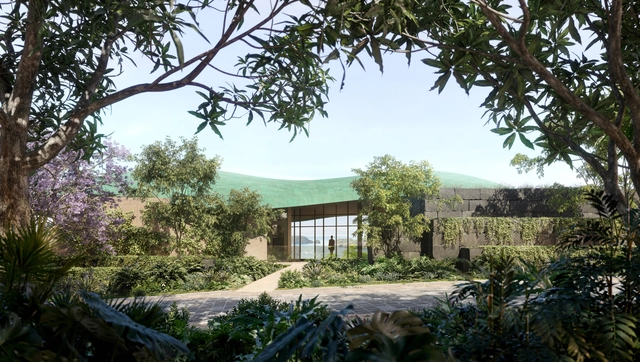
Vladimir Belogolovsky speaks with Antoine Predock about the soon-to-be-built Bahías, a community of 13 houses in Costa Rica, inspired by a vision of manmade foliage.
Despite the emergence of collective and interdisciplinary practices, architectural entrepreneurship remains a vague discipline. As academic institutes focus on cultivating students' hard skills during their undergraduate years, their soft skills are often overlooked, left to be acquired or strengthened during their work experience. Stepping into the "real world", fresh graduates who decide to venture into their professional journey as freelancers or in start-ups, often find themselves overwhelmed with questions; 'How do I convince the client? Am I communicating my concept properly to the contractors? Am I charging the client enough? Why is the project not being executed like I designed it? Why is this project taking a lot more time than I intended it to? How can I run a successful business if I've never taken a business course in architecture school?'
Exploring the question of slavery in Architecture, the building materials and the construction industry, Michael J. Crosbie interviews Sharon Prince, the women behind Design for Freedom, discussing the initiative's report "on the pervasive use of slavery in the design and construction industry, and how design professionals can respond".
https://www.archdaily.com/962116/architecture-and-the-stain-of-modern-day-slaveryMichael J. Crosbie
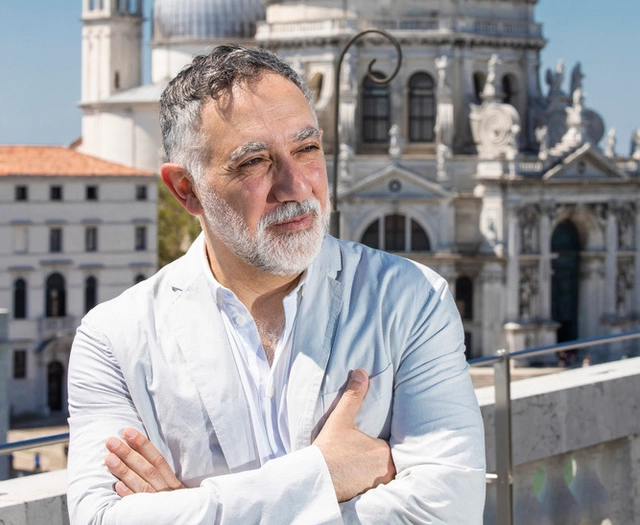
Scheduled originally from August to November 2020, the 17th Venice Architecture Biennale was postponed, like every other event this year, and will be held from May 22nd to November 21st, 2021, due to the pandemic. Questioning “How will we live together?” the original statement of curator Hashim Sarkis, called upon architects “to imagine spaces in which we can generously live together”. Relevant today more than ever, with the current worldwide circumstances, the theme of the Biennale is in fact the focus of interest of the global scene.
After having discussed “How will we live together?” in 2019 with Hashim Sarkis in Venice, ArchDaily had the chance to open the debate once more and re-examine the question of the Architecture Biennale. In a two-part interview, the architect tackles the theme, the Biennale, the present situation, and the future.
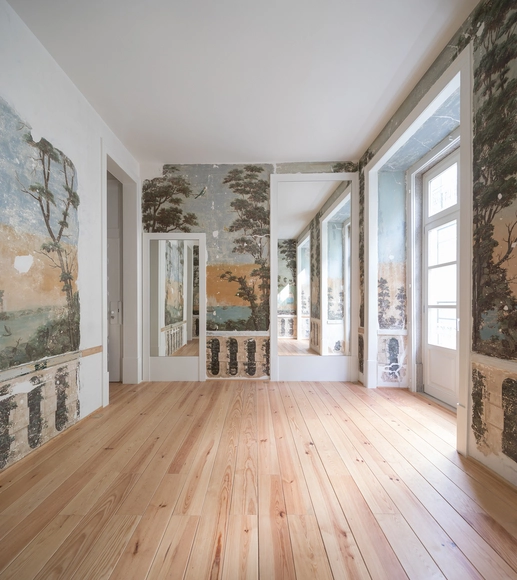
José Adrião. Douradores Apartments Lisbon | 2013–2020. Photo by Nuno Almendra, 2020
"The house is among the first concepts shared by society and architecture", states André Tavares and Pippo Ciorra, curators of the exhibition called At Home: Projects for Contemporary Housing, on display at Garagem Sul / Centro Cultural Belém, in Lisbon. The show, which is the unfolding of another one previously held at the MAXXI Museum in Rome, gathers pieces from the huge collection of the Italian institution and seeks intersections with contemporary Portuguese architectural production. Its main topic – the house, the home – has never been more discussed than right now.
Bringing together houses of different scales, built in diverse locations by various methods and techniques, and designed by Italian, Portuguese and international architects, the exhibition gathers, in groups of three, projects from which it is possible to weave relationships that go beyond geographies and materialities and foster reflections about the future of housing and what the home of tomorrow will look like.
We had the opportunity to talk with Tavares and Ciorra about the exhibition, its motivations and expectations with its opening in the physical venue of Garagem Sul. Read below.
Believing firmly that "architecture is [...] too important to leave solely to architects", Ole Bouman embarked on diverse activities throughout his three decades of work, reflecting on “architecture, not so much as the art or technique of making buildings, but architecture as the intelligent way to organize our lives on earth, and infuse it with purpose”.
After having shared Bouman's essay Finding Measure, ArchDaily had the chance to discuss with DesignSociety’s founding director his thoughts on the role of architecture, the current challenges of the world, the digital revolution, and many other thought-provoking topics.


Nacasa___Partners.jpg?1629103408 "Tod's Omotesando Building_interior. Image © Nacasa & Partners")


Kai_Nakamura.jpg?1629103497 "'Minna no Mori' Gifu Media Cosmos. Image © Kai Nakamura")