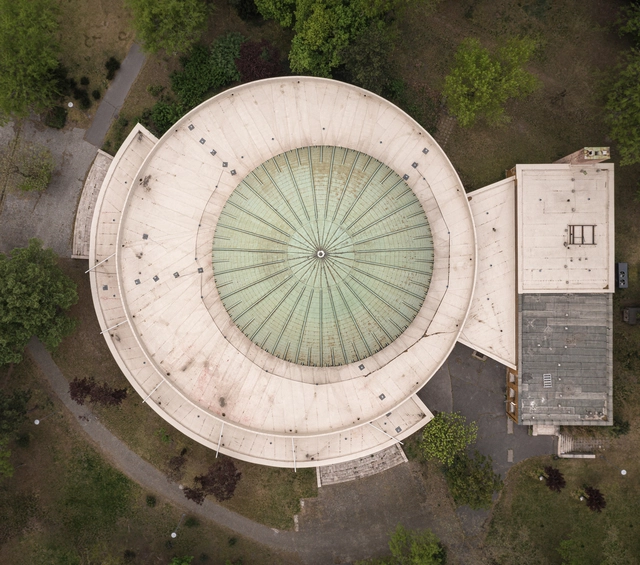
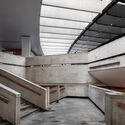
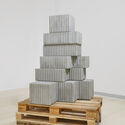
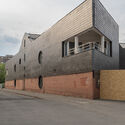
The Hungarian Pavilion at the 17th Venice Biennale explores the often challenging socialist architecture and looks at how this heritage could be reconsidered and given a new future. Titled Othernity – Reconditioning our Modern Heritage, the exhibition curated by Dániel Kovács presents twelve iconic modern buildings of Budapest and the visions of twelve architecture practices from Central and Eastern Europe for their reconditioning. The Hungarian Pavilion's project looks into how architecture can build on its past to foster resilience, sustainability and strong cultural identities.
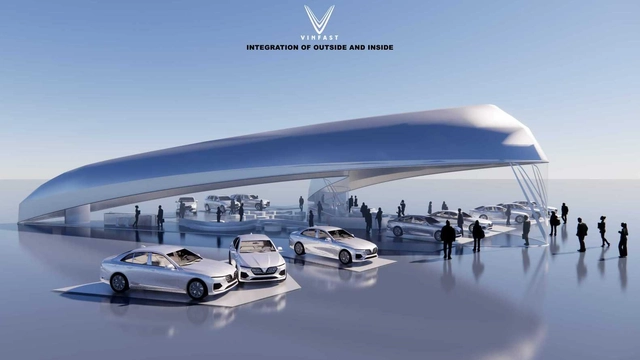
The VinFast Global Showroom Design Competition organized by Vietnam Design Association (VDAS) and VinFast from January 25th to February 25th, received approximately 1000 entries from 90 countries across 5 continents. Accordingly, VFDC 2021 greatly attracted designer contestants from the US, Canada, Europe, Australia, and Vietnam, which are key markets in VinFast's global strategy.
https://www.archdaily.com/961247/winner-announcement-of-vinfast-global-showroom-design-competition-2021ArchDaily Team
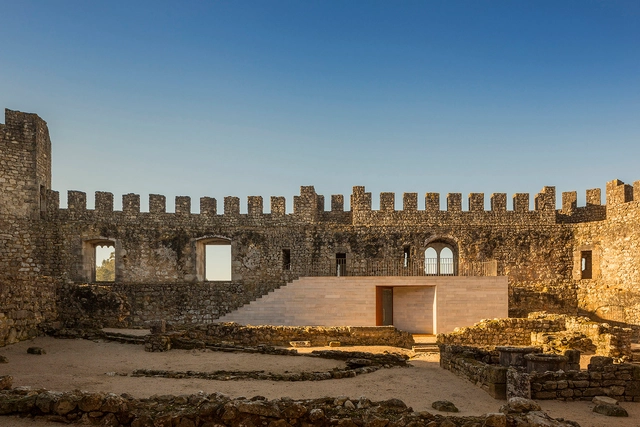
At the heart of it, architecture is an inter-disciplinary profession. Ranging from structural engineers to quantity surveyors, a design project thrives from the collaboration of individuals from various fields of work. An often-overlooked connection is the link between the fields of architecture and archaeology, which in more ways than one have a lot in common. In a time of increased awareness on issues of sustainability and heritage, the expertise present in the field of archaeology plays a vital part in the preservation of architectural landmarks of historical significance. This expertise can also play a significant part in creating sensitive architectural interventions suitable for their context, contemporary in their design while responding to historical precedents.
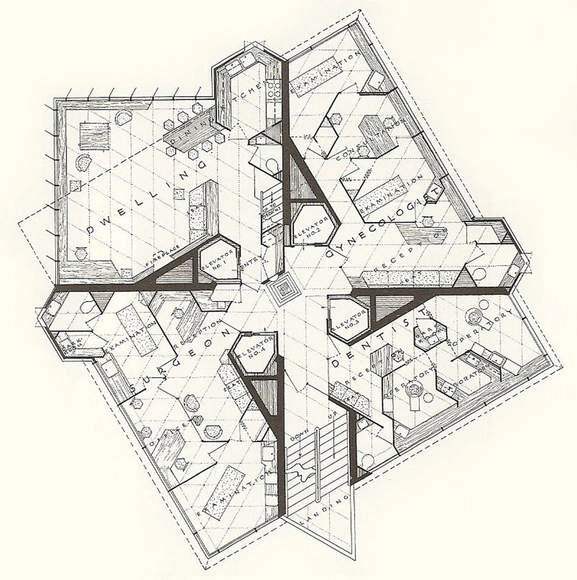
Frank Lloyd Wright’s Price Tower is the famous American architect’s only realized high-rise building and one of his only extant vertically-oriented designs. Located in the plains of Bartlesville, Oklahoma and commissioned by the local oil and chemical firm H. C. Price Company, the mixed-use tower is significant not only for its singularity within Wright’s oeuvre, but because of its unique materials and structural design. Some of Wright’s innovations, which were novel in the mid-twentieth century, remain useful even today.
https://www.archdaily.com/958989/the-tree-that-escaped-the-crowded-forest-lessons-from-frank-lloyd-wrights-price-towerLilly Cao
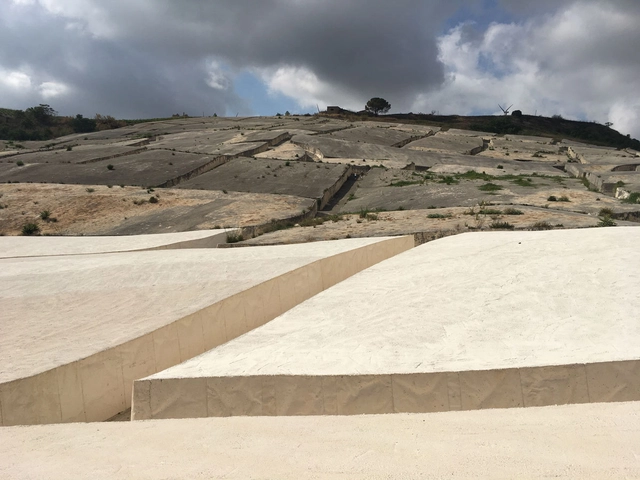
In 1968, the small town of Gibellina in Sicily was flattened by the colossal Belice earthquake, a magnitude 5.5 quake that killed hundreds and left 100,000 homeless. Planners were unable to rebuild Gibellina at its original site, so the new city—Gibellina Nuova—was constructed 11 kilometers (7 miles) away instead. In anticipation of the design and construction of Gibellina Nuova, and in the wake of the Belice earthquake tragedy, the mayor of Gibellina called on several artists to submit proposals for projects to decorate the new city. One of the artists was the prolific “polymaterialist” Italian painter and sculptor Alberto Burri (1915-1995).
https://www.archdaily.com/958178/the-psycho-geography-of-the-cretto-di-burriLilly Cao
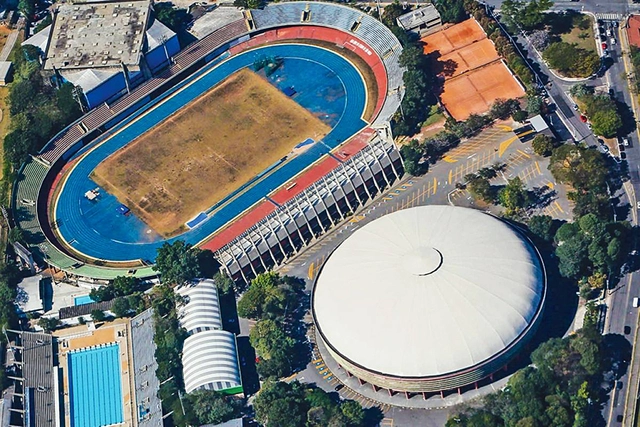
For the past few weeks, there has been concern that the Ginásio do Ibirapuera, an indoor sporting arena located in São Paulo, Brazil, designed by architect Ícaro de Castro Mello, may be converted into a shopping, entertainment, and gastronomic center. This could be the fate of the building, which is of notorious historical significance if the private sector sets in motion the financial modeling report for the Ibirapuera Park concession, articulated by the São Paulo State Government.
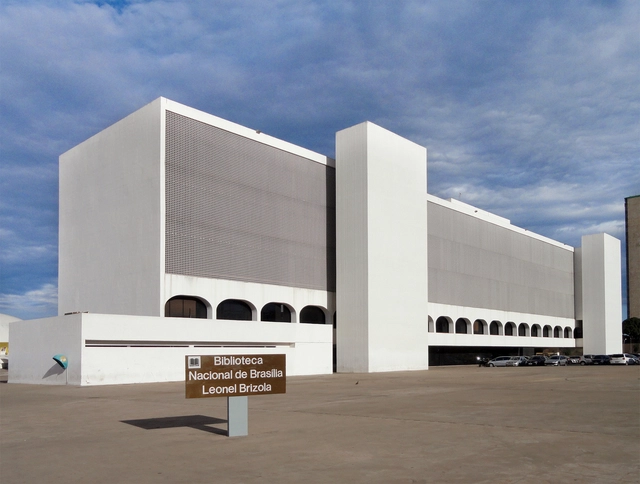
Leonel Brizola Nacional Library. Picture via Wikipedia, user Daderot, licensed under CC0
The Leonel Brizola National Library, designed by Oscar Niemeyer —a building that integrates the Cultural Complex of the Republic, a cultural center located along the Eixo Monumental, in the city of Brasília, Brazil— is covered in cracks. The lack of preventive maintenance has caused several cracks throughout the building, according to an article published in the newspaper Metrópoles.
The cracks were identified by local firefighters on November 19th and have spread all over the building, especially on the walls of the elevator machine room and the roof. The library receives an average of 102,000 visitors per year, and the building administration has been notified of the problem. An inspection was carried out to determine whether there is any structural damage to the building.
https://www.archdaily.com/952421/cracks-threaten-oscar-niemeyers-national-library-in-brasiliaEquipe ArchDaily Brasil
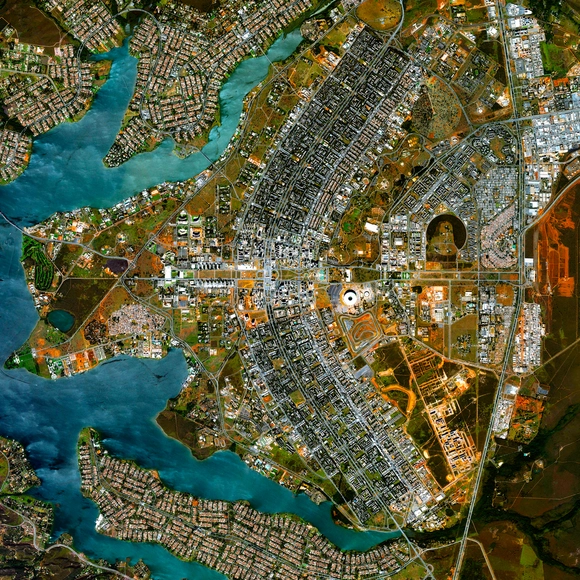
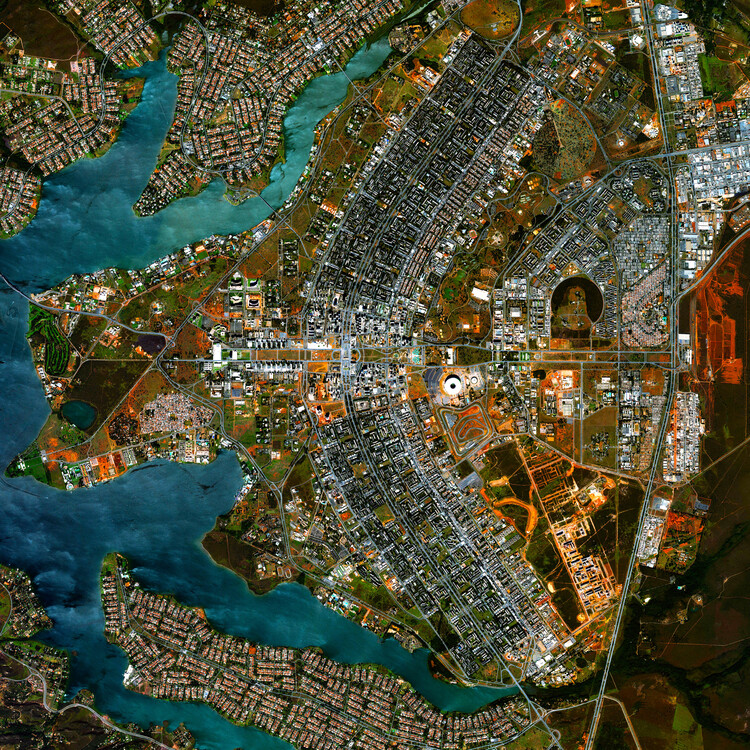
Brasília, Distrito Federal, Brasil. Created by @benjaminrgrant, source imagery: @digitalglobe
In 1972 Unesco created the World Heritage Convention linking together the concepts of nature conservation and the preservation of cultural heritage. Based on the understanding that sites and monuments are threatened with deterioration or disappearance over time, the organization determines that those of outstanding universal value deserve special protection from the dangers they are facing. Therefore, the efforts to identify, protect, preserve, and value the sites included on this list are meant to safeguard and pass the world's cultural and natural heritage on to future generations.
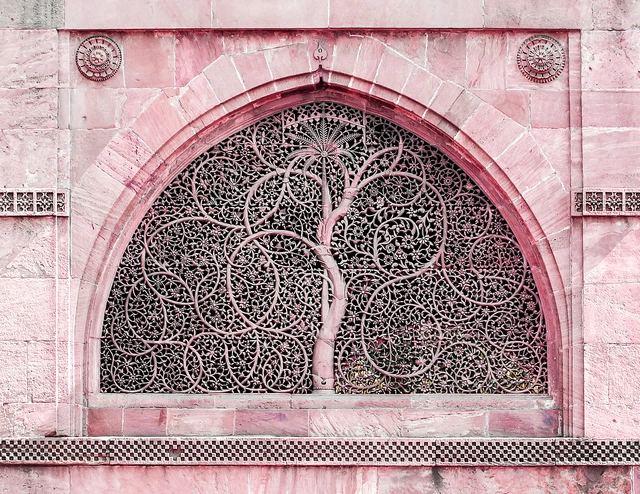
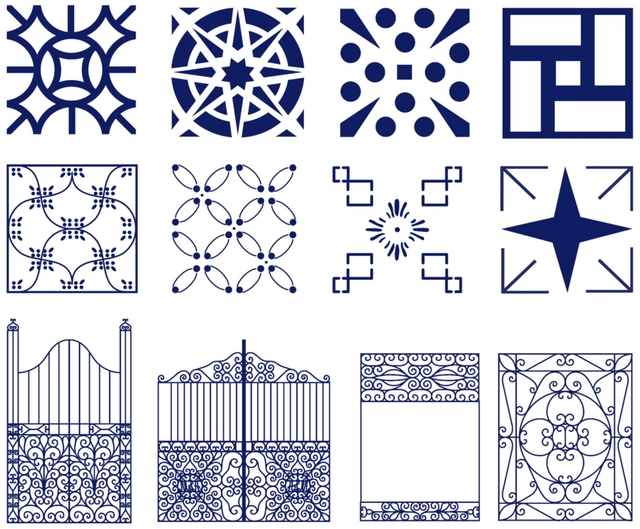
In the Historic Center of Olinda, a Brazilian municipality in the state of Pernambuco, architecture borrows shapes and colors from nature; cobogós perforations on the balconies look like round leaves and fruits, while the railings spiral with a hint of twisted flowers. The colors of the earth and sky also reappear in the floors, backyards, kitchens, and rooms of colonial houses, coating them in shades of brown and blue.
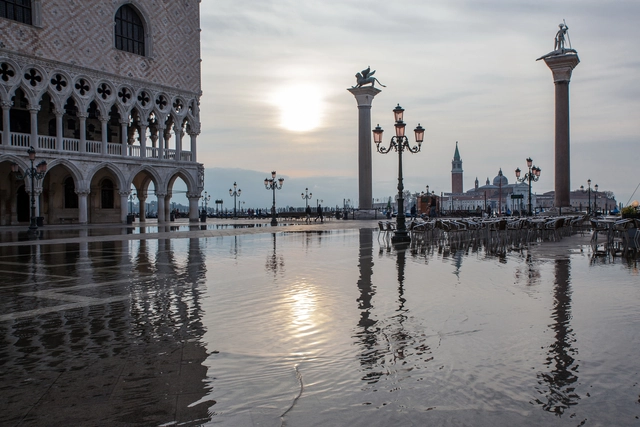
Factum Foundation, a nonprofit dedicated to the use of digital technology for cultural heritage conservation, in collaboration with the Fondazione Giorgio Cini, Ecole Polytechnique Fédérale de Lausanne (EPFL) and Iconem have recorded the Island of San Giorgio Maggiore, in Venice, Italy, in its entirety. For more than 10 days, the team using photogrammetry and LiDAR technologies scanned the 10-hectare island. The project entitled ARCHiVe, linked with EPFL's Venice Time Machine aims to "efficiently and effectively aid in the preservation of Venice's fragile cultural heritage".
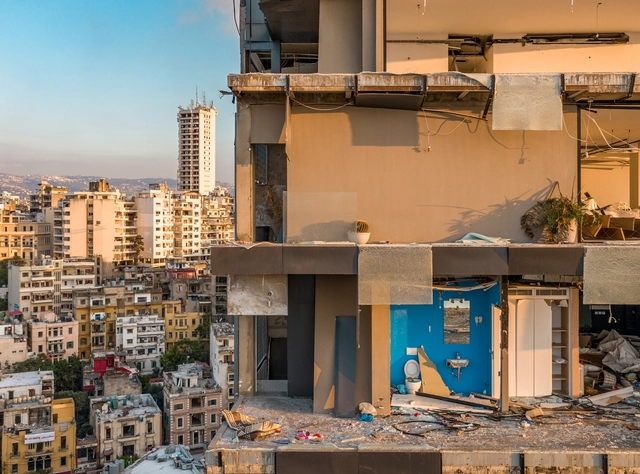
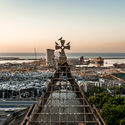
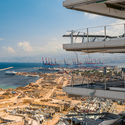
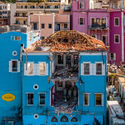
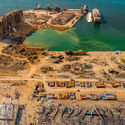
It only took a couple of seconds to destroy 40% of the city of Beirut on August 4th, 2020. A couple of trivial seconds were enough to determine the fate of the urban and social fabric of the Lebanese capital and its architectural heritage. Years and years of accumulated cultural assets fell instantly in distress, causing more harm than the infamous 15-year civil war. These seconds have erased the past, present, and destroyed future aspirations.
Hit right in its rich cultural center, the blast of the port shook the northeastern side of the Lebanese capital, leaving the neighborhoods of Mdawar, Rmeil, Gemmayze, Achrafieh, Mar Mkhayel, Karantina, and Geitawi, severely hurt. According to the UN Development Programme (UNDP), 200,000 housing units were affected by the explosions, with an estimated 40,000 buildings damaged, of which 3,000 were severely damaged.
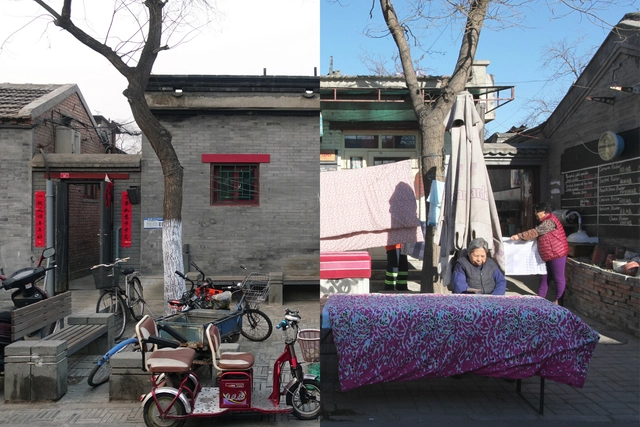
“BEFORE/AFTER” documents the drastic changes, both physical and psychological, which took place during the renovation of Beijing’s Fangjia Hutong in the months between April and September 2017. In 2019, OPEN Architecture was invited to participate in “Unknown City: China Contemporary Architecture and Image Exhibition”, the opening exhibition of the Pingshan Art Museum, with their work “BEFORE/AFTER”.
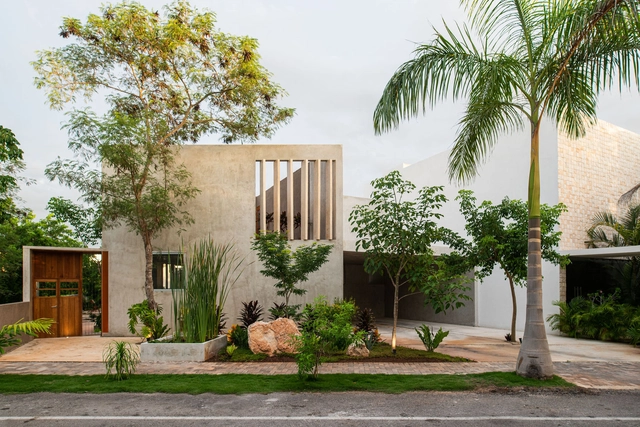
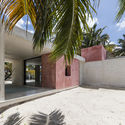
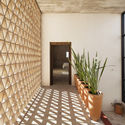
In Yucatan, architects are reviving an ancient Mayan stucco technique for contemporary buildings, merging modern architecture with regional history and culture. The technique is called “chukum,” a term derived from the colloquial name for the Havardia albicans tree native to Mexico. Made with chukum tree bark, the material has several defining qualities that separate it from traditional stucco, including impermeable properties and a natural earthy color. Though chukum initially fell out of use following Spanish conquest of the Maya civilization, it was rediscovered and reemployed by Salvador Reyes Rios of the architecture firm Reyes Rios + Larrain Arquitectos in the late 1990’s, initiating a resurgence of use in the area.
https://www.archdaily.com/946291/the-rustic-beauty-of-the-chukum-in-modern-mexican-architectureLilly Cao
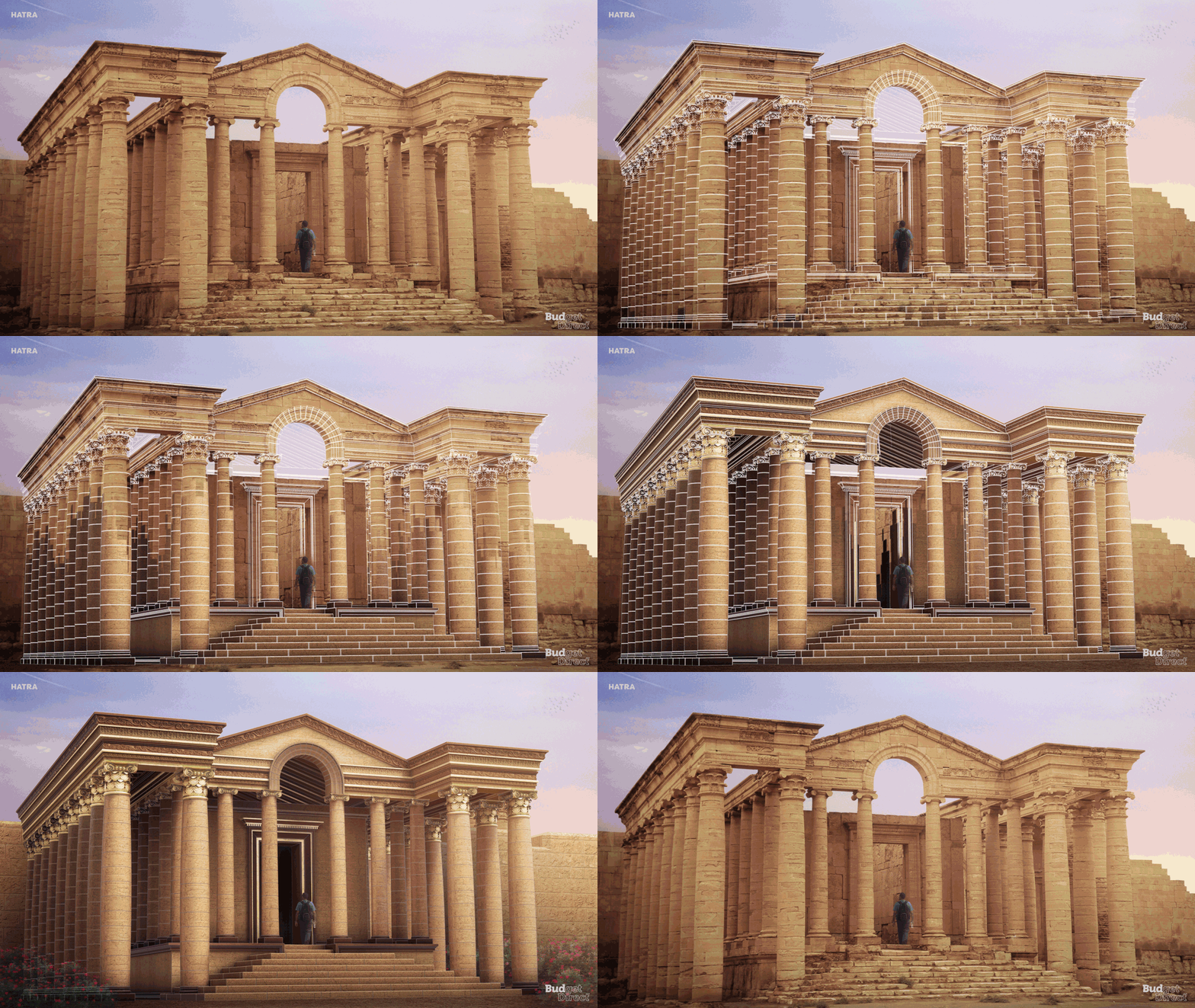
Budget Direct and NeoMam Studios, a creative studio based in the UK, have created a series of animated gifs restoring 6 UNESCO cultural sites and showcasing how these ruins would have looked like if they had been preserved. Bringing to life endangered sites, the project includes the recently destroyed ruins of Palmyra in Syria and Hatra in Iraq, demolished by ISIS in 2015.
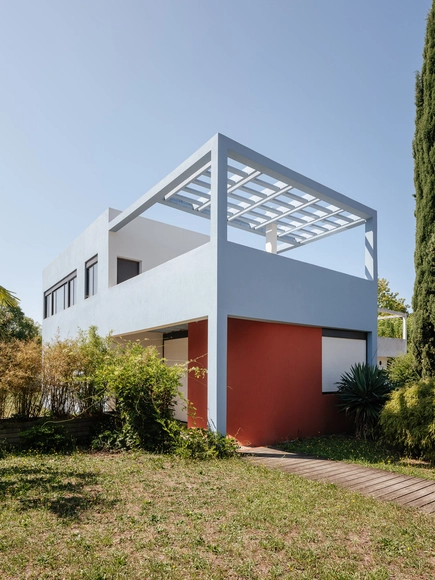
In the 1920s, work was completed on the Cité Frugès housing complex in Pessac, France. The project, meant to house Pessac's industrial workers, would be one of seventeen Le Corbusier works on UNESCO's list of World Heritage Sites.
At the apogee of the Roman Empire, its territory extended over more than five million square kilometers, between Europe, Asia, and Africa. Rome exercised power over a population of more than 70 million people, which equated to roughly 21% of the world population at the time. In fact, as we have already shown in another article, all roads led to the city of Rome. The great seat of the empire and the material and immaterial heritage left by it is immeasurable, and even today researchers seek to understand its full impact on the current world. From the beginning of its expansion in the 6th century BC until its fall in the year 476 AD, the legacy left by the Romans encompasses areas such as law, plastic arts, Latin (which originated many different languages), systems of government, and, importantly, architecture.
The passage of time will alter, erode, and in most cases, degrade any architectural structure. Whether this be the result of climate, adaptation, misuse, or even war, all buildings are subject to the same life cycles of steady, or extreme, decline. In recent decades, “adaptive reuse” has gained significant traction as a means of breathing new life into an old structure, offering an often complex challenge for designers, architects, and indeed everyday users, who walk a fine line between a respectful restoration of history, and significant adaption for modern needs.