1. ArchDaily
  2. Charles & Ray Eames

Charles & Ray Eames: The Latest Architecture and News

Case Study Houses and the Myth of a Universal Domestic Ideal

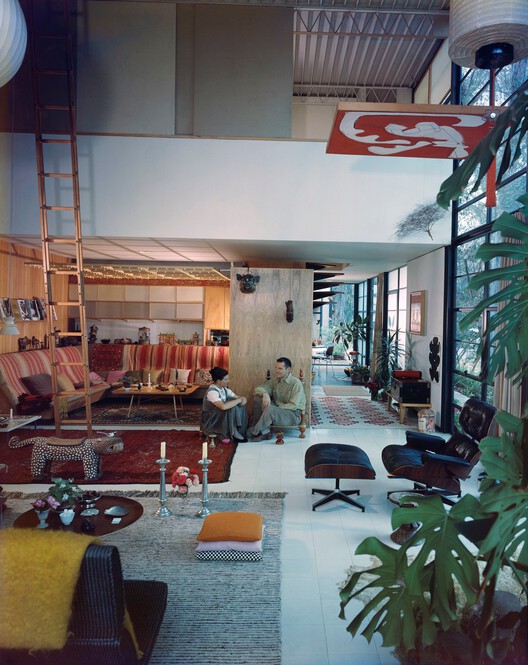
Sitting on low benches, casually talking, dressed in comfortable clothes, and surrounded by books, design objects, and works of art, Charles and Ray Eames appear in one of the most emblematic images of postwar modern domesticity in the United States. The house does not appear as an explicit architectural manifesto, but rather as an inhabited, appropriated, everyday space. Still, nearly everything in that scene functions as the condensation of a carefully constructed ideal: modern informality, the integration between architecture and daily life with the coexistence of industrial production. The photograph projects a way of living more than it represents a residence. And perhaps that was, from the very beginning, the central ambition behind the Case Study Houses.

Case Study Houses and the Myth of a Universal Domestic Ideal - Image 1 of 4Case Study Houses and the Myth of a Universal Domestic Ideal - Image 2 of 4Case Study Houses and the Myth of a Universal Domestic Ideal - Image 3 of 4Case Study Houses and the Myth of a Universal Domestic Ideal - Image 4 of 4Case Study Houses and the Myth of a Universal Domestic Ideal - More Images+ 16

ArchDaily’s Selection: 15 Installations and Exhibitions from Milan Design Week 2026

Bringing together a week of exhibitions, installations, and industry exchange, Milan Design Week 2026 and the 64th edition of Salone del Mobile.Milano concluded on April 26, following six days of programming across the fairgrounds and the city. Held from April 20 to 26, this year's events reaffirmed Milan's central role within the global design calendar. The Salone itself drew over 316,000 visitors from 167 countries. With 1,900 brands represented and a strong international presence, the week once again operated as both a cultural platform and an economic engine, navigating a context marked by market uncertainty while maintaining its capacity to convene designers, institutions, and industry leaders at a global scale.
ArchDaily’s Selection: 15 Installations and Exhibitions from Milan Design Week 2026 - Image 1 of 4ArchDaily’s Selection: 15 Installations and Exhibitions from Milan Design Week 2026 - Image 2 of 4ArchDaily’s Selection: 15 Installations and Exhibitions from Milan Design Week 2026 - Image 3 of 4ArchDaily’s Selection: 15 Installations and Exhibitions from Milan Design Week 2026 - Image 4 of 4ArchDaily’s Selection: 15 Installations and Exhibitions from Milan Design Week 2026 - More Images+ 26

Milan Design Week 2026: Must-See Installations, Exhibitions, and Events

From April 20 to 26, Milan Design Week 2026 returns as a citywide platform where design operates as both a cultural practice and a form of exploration. Framed by the Fuorisalone theme "Be the Project," this year's edition shifts the focus from outcome to process, positioning design as a dynamic, human-centered act shaped by intuition, responsibility, and transformation. Installations and exhibitions across the city foreground making as an open-ended condition, one that embraces error, temporality, and experimentation as integral to creative production. Within this context, design becomes a space of exchange between disciplines, materials, and intelligences, reflecting broader conversations around sustainability, emerging technologies, and the evolving relationship between the physical and the digital.

Milan Design Week 2026: Must-See Installations, Exhibitions, and Events - Image 1 of 4Milan Design Week 2026: Must-See Installations, Exhibitions, and Events - Image 2 of 4Milan Design Week 2026: Must-See Installations, Exhibitions, and Events - Image 3 of 4Milan Design Week 2026: Must-See Installations, Exhibitions, and Events - Image 4 of 4Milan Design Week 2026: Must-See Installations, Exhibitions, and Events - More Images+ 14

Overprovision: Exploring Purposefully Wasteful Spaces in Residential Design

Overprovision can be seen as an architecture strategy through the lens of resilience—making spaces adaptable to changes, reinterpretations, and future needs. However, could overprovision also offer a productive lens for rethinking spatial design? Are there parallels in architectural theory or practice that align with this concept, as explored by notable figures in the discourse on space?

This question becomes particularly relevant in residential design, especially in regions like Hong Kong or Tokyo, where the demand to maximize space is a cultural and practical norm. Designers are frequently tasked with "making use of every inch" for storage or function, reflecting a tendency among residents to accumulate belongings disproportionate to their living spaces. 

Overprovision: Exploring Purposefully Wasteful Spaces in Residential Design - Image 1 of 4Overprovision: Exploring Purposefully Wasteful Spaces in Residential Design - Image 2 of 4Overprovision: Exploring Purposefully Wasteful Spaces in Residential Design - Image 3 of 4Overprovision: Exploring Purposefully Wasteful Spaces in Residential Design - Image 4 of 4Overprovision: Exploring Purposefully Wasteful Spaces in Residential Design - More Images+ 12

Eames House Reopens With Expanded Public Access Following Restoration

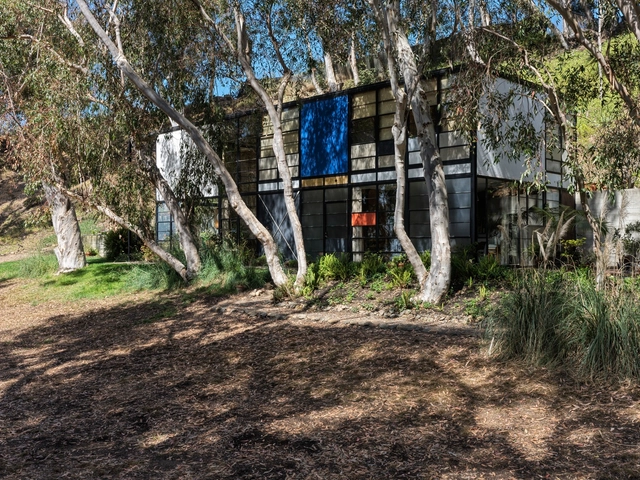
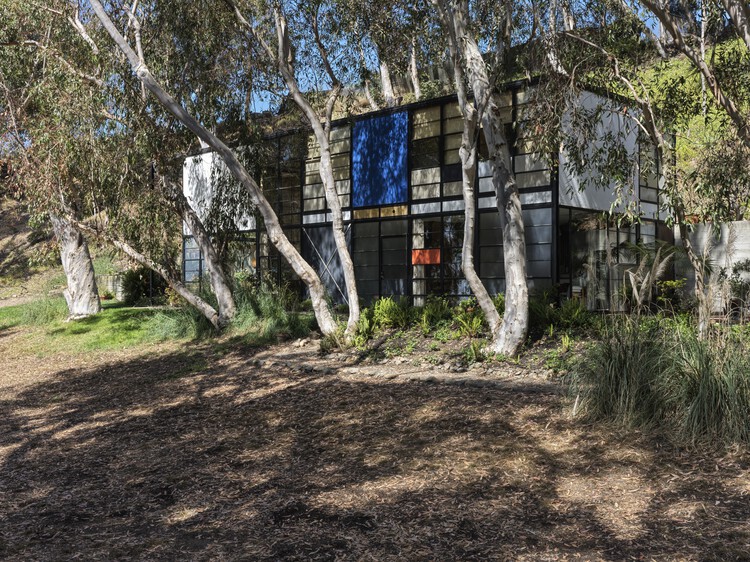
Following an extensive conservation process, the Eames House, Case Study House No. 8, has reopened to visitors after a five-month closure due to smoke damage from the Palisades Wildfire earlier this year. Although the iconic structure, designed by Charles and Ray Eames in 1949 as part of the Case Study House Program, was not directly damaged by flames, it required comprehensive cleaning and restoration to address the effects of smoke infiltration. As part of the reopening, the adjacent Eames Studio, previously closed to the public, will now be accessible for the first time. Designed and used by Charles and Ray as a working space, the studio will serve as a venue for rotating exhibitions, workshops, and public programs, offering an expanded architectural experience.

Eames House Reopens With Expanded Public Access Following Restoration - Image 1 of 4Eames House Reopens With Expanded Public Access Following Restoration - Image 2 of 4Eames House Reopens With Expanded Public Access Following Restoration - Image 3 of 4Eames House Reopens With Expanded Public Access Following Restoration - Image 4 of 4Eames House Reopens With Expanded Public Access Following Restoration - More Images+ 3

Living and Creating: 12 Homes with Art Studios in Latin America

Subscriber Access | 

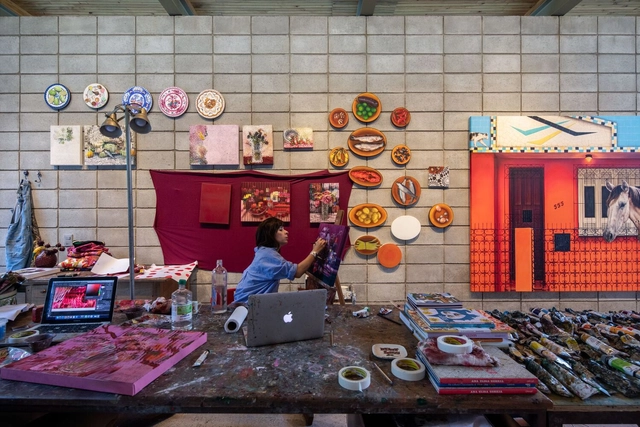
The spaces where artists create their work reveal a great deal about their creative journey—their techniques, themes, and inspirations. These places hold memories, intimacy, and emotional connections. For some artists, the studio is a secluded space, free from distractions. For others, it is a place for openness and freedom. Often, the studio becomes the home—or the home becomes the studio—blending function, desire, and necessity. Positioned at the crossroads of living and creating, leisure and work, these spaces fascinate art lovers. Many are later recreated in galleries or transformed into museums. Regardless of the artist’s fame, these spaces offer a unique look into the creative process, the artwork, and the artist's identity.

Living and Creating: 12 Homes with Art Studios in Latin America - Image 1 of 4Living and Creating: 12 Homes with Art Studios in Latin America - Image 2 of 4Living and Creating: 12 Homes with Art Studios in Latin America - Image 3 of 4Living and Creating: 12 Homes with Art Studios in Latin America - Image 4 of 4Living and Creating: 12 Homes with Art Studios in Latin America - More Images+ 12

Designing Without a Client: 6 Houses Created by Celebrated Architects for Themselves

Examining the houses that architects designed for themselves can provide insight into their design process, priorities, and philosophy. While often reduced in scale, these personal residences offer a peek into the architects' mindsets and the way in which they translate their ideas into lived spaces without having client-imposed restrictions on the end result. The structures also reflect their creators' personal values, lifestyles, and aesthetic preferences.

These projects are often experiments and testing grounds for their own design principles, pushing the boundaries of architectural expression. From Ray and Charles Eames, who ended up spending their lives in an experimental house created for prefabrication, to Frank Gehry, who used his Santa Monica Dutch colonial house to test out the ideas of deconstructivism that would later come to define his career, these projects represent showcase a different face of the design process of world-renowned architects.

Designing Without a Client: 6 Houses Created by Celebrated Architects for Themselves - Image 1 of 4Designing Without a Client: 6 Houses Created by Celebrated Architects for Themselves - Image 2 of 4Designing Without a Client: 6 Houses Created by Celebrated Architects for Themselves - Image 3 of 4Designing Without a Client: 6 Houses Created by Celebrated Architects for Themselves - Image 4 of 4Designing Without a Client: 6 Houses Created by Celebrated Architects for Themselves - More Images+ 18

Designing for Density: How Modernist Principles Continue to Shape Social Housing Solutions Today

When discussing modernist living, several iconic private residential projects may first come to mind—Le Corbusier's Villa Savoye, the Case Study Houses, most notably by Richard Neutra, Pierre Koenig, and Charles and Ray Eames, as well as the glass houses by Mies van der Rohe and Philip Johnson. Most of these projects exemplified an idealized vision of modern living, set in picturesque landscapes and characterized by experimentation with new construction methods, materials, and spatial concepts. Their designs embraced openness, blurring the boundaries between private and public spaces, largely unburdened by constraints such as density, efficiency, accessibility, public transit integration, or communal considerations.

While these modern homes remain influential in contemporary residential design, they also—perhaps unexpectedly—laid the groundwork for high-density housing principles. Concepts such as the interplay between public and private space, modular construction, and prefabrication, initially explored in these private residences, have been adapted to the vastly different constraints of social housing. 

Designing for Density: How Modernist Principles Continue to Shape Social Housing Solutions Today - Image 1 of 4Designing for Density: How Modernist Principles Continue to Shape Social Housing Solutions Today - Image 2 of 4Designing for Density: How Modernist Principles Continue to Shape Social Housing Solutions Today - Image 3 of 4Designing for Density: How Modernist Principles Continue to Shape Social Housing Solutions Today - Image 4 of 4Designing for Density: How Modernist Principles Continue to Shape Social Housing Solutions Today - More Images+ 26

Los Angeles Wildfires Threatens Architectural Landmarks Including the Hollywood Bowl and the Eames House

On Tuesday morning, wildfires erupted in the Pacific Palisades, one of Los Angeles' wealthiest neighborhoods. The catastrophic fire left a significant mark on the infrastructure and neighborhoods of Los Angeles, resembling a war-torn landscape by the morning of January 8, 2025. Iconic locations along Sunset Boulevard transformed into scenes of devastation, with charred buildings. Over 2,000 structures have been destroyed, displacing tens of thousands of residents and sparking urgent appeals for access to homes for medication retrieval. Several hotels in Los Angeles have been taking in displaced residents.

Architecture works such as the celebrated Case Study Homes, the Getty Villa museum and significant works by architects like Richard Neutra, Eero Saarinen, A. Quincy Jones, Charles and Ray Eames, and Charles Moore are all now under threat from the fires fueled by strong Santa Ana winds and drought conditions.

MoMA's “Emerging Ecologies” Exhibition Explores the Ecolution of Environmental Architecture

The Museum of Modern Art New York has announced the opening of an exhibition focused on the first realized and unrealized projects that address ecological and environmental concerns. Featuring works by architects who practiced mainly in the United States from the 1930s through the 1990s, the exhibition titled “Emerging Ecologies: Architecture and the Rise of Environmentalism” is on view from September 17, 2023, through January 20, 2024. The over 150 works showcased reveal the rise of the environmental movement through the lens of architectural practice and thought.

MoMA's “Emerging Ecologies” Exhibition Explores the Ecolution of Environmental Architecture - Image 1 of 4MoMA's “Emerging Ecologies” Exhibition Explores the Ecolution of Environmental Architecture - Image 2 of 4MoMA's “Emerging Ecologies” Exhibition Explores the Ecolution of Environmental Architecture - Image 3 of 4MoMA's “Emerging Ecologies” Exhibition Explores the Ecolution of Environmental Architecture - Image 4 of 4MoMA's “Emerging Ecologies” Exhibition Explores the Ecolution of Environmental Architecture - More Images+ 12

Styling Interiors with Design Icons: Eames, Breuer, Jacobsen, & Bellini

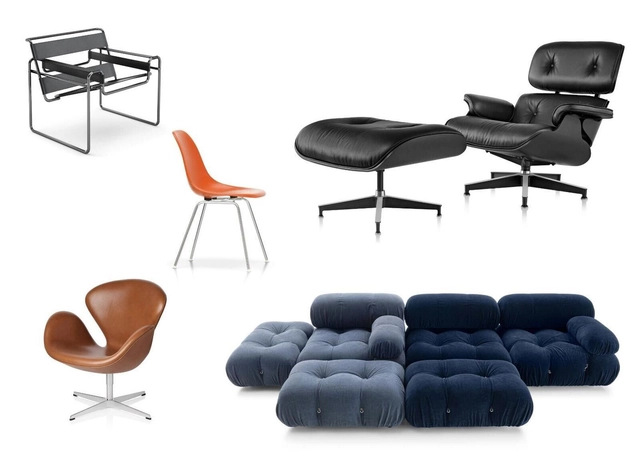
In a way, classic furniture is like a mixture between a work of art and a gold bar: it is a safe investment and can often even increase in value with age. In our second selection of design icons from the 20th century, we present Ray and Charles Eames, Marcel Breuer, Arne Jacobsen and Mario Bellini and some furniture pieces from the past century that remain more modern today than ever, in terms of not only design but also comfort. Find out more on the Architonic Platform.

Spirits in the Material World: A Trip to the Eames Institute

Metropolis Magazine's Kenneth Caldwell visits the Eames Ranch in Petaluma, California to unpack the goals and secrets of the Eames Institute of Infinite Curiosity. He explains that he may not be the best person to write objectively about the recent public launch of the Eames Institute of Infinite Curiosity, a non-profit formed in 2019 to help us explore Charles and Ray Eames’ legacy; particularly their timeless, iterative design process; the chair he sits in every day was designed by the Eameses the year he was born, and their work has been part of his life since he was a young boy looking for the future in architecture magazines at the local public library.

Spirits in the Material World: A Trip to the Eames Institute - Featured ImageSpirits in the Material World: A Trip to the Eames Institute - Image 1 of 4Spirits in the Material World: A Trip to the Eames Institute - Image 2 of 4Spirits in the Material World: A Trip to the Eames Institute - Image 3 of 4Spirits in the Material World: A Trip to the Eames Institute - More Images

The Newly Launched Eames Institute Brings Insight into the Eameses' Design Methodology

The Newly Launched Eames Institute Brings Insight into the Eameses' Design Methodology - Featured Image
Courtesy of The Eames Institute of Infinite Curiosity

The Eames Institute of Infinite Curiosity is a new non-profit organization that aims to bring forward the design processes and problem-solving approaches of the two renowned designers with the purpose of equipping a new generation of creatives with the tools for tackling today's challenges. Through archival exhibitions, storytelling, and other programming, the institution will demonstrate the Eameses' iterative process and highlight the lessons to be passed on from their methodology, making a vast collection of objects, prototypes, and personal archives available to the public.

The Newly Launched Eames Institute Brings Insight into the Eameses' Design Methodology - Image 1 of 4The Newly Launched Eames Institute Brings Insight into the Eameses' Design Methodology - Image 2 of 4The Newly Launched Eames Institute Brings Insight into the Eameses' Design Methodology - Image 3 of 4The Newly Launched Eames Institute Brings Insight into the Eameses' Design Methodology - Image 4 of 4The Newly Launched Eames Institute Brings Insight into the Eameses' Design Methodology - More Images

Putting Ray Eames’s Design Contributions in Context

On the heels of the Eames Office’s 80th anniversary marked by an exhibition and a Ray-inspired sneaker, director Eames Demetrios spoke to Metropolis about the matriarch who continues to inspire design.

Putting Ray Eames’s Design Contributions in Context - Image 1 of 4Putting Ray Eames’s Design Contributions in Context - Image 2 of 4Putting Ray Eames’s Design Contributions in Context - Image 3 of 4Putting Ray Eames’s Design Contributions in Context - Image 4 of 4Putting Ray Eames’s Design Contributions in Context - More Images+ 7

Eames Office Celebrates 80 Years of Design History with Exhibition in Tokyo

In celebration of its eight decades of design history, Eames Office recently inaugurated a new exhibition at Design Gallery Isetan The Space in Tokyo, rememorating Charles and Ray Eames’ human-centred design philosophy. Featuring classic furniture designs, archival works, recreated architectural models as well as new projects developed with brands like Herman Miller, Vitra, Ravensburger or Reebok, The 80 Years of Design exhibition illustrates the prolific and highly diverse work of the studio, highlighting the value of its designs for contemporary living.

Eames Office Celebrates 80 Years of Design History with Exhibition in Tokyo - Image 1 of 4Eames Office Celebrates 80 Years of Design History with Exhibition in Tokyo - Image 2 of 4Eames Office Celebrates 80 Years of Design History with Exhibition in Tokyo - Image 3 of 4Eames Office Celebrates 80 Years of Design History with Exhibition in Tokyo - Image 4 of 4Eames Office Celebrates 80 Years of Design History with Exhibition in Tokyo - More Images+ 15

Charles and Ray Eames: The Designers Who Shaped the Course of Modernism

Subscriber Access | 

Charles (June 17, 1907 – August 21, 1978) and Ray Eames (December 15, 1912 – August 21, 1988) are best known for their personal and artistic collaboration and their innovative designs that shaped the course of modernism. Their firm worked on a diverse array of projects, with designs for exhibitions, furniture, houses, monuments, and toys. Together they developed manufacturing processes to take advantage of new materials and technology, aiming to produce high-quality everyday objects at a reasonable cost. Many of their furniture designs are considered contemporary classics, particularly the Eames Lounge & Shell Chairs, while the Eames House is a seminal work of architectural modernism.

Modern, Low-Budget and Easy to Build Living Spaces: the Case Study House Program

Between 1945 and 1966, the Case Study Houses program, following the Weißenhof-siedlung exposition, commissioned a study of economic, easy-to-build houses. The study included the creation of 36 prototypes that were to be built leading up to post-war residential development. The initiative by John Entenza, editor of Arts & Architecture magazine, brought a team to Los Angeles that featured some of the biggest names in architecture at the time, including Richard Neutra, Charles & Ray Eames, Pierre Koenig, and Eero Saarinen, among others.

The program's experiment not only defined the modern home and set it apart from its predecessors, but it also pioneered new construction materials and methods in residential development that continue to influence international architecture to this day. Take a detailed look at some of the program's most emblematic work together with recommendations for facing contemporary challenges. 

How the Star System and Sexism Have Erased the Contribution of Women Architects in Intimate-Creative Partnerships

Subscriber Access | 

While women in architecture already face more obstacles than men in their careers, as proven by studies and research from across the globe, the disparities become even more obvious when it comes to partnerships involving both genders. In the history of the profession, there are many examples of office partnerships or collaborations that reveal the discrepancies in terms of recognition achieved by the work, reflected in awards, honors, citations, and salaries.

Many of these collaborations are between intimate couples who, as in any business partnership, design and make work decisions together. But in the particular case of architects in a heterosexual relationship, the role of the "wife" seems to have prevailed over that of collaborator, architect, or equal partner on many occasions.