1. ArchDaily
  2. Marcel Breuer

Marcel Breuer: The Latest Architecture and News

Why Do We Want to Float? The Psychology of Lightness in Architecture

In 1962, the architect Buckminster Fuller envisioned a floating city that would free humanity from its dependence on the Earth. The speculative project consisted of enormous geodesic spheres that would naturally levitate in air warmed by the sun and be anchored to mountaintops. Designed to house thousands of people, Fuller’s Cloud Nine aimed to ease land ownership pressures, address housing shortages, and contribute to environmental preservation.

More than half a century later, we remain far from realizing Fuller’s vision. Creating a truly floating structure on the Earth’s surface is still, for now, an unattainable ideal. While supports continue to be necessary, we manipulate their position, intensity, and number, developing structural “acrobatics” to at least approach the idea of overcoming gravity — a desire that has long fascinated humanity.

Why Do We Want to Float? The Psychology of Lightness in Architecture - Image 1 of 4Why Do We Want to Float? The Psychology of Lightness in Architecture - Image 2 of 4Why Do We Want to Float? The Psychology of Lightness in Architecture - Image 3 of 4Why Do We Want to Float? The Psychology of Lightness in Architecture - Image 4 of 4Why Do We Want to Float? The Psychology of Lightness in Architecture - More Images+ 17

New Cultural Venues, Awards and Transformative Architecture From Ghana to New York: This Week’s Review

This week's architecture news highlights a diverse global landscape of design innovation, cultural investment, and adaptive reuse. Across continents, new museums and cultural venues are opening to foster dialogue around art, design, and community engagement. At the same time, major recognitions and project announcements underscore the growing importance of sustainable, socially conscious practices in shaping contemporary architecture. From adaptive transformations in New York, Tainan, and Milan, including preparations for the Milano Cortina 2026 Winter Games, to new cultural landmarks in Ghana and Qatar, this week's overview features projects by leading firms such as Herzog & de Meuron, Snøhetta, and Mecanoo, alongside initiatives from emerging practices like Limbo Accra in West Africa.

New Cultural Venues, Awards and Transformative Architecture From Ghana to New York: This Week’s Review - Image 1 of 4New Cultural Venues, Awards and Transformative Architecture From Ghana to New York: This Week’s Review - Image 2 of 4New Cultural Venues, Awards and Transformative Architecture From Ghana to New York: This Week’s Review - Image 3 of 4New Cultural Venues, Awards and Transformative Architecture From Ghana to New York: This Week’s Review - Image 4 of 4New Cultural Venues, Awards and Transformative Architecture From Ghana to New York: This Week’s Review - More Images+ 17

Architecture as Soft Power: Cultural Diplomacy and Its Role in Shaping Architectural Production

Cultural diplomacy refers to the use of cultural expression and creative exchange to foster understanding and build relationships between nations. In this context, architecture has long played a distinctive role. Beyond its functional and aesthetic dimensions, it serves as a medium of communication, a language through which countries express identity, values, and ambition on the global stage.

Architecture operates as a form of soft power — persuasive rather than coercive — enabling nations to project influence through material presence. From modernist embassies in the post-war era to monumental pavilions at world expositions, governments and institutions have recognized the built environment's potential to shape perception. By commissioning prominent architects and adopting specific design languages, countries have used architecture to signal modernity, tradition, innovation, or stability.
Architecture as Soft Power: Cultural Diplomacy and Its Role in Shaping Architectural Production - Image 1 of 4Architecture as Soft Power: Cultural Diplomacy and Its Role in Shaping Architectural Production - Image 2 of 4Architecture as Soft Power: Cultural Diplomacy and Its Role in Shaping Architectural Production - Image 3 of 4Architecture as Soft Power: Cultural Diplomacy and Its Role in Shaping Architectural Production - Image 4 of 4Architecture as Soft Power: Cultural Diplomacy and Its Role in Shaping Architectural Production - More Images+ 20

Understanding Eco Brutalism: The Paradox of Structure, Sustainability, and Style

Subscriber Access | 

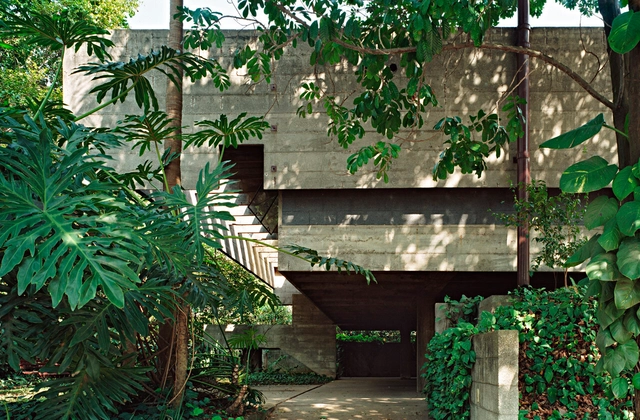
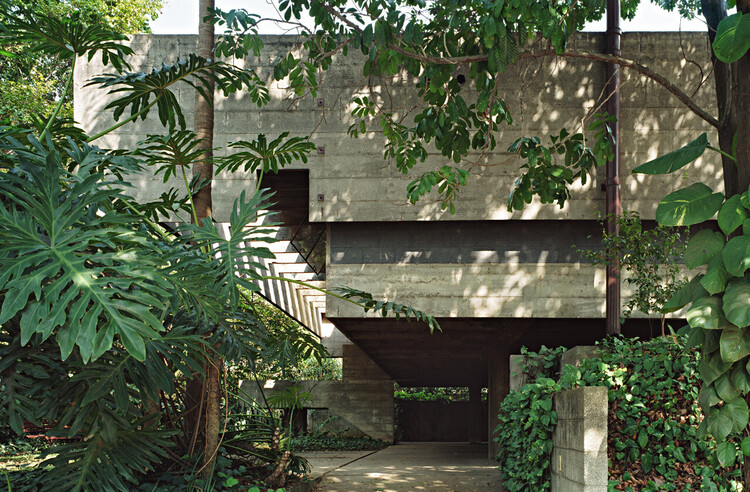
The built environment is expected to reduce carbon emissions, support biodiversity, and respond to changing ecological conditions, all while providing housing for communities and reflecting their cultural values. In this shifting landscape, a once-maligned architectural style emerges in a surprising new form. Brutalism, long associated with institutional gravitas and material austerity, is now being reframed through an ecological lens. This hybrid movement, known as eco-brutalism, combines the power of concrete with greenery and climate-sensitive design strategies. The result is a set of spaces that are visually arresting, conceptually complex, and increasingly popular among designers, urban planners, and the general public. This movement includes not only the direct lineage of 1960s Brutalism but also contemporary projects that, while not strictly Brutalist, share its material honesty, monumental scale, and use of expressive concrete forms.

Understanding Eco Brutalism:  The Paradox of Structure, Sustainability, and Style - Image 1 of 4Understanding Eco Brutalism:  The Paradox of Structure, Sustainability, and Style - Image 2 of 4Understanding Eco Brutalism:  The Paradox of Structure, Sustainability, and Style - Image 3 of 4Understanding Eco Brutalism:  The Paradox of Structure, Sustainability, and Style - Image 4 of 4Understanding Eco Brutalism:  The Paradox of Structure, Sustainability, and Style - More Images+ 39

Herzog & de Meuron Set to Revamp Breuer Building for Sotheby’s in New York

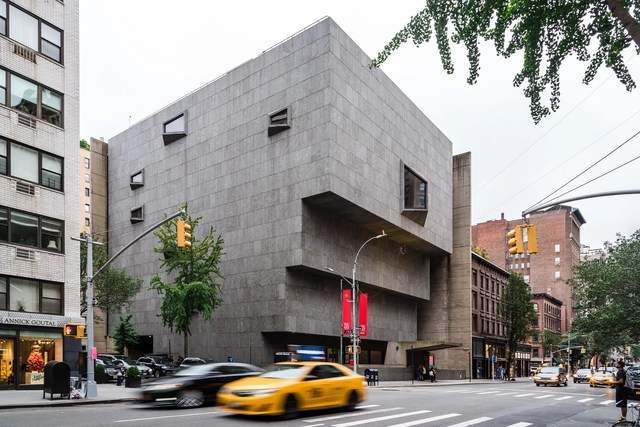
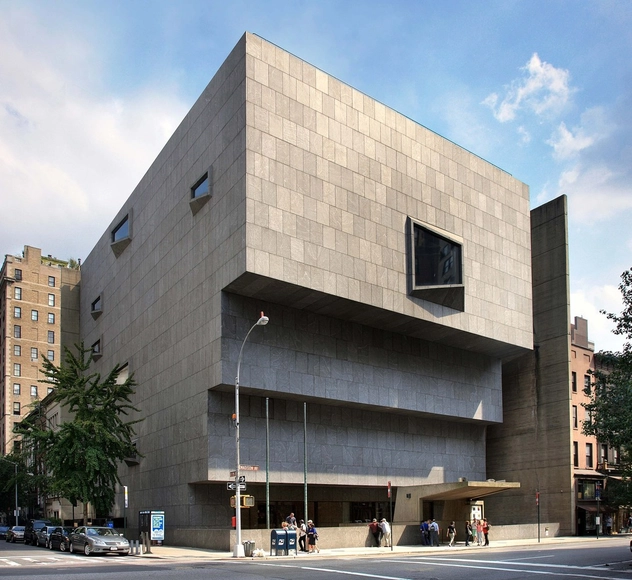
Sotheby's has revealed that Pritzker Prize laureate Herzog & de Meuron will renovate the iconic modernist Breuer Building. The auction house has successfully acquired the building, situated on Madison Avenue, New York City, from the Whitney Museum. Previously, the Breuer building was home to the Whitney, later accommodating the Frick Collection and serving as a venue for the Metropolitan Museum of Art's modern and contemporary pieces. The renovation will include an upgraded sales room for Sotheby's, alongside new exhibition and dining areas. The project, developed together with PBDW Architects, is slated for completion by the fall of 2025.

Herzog & de Meuron Set to Revamp Breuer Building for Sotheby’s in New York - Image 1 of 4Herzog & de Meuron Set to Revamp Breuer Building for Sotheby’s in New York - Image 2 of 4Herzog & de Meuron Set to Revamp Breuer Building for Sotheby’s in New York - Image 3 of 4Herzog & de Meuron Set to Revamp Breuer Building for Sotheby’s in New York - Image 4 of 4Herzog & de Meuron Set to Revamp Breuer Building for Sotheby’s in New York - More Images

"Capital Brutalism" Exhibition Explores Washington D.C's Architectural Legacy in United States

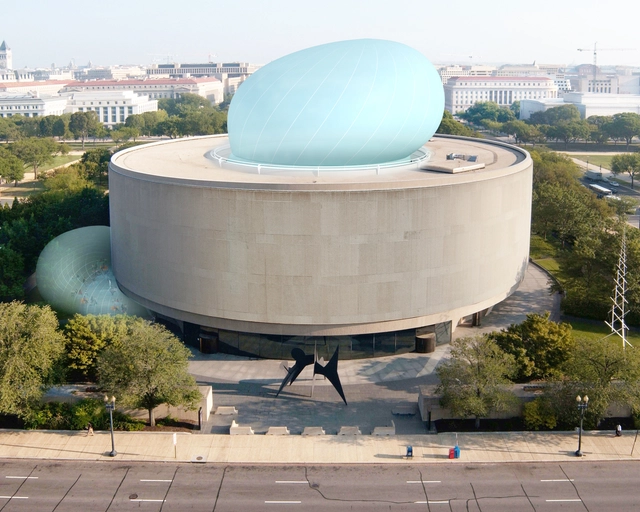
Brutalist buildings are a significant component of Washington, D.C.’s architectural identity. In the National Building Museum’s new exhibition, Capital Brutalism, this identity is explored further. Co-organized with the Southern Utah Museum of Art (SUMA), Capital Brutalism is a comprehensive exhibition of Brutalist architecture in Washington, D.C., to date, running until February 17th, 2025.

"Capital Brutalism" Exhibition Explores Washington D.C's Architectural Legacy in United States - Image 1 of 4"Capital Brutalism" Exhibition Explores Washington D.C's Architectural Legacy in United States - Image 2 of 4"Capital Brutalism" Exhibition Explores Washington D.C's Architectural Legacy in United States - Image 3 of 4"Capital Brutalism" Exhibition Explores Washington D.C's Architectural Legacy in United States - Image 4 of 4Capital Brutalism Exhibition Explores Washington D.C's Architectural Legacy in United States - More Images+ 25

From Art Nouveau to the Bauhaus: How Home Interiors Looked in Popular Art Movements

Subscriber Access | 

Art has always been a means for people to connect with space, and art movements have served as a platform for exploring new relationships with architecture. By incorporating art into buildings and interior spaces, they have been transformed, resulting in a fusion that creates beautiful, inspiring, and spiritually uplifting environments. Throughout history, various art movements, such as the Renaissance in the 17th century, Baroque in the 18th century, and Art Nouveau, Art Déco, and Bauhaus in the early 20th century, have had a significant impact on architecture. Architects drew inspiration from the ideals, concepts, stylistic approaches, and techniques of these movements, using them to create large-scale habitable structures. As the home is a fundamental expression of an architectural movement and the simplest canvas to exhibit the artistic ethos of any particular era, studying the interior spaces of houses provides a detailed picture of art's influence on spatial organization, furniture design, product patterns, and user interaction.

From Art Nouveau to the Bauhaus: How Home Interiors Looked in Popular Art Movements - Image 1 of 4From Art Nouveau to the Bauhaus: How Home Interiors Looked in Popular Art Movements - Image 2 of 4From Art Nouveau to the Bauhaus: How Home Interiors Looked in Popular Art Movements - Image 3 of 4From Art Nouveau to the Bauhaus: How Home Interiors Looked in Popular Art Movements - Image 4 of 4From Art Nouveau to the Bauhaus: How Home Interiors Looked in Popular Art Movements - More Images+ 18

Styling Interiors with Design Icons: Eames, Breuer, Jacobsen, & Bellini

In a way, classic furniture is like a mixture between a work of art and a gold bar: it is a safe investment and can often even increase in value with age. In our second selection of design icons from the 20th century, we present Ray and Charles Eames, Marcel Breuer, Arne Jacobsen and Mario Bellini and some furniture pieces from the past century that remain more modern today than ever, in terms of not only design but also comfort. Find out more on the Architonic Platform.

8 Stories of Architects Embracing Refurbishment and Adaptive Reuse

8 Stories of Architects Embracing Refurbishment and Adaptive Reuse - Featured Image
OMA / Jason Long's Adaptive Reuse of Historic Houston Post Office. Image © Leonid Furmansky

Over the past year, established practices have continued to champion the transformation of existing structures, with adaptive reuse and renovations increasingly becoming a defining aspect of contemporary architecture  From the renovation of landmark structures to the adaptive reuse of obsolete facilities, the idea of giving new life to existing buildings has been embraced as the premise for a more sustainable practice, but also as a means of reinforcing the urban and cultural identity of cities. Discover 8 designs and recently completed projects that showcase a new common practice of reusing existing building stock.

8 Stories of Architects Embracing Refurbishment and Adaptive Reuse - Image 1 of 48 Stories of Architects Embracing Refurbishment and Adaptive Reuse - Image 2 of 48 Stories of Architects Embracing Refurbishment and Adaptive Reuse - Image 3 of 48 Stories of Architects Embracing Refurbishment and Adaptive Reuse - Image 4 of 48 Stories of Architects Embracing Refurbishment and Adaptive Reuse - More Images+ 4

Marcel Breuer's Iconic Brutalist Building is being Transformed into an Eco-friendly Boutique Hotel

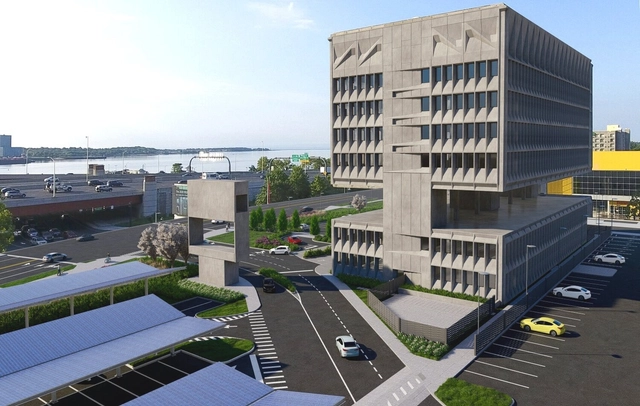
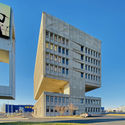
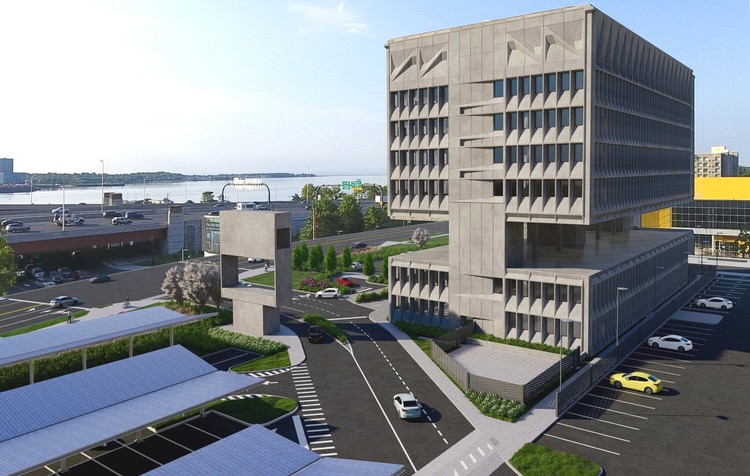
Marcel Breuer’s Pirelli Tire Building, a beacon of Brutalist architecture in the United States, is being reimagined as a hotel by development company Becker and Becker. After being abandoned for years, the structure was sold to architect and developer Bruce Redman Becker in 2020 with plans to transform it into a sustainable 165-room hotel. The sculptural concrete structure aims to be a model for passive design hotels using its unique architectural features and innovative adaptive reuse techniques.

Marcel Breuer's Iconic Brutalist Building is being Transformed into an Eco-friendly Boutique Hotel  - Image 1 of 4Marcel Breuer's Iconic Brutalist Building is being Transformed into an Eco-friendly Boutique Hotel  - Image 2 of 4Marcel Breuer's Iconic Brutalist Building is being Transformed into an Eco-friendly Boutique Hotel  - Image 3 of 4Marcel Breuer's Iconic Brutalist Building is being Transformed into an Eco-friendly Boutique Hotel  - Image 4 of 4Marcel Breuer's Iconic Brutalist Building is being Transformed into an Eco-friendly Boutique Hotel  - More Images+ 17

The Refurbishment and Adaptive Reuse of Brutalist Architecture

Subscriber Access | 

"Demolition is a waste of many things – a waste of energy, a waste of material, and a waste of history," says Pritzker-winning architect Anne Lacaton. In recent years, refurbishment and adaptive reuse have become ubiquitous within the architectural discourse, as the profession is becoming more aware of issues such as waste, use of resources and embedded carbon emissions. However, the practice of updating the existing building stock lacks consistency, especially when it comes to Brutalist heritage. The following explores the challenges and opportunities of refurbishment and adaptive reuse of post-war architecture, highlighting how these strategies can play a significant role in addressing the climate crisis and translating the net-zero emissions goal into reality while also giving new life to existing spaces.

The Refurbishment and Adaptive Reuse of Brutalist Architecture - Image 1 of 4The Refurbishment and Adaptive Reuse of Brutalist Architecture - Image 2 of 4The Refurbishment and Adaptive Reuse of Brutalist Architecture - Image 3 of 4The Refurbishment and Adaptive Reuse of Brutalist Architecture - Image 4 of 4The Refurbishment and Adaptive Reuse of Brutalist Architecture - More Images+ 1

Beyond Bauhaus - Modernism In Britain 1933 to 1966

The 1930s were a pivotal decade for British avantgarde architecture. Despite the relative paucity of modernist buildings being commissioned, by 1937 the country had, for a brief moment, become the epicentre of progressive contemporary architecture in Europe.

7 International Examples of How the Bauhaus Lived On After 1933

Subscriber Access | 

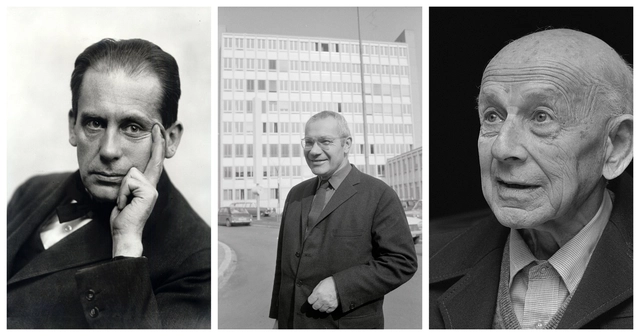
After the dissolution of the Bauhaus due to Nazi political pressure in April 1933, the ideas, teachings, and philosophies of the school were flung across the world as former students and faculty dispersed in the face of impending war. Of the numerous creative talents associated with the Bauhaus, many went on to notable careers elsewhere. Some made a living as artists or practitioners, others either continued or began careers as teachers themselves - and many did both throughout the course of their lives.

7 International Examples of How the Bauhaus Lived On After 1933 - Image 1 of 47 International Examples of How the Bauhaus Lived On After 1933 - Image 2 of 47 International Examples of How the Bauhaus Lived On After 1933 - Image 3 of 47 International Examples of How the Bauhaus Lived On After 1933 - Image 4 of 47 International Examples of How the Bauhaus Lived On After 1933 - More Images+ 6

7 Abandoned and Deteriorating Latin American Architectural Classics

Subscriber Access | 

How many lives does a great work of architecture have? The first begins when it is built and inhabited, judged based on the quality of life it provides for its residents. The second comes generations later when it becomes historically significant and perhaps its original function no longer suits the demands of society. The value of such buildings is that they inform us about the past and for that reason their conservation is necessary.

However, in Latin America, there are countless cases of buildings of great architectural value that are in tragic states of neglect and deterioration. Seven such examples are:

Modern Tide: Midcentury Architecture on Long Island

Subscriber Access | 

The relationship between social dynamics and architecture has always been intimate. It is a constant dialogue between social norms and politics, stylistic trends and aesthetic choices, individual preferences and the collective good. The Modernist Period was a time when architecture took on the challenge of many social problems. In all the arts – architecture, design, music and film – the period was highly politicized and the choices often gave way to a utilitarian ideal that was a hybrid of efficiency, simplicity and comfort. Jake Gorst’s new film Modern Tide: Midcentury Architecture on Long Island, supported by Design Onscreen, is a message of preservation that takes us through the history of the modernist housing boom that took place on Long Island, NY in the period between the Great Depression and the 1970s.

On August 14th, Cook+Fox Architects hosted a private film screening at their office on 641 Ave of the Americas, presenting the treasures along the island’s shore that have fallen between the cracks of history. The film looks at works from Albert Frey, Wallace Harrison, Frank Lloyd Wright, Marcel Breuer, Philip Johnson, Charles Gwathmey, Barbara and Julian Neski and many others.

Follow us after the break to catch up on the history of the development of these houses on Long Island.

Syracuse University Unveils First Phase of Marcel Breuer Digital Archive

Subscriber Access | 
Syracuse University Unveils First Phase of Marcel Breuer Digital Archive - Featured Image
Whitney Museum of American Art / Architect: Marcel Breuer and Hamilton Smith, Architects; Michael H. Irving, Consulting Architect

Marcel Breuer, born in Hungary in 1902, was educated under the Bauhaus manifesto of “total construction”; this is likely why Breuer is well known for both his furniture designs as well as his numerous works of architecture, which ranged from small residences to monumental architecture and governmental buildings. His career flourished during the Modernist period in conjunction with architects and designers such as founder of Bauhaus Walter Gropius, Le Corbusier and Mies van der Rohe.

In 2009, Syracuse University’s Special Collection Research Center recieved a National Endowment for the Humanities grant with which it began creating the Marcel Breuer Digital Archive. The digital archive, available online, is a collaborative effort headed by the library and includes institutions such as the Bauhaus-Archiv Berlin, the Stiftung Bauhaus Dessau, the Eidgenössische Technische Hochschule Zürich, Harvard University, the Archives of American Art at the Smithsonian Institution, the University of East Anglia, and the Vitra Design Museum. It is in the first phase, which includes Breuer work up until 1955, of digitzing over 30,000 drawings, photographs, letters and other related material of his work.

More about Marcel Breuer’s career and the archive after the break.