1. ArchDaily
  2. Carbon Footprint

Carbon Footprint: The Latest Architecture and News

Light Structures, Heavy Footprints? The Environmental Paradox of Lightweight Materials

Using massive s plates, often several centimeters thick and weighing tons, Richard Serra's sculptures convey an almost improbable sense of lightness. This effect does not result from a reduction of mass, but from how that mass is organized: large curved surfaces tilt, narrow passages compress the body, and seemingly unstable elements create a constant sense of imbalance. Serra transforms weight into a dynamic spatial experience.

In architecture, lightness has occupied a central role at least since the modern period. While earlier traditions, such as Greek and Roman architecture, were closely associated with stability, and large churches with monumentality, the twentieth century introduced a decisive shift in how matter is handled, particularly through the separation of structure and enclosure.

How to Measure the Life Cycle of a Construction Material?

Subscriber Access | 

As a major driver of natural resource consumption, energy use, and greenhouse gas emissions, the construction industry has a significant impact on the environment, consuming 32% of global energy and contributing to 34% of global CO₂ emissions. Building materials play a crucial role in shaping the built environment. Through principles of circular economy, renewable and self-sufficient solutions, and technological innovations, analyzing the environmental performance of each material highlights the opportunity to review and assess the different stages of its life cycle.

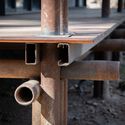
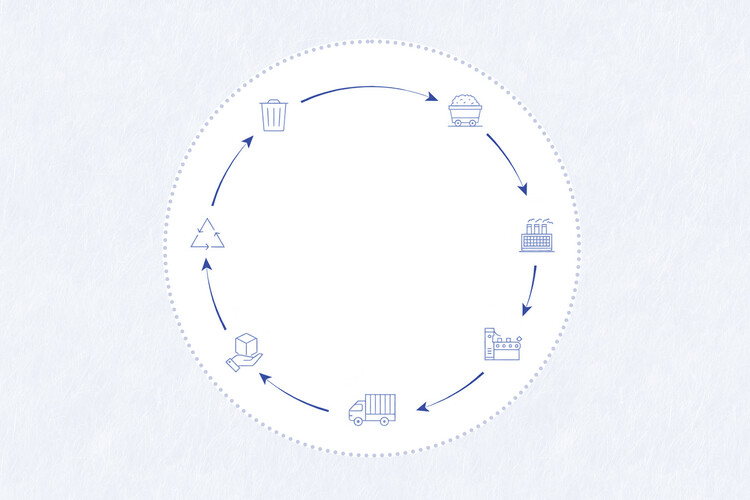
By establishing a common framework for measuring and managing the environmental impact of building materials, Life Cycle Assessment (LCA) emerges as a key approach. This methodology provides a comprehensive evaluation of the environmental impacts associated with products, processes, or activities throughout their entire life cycle. From raw material extraction, manufacturing, and transportation to construction, use, and end-of-life treatment, the analysis considers the environmental burdens linked to each stage. In the context of building materials, LCA offers a holistic and systematic approach to assessing environmental performance and identifying opportunities for design optimization, among other improvements. In this way, it quantifies impacts such as carbon emissions, energy consumption, water use, air pollution, waste generation, and ecosystem depletion.

How to Measure the Life Cycle of a Construction Material? - Image 1 of 4How to Measure the Life Cycle of a Construction Material? - Image 2 of 4How to Measure the Life Cycle of a Construction Material? - Image 3 of 4How to Measure the Life Cycle of a Construction Material? - Image 4 of 4How to Measure the Life Cycle of a Construction Material? - More Images+ 12

How Architects Are Responding to Technology That Turns Buildings into Carbon Sinks

 | Sponsored Content

During the Time Space Existence exhibition, organized by the European Cultural Centre in Venice, the building-solutions company Holcim and Pritzker Prize-winning architect Alejandro Aravena, with his firm ELEMENTAL, unveiled a full-scale prototype that introduces a new approach in incremental housing solutions.

The housing prototype—The Basic Services Unit—was built with Hoclim's recently launched biochar technology, which transforms buildings into carbon sinks by permanently trapping carbon in a bio-based material called biochar. This material is used as a component of low-carbon concrete, cement, and mortars.

The Architecture of Restraint: When Choosing Not to Build Becomes Design

In a world facing ecological exhaustion and spatial saturation, the act of building has come to represent both creation and consumption. For decades, architectural progress was measured by the new: new materials, new technologies, new monuments of ambition. Yet today, the discipline is increasingly shaped by another form of intelligence, one that values what already exists. Architects are learning that doing less can mean designing more, and this shift marks the emergence of what might be called an architecture of restraint: a practice defined by care, maintenance, and the deliberate choice not to build.

The principle recognizes that the most sustainable building is often the one that already stands, and that transformation can occur through preservation, repair, or even absence. Choosing not to build becomes a political and creative act, a response to the material limits of the planet and to the ethical limits of endless growth. That Architecture moves beyond the production of new forms to embrace continuity, extending the life of structures, materials, and memories that already inhabit the world.

The Architecture of Restraint: When Choosing Not to Build Becomes Design - Image 1 of 4The Architecture of Restraint: When Choosing Not to Build Becomes Design - Image 2 of 4The Architecture of Restraint: When Choosing Not to Build Becomes Design - Image 3 of 4The Architecture of Restraint: When Choosing Not to Build Becomes Design - Image 4 of 4The Architecture of Restraint: When Choosing Not to Build Becomes Design - More Images+ 33

Unlocking the Untapped Potential of Our Existing Buildings for a Healthier Future

 | Sponsored Content

The VELUX Group is launching the next step in its Action Leadership agenda as an experiment to explore how existing buildings can better serve both people and planet. The experiment builds on decades of demonstration projects and research into healthy buildings, including Living Places, which achieved an ultra-low carbon footprint and first-class indoor climate in an affordable and accessible way. The next step shifts focus towards existing buildings, from new build to renovation—named Re:Living.

Re:Living is a forward-thinking experiment to reimagine renovation to be more than a technical upgrade, and instead as a holistic opportunity to improve human well-being, support biodiversity, and reduce environmental impact. It's part of VELUX's long-term commitment to lead the building industry toward healthier, more sustainable practices, driven by a belief that simply reducing harm is no longer enough.

CarbonSpace: Designing with Carbon from the First Sketch

Subscriber Access | 

Every act of building begins with the transformation of raw materials, energy, and land, and this inevitably entails environmental impact. This encompasses all the changes a process triggers in the natural world: from resource extraction to pollutant emissions, from energy consumption to biodiversity loss. Measuring this is complex, as it spans multiple dimensions. Carbon has emerged as the common metric, translating these effects into greenhouse gas emissions (CO₂ equivalent) directly linked to global warming. This standardization has made it omnipresent and comparable across materials, systems, and sectors. Reducing carbon emissions, therefore, means addressing the root of global warming, which is a particularly urgent task in the construction industry, responsible for about 39% of global emissions. In response to this challenge, MVRDV NEXT, the innovation and digital tools division of the Dutch architectural firm, launched CarbonSpace, a free, open platform that brings carbon accounting to the architect's desk, right at the napkin sketch stage.

CarbonSpace: Designing with Carbon from the First Sketch - Image 1 of 4CarbonSpace: Designing with Carbon from the First Sketch - Image 2 of 4CarbonSpace: Designing with Carbon from the First Sketch - Image 3 of 4CarbonSpace: Designing with Carbon from the First Sketch - Image 4 of 4CarbonSpace: Designing with Carbon from the First Sketch - More Images+ 19

Pylon of Permanence Showcases Water-Filled Glass at the Venice Architecture Biennale 2025

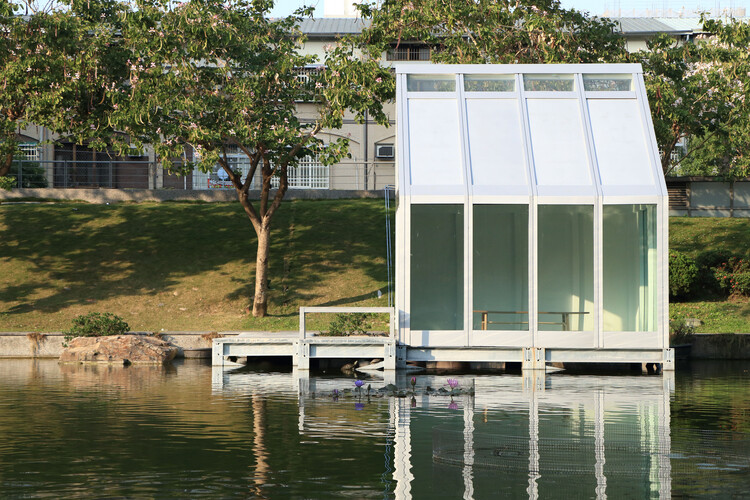
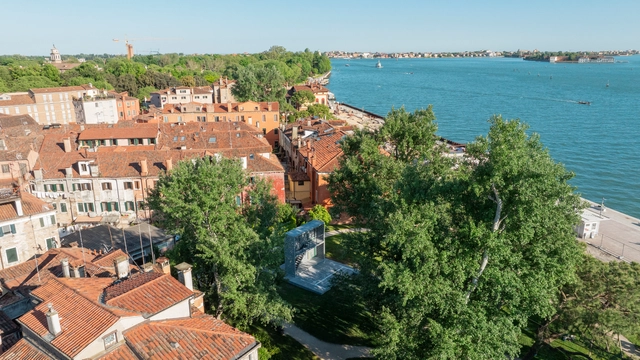
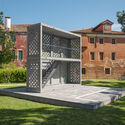
At the 2025 Venice Architecture Biennale, the installation Pylon of Permanence presents Water-Filled Glass (WFG), a glazing system developed to address the environmental impact of glass in the built environment. Although glass is one of the most widely used construction materials, its embodied and operational carbon footprint surpasses that of concrete, steel, and brick. Water-Filled Glass proposes an alternative approach by transforming glass from a passive enclosure into an active energy regulator.

Pylon of Permanence Showcases Water-Filled Glass at the Venice Architecture Biennale 2025 - Image 1 of 4Pylon of Permanence Showcases Water-Filled Glass at the Venice Architecture Biennale 2025 - Image 2 of 4Pylon of Permanence Showcases Water-Filled Glass at the Venice Architecture Biennale 2025 - Image 3 of 4Pylon of Permanence Showcases Water-Filled Glass at the Venice Architecture Biennale 2025 - Image 4 of 4Pylon of Permanence Showcases Water-Filled Glass at the Venice Architecture Biennale 2025 - More Images+ 10

AI and Architecture Software at AIA25: From Code to Concrete in the Digital Future

Subscriber Access | 

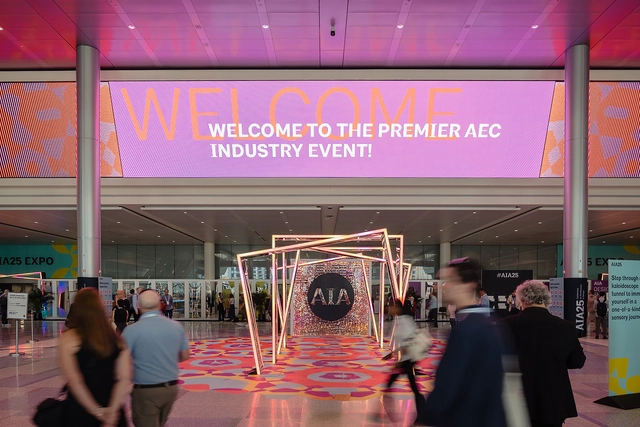
The future of architecture isn't just being drawn—it's being coded. Since mathematician John W. Tukey coined the term "software" in 1958 in The American Mathematical Monthly, its influence has steadily expanded, from revolutionizing science and engineering to quietly transforming architecture. What was first embraced as an innovation for structural calculations and drafting has since revealed a much broader potential, becoming a creative driver in architectural narrative and practice.

While that transformation has already taken root—software now embedded in the way we design and think—it continues to evolve. At the recent AIA Conference on Architecture & Design in Boston, current innovations made it clear that we're entering a new chapter: one where software and artificial intelligence aren't just enhancing workflows but actively shaping sustainability, regulation, and decision-making. Architects and software developers now treat code with the same logic as a material—shaped not by modeling or carving, but through parameters, cycles, constant evolution, and feedback. At the same time, architects are working with AI as a co-pilot in the design process, collaborating with it to support decision-making and enhance the design.

ADEPT Wins Competition to Transform Former Warehouse Into Haus Der Musik in Braunschweig, Germany

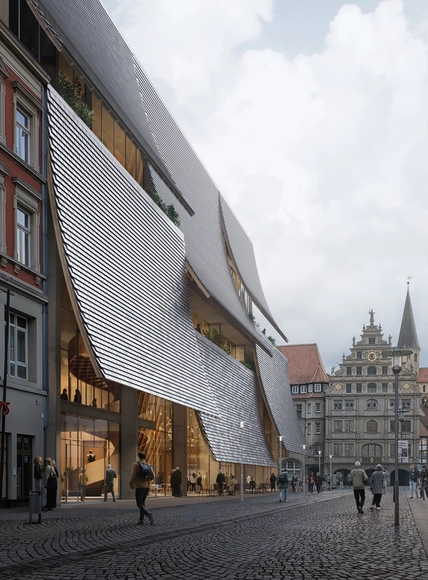
Copenhagen and Hamburg-based architecture office ADEPT has won first prize in the international competition to transform a former Karstadt warehouse in the historic center of Braunschweig, Germany, into the Haus der Musik. The 18,000-square-meter cultural complex will include a new concert hall, a public music school, and community-oriented spaces. Emphasizing adaptive reuse, the project retains the existing load-bearing structure and architectural rhythm, positioning the intervention as a continuation rather than a replacement.

ADEPT Wins Competition to Transform Former Warehouse Into Haus Der Musik in Braunschweig, Germany - Image 1 of 4ADEPT Wins Competition to Transform Former Warehouse Into Haus Der Musik in Braunschweig, Germany - Image 2 of 4ADEPT Wins Competition to Transform Former Warehouse Into Haus Der Musik in Braunschweig, Germany - Image 3 of 4ADEPT Wins Competition to Transform Former Warehouse Into Haus Der Musik in Braunschweig, Germany - Image 4 of 4ADEPT Wins Competition to Transform Former Warehouse Into Haus Der Musik in Braunschweig, Germany - More Images+ 1

Between Housing Demand and Environmental Goals: Alejandro Aravena on Incremental Solutions and Net-Zero Concrete

During the Time Space Existence exhibition, organized by the European Cultural Centre in Venice, Pritzker Prize-winning architect Alejandro Aravena and his firm ELEMENTAL unveiled a full-scale prototype for a new approach in incremental housing solutions. Titled the USB Core, standing for Basic Services Unit housing prototype, this proposal aims to demonstrate how efficient construction can provide all the essential housing components in a minimal space. The prototype is also the result of a collaboration between the architecture office and concrete manufacturer and researcher Holcim, and is built out of a newly developed type of net-zero concrete mix. It also incorporates fully recycled aggregates, in alignment with circular economy principles. The collaboration aims to demonstrate a more environmentally conscious yet cost-effective way of providing essential services to at-risk communities without harming the planet.

While on site in Venice, ArchDaily's managing editor Maria-Cristina Florian had the chance to sit down with Alejandro Aravena and discuss the implications of this collaboration, the urgent need for housing, and the role of the architect as the coordinator of a process involving many actors.

Between Housing Demand and Environmental Goals: Alejandro Aravena on Incremental Solutions and Net-Zero Concrete - Image 1 of 4Between Housing Demand and Environmental Goals: Alejandro Aravena on Incremental Solutions and Net-Zero Concrete - Image 2 of 4Between Housing Demand and Environmental Goals: Alejandro Aravena on Incremental Solutions and Net-Zero Concrete - Image 3 of 4Between Housing Demand and Environmental Goals: Alejandro Aravena on Incremental Solutions and Net-Zero Concrete - Image 4 of 4Between Housing Demand and Environmental Goals: Alejandro Aravena on Incremental Solutions and Net-Zero Concrete - More Images+ 29

From Helsinki’s Landmark Bridge to London’s Urban Regeneration: Recent Updates from Knight Architects, Foster + Partners, and More

In recent weeks, a series of notable architectural projects have been announced, reflecting a broad spectrum of design approaches aimed at enhancing urban life, infrastructure, and environmental sustainability. From cultural venues to large-scale masterplans and infrastructural advancements, these developments highlight how architecture continues to shape cities and communities. Among them, Knight Architects' Kruunusillat Bridge in Helsinki marks a milestone as Finland's tallest and longest bridge, designed to support sustainable mobility. Meanwhile, Unibail-Rodamco-Westfield's masterplan for Croydon sets out a vision for a vibrant mixed-use district, integrating historic preservation with contemporary urban renewal. At Kew Gardens, Mizzi Studio's Carbon Garden introduces a new permanent installation that explores carbon cycles through landscape design. This collection of recent announcements underscores the evolving priorities in architecture, from connectivity and urban regeneration to climate-conscious interventions.

Unlocking Sustainable Architecture with Wood-Based Materials

 | Sponsored Content

Sustainability has been deeply rooted in EGGER's corporate DNA since 1961. Long before it became a global imperative, Fritz Egger Sr. recognized the immense value of wood and laid the foundation for a business model built on responsible resource use. Working in closed cycles is a central element of the corporate philosophy. The wood-based material specialist gives the valuable resource of wood many lives and assumes comprehensive economic, ecological and social responsibility. 

MVRDV "Carbon Confessions" Exhibition in Germany Reveals the Realities of Sustainable Construction

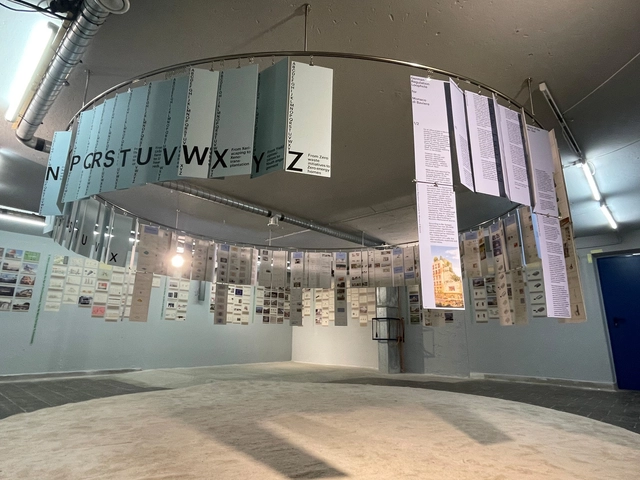
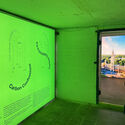
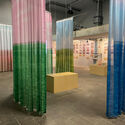
As the global climate crisis intensifies, the construction industry faces increasing pressure to reduce carbon emissions, prompting a fundamental reassessment of building practices. Dutch architecture firm MVRDV, known for its commitment to sustainability, presents an honest exploration of this challenge in "Carbon Confessions," an exhibition at Munich's Architekturgalerie. The exhibition provides insight into the firm's ongoing efforts, highlighting both its achievements and the obstacles encountered in the pursuit of carbon reduction.

MVRDV "Carbon Confessions" Exhibition in Germany Reveals the Realities of Sustainable Construction - Image 1 of 4MVRDV "Carbon Confessions" Exhibition in Germany Reveals the Realities of Sustainable Construction - Image 2 of 4MVRDV "Carbon Confessions" Exhibition in Germany Reveals the Realities of Sustainable Construction - Image 3 of 4MVRDV "Carbon Confessions" Exhibition in Germany Reveals the Realities of Sustainable Construction - Image 4 of 4MVRDV Carbon Confessions Exhibition in Germany Reveals the Realities of Sustainable Construction - More Images+ 4

The Ecological Footprint of Data Centers: The Downpour of a Digital Future

Subscriber Access | 

This article is the winning entry of the Epistle Writing Prize 2024, an annual competition dedicated to recognizing outstanding writing on design, architecture, and the environment.

We might be in the age of the digital cloud - however celestial or ethereal it may appear to be - but it is not only incontrovertibly material but also a powerful ecological force. In present times, data centers are mammoth powerhouses of modern information, communication, and technology industries with giant servers that store and process data. While their proliferation is in a sense, a consequence of our consumption patterns, and as the global demand for the digital grows, so does the data center footprint.

COP29 Launches in Baku, Azerbaijan, to Address Climate Finance and Resilience

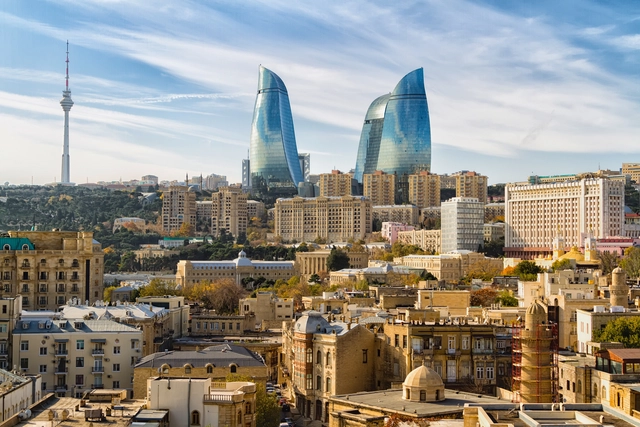
The 29th Conference of the Parties to the UN Framework Convention on Climate Change (COP29) takes place between the 11th and 22nd of November in Baku, Azerbaijan. The event proposes a global gathering of business leaders, governments, and civil society with the aim of taking effective measures to limit global warming to 1.5°C above pre-industrial levels. As the construction industry is responsible for approximately 37% of global emissions, the conference is of particular interest to architects, urban planners, and researchers in this field.

COP29 Launches in Baku, Azerbaijan, to Address Climate Finance and Resilience - Image 1 of 4COP29 Launches in Baku, Azerbaijan, to Address Climate Finance and Resilience - Image 2 of 4COP29 Launches in Baku, Azerbaijan, to Address Climate Finance and Resilience - Image 3 of 4COP29 Launches in Baku, Azerbaijan, to Address Climate Finance and Resilience - Image 4 of 4COP29 Launches in Baku, Azerbaijan, to Address Climate Finance and Resilience - More Images

Building Better with Data: The Role of Material Libraries in Sustainable Architecture

Subscriber Access | 

For decades, the construction industry followed a familiar rhythm: design came first, materials followed. The pressing need for sustainable buildings has shattered this routine. Material selection is no longer an afterthought, but a critical decision made at the outset, with the potential to dramatically reduce a project's environmental footprint. This shift is even more crucial given the construction industry's appetite for raw materials – a staggering 3 billion tons extracted annually. To navigate this new landscape, digital material libraries and data-driven evaluation are emerging as powerful tools, creating a culture where materiality takes center stage to shape a more sustainable built environment.

Building Better with Data: The Role of Material Libraries in Sustainable Architecture - Image 1 of 4Building Better with Data: The Role of Material Libraries in Sustainable Architecture - Image 2 of 4Building Better with Data: The Role of Material Libraries in Sustainable Architecture - Image 3 of 4Building Better with Data: The Role of Material Libraries in Sustainable Architecture - Image 4 of 4Building Better with Data: The Role of Material Libraries in Sustainable Architecture - More Images+ 3

The Hidden Carbon Cost of Climate Retrofits

Evolving urban conditions call for an evolving builtscape, and retrofits have been a key mechanism to allow buildings to adapt and respond to new needs. Amidst global environmental concerns, climate retrofits have become a popular strategy to upgrade buildings based on improved operational efficiency. Global decarbonization plans have even called for city-wide retrofits, such as in the case of London, to meet civic goals. While such upgrades significantly reduce energy consumption, they often come with a hidden cost - embodied carbon in retrofit materials and the potential for future waste.

The Hidden Carbon Cost of Climate Retrofits - Image 1 of 4The Hidden Carbon Cost of Climate Retrofits - Image 2 of 4The Hidden Carbon Cost of Climate Retrofits - Image 3 of 4The Hidden Carbon Cost of Climate Retrofits - Image 4 of 4The Hidden Carbon Cost of Climate Retrofits - More Images+ 3

Z6 Tower, Designed by Foster + Partners, Becomes First Certified Net-Zero Operational Skyscraper in China

Located in the heart of Beijing’s Central Business District, the Z6 tower, designed by Foster + Partners, has become China's first high-rise office building to achieve “Net Zero Carbon Outstanding” certification. The project received this recognition by passing the “Net Zero Carbon Building Evaluation System,” which was developed by the British Research Establishment (BRE) and TÜV Rheinland Greater China, based on BREEAM standards.