1. ArchDaily
  2. Material

Material: The Latest Architecture and News

A World in Between: The Role of Hybrid Forms in Contemporary Bathrooms

 | In Collaboration

When is a form still circular or rectangular? In twentieth-century modernism, this question was largely absent. Architecture was built on clarity, reduction, and formal purity. Influenced by architects such as Le Corbusier and Ludwig Mies van der Rohe, modernist design established a visual order based on rational geometry, industrial materials, and the rejection of ornament. Circle and square, function and expression, were kept strictly apart—a logic that dictated the rigid, modular layouts of traditional bathrooms for decades.

The Productive Clash: Heritage Interiors, Contemporary Projects, and the Value of Imperfection

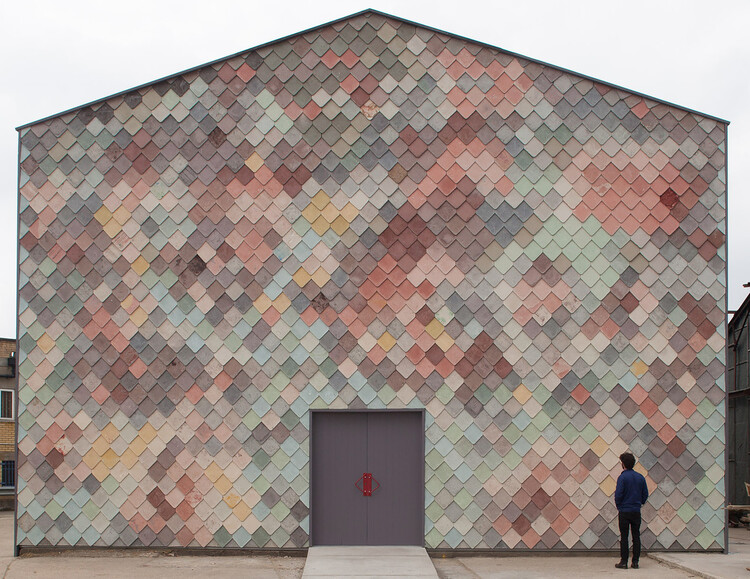
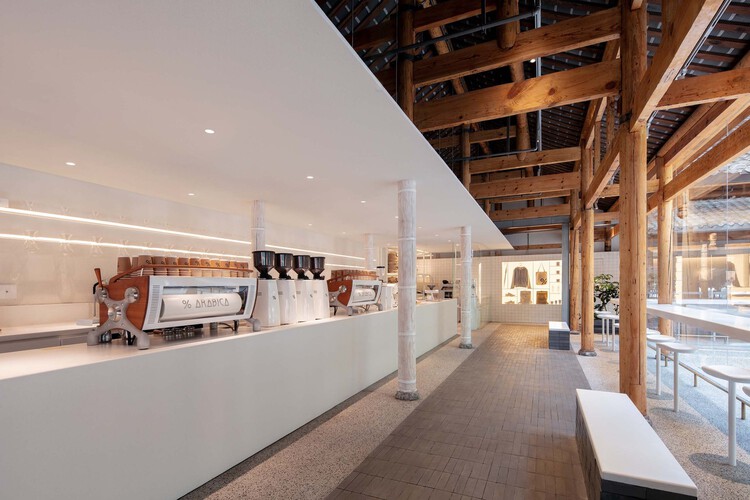
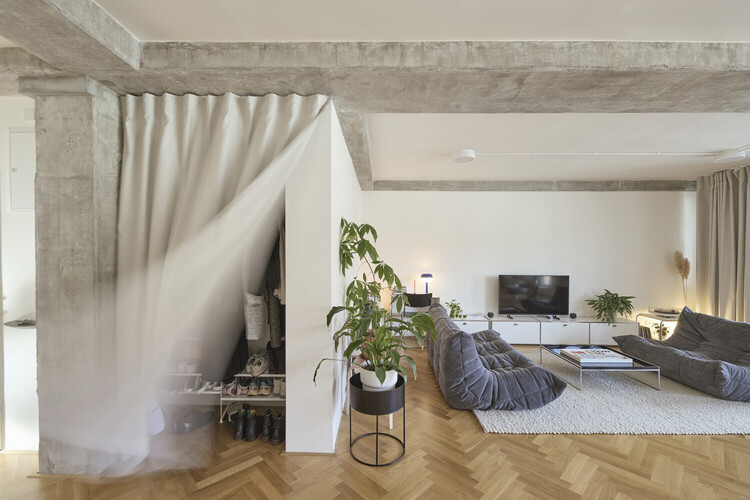
Heritage, in interiors, is increasingly rarer to be only a matter of preservation alone. More often it arrives as friction: the encounter between what a building already is—its plan logic, its scars, its structural inconsistencies—and what contemporary life demands of it.

Some of the most convincing projects today are not those that "restore" an interior back to a single moment, nor those that erase the past under a seamless new skin. They are the ones that stage a relationship between old and new—allowing contrast to do more than tell a story, and letting the clash become a pragmatic tool for construction, budget, and speed.

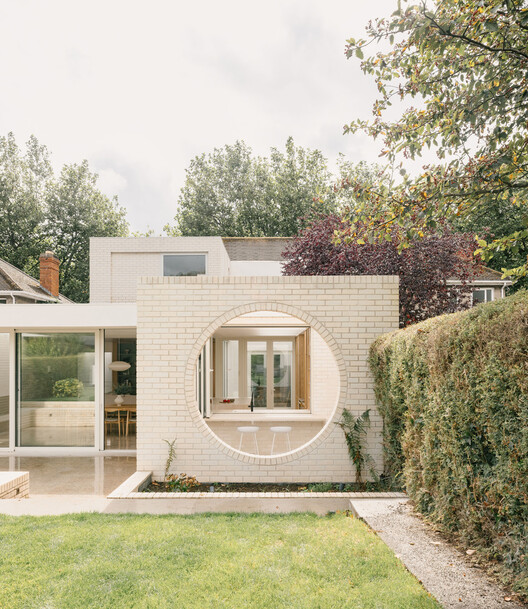
The Productive Clash: Heritage Interiors, Contemporary Projects, and the Value of Imperfection - Image 1 of 4The Productive Clash: Heritage Interiors, Contemporary Projects, and the Value of Imperfection - Image 2 of 4The Productive Clash: Heritage Interiors, Contemporary Projects, and the Value of Imperfection - Image 3 of 4The Productive Clash: Heritage Interiors, Contemporary Projects, and the Value of Imperfection - Image 4 of 4The Productive Clash: Heritage Interiors, Contemporary Projects, and the Value of Imperfection - More Images+ 28

How Waterways and Memory Shape Bathroom Design

 | In Collaboration

Water has always occupied a unique position in architecture: elemental yet elusive, functional yet symbolic. It is both a material and a medium that shapes cities, structures rituals, and influences how space is perceived. Across cultures, water is understood not only as a source of life but as a carrier of meaning, associated with purification, renewal, and continuity. Its presence in the built environment often extends beyond utility, becoming a device through which architecture engages the senses and constructs atmosphere.

"Calibrated Instability": Daryan Knoblauch on Building With Tension, Time, and Light

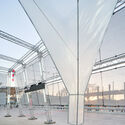
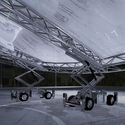
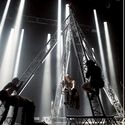
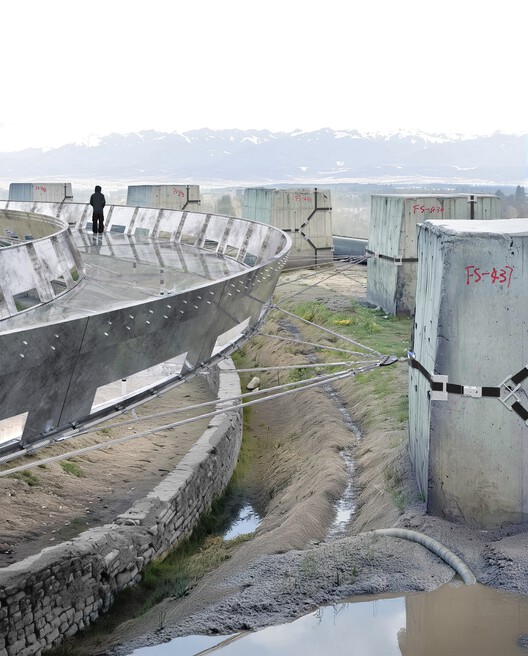
Daryan Knoblauch's work sits at the intersection of architecture and live cultural production, with a focus on how space is made legible through tension and atmosphere. Rather than treating temporary work as a lesser category of architecture, Knoblauch approaches installations, stages, and event architectures as full disciplinary problems—where enclosure, stability, light, and movement must be resolved with the same seriousness as any building, often under tighter constraints and faster timelines.
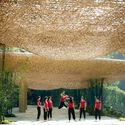
Across projects, a consistent thread is the productive tension between high-modern precision and an intentionally raw clarity of assembly. Membranes and lightweight systems are not deployed as surface effects, but as structural and spatial instruments—tuned to wind, load, and occupation, and calibrated to produce a sublimity that is felt as much as it is seen. Here, ephemerality is not simply a duration, but a design condition: temporality makes forces—weather, wear, performance—more visible, and demands an ethic of making that is both exacting and adaptable.

"Calibrated Instability": Daryan Knoblauch on Building With Tension, Time, and Light - Image 1 of 4"Calibrated Instability": Daryan Knoblauch on Building With Tension, Time, and Light - Image 2 of 4"Calibrated Instability": Daryan Knoblauch on Building With Tension, Time, and Light - Image 3 of 4"Calibrated Instability": Daryan Knoblauch on Building With Tension, Time, and Light - Image 4 of 4Calibrated Instability: Daryan Knoblauch on Building With Tension, Time, and Light - More Images+ 4

The Alchemy of Mass: Peter Zumthor and the Perception of Lightness

Architecture begins as an encounter with gravity. It is the ancient act of placing weight upon the earth, of persuading matter to stand, hold, and shelter. Within this fundamental condition of heaviness, however, lies a quieter possibility: density itself can generate a sense of lightness—a perceptual condition in which the body, fully convinced of matter's weight, begins to experience space as suspension.

Much of contemporary architecture has pursued lightness through reduction: thinner structures, smoother surfaces, increasingly seamless transitions between interior and exterior. Here, lightness is equated with disappearance, as if gravity could be overcome by withdrawing material presence. Yet there exists another register in which lightness is not the result of absence, but of intensification. It emerges when material presence becomes so precise, so fully asserted, that it begins to alter perception itself—when mass remains heavy, but no longer behaves as simply inert.

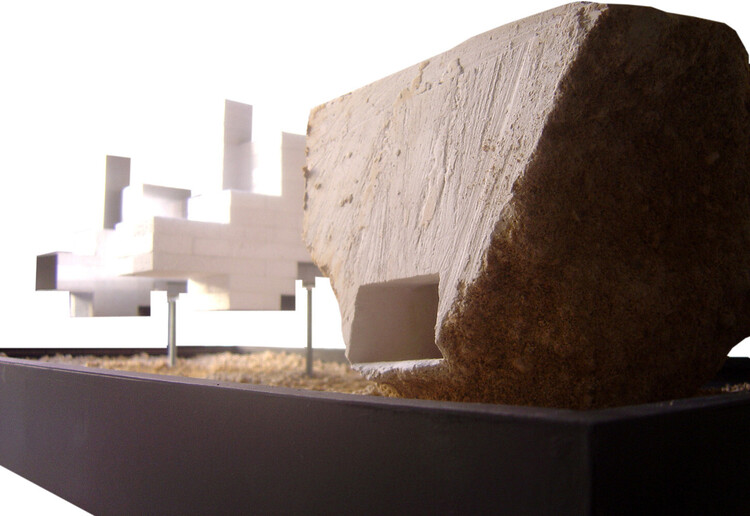
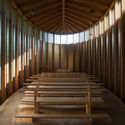
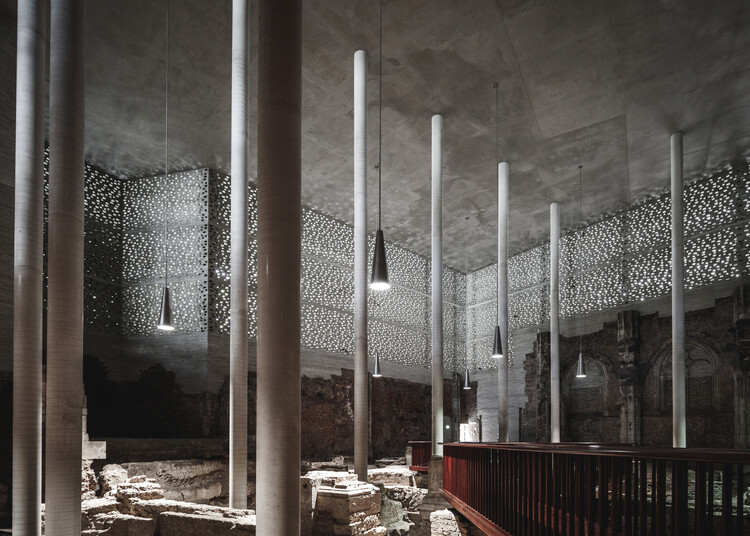
The Alchemy of Mass: Peter Zumthor and the Perception of Lightness - Image 1 of 4The Alchemy of Mass: Peter Zumthor and the Perception of Lightness - Image 13 of 4The Alchemy of Mass: Peter Zumthor and the Perception of Lightness - Image 3 of 4The Alchemy of Mass: Peter Zumthor and the Perception of Lightness - Image 17 of 4The Alchemy of Mass: Peter Zumthor and the Perception of Lightness - More Images+ 16

7 Unbuilt Houses Shaped by Site, Climate, and Constraints

Subscriber Access | 

Residential architecture continues to offer a productive ground for unbuilt exploration, revealing how architects respond to site, climate, and constraint at the scale of the domestic. In this Unbuilt edition, submitted by the ArchDaily community, the selected projects bring together a range of proposals that reconsider the house not as an isolated object, but as a spatial system shaped by its environment. These works position architecture as a framework that negotiates between ground, material, and inhabitation, often emerging directly from the conditions of the site.

Across varied geographies, from Kerala and Cartagena to Amman, Tromsø, and Zwolle, the projects demonstrate diverse responses to domestic architecture. They include compact urban dwellings organized through vertical layering, courtyard houses partially embedded within the ground, residences adapted to sloping terrains, and typological transformations shaped by regulatory constraints. Some projects explore linear spatial sequences rooted in traditional proportions, while others organize domestic life around atria or excavated voids that mediate light, ventilation, and privacy. Together, these proposals examine how the house can be structured through section, material, and environmental performance rather than formal expression.

7 Unbuilt Houses Shaped by Site, Climate, and Constraints - Image 6 of 47 Unbuilt Houses Shaped by Site, Climate, and Constraints - Image 10 of 47 Unbuilt Houses Shaped by Site, Climate, and Constraints - Image 28 of 47 Unbuilt Houses Shaped by Site, Climate, and Constraints - Image 36 of 47 Unbuilt Houses Shaped by Site, Climate, and Constraints - More Images+ 42

“Material Is Where the Story Begins”: Studio NEiDA on Building Through Craft and Context

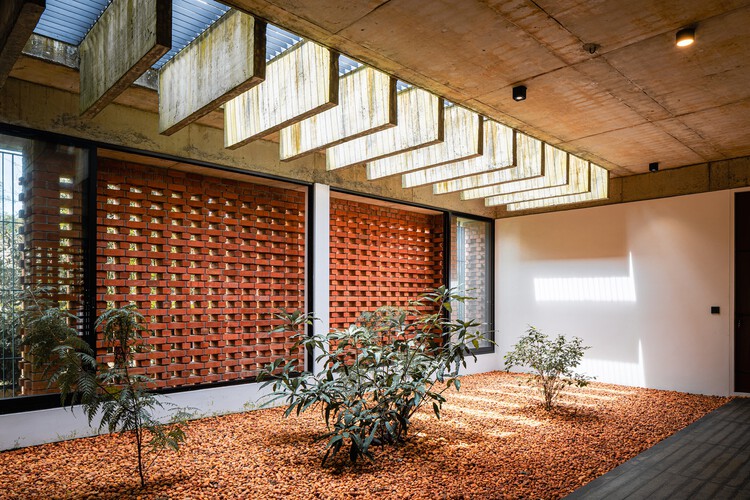
Studio NEiDA operates at the intersection of architectural practice, research, and curatorial work, with a consistent focus on how buildings emerge from the material and cultural conditions of a place. Rather than treating materiality as a finishing language, the studio frames it as the beginning of an architectural narrative—starting from what is locally available, they look at what craft knowledge exists on the ground, and how those resources and skills situate a project within an architectural lineage. This approach foregrounds limitations and possibilities as productive forces, and positions design as an iterative process of aligning spatial intent with the realities of construction culture and vernacular intelligence.

Across their work, NEiDA's interests extend beyond form toward the socio-political and climatic contexts that shape how architecture is made and inhabited. They emphasize learning from non-authored, vernacular, and informal building practices as a way of establishing a shared grammar for intervention, and they describe an indoor–outdoor continuity not as a stylistic preference but as a response to local life and ventilation logics—where outdoor rooms can be as spatially defined and programmatically central as interior ones. Collaboration, in this framework, is not auxiliary: the studio highlights on-site exchange with craftspeople and builders as a core methodology, where projects evolve through collective intelligence and adaptive communication.
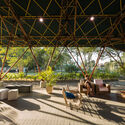
“Material Is Where the Story Begins”: Studio NEiDA on Building Through Craft and Context - Image 1 of 4“Material Is Where the Story Begins”: Studio NEiDA on Building Through Craft and Context - Image 2 of 4“Material Is Where the Story Begins”: Studio NEiDA on Building Through Craft and Context - Image 3 of 4“Material Is Where the Story Begins”: Studio NEiDA on Building Through Craft and Context - Image 9 of 4“Material Is Where the Story Begins”: Studio NEiDA on Building Through Craft and Context - More Images+ 12

Designing With Living Systems: Discover the Works of Yong Ju Lee Architecture

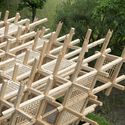
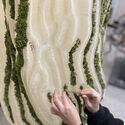
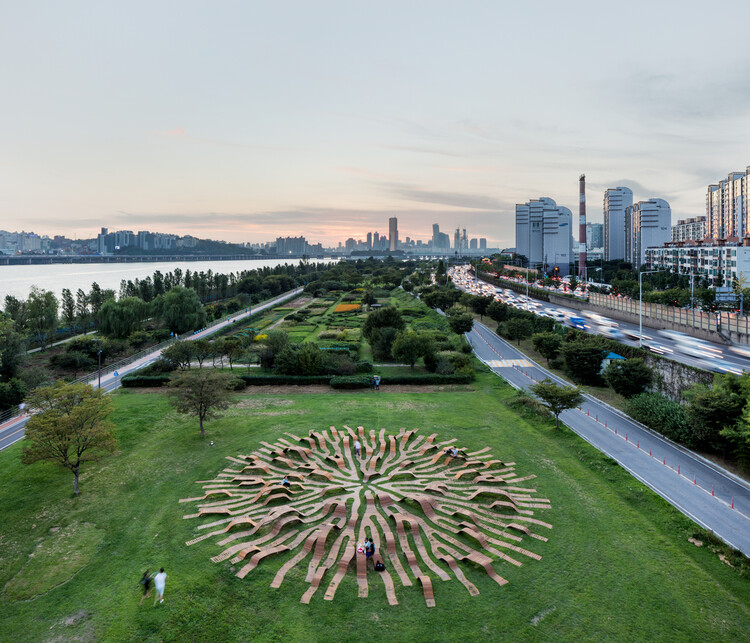
What does it mean to practice ecological responsibility beyond performance metrics or carbon calculations? How can fabrication become a design method rather than a final outcome? Founded in Seoul, Yong Ju Lee Architecture is a practice led by architect and researcher Yong Ju Lee. Across installations, research-driven proposals, and cultural projects, the studio positions architecture as an experimental discipline rooted in making: a process in which design emerges from material behavior, prototyping, and fabrication logic as much as from drawing or representation. Bridging professional practice and academia, his work consistently expands the architectural toolkit through computational design, experimental material research, and an evolving commitment to ecology as a responsibility and a design driver. In 2025, the studio was selected as a winner of the ArchDaily Next Practices Awards.

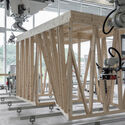
Designing With Living Systems: Discover the Works of Yong Ju Lee Architecture - Image 1 of 4Designing With Living Systems: Discover the Works of Yong Ju Lee Architecture - Image 2 of 4Designing With Living Systems: Discover the Works of Yong Ju Lee Architecture - Image 3 of 4Designing With Living Systems: Discover the Works of Yong Ju Lee Architecture - Image 4 of 4Designing With Living Systems: Discover the Works of Yong Ju Lee Architecture - More Images+ 21

Architecture as a Living Medium: Get to Know the Works of IGArchitects

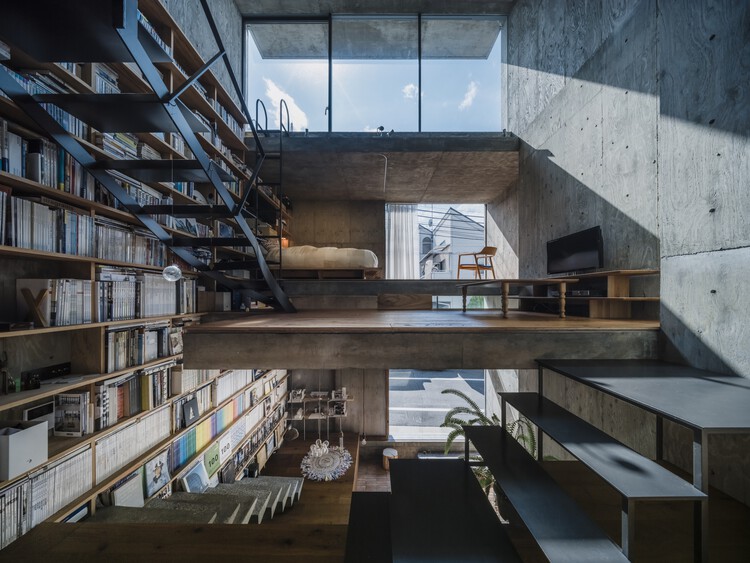
Founded in 2020 by Masato Igarashi, IGArchitects is an architectural practice based in Tokyo and Saitama, Japan. The studio, one of the winners of the ArchDaily 2025 Next Practices Awards, explores enduring architecture through a careful yet assertive treatment of structure, scale, and materiality. Prior to establishing his own practice, Igarashi worked at the large-scale firm Shimizu Sekkei as well as the Suppose Design Office, gaining experience across projects ranging from major developments to smaller, concept-driven works. This breadth of experience continues to inform IGArchitects' current focus on residential and commercial architecture across Japan.

Architecture as a Living Medium: Get to Know the Works of IGArchitects - Image 1 of 4Architecture as a Living Medium: Get to Know the Works of IGArchitects - Image 2 of 4Architecture as a Living Medium: Get to Know the Works of IGArchitects - Image 3 of 4Architecture as a Living Medium: Get to Know the Works of IGArchitects - Image 4 of 4Architecture as a Living Medium: Get to Know the Works of IGArchitects - More Images+ 18

How Architects Are Responding to Technology That Turns Buildings into Carbon Sinks

 | Sponsored Content

During the Time Space Existence exhibition, organized by the European Cultural Centre in Venice, the building-solutions company Holcim and Pritzker Prize-winning architect Alejandro Aravena, with his firm ELEMENTAL, unveiled a full-scale prototype that introduces a new approach in incremental housing solutions.

The housing prototype—The Basic Services Unit—was built with Hoclim's recently launched biochar technology, which transforms buildings into carbon sinks by permanently trapping carbon in a bio-based material called biochar. This material is used as a component of low-carbon concrete, cement, and mortars.

How Does Marble Transform Interior Spaces in Vicenza’s Historic Architecture?

 | Sponsored Content

In a former 16th-century church in Vicenza, two stories come together: that of Italian Renaissance sacred architecture and that of marble, the ancient material by excellence, reinterpreted here in a contemporary key. In this dialogue between eras, Lithos Design presents Quinte, a double-sided partition wall that transforms marble into a design tool: not just a surface, but a rhythmic and modular element that defines and enhances spaces. An idea designed for interior architects looking for solutions that are both functional and decorative, capable of shaping interiors with precision, elegance, and personality.
Light, Material, Reaction: How Active Surfaces® Transform Cybernet Systems’ Tokyo Headquarters

 | Sponsored Content

The new headquarters for Cybernet Systems was designed around the Japanese architectural concept of flexibility, promoting well-being, collaboration, and productivity. As a global leader in Computer-Aided Engineering, supporting industrial production through advanced digital solutions, the headquarters, located in the Fuji Soft Akihabara Building in Tokyo, embodies the company's commitment to creating a dynamic, technology-driven community.  

Developed by MB-AA (Matteo Belfiore Architect & Associates) and Shukoh, in collaboration with Cybernet Systems, the project translates corporate values into spatial design. Minimalism, natural light, and openness define the environment. Transparent partitions and adaptable layouts foster communication while allowing each employee to personalize their workspace. Well-being, creativity, flexibility, and technology form the core of the project.

Make Materials Matter: Louisiana Channel Releases New Documentary on Danish Architect Søren Pihlmann

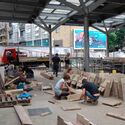
Louisiana Channel, a web TV platform based at the Louisiana Museum of Modern Art in Denmark, is launching a new film titled Søren Pihlmann: Make Materials Matter. Over the course of 54 minutes, Marc-Christoph Wagner and Simon Weyhe offer a glimpse into the work and mind of the founding architect of Pihlmann Architects, presenting his vision of Danish architecture, the practice of architecture itself, and, in particular, his sensitivity to materials. The film provides a behind-the-scenes look at the process and thinking behind the Danish exhibition at this year's Venice Architecture Biennale. Led by Søren Pihlmann, the team used the opportunity to renovate and conduct material research on Denmark's permanent building in the Giardini, transforming it into a material laboratory and experimental construction site. The result is a process exhibition that highlights how rethinking and reusing existing structures and materials can address critical architectural challenges. As of today, November 20, the documentary is available to watch online for free.

Make Materials Matter: Louisiana Channel Releases New Documentary on Danish Architect Søren Pihlmann - Image 1 of 4Make Materials Matter: Louisiana Channel Releases New Documentary on Danish Architect Søren Pihlmann - Image 2 of 4Make Materials Matter: Louisiana Channel Releases New Documentary on Danish Architect Søren Pihlmann - Image 3 of 4Make Materials Matter: Louisiana Channel Releases New Documentary on Danish Architect Søren Pihlmann - Image 4 of 4Make Materials Matter: Louisiana Channel Releases New Documentary on Danish Architect Søren Pihlmann - More Images+ 37

Laying the Groundwork: Six Creative Strategies for Reusing Architectural Foundations

Adaptive reuse allows architects to conserve resources, reduce waste, and extend the life of existing structures. By working with what already exists, architects lessen the need for new materials, lower energy consumption, and limit demolition debris. This approach protects natural habitats and green spaces by reducing the demand for new land development. Through reuse, cities become more sustainable and less carbon-intensive while preserving the material and cultural value of the built environment.

Laying the Groundwork: Six Creative Strategies for Reusing Architectural Foundations - Image 1 of 4Laying the Groundwork: Six Creative Strategies for Reusing Architectural Foundations - Image 2 of 4Laying the Groundwork: Six Creative Strategies for Reusing Architectural Foundations - Image 3 of 4Laying the Groundwork: Six Creative Strategies for Reusing Architectural Foundations - Image 4 of 4Laying the Groundwork: Six Creative Strategies for Reusing Architectural Foundations - More Images+ 11

Designing with Smoke: The Chimney as Architectural and Environmental Instrument

Subscriber Access | 

Chimneys are among the most quietly persistent elements in architectural history. Yet their presence persists in nearly every cultural and climatic context, serving as a technical feature and a spatial, atmospheric, and symbolic device. It populates dense city skylines and anchors rural horizons alike, its vertical silhouette as ordinary as a window or a doorframe. This apparent ordinariness is deceptive. The chimney is one of the few architectural components that links the intimate scale of interior life with the expansive forces of the environment. For architects and designers, the necessity of the chimney presents a choice: to let it recede quietly into the building's functional fabric or to amplify it as a central, expressive element that shapes a project's identity.

Designing with Smoke: The Chimney as Architectural and Environmental Instrument - Image 1 of 4Designing with Smoke: The Chimney as Architectural and Environmental Instrument - Image 2 of 4Designing with Smoke: The Chimney as Architectural and Environmental Instrument - Image 3 of 4Designing with Smoke: The Chimney as Architectural and Environmental Instrument - Image 4 of 4Designing with Smoke: The Chimney as Architectural and Environmental Instrument - More Images+ 47

Environments of Curiosity: Translating Pedagogy into Architectural Form in Montessori, Waldorf, and Beyond

Children encounter space differently from adults. For them, the world is not yet rationalized into function and circulation but is experienced through emotion and curiosity. Where adults may navigate rooms through habit, children inhabit them through immediacy. A patch of sunlight becomes an event. The curve of a hallway invites wandering. The sound of footsteps on wood or the softness of fabric beneath fingertips is not background but information. What adults may dismiss as peripheral moments quietly mediates their sense of safety, autonomy, belonging, and possibility. Architecture is an opportunity for pedagogy to become physical.

Environments of Curiosity: Translating Pedagogy into Architectural Form in Montessori, Waldorf, and Beyond - Image 1 of 4Environments of Curiosity: Translating Pedagogy into Architectural Form in Montessori, Waldorf, and Beyond - Image 2 of 4Environments of Curiosity: Translating Pedagogy into Architectural Form in Montessori, Waldorf, and Beyond - Image 3 of 4Environments of Curiosity: Translating Pedagogy into Architectural Form in Montessori, Waldorf, and Beyond - Image 4 of 4Environments of Curiosity: Translating Pedagogy into Architectural Form in Montessori, Waldorf, and Beyond - More Images+ 45

Longevity Through Renewal: The Enduring Wisdom of Hong Kong's Water Villages

While Hong Kong is widely celebrated for its iconic harbor view, glittering skyline, and fast-paced urban lifestyle, its origins tell a different story—one deeply rooted in its relationship with water. Before transforming into a dense, vertical metropolis, Hong Kong's architectural identity was closely tied to its maritime context. Today, the city is often associated with slender, glass-clad towers that symbolize modernity. While visually striking in their pursuit of height and form, many of these buildings appear disconnected from their immediate environment, often overlooking natural site conditions, ecological responsiveness, and contextual sensitivity.

Historically, however, this was not the case. Hong Kong's earliest built environments—rural fishing villages in areas like Tai O, Aberdeen, and Shau Kei Wan—emerged through organic, community-driven spatial practices that engaged closely with their surroundings. These coastal and riverside settlements developed architectural systems tailored to the marine environment and to the rhythms of fishing life. Villages were sited around water, and construction strategies were adapted to fluctuating tides, terrain, and social use.

Longevity Through Renewal: The Enduring Wisdom of Hong Kong's Water Villages - Image 1 of 4Longevity Through Renewal: The Enduring Wisdom of Hong Kong's Water Villages - Image 2 of 4Longevity Through Renewal: The Enduring Wisdom of Hong Kong's Water Villages - Image 3 of 4Longevity Through Renewal: The Enduring Wisdom of Hong Kong's Water Villages - Image 4 of 4Longevity Through Renewal: The Enduring Wisdom of Hong Kong's Water Villages - More Images+ 13

Between Geometric Shapes and Raw Materials: The Case of Brutalism in Italy

Born in the post-war period in the United Kingdom, the Brutalism movement was first met with skepticism but has found a new appreciation in the last decade, capturing the imagination of new designers fascinated with the interplay between striking geometric shapes and the exposed raw materials in which they are rendered. From Britain, the movement spread throughout Europe, Southeast Asia, and Africa, gathering different variations influenced by the cultural and socio-economic status of each area. In this article, we delve into the particularities that define Italy's contribution to the Brutalist movement, exploring the style through the lens of Roberto Conte and Stefano Perego. The two photographers have also published a photographic essay on the subject, taking the form of a book titled "Brutalist Italy: Concrete Architecture from the Alps to the Mediterranean Sea".

Between Geometric Shapes and Raw Materials: The Case of Brutalism in Italy - Image 1 of 4Between Geometric Shapes and Raw Materials: The Case of Brutalism in Italy - Image 2 of 4Between Geometric Shapes and Raw Materials: The Case of Brutalism in Italy - Image 3 of 4Between Geometric Shapes and Raw Materials: The Case of Brutalism in Italy - Image 4 of 4Between Geometric Shapes and Raw Materials: The Case of Brutalism in Italy - More Images+ 11