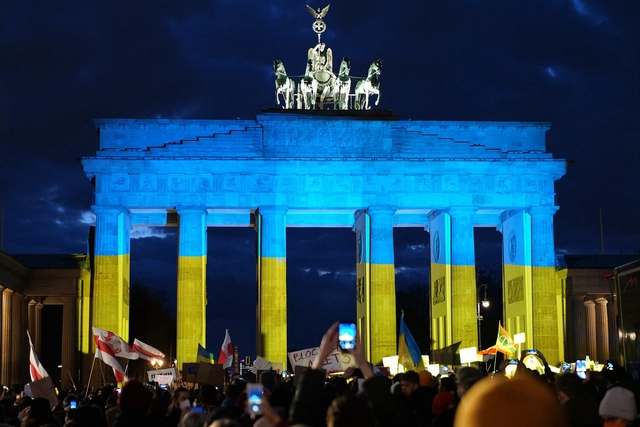
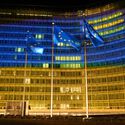
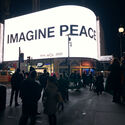
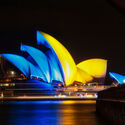
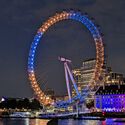
In the realm of media architecture and its role in supporting struggles for social justice, the recent Media Architecture Biennale 2023 (MAB23) in Toronto, Canada, shed light on a captivating aspect: The rapid and vast propagation of solidarity lighting in response to Russia's invasion of Ukraine in 2022. The synchronized illuminations, infused with activism and global art projects, became a powerful emblem of worldwide support for Ukraine during its time of crisis. Two emphatic female political leaders in Europe initiated the lighting solidarity message. Surprisingly, the blue and yellow Ukrainian flag illumination on iconic buildings worldwide defined an image of solidarity even faster in the press than large crowds of people in anti-war protests the weekend after the war began.
While it is undeniable that the surrounding environment is changing due to human activity, the effects can be difficult to perceive directly, as they are often illustrated with unrelatable pictures of far-away places or overused graphics and statistics. Danish office Tideland Studio aims to change this. Through their work, they aim to bring forth a new type of sensible understanding of the changes happening around us. They work across disciplines, melding research, art, and architecture while employing the newest survey and fabrication technologies to give presence to the abstract phenomena that shape our planet. Because of their practical approach to research and the new perspectives that they open toward extreme environments affected by climate change, ArchDaily has selected Tideland Studio as one of the 2023 New Practices. The annual survey highlights emerging offices that use innovation and forward-looking processes to rethink the ways in which we practice architecture.
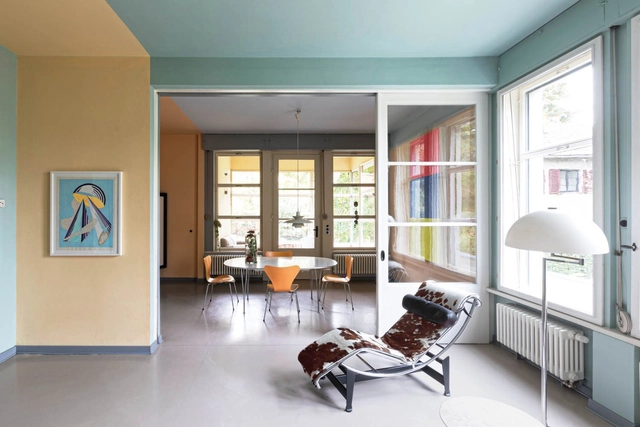
Art has always been a means for people to connect with space, and art movements have served as a platform for exploring new relationships with architecture. By incorporating art into buildings and interior spaces, they have been transformed, resulting in a fusion that creates beautiful, inspiring, and spiritually uplifting environments. Throughout history, various art movements, such as the Renaissance in the 17th century, Baroque in the 18th century, and Art Nouveau, Art Déco, and Bauhaus in the early 20th century, have had a significant impact on architecture. Architects drew inspiration from the ideals, concepts, stylistic approaches, and techniques of these movements, using them to create large-scale habitable structures. As the home is a fundamental expression of an architectural movement and the simplest canvas to exhibit the artistic ethos of any particular era, studying the interior spaces of houses provides a detailed picture of art's influence on spatial organization, furniture design, product patterns, and user interaction.
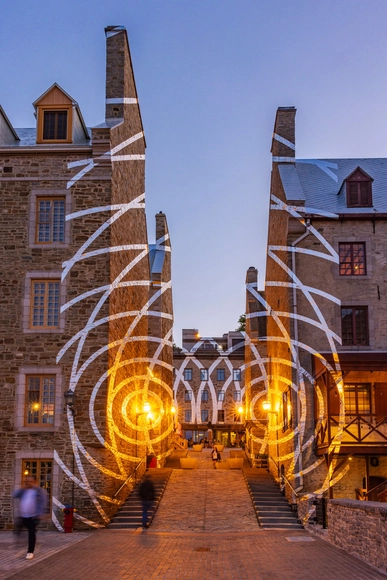
The 10th edition of Passages Insolites is taking place from June 22 until October 9, 2023, bringing together artists from around the world. The public art circuit is presented by the City of Quebec and created by EXMURO arts public to showcase a retrospective artistic path through the city, recalling the event’s previous editions. The public art event takes place every summer in Quebec City in in the Place Royale, Petit Champlain and Old Port districts. This year, the event presents works of art from 40 artists, headlined by Felice Varini, who presents a monumental three-dimensional work at Place-Royale.
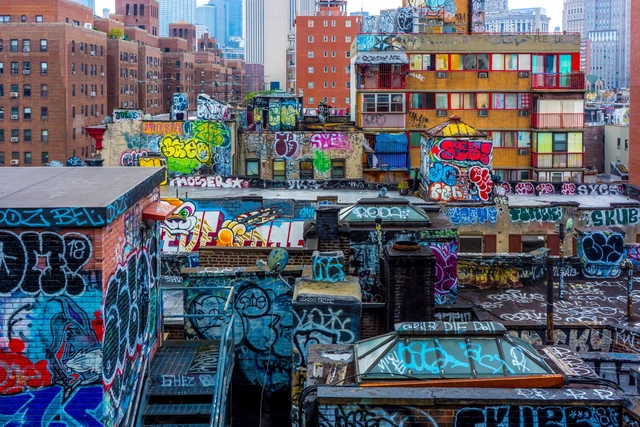
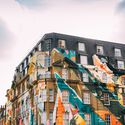
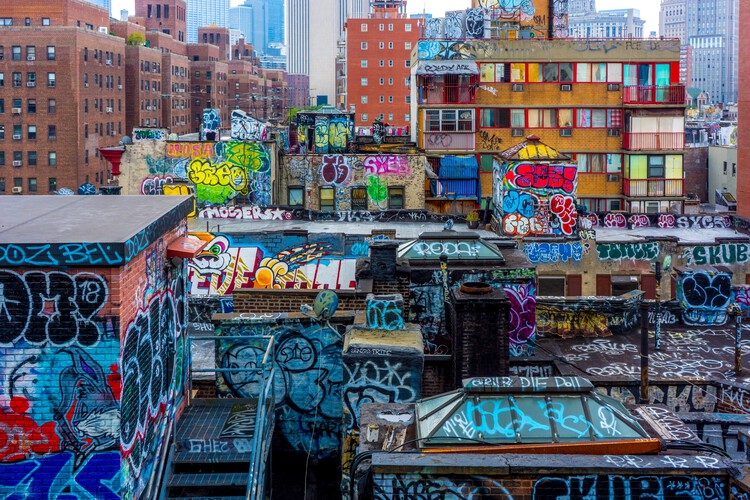
Graffiti, as an art form, has a complex relationship with gentrification. On one hand, it has engaged the streets and urban fabric as a canvas for people to express themselves culturally and socio-politically. This expression could be a form of rebellion by ethnic minorities and disadvantaged groups in certain neighborhoods, or it can build up a sense of cultural uniqueness and social expression, giving a neighborhood a positive character and attracting newcomers. However, over the years, the latter has been an agent of gentrification, spiking up property values to accommodate richer residents and alienating the native communities of those neighborhoods.
In certain instances, artists recognize their role in this urban scheme and tweak their art form through its style, message, location, and action as direct forms of protest to fight against gentrification. From Brixton, Shoreditch, and Hackney in London, Williamsburg and Bushwick in New York, to The Canal Saint-Denis and Belleville in Paris, the use of graffiti on the streetscapes of these neighborhoods can either protest or inspire different forms of development.
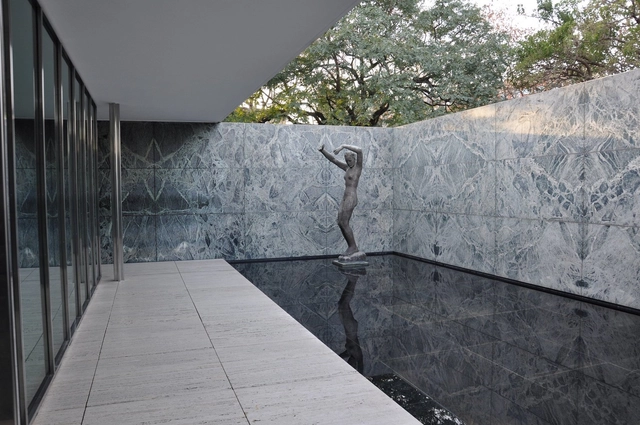
Barcelona Pavilion. @ Flickr Renato Saboya. Used under Creative Commons
The idea of integration between art and architecture dates back to the very origin of the discipline, however, it took on a new meaning and social purpose during the Avant-Garde movement of the early twentieth century, becoming one of the most defining characteristics of Modernism. This close relationship is evident in the works of some of the greatest modern architects, such as Mies van der Rohe, Le Corbusier, and Oscar Niemeyer, to name a few.
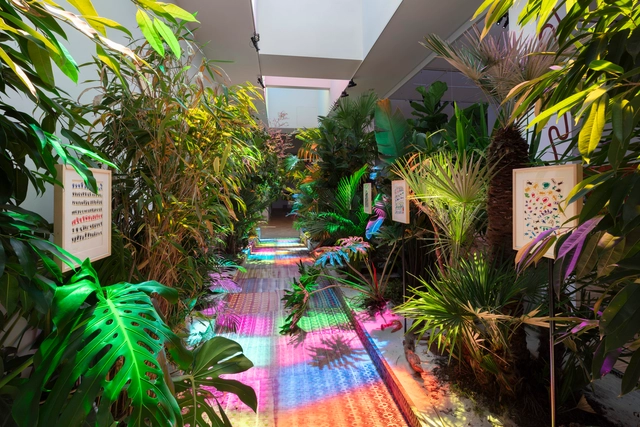
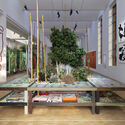
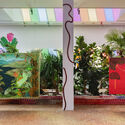
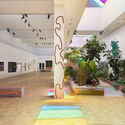
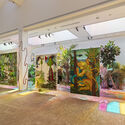
The Triennale Milano and Fondation Cartier pour l'art contemporain present the exhibition Siamo Foresta, inaugurated in June and open until October 29, 2023. Curated by Bruce Albert and Hervé Chandès, the exhibition features works by 27 artists from different countries and cultures, mainly from Latin America and indigenous communities.
The exhibition is the result of a partnership between the two institutions — which has already produced six projects over eight years — and seeks to reach diverse audiences and promote artists from different geographical contexts. Designed by Brazilian artist Luiz Zerbini, the exhibition highlights the importance of the forest as a central theme and provides an emotional connection between the works.
https://www.archdaily.com/1003303/siamo-foresta-exhibition-at-the-milan-triennale-addresses-the-future-of-the-planet-through-indigenous-artistic-perspectivesArchDaily Team
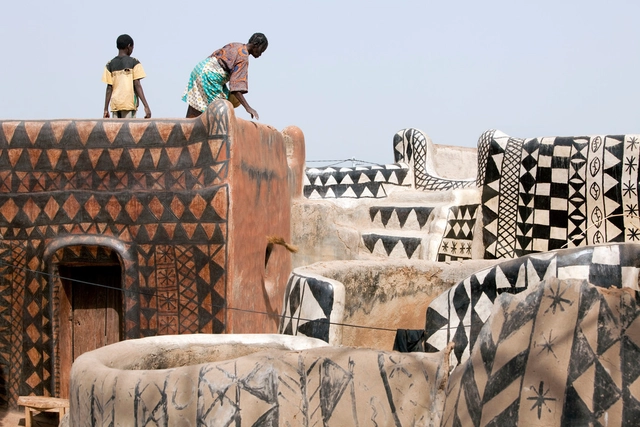
In the south of Burkina Faso, sharing borders with the northern environs of Ghana is Tiébélé; a small village exhibiting fractal patterns of circular and rectangular buildings, housing one of the oldest ethnic groups in West Africa; the Kassena tribe. With vernacular houses dating back to the 15th century, the village’s buildings strike a distinctive character through its symbol-laden painted walls. It is an architecture of wall decoration where the community uses their building envelope as a canvas for geometric shapes and symbols of local folklore, expressing the culture’s history and unique heritage. This architecture is the product of a unique form of communal collaboration, where all men and women in the community are tasked with contributing to the construction and finishing of any new house. This practice serves as a transmission point for Kassena culture across generations.
While exploring the 18th International Architecture Exhibition onsite in Venice, ArchDaily had the chance to speak with Jayden Ali and Joseph Henry, two of the co-curators of the British National Pavilion. The exhibition titled “Dancing Before the Moon” was created together with Meneesha Kellay and Sumitra Upham, and features creations from six designers and artists. As the curators explain, the aim of the installations is to expand the general understanding of what architecture is and to integrate it into a wider conversation with fashion, music, art, dance, and performance, rather than separating it as its own class of creativity. On June 20th, a few days after the conversation, the British National Pavilion was awarded a special mention at this year's award ceremony.
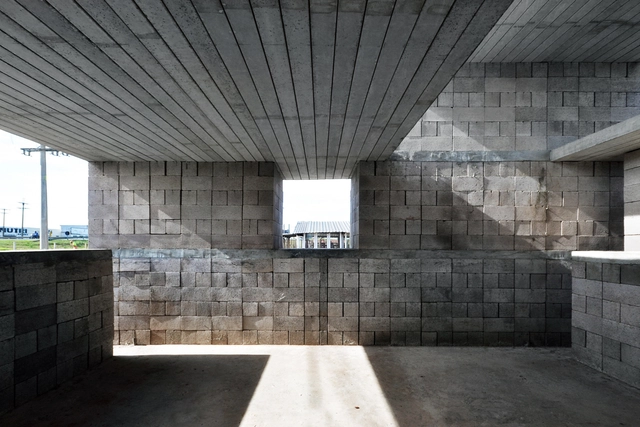
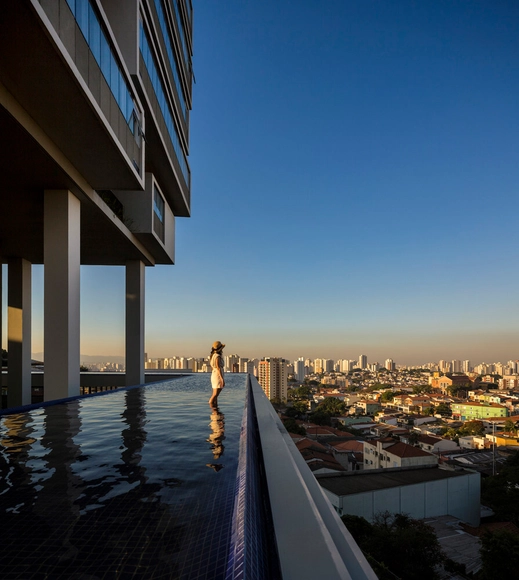
In theory, architecture is separate from art. Some even argue that there is a hierarchy between the two. Fortunately, Vão is an example of how this separation doesn't need to exist and how having a hierarchy between them is unproductive for both sides. Founded in 2013 by Anna Juni, Enk te Winkel, and Gustavo Delonero in São Paulo, the office develops architectural projects fueled by artistic thought. It also develops artistic works on an architectural scale.
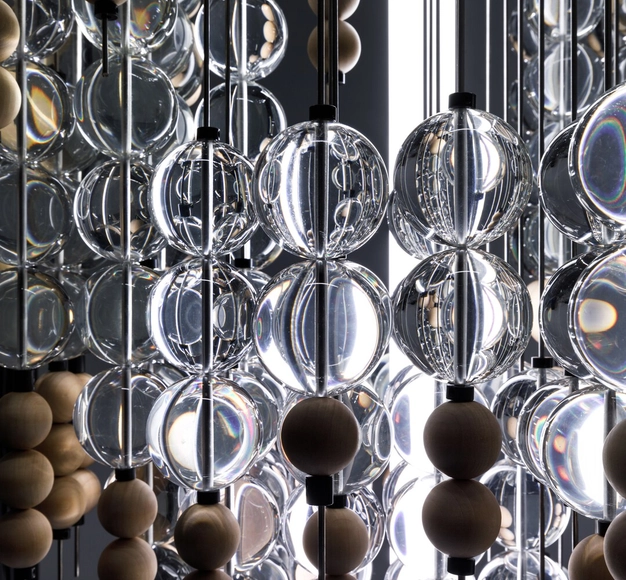
Minimaforms Presents The Order of Time at the Architectural Association School of Architecture Gallery. It is an immersive installation aimed to connect the preoccupations of physics, art, and architecture by revealing the ordering of spaces and constructed relationships through direct experience.
Three Sculptural installations are the highlight of the exhibition. Spherical organizations deployed through mathematical logic and designed to extend space within reflective light boxes, gifting its viewer a new immersive moment at every turn. ArchDaily had the chance to engage in a conversation with Theodore Spyropoulos; Artist & Architect at Minimaforms and Director of the Architectural Association’s Design Research Lab, on issues that tackled the interdisciplinary nature of architecture, the creative process of the installation, and how it influences the creation of spaces, buildings & cities.
Videos
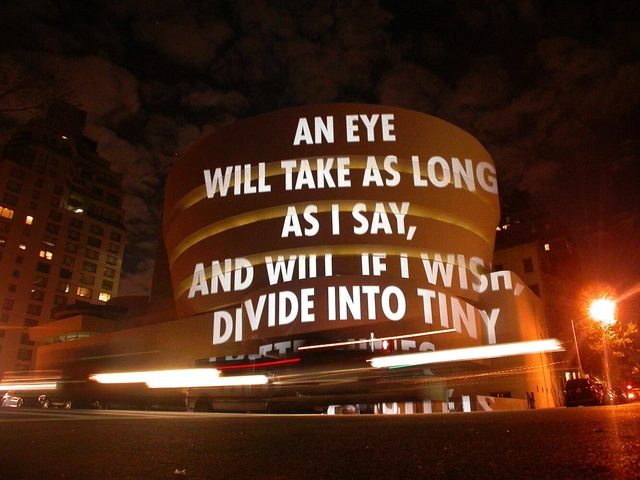
Jenny Holzer, installation at Guggenheim New York. Image: fluido & franz, CC BY-NC-SA 2.0 via Flickr
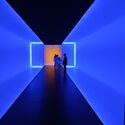
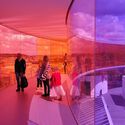
Light has been present in art for centuries. To think of the Baroque or Gothic without this element would be impossible. However, in the 20th century, artists began to explore light qualities and transformed them into a means of materializing art. Sculptures, immersive installations, and ways of shaping the environment through light, its colors and intensities brought new spatial perceptions by establishing a unique relationship with architecture.
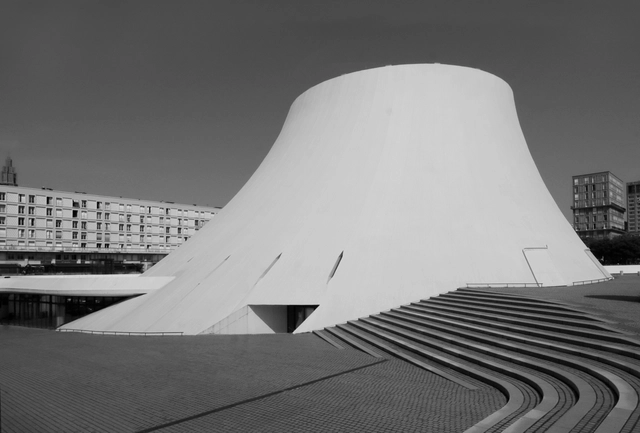
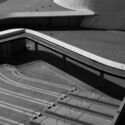
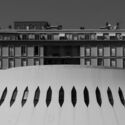
Espace Oscar Niemeyer is a cultural center designed by Oscar Niemeyer in the port city of Le Havre, France. The project’s location is inside the urban reconstruction area conceived by the rationalist architect Auguste Perret after the destruction of the city’s downtown area in World War II.
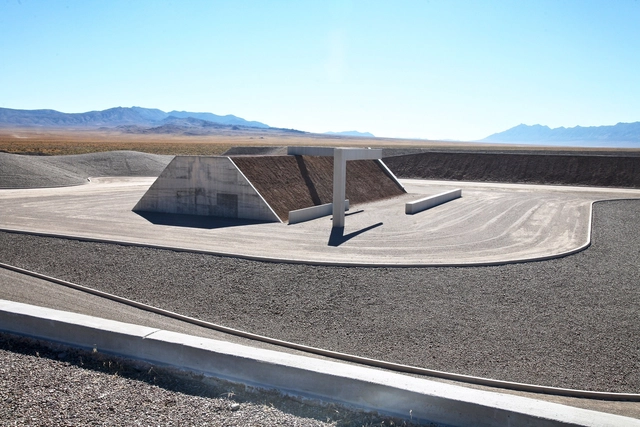
Artists are frequently inspired by land — be it painter Robert S. Duncanson’s renditions of American landscapes, or William Kentridge’s subversions of colonial-era British paintings depicting African vistas. Some artists, though, have preferred to work directly with the land, creating structures that sit on landscapes, or carving into the land itself. This art style — formally termed as Land Art — gained prominence in 1960s and 70s United States, in the context of the rise of the environmental movement amidst civil rights and antiwar protests, and as artists looked to separate themselves from the art market.
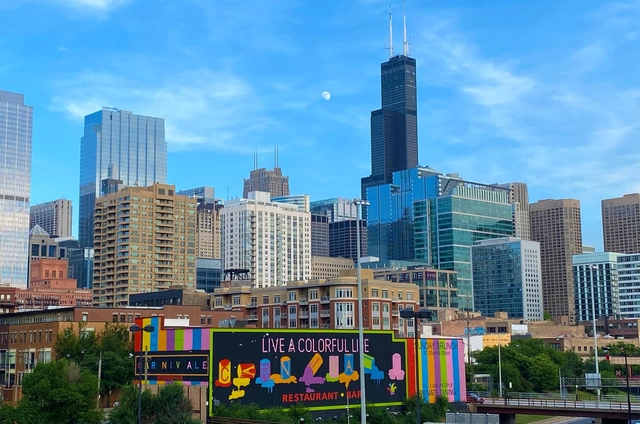
“Art aims to represent not the outward appearance of things, but their inward significance”, Greek polymath Aristotle remarked. Public art in cities worldwide seeks to pursue this aim by offering a sense of meaning and identification to its residents. Taking the form of murals, installations, sculptures, and statues, public art engages with audiences outside of museums and in the public realm. This art presents a democratic manner of collectively redefining concepts like community, identity, and social engagement.
Fashion designer Paul Smith, British band Radiohead and Swedish film director Ingmar Bergman seem to have nothing in common, except for being constantly mentioned as major inspirations for São Paulo architect Isay Weinfeld. A multidisciplinary range of influences that says a lot about his personality and, accordingly , about his works.
Image: achassignon via VisualHunt / CC BY-SA. Assembly with image of John Cunniff via Visual Hunt / CC BY
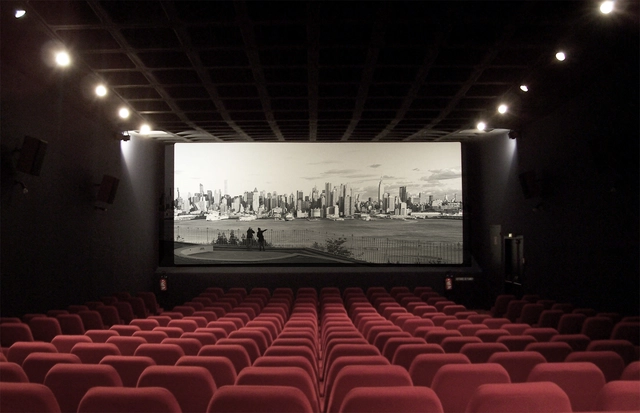
Jean-Luc Godard, through his films, talks about architecture almost as easily as he talks about cinema itself. In honor of the nouvelle vague icon, who passed away today at the age of 91, we revisit How Architecture Speaks Through Cinema.
There are several ways of making films. Like Jean Renoir and Robert Bresson, who make music. Like Sergei Eisenstein, who paints. Like Stroheim, who wrote sound novels in silent days. Like Alain Resnais, who sculpts. And like Socrates, Rossellini I mean, who creates philosophy. The cinema, in other words, can be everything at once, both judge and litigant. — Jean-Luc Godard [1]
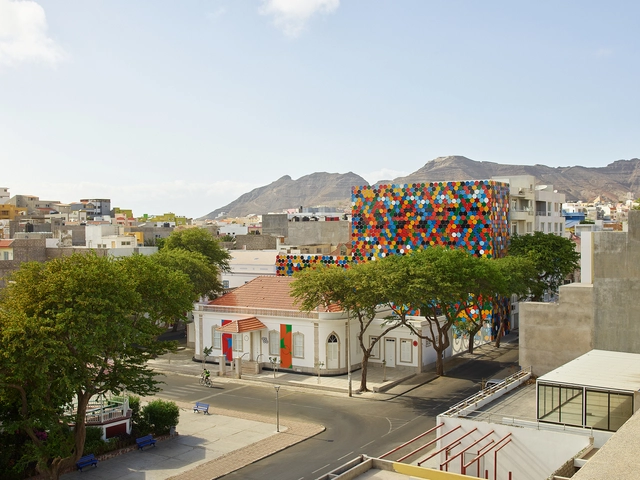
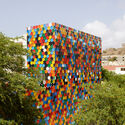
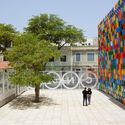
There are two ways to get to Cape Verde, by sea or sky. Either way, we are surprised by the landscape of immense rocky masses sprouting from the Atlantic’s navel before setting foot on land. Unpopulated until the middle of the 15th century, the volcanic archipelago is made up of ten islands, nine of which are currently inhabited, with unique characteristics in each one of them — some more touristy, like Sal, others more rural, like Santo Antão — and a version of Kriolu Kabuverdianu, which is not the official language (Portuguese occupies this place), but which is by far the most widely spoken.
São Vicente is the second most populous island in the country and makes up the northern insular group called Sotavento, along with Santo Antão, Santa Luzia, São Nicolau, Sal and Boa Vista. Its largest city, Mindelo, has a port vocation and has historically been the point of departure and arrival for people and goods. Marked by traffic, the city is a place of passage and intense cultural exchanges. It is also home to the first museum built in the country, the National Centre for Art, Crafts and Design — CNAD.