1. ArchDaily
  2. Architecture Students

Architecture Students: The Latest Architecture and News

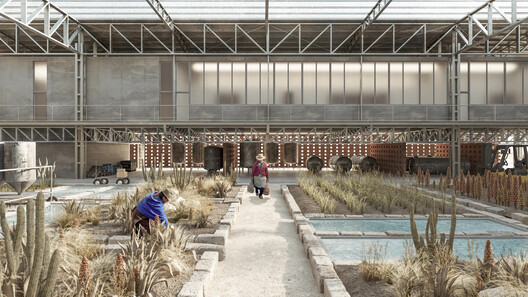
Escuelita Lochiel: An ArchDaily Student Project Awards Winner Reframing Education Through Adobe

Subscriber Access | 

In the high desert of the San Rafael Valley, a few miles from the United States-Mexico border in Lochiel, Arizona, an adobe schoolhouse has stood for more than a century. Built before 1905, before Arizona was an incorporated state, the schoolhouse served generations of Mexican American students from Arizona and Sonora, cultivating shared cultural experiences, stories, and relationships that transcend physical and political boundaries. Over decades of education and shared histories, it became a place where language and narrative moved freely, even as geopolitical tensions continued to rise along the border. Today, it is one of the last remaining one-room adobe schoolhouses in the United States.

Adobe is among the oldest building technologies in the American Southwest, and among the most demanding to steward. In desert climates, earthen walls face intense weathering from temperature extremes, cracking due to seasonal shifts, and accelerated decay after storm events. These vulnerabilities require sustained and skilled maintenance over many seasons and compounding decades. After years of encroaching abandonment and structural threats, a twelve-year restoration effort by local community members who understood this building as critical cultural infrastructure brought the schoolhouse back from the edge of demolition. That the community chose to undertake this effort, given everything Adobe construction demands of those who care for it, is a statement about what the loss of this building would have cost. The result is a structure that now stands as a monument to Mexican American heritage and a living archive of rural border education.

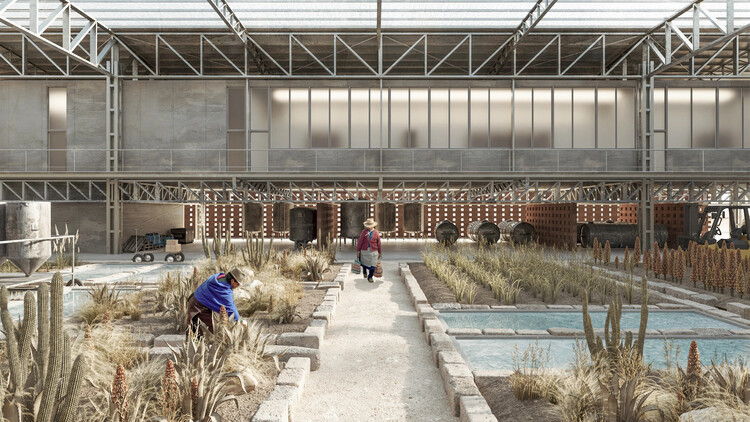
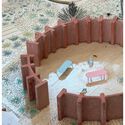
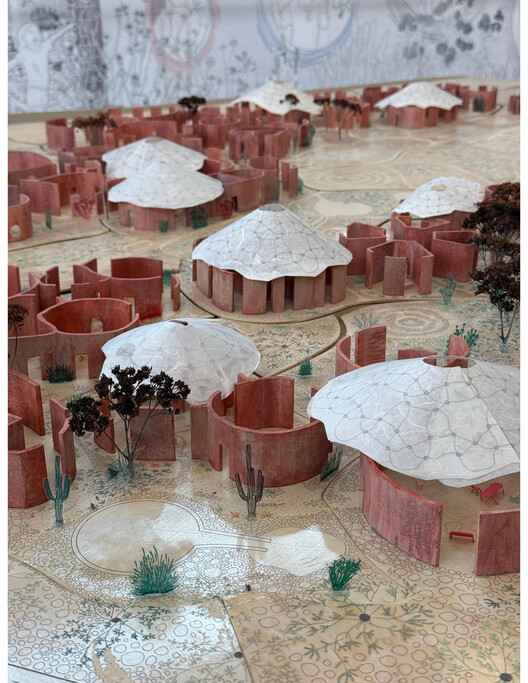
Escuelita Lochiel: An ArchDaily Student Project Awards Winner Reframing Education Through Adobe - Image 1 of 4Escuelita Lochiel: An ArchDaily Student Project Awards Winner Reframing Education Through Adobe - Image 2 of 4Escuelita Lochiel: An ArchDaily Student Project Awards Winner Reframing Education Through Adobe - Image 3 of 4Escuelita Lochiel: An ArchDaily Student Project Awards Winner Reframing Education Through Adobe - Image 4 of 4Escuelita Lochiel: An ArchDaily Student Project Awards Winner Reframing Education Through Adobe - More Images+ 5

Designing Coexistence: Meet the Winners of the First Edition of ArchDaily Student Project Awards

In November 2025, ArchDaily launched its first edition of the Student Project Awards. The decision to introduce this new award came from a place of hope; hope in the next generations of architects, their talent and vision, and the importance of giving them visibility and recognition. After all, the future of architecture is being shaped right now, in classrooms, studios, and workshops around the world, and it is vital to support those shaping it. The response was remarkable, with projects from students in every continent, showcasing a wealth and breadth of viewpoints, solutions and visions.

Five months after the launch of the open call, and following the announcements of a longlist of 104 projects and a shortlist of 20, our external jury of architects and practitioners carefully reviewed the proposals to select the three winners and four honorable mentions of the ArchDaily Student Project Awards. Approaching each project with care, the jury looked beyond final outputs, focusing on the ideas, questions, and positions driving the work. The result is a selection of winning projects that reflect both the spirit of the awards and the shifting priorities shaping architecture today.

The 20 Shortlisted Projects of the ArchDaily Student Project Awards

Every architecture student knows what it's like to spend sleepless nights working away, rushing to finalize a project as a deadline looms ahead. Revising every detail, putting the finishing touches and hoping for the best. The pay-off? Seeing the finished project, talking about it with your classmates, and getting to dream about your perfect idea of what a space should look and feel like.

While making the shortlist selection throughout the past two weeks, the ArchDaily jury panel was well-aware of what it feels like to be an architecture student. Comprised of architects, the panel carefully studied, considered and debated each individual project, with an understanding of what goes into each and every submission. The result is a shortlist that exemplifies the spirit of the Student Project Awards and its mission to recognize the creativity and vision of students who are redefining architectural practice and discourse.

“Even If You Want to Be a Gardener, Study Architecture”: Archigram Co-Founder Sir Peter Cook on Boldness, Creativity, and Architectural Education

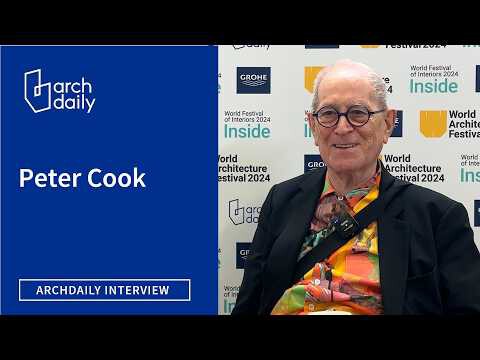
Sir Peter Cook is an English architect, professor, and writer, and a founding member of the neo-futuristic design group Archigram, alongside Warren Chalk, Ron Herron, David Greene, and Michael Webb. Beyond the group's radical urban concepts and visionary imagery, he co-founded CRAB Studio (Cook Robotham Architectural Bureau) with David Robotham in 2006, where they have developed built, conceptual, and speculative projects. He recently designed the Play Pavilion, located next to Serpentine South in Kensington Gardens, which opened on World Play Day, June 11, 2025. He is also known for the BIX Light and Media Façade at MoMA and for his series of drawings and collages that explore spaces, building elements, and organic landscapes.

Returning for his second interview with ArchDaily, Sir Peter Cook sat with Editor in Chief, Christele Harrouk, at the World Architecture Festival 2025. While the first conversation focused on his advice for young architects, this one followed his presentation during WAF on the forthcoming book, Archigram Ten, an editorial project reviving the spirit of the original magazine with founding members and contemporary designers. Building on those themes, he reflects on artificial intelligence, the impact of COVID-19 on his own practice, and current architectural pedagogies.

“Even If You Want to Be a Gardener, Study Architecture”: Archigram Co-Founder Sir Peter Cook on Boldness, Creativity, and Architectural Education - Image 1 of 4“Even If You Want to Be a Gardener, Study Architecture”: Archigram Co-Founder Sir Peter Cook on Boldness, Creativity, and Architectural Education - Image 2 of 4“Even If You Want to Be a Gardener, Study Architecture”: Archigram Co-Founder Sir Peter Cook on Boldness, Creativity, and Architectural Education - Image 3 of 4“Even If You Want to Be a Gardener, Study Architecture”: Archigram Co-Founder Sir Peter Cook on Boldness, Creativity, and Architectural Education - Image 4 of 4“Even If You Want to Be a Gardener, Study Architecture”: Archigram Co-Founder Sir Peter Cook on Boldness, Creativity, and Architectural Education - More Images+ 2

Forming a Distinct Identity: How Brutalism Shaped American Architecture Education

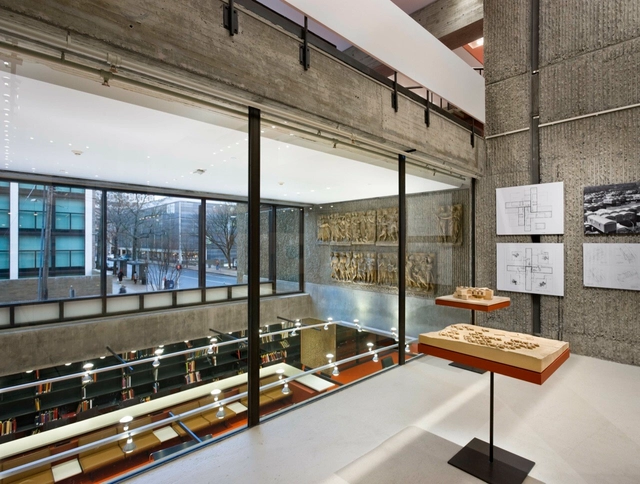
By the mid-nineteenth century, American universities began to distinguish architecture from civil engineering and the applied sciences formally. Architecture was emerging as a discipline defined by both technical competence and conceptual inquiry, spatial imagination, and cultural agency. As this disciplinary identity evolved in the postwar decades, its built expression coalesced into the emerging architectural language of Brutalism.
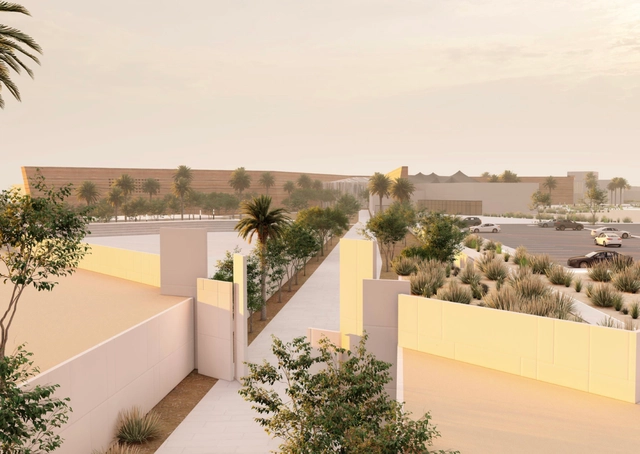
Forming a Distinct Identity: How Brutalism Shaped American Architecture Education - Image 1 of 4Forming a Distinct Identity: How Brutalism Shaped American Architecture Education - Image 2 of 4Forming a Distinct Identity: How Brutalism Shaped American Architecture Education - Image 3 of 4Forming a Distinct Identity: How Brutalism Shaped American Architecture Education - Image 4 of 4Forming a Distinct Identity: How Brutalism Shaped American Architecture Education - More Images+ 12

Winners of the EUmies Awards for Young Talent 2025 Highlight Reuse and Collective Resilience

During the EUmies Awards Day in Venice, representatives from the Creative Europe program and the Fundació Mies van der Rohe revealed the four student project winners of the EUmies Awards Young Talent 2025. The award recognizes architecture projects for their capacity to respond to contemporary social, urban, and environmental challenges. The event was held within the context of the 19th International Architecture Exhibition – La Biennale di Venezia, inviting winners, jury members, and institutional representatives to engage in dialogue around four key themes, aligned with the Biennale's curatorial proposal: Artificial, Natural, Collective, and Intelligens.

Winners of the EUmies Awards for Young Talent 2025 Highlight Reuse and Collective Resilience - Image 1 of 4Winners of the EUmies Awards for Young Talent 2025 Highlight Reuse and Collective Resilience - Image 2 of 4Winners of the EUmies Awards for Young Talent 2025 Highlight Reuse and Collective Resilience - Image 3 of 4Winners of the EUmies Awards for Young Talent 2025 Highlight Reuse and Collective Resilience - Image 4 of 4Winners of the EUmies Awards for Young Talent 2025 Highlight Reuse and Collective Resilience - More Images+ 38

"The Building as a Dance Between Design and Habitation": In Conversation with Níall McLaughlin

In an era marked by rapid urbanization, climate emergencies, and evolving societal needs, architecture has a complex role to play and a responsibility to engage actively yet sensibly with cultural, political, and economic considerations. In this context, Níall McLaughlin stands out for his balanced approach rooted in historical contexts, yet aware and responsive to contemporary challenges. His studio, Niall McLaughlin Architects, embraces a dialogue-centric approach, fostering a collaborative environment. ArchDaily's senior editor Maria-Cristina Florian had the chance to sit down with Níall McLaughlin and discuss his perspective on the role of architecture in today's society and the emerging challenges of architectural education.

"The Building as a Dance Between Design and Habitation": In Conversation with Níall McLaughlin - Image 1 of 4"The Building as a Dance Between Design and Habitation": In Conversation with Níall McLaughlin - Image 2 of 4"The Building as a Dance Between Design and Habitation": In Conversation with Níall McLaughlin - Image 3 of 4"The Building as a Dance Between Design and Habitation": In Conversation with Níall McLaughlin - Image 4 of 4The Building as a Dance Between Design and Habitation: In Conversation with Níall McLaughlin - More Images+ 21

Roboceramic: Humans vs. Machines or Humans with Machines?

Subscriber Access | 

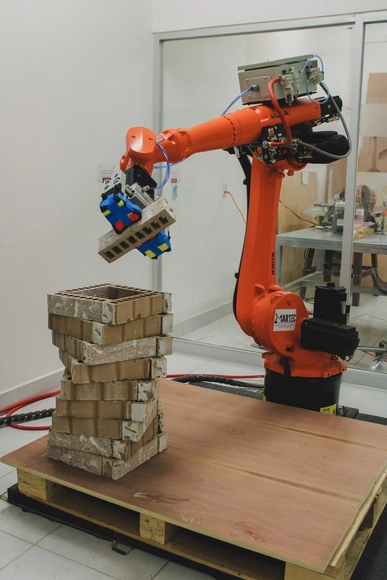
The relationship between man and machine has long been a complex and nuanced one, especially for modern artisans. While machines are often seen as tools that can enhance productivity, the comparison between human hands and mechanical efficiency can be misleading. Machines, with their ability to perform tasks with precision and without fatigue, can overshadow the unique qualities that define human craftsmanship.

Unlike machines, humans are inherently imperfect, and it is this very imperfection that fosters creativity and self-expression. When a person repeats a task with their hands, they do so with a rhythm, guided by an awareness and an understanding that transcends mere mechanical repetition. This rhythm is not just a physical pattern, but a reflection of the unity between the mind, hand, and eye—a connection that machines cannot replicate. The act of making, with all its subtle variations and imperfections, is what imbues human work with meaning and value.

King Salman Charter for Architecture and Urbanism Award Announces 2024 Winners in Saudi Arabia

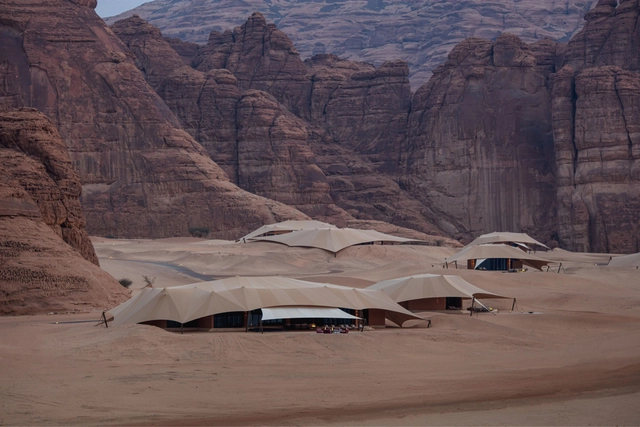
The King Salman Charter for Architecture and Urbanism Award has just announced the winners for 2024. Recognizing outstanding achievements in architecture and urbanism in Saudi Arabia, The King Salman Charter for Architecture and Urbanism Award is an initiative designed to celebrate projects that are aligned with the values of the King Salman Charter in Saudi Arabia. This year, since projects were honored with the award from three categories: built projects, unbuilt projects, and student projects.

King Salman Charter for Architecture and Urbanism Award Announces 2024 Winners in Saudi Arabia - Image 1 of 4King Salman Charter for Architecture and Urbanism Award Announces 2024 Winners in Saudi Arabia - Image 2 of 4King Salman Charter for Architecture and Urbanism Award Announces 2024 Winners in Saudi Arabia - Image 3 of 4King Salman Charter for Architecture and Urbanism Award Announces 2024 Winners in Saudi Arabia - Image 4 of 4King Salman Charter for Architecture and Urbanism Award Announces 2024 Winners in Saudi Arabia - More Images+ 5

King Salman Charter for Architecture and Urbanism Award 2024 Announces Shortlisted Nominees in Saudi Arabia

The King Salman Charter for Architecture and Urbanism Award is an initiative designed to recognize and celebrate architectural excellence aligned with the values of the King Salman Charter in Saudi Arabia. Established to honor King Salman’s vision, the Award promotes high-quality design by encouraging architects and designers to integrate the Charter’s principles into their work.

King Salman Charter for Architecture and Urbanism Award 2024 Announces Shortlisted Nominees in Saudi Arabia - Image 1 of 4King Salman Charter for Architecture and Urbanism Award 2024 Announces Shortlisted Nominees in Saudi Arabia - Image 2 of 4King Salman Charter for Architecture and Urbanism Award 2024 Announces Shortlisted Nominees in Saudi Arabia - Image 3 of 4King Salman Charter for Architecture and Urbanism Award 2024 Announces Shortlisted Nominees in Saudi Arabia - Image 4 of 4King Salman Charter for Architecture and Urbanism Award 2024 Announces Shortlisted Nominees in Saudi Arabia - More Images+ 20

South Korea’s Longest Art Gallery Bridge and a Brutalist Congress Center in Croatia: 8 Competition-Winning Projects Submitted by the ArchDaily Community

Subscriber Access | 

Architectural competitions are valuable learning tools, offering architects a unique opportunity to experiment and expand their creative boundaries. By engaging with real-world challenges and receiving critical feedback, participants gain practical experience and a deeper understanding of the profession. Whether conceptual or not, competitions foster innovation, encouraging design professionals to think outside the. This week's curated selection showcases winning competition entries submitted by the ArchDaily community, providing architects and architecture students with new perspectives and inspiration for their own practice, be it diploma projects, professional licensing, or commissions.

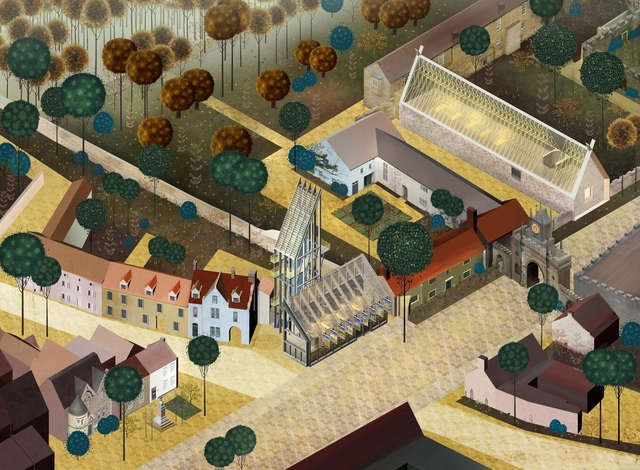
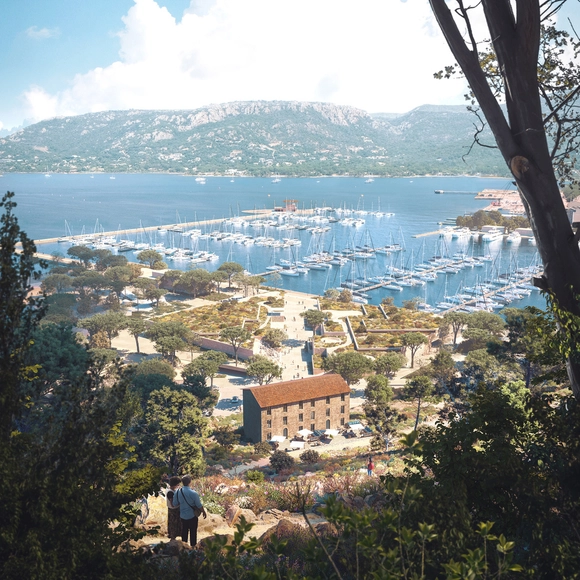
From an immersive urban park in Seoul, South Korea, to a rural education campus in the Amazon, or a reimagined port in Corsica, this selection highlights projects that have stood out in competitions from around the world. While some of the proposals have been developed by established firms, including KAAN Architecten, ArchiWorkshop, Studio Akkerhuis, or Richez Associés, these competitions have also proven to be an opportunity for emerging designers to showcase their creativity and problem-solving abilities

South Korea’s Longest Art Gallery Bridge and a Brutalist Congress Center in Croatia: 8 Competition-Winning Projects Submitted by the ArchDaily Community - Image 25 of 4South Korea’s Longest Art Gallery Bridge and a Brutalist Congress Center in Croatia: 8 Competition-Winning Projects Submitted by the ArchDaily Community - Image 39 of 4South Korea’s Longest Art Gallery Bridge and a Brutalist Congress Center in Croatia: 8 Competition-Winning Projects Submitted by the ArchDaily Community - Image 34 of 4South Korea’s Longest Art Gallery Bridge and a Brutalist Congress Center in Croatia: 8 Competition-Winning Projects Submitted by the ArchDaily Community - Image 5 of 4South Korea’s Longest Art Gallery Bridge and a Brutalist Congress Center in Croatia: 8 Competition-Winning Projects Submitted by the ArchDaily Community - More Images+ 51

Transforming Architectural Education with Augmented and Virtual Reality

Subscriber Access | 

The discipline of architecture has undergone considerable change, primarily driven by advancements in the application of technology. Architects, long viewed as the futurists of the constructed world, are now utilizing progressive techniques and resources and expanding the use cases of technologies such as Augmented Reality (AR) and Virtual Reality (VR). This transition extends beyond professional practices into architectural education, bringing opportunities to redefine the approach of architects toward their craft.

Transforming Architectural Education with Augmented and Virtual Reality - Image 1 of 4Transforming Architectural Education with Augmented and Virtual Reality - Image 2 of 4Transforming Architectural Education with Augmented and Virtual Reality - Image 3 of 4Transforming Architectural Education with Augmented and Virtual Reality - Image 4 of 4Transforming Architectural Education with Augmented and Virtual Reality - More Images+ 2

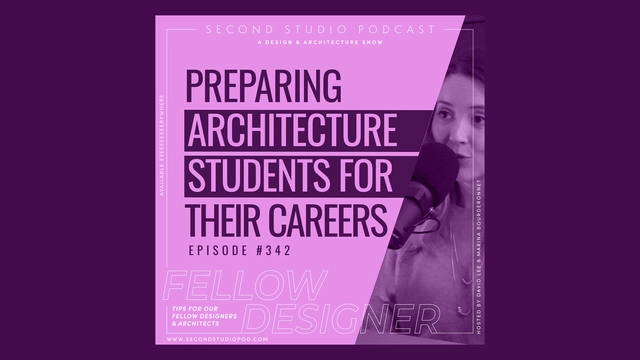
The Second Studio Podcast: Preparing Students for Their Careers and Global Challenges

The Second Studio (formerly The Midnight Charette) is an explicit podcast about design, architecture, and the everyday. Hosted by Architects David Lee and Marina Bourderonnet, it features different creative professionals in unscripted conversations that allow for thoughtful takes and personal discussions.

A variety of subjects are covered with honesty and humor: some episodes are interviews, while others are tips for fellow designers, reviews of buildings and other projects, or casual explorations of everyday life and design. The Second Studio is also available on iTunes, Spotify, and YouTube.

This week David and Marina have a discussion about how schools can better prepare students for their careers and to tackle issues of equity, social justice, and climate change. The questions are from EQiA’s (Equity in Architecture) 2023 Forum panel which took place in Georgia Institute of Technology. The EQiA is a student organization at the Georgia Institute of Technology, College of Design. It is dedicated to unity and equity in architecture.

Hello Wood’s Builder Summit Experiments with Construction Techniques to Revive an Abandoned Quarry in Hungary

Subscriber Access | 

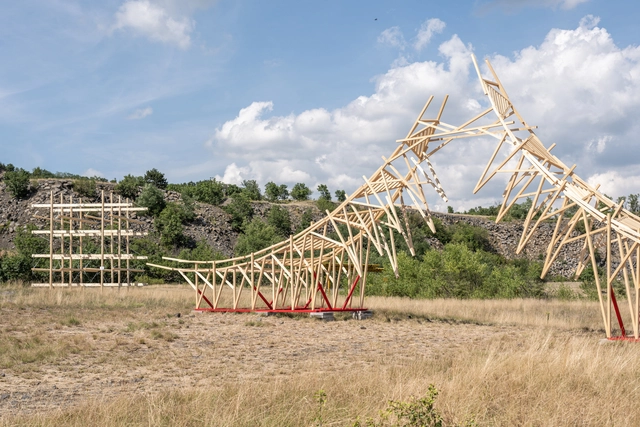
After a three-year break, Hello Wood’s builder festival returns to welcome students, architects, and young professionals from all across the world to join the 10-day builder camp to test their wooden construction abilities, learn to collaborate, and participate actively in on-site design and construction. For the first time in Hello Wood’s 13-year history, this year’s workshop takes place at a new location, in the crater of an abandoned basalt quarry on Haláp Mountain in Hungary. The workshop also aligns with and supports Veszprém’s title of 2023 European Capital of Culture, which also includes over a hundred other villages and towns across the Bakony-Balaton region. The event took place between July 6 and 15, ending in a two-day music festival open to all.

Hello Wood’s Builder Summit Experiments with Construction Techniques to Revive an Abandoned Quarry in Hungary - Image 1 of 4Hello Wood’s Builder Summit Experiments with Construction Techniques to Revive an Abandoned Quarry in Hungary - Image 2 of 4Hello Wood’s Builder Summit Experiments with Construction Techniques to Revive an Abandoned Quarry in Hungary - Image 3 of 4Hello Wood’s Builder Summit Experiments with Construction Techniques to Revive an Abandoned Quarry in Hungary - Image 6 of 4Hello Wood’s Builder Summit Experiments with Construction Techniques to Revive an Abandoned Quarry in Hungary - More Images+ 59

Design Immersion Days: Introducing Architecture and Design to High School Students

 | Sponsored Content

Introducing high school students to their potential future careers is key in helping them to envision how the next years of their lives may be. With an immersive four-week summer program, Design Immersion Days (DID) gives an insight into design and architecture experimentation to high school students. Aiming to inspire their curiosity about architecture, the program’s proposal integrates the introduction of basic design knowledge and critical thinking skills, as well as familiarizing them with the wider architecture and design culture of Los Angeles.

Known for their innovative approach, SCI-Arc is characterized for encouraging their students to take the lead in reimagining the limits of architecture. Through their Youth and Summer Programs, they start building connections –both locally and internationally– with those interested in a future inside the discipline and provide them with design tools and architectural thinking.

New European Architecture Platform LINA Supporting Emerging Professionals Launches in June

New European Architecture Platform LINA Supporting Emerging Professionals Launches in June  - Featured Image
Recycling Utopia, idea by Goda Verikaite, 2020. Image © Future Architecture Platform

A new European architecture platform will launch in June this year, with the scope of supporting emerging architects and at the same time mobilizing the profession's efforts in delivering a sustainable, circular built environment. Operating on a grant from the Creative Europe initiative, LINA brings together 28 European and Mediterranean organizations from 23 countries, among which are several European biennials, triennials and festivals, museums, research networks and laboratories, publishing houses and universities. A successor to the Future Architecture platform, the initiative will be coordinated by the Faculty of Architecture at the University of Ljubljana and directed by Matevž Čelik.

The Second Studio Podcast's Tips for Architecture and Design Students Learning Remotely

The Second Studio (formerly The Midnight Charette) is an explicit podcast about design, architecture, and the everyday. Hosted by Architects David Lee and Marina Bourderonnet, it features different creative professionals in unscripted conversations that allow for thoughtful takes and personal discussions.

A variety of subjects are covered with honesty and humor: some episodes are interviews, while others are tips for fellow designers, reviews of buildings and other projects, or casual explorations of everyday life and design. The Second Studio is also available on iTunes, Spotify, and YouTube.

This week David and Marina answer a hotline text asking for advice regarding attending architecture school during COVID. The two cover choosing to defer and taking a year off from school, aspects of education missing from remote learning, the differences between physical and virtual learning, how to overcome remote learning challenges, and more. Enjoy! Text or call our hotline: 213-222-6950 for any questions.

RIBA's Latest Student Survey Highlights High Levels of Mental Health Struggles post COVID-19 

A recent study conducted by the Royal Institute of British Architects (RIBA) examined how architecture students have been affected by the pandemic. Examining 398 architecture students, the COVID-19 survey found that these young adults are under significant stress and are concerned about their future career. In fact, the results highlight that 58% of students are struggling with mental health and almost half are concerned about job prospects.