1. ArchDaily
  2. Machines

Machines: The Latest Architecture and News

Compute Isn’t Weightless: AI Infrastructure and the Architecture of the City

As artificial intelligence continues to disrupt sectors of the economy and reshape entire industries, institutions and individuals alike are bracing—and rapidly adapting—to the changes that machines seem to hold over our heads. Yet the more precise pressure is not simply AI altering the way people work and live, but the business models and investment logics of the companies developing these systems: the concentration of capital, the new requirements for compute, the race for compartmentalized talent, and the infrastructural footprint needed to sustain it. In the Greater Bay Area—anchored by Guangzhou, Shenzhen, and Hong Kong—this dynamic is especially pronounced. Government-led initiatives are actively accelerating the industry's growth, with policy and planning mechanisms beginning to translate an ostensibly intangible field into physical form: zoning updates, earmarked land, and the emergence of AI-oriented building types, from research laboratories to large-scale data centers.

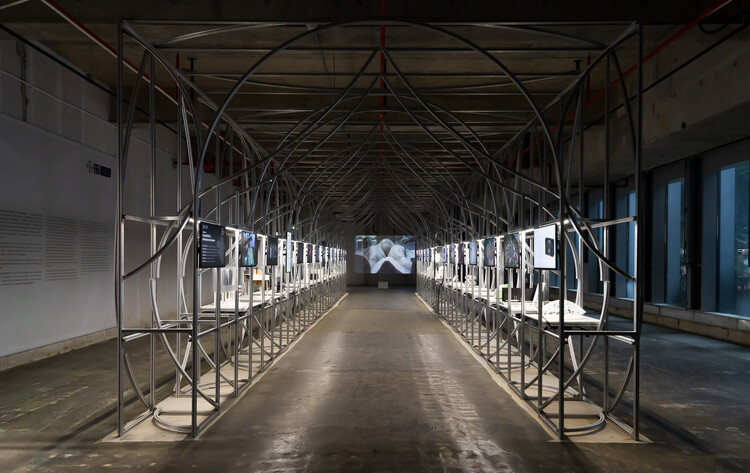
Compute Isn’t Weightless: AI Infrastructure and the Architecture of the City - Image 1 of 4Compute Isn’t Weightless: AI Infrastructure and the Architecture of the City - Image 2 of 4Compute Isn’t Weightless: AI Infrastructure and the Architecture of the City - Image 3 of 4Compute Isn’t Weightless: AI Infrastructure and the Architecture of the City - Image 4 of 4Compute Isn’t Weightless: AI Infrastructure and the Architecture of the City - More Images+ 23

Roboceramic: Humans vs. Machines or Humans with Machines?

Subscriber Access | 

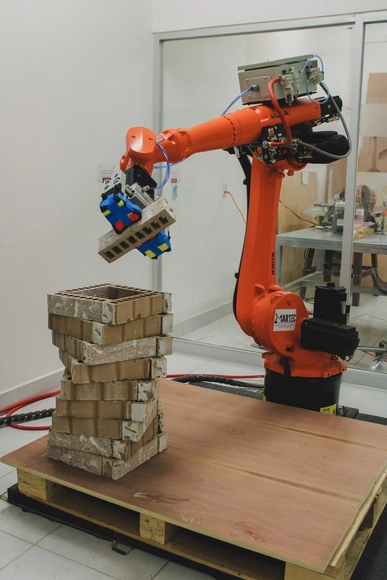
The relationship between man and machine has long been a complex and nuanced one, especially for modern artisans. While machines are often seen as tools that can enhance productivity, the comparison between human hands and mechanical efficiency can be misleading. Machines, with their ability to perform tasks with precision and without fatigue, can overshadow the unique qualities that define human craftsmanship.

Unlike machines, humans are inherently imperfect, and it is this very imperfection that fosters creativity and self-expression. When a person repeats a task with their hands, they do so with a rhythm, guided by an awareness and an understanding that transcends mere mechanical repetition. This rhythm is not just a physical pattern, but a reflection of the unity between the mind, hand, and eye—a connection that machines cannot replicate. The act of making, with all its subtle variations and imperfections, is what imbues human work with meaning and value.

Project Galath3a: a Woman-Machine Collaboration at the Berlin Open Lab

Exploring the use of innovative technologies in architecture and practicing at the crossroads between art and spatial design, Gili Ron and Irina Bogdan have imagined project Galath3a, a woman-machine collaboration. The research-based venture uses a UR5 robotic arm named Gala (short for Galatea), to speculate on what is culturally considered as "womanly behavior".

Project Galath3a: a Woman-Machine Collaboration at the Berlin Open Lab - Image 1 of 4Project Galath3a: a Woman-Machine Collaboration at the Berlin Open Lab - Image 2 of 4Project Galath3a: a Woman-Machine Collaboration at the Berlin Open Lab - Image 3 of 4Project Galath3a: a Woman-Machine Collaboration at the Berlin Open Lab - Image 4 of 4Project Galath3a: a Woman-Machine Collaboration at the Berlin Open Lab - More Images+ 4