This edition of Latin America in Focus explores the ways architecture shapes collective life across different scales and contexts, from public infrastructure and educational environments to the urban histories that continue to inform cities today. The featured projects in Ecuador and Mexico consider how cultural facilities and landscape interventions can support shared activities while responding to their surroundings, while the history of Santo Domingo traces the early development of colonial urban planning in the Americas. The selection also looks at current approaches to cultural heritage conservation and public space, highlighting initiatives in Peru and across the region.
Public Architecture, Learning Environments, and Civic Life
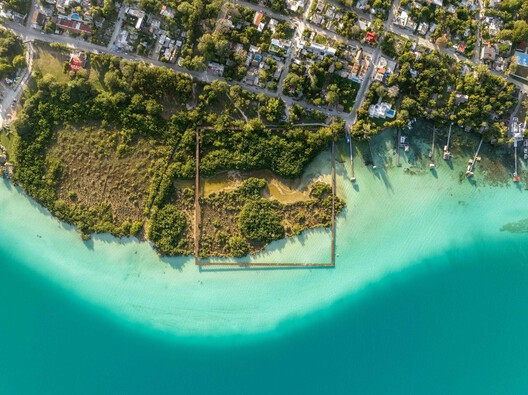
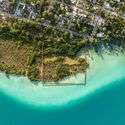
From educational facilities to community infrastructure, recent projects and recognitions highlight how architecture accommodates collective activities and responds to different social contexts. Scheduled to open in December, the 31,000-square-foot New Mexico Literacy Institute by Multistudio and Design Plus Architects brings together flexible learning spaces, reading nooks, recreational areas, and a central courtyard designed to accommodate more than 550 learners and educators, extending educational activities beyond conventional classrooms. In Mexico, COLECTIVO C733 was named the inaugural recipient of the Siza Award for Public Architecture, established by the Serralves Foundation to recognize socially engaged practices working with public space and local communities. The studio's portfolio includes markets, cultural facilities, transport hubs, parks, and public landscapes, among them Matamoros Market, Tapachula Station, and Bacalar Eco-Park, alongside projects developed with SEDATU in vulnerable communities. The award recognizes the studio's contribution to civic infrastructure and public space, bringing renewed attention to architecture's role in supporting shared spaces and community life.
Colonial Urbanism and Indigenous Spatial Traditions
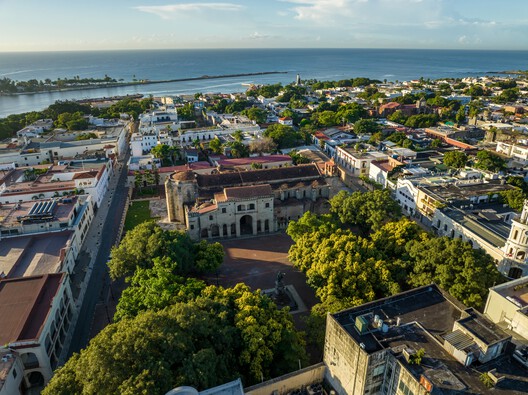
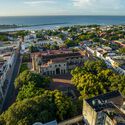
The Colonial City of Santo Domingo in the Dominican Republic offers a historical perspective on the development of urban planning in the Americas, tracing the formation of a settlement that became an early precedent for colonial urban structures across the region. Founded in 1496 and relocated to the western bank of the Ozama River following a hurricane in 1502, the city was reorganized under Nicolás de Ovando around a central plaza, a cathedral, and a regular street grid. Predating the Laws of the Indies of 1573, its layout represents an early example of planning principles later formalized across Spanish colonial settlements, while its two distinct centers around the main square and riverfront reflect the relationship between civic authority and commercial activity. The city's spatial history also raises questions about the influence of Indigenous settlement patterns, with research suggesting that the Plaza Mayor may have occupied the center of an earlier Taíno settlement organized around communal open spaces known as bateyes. This possibility offers another reading of colonial urbanism, in which the imposition of European planning systems may have also involved the appropriation and transformation of existing spatial structures.
Featured Projects
The Floating Cultural Center El Embarcadero / Natura Futura
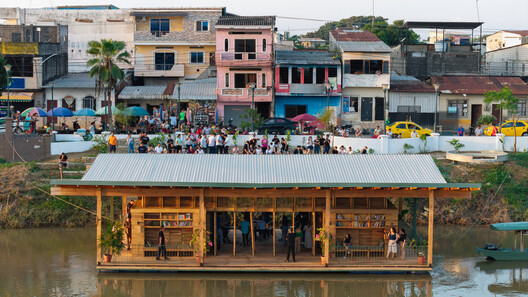
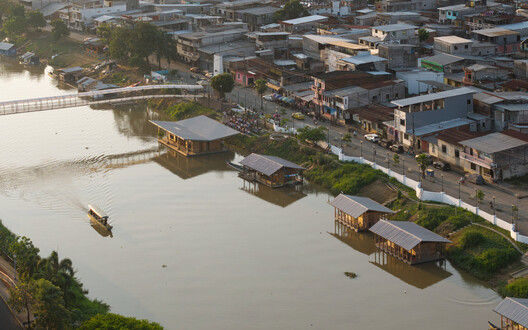
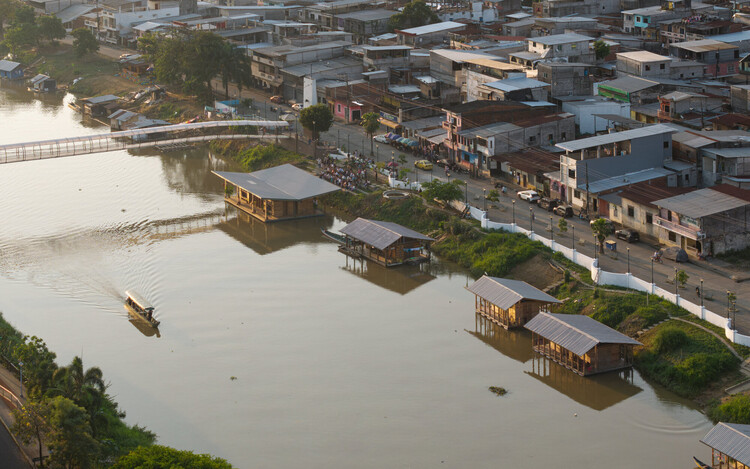
Located along the San Pablo River in Babahoyo, Ecuador, the Floating Cultural Center El Embarcadero by Natura Futura introduces cultural and educational infrastructure to the Barreiro neighborhood, where residents lack access to public social and cultural facilities. Developed with REARC Practice Lab, local organizations, and the community, the project combines a floating cultural center with a floodable amphitheater, an open-air educational ring, and a mobile Canoe Library. Built on an approximately 10-by-16-meter platform, the center accommodates a library, community kitchen, educational spaces, and common areas. Its timber truss structure and split-bamboo roof respond to the local climate, while floating structures, floodable surfaces, and mooring systems accommodate seasonal changes in the river's water level. The Canoe Library extends the initiative to remote riverside communities, bringing books, workshops, and educational activities by boat. Through these interconnected spaces, the project approaches the river as an extension of the city's public realm and a setting for collective learning and cultural exchange.
Visitor Center at La Hacienda Clase Azul / Elías Rizo Arquitectos
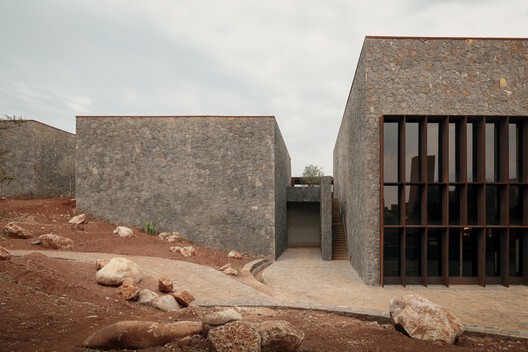
Located in Capilla de Guadalupe, in the highlands of Jalisco, Mexico, the 6,625-square-meter Visitor Center at La Hacienda Clase Azul by Elías Rizo Arquitectos draws on the traditional Mexican house and its central courtyard. Set between an agave landscape and an oak forest, the project comprises eight volumes connected by a portico and arranged around a central courtyard with a reflecting pool, forming a horseshoe-shaped plan that opens toward the surrounding landscape. The building accommodates a welcome hall, museum, store, bar, restaurant, and visitor experience spaces, while a basement houses the tequila cellar and service areas. The reflecting pool also provides thermal insulation for the cellar, while subterranean courtyards bring natural light and ventilation to the lower level. Rocks sourced from the site were processed and used throughout the building's walls, connecting its material expression to the surrounding terrain.
Kaybé Tulum – Multisensory Park / Arquitectura Mixta
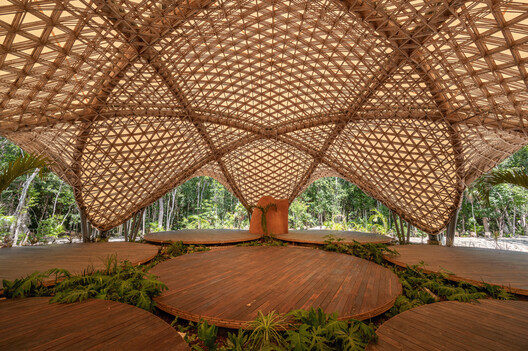
Located within a tropical jungle in Tulum, Mexico, Kaybé Multisensory Park by Arquitectura Mixta is an 800-square-meter landscape project organized around a sequence of sculptural bamboo structures and winding pathways. Commissioned as part of a low-density residential development, the park preserves much of the existing vegetation, allowing its architectural interventions to emerge within the surrounding landscape. The route connects several pavilions, each exploring different relationships between nature, perception, and the senses, including Toroides, an entrance structure formed by interlocking bamboo geometries; El Átomo, a multipurpose gathering space; and Torre Nikte, a flower-inspired lookout tower with a helical staircase. Bamboo is used throughout in different structural configurations, including laminated beams and woven elements, demonstrating its versatility in creating varied geometries while establishing a consistent architectural language across the park.
On the Radar
Getty Launches Conservation Project for Peru's 17th-Century Church of Rondocan
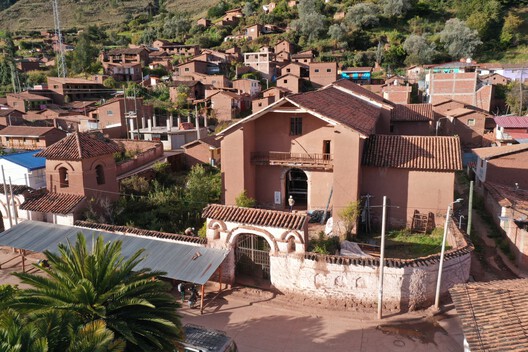
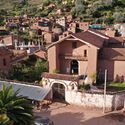
The Getty Conservation Institute has announced a multi-year project to conserve the Church of Santo Tomás de Aquino, known locally as the Church of Rondocan, in Peru's Cusco region. The initiative, developed in partnership with the Dirección Desconcentrada de Cultura – Cusco, will address earthquake-related damage through seismic retrofitting and support the conservation of the 17th-century adobe structure and its collection of more than 300 cultural objects. The collection includes religious paintings, gilded wooden altarpieces, sculptures, and textiles, as well as eight paintings by Italian Jesuit artist Bernardo Bitti, a series previously thought to be lost. One of the paintings will be transferred to the Getty in 2027 for scientific analysis and conservation. Construction is scheduled to begin on site in 2027, with the regional cultural authority funding and carrying out the work while Getty monitors its progress.
Bloomberg Philanthropies Expands Asphalt Art Initiative Across the Americas and Caribbean
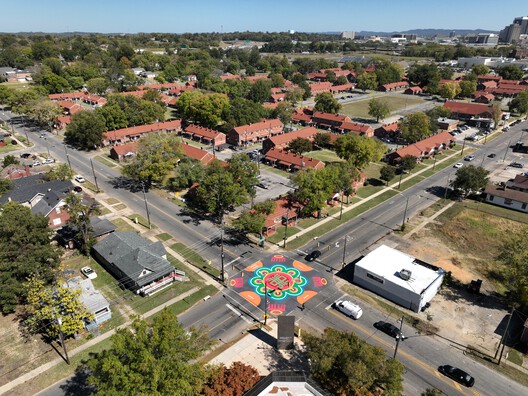
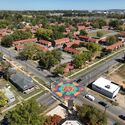
Bloomberg Philanthropies has opened applications for a new edition of its Asphalt Art Initiative, which offers grants of US$100,000 to cities across the Americas and the Caribbean to transform streets into safer and more vibrant public spaces through art. Up to 10 cities will be selected to develop projects that reclaim street space for pedestrians, improve road safety, and create new gathering places, with technical support from Bloomberg Associates, Street Plans Collaborative, and TY Lin. An updated study examining more than 50 projects across the United States found a 52% reduction in traffic crashes involving pedestrians or cyclists, a 32% decrease in overall crashes, and a 55% decline in near-miss incidents involving pedestrians following the interventions. Previous projects include redesigned intersections in Puebla, Mexico, where average vehicle speeds decreased by 61%. Cities with populations of at least 50,000 can apply until February 11, 2027, with selected projects expected to be implemented in late 2027 and 2028.
This article is part of our Regional Focus series, bringing together recent architecture news, projects, and emerging developments from across Latin America. Explore more architecture news and projects from the region on ArchDaily.