
The United States' contribution to the 20th International Architecture Exhibition of La Biennale di Venezia will explore the relationship between the country's architecture, landscapes, and the people who shape it. Titled Earth Craft, the exhibition will be commissioned, organized, and curated by a team from the University of Miami School of Architecture (U-SoA). The lead curator, Professor Germane Barnes, conceived the exhibition as a representation of the United States "through its makers and not through its icons," recognizing that celebrated buildings were raised by anonymous builders who dug, shaped, and fired architectural legacy. Vyta Pivo, assistant professor, curator, and historian of Earth Craft, adds a contemporary approach by translating inherited knowledge of soil, water, and heat into computational design, conceiving craftwork and robotic fabrication as complementary. The exhibition will occupy the United States Pavilion at the Giardini della Biennale between May 8 and November 21, 2027, tracing earthen materials from the ground to finished buildings.




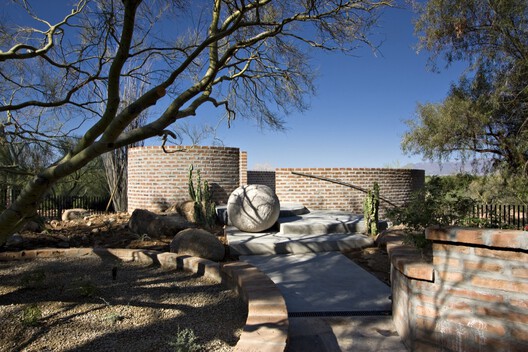
The participation of the United States in the Art and Architecture Exhibitions of La Biennale di Venezia is officially managed by the United States Department of State's Bureau of Educational and Cultural Affairs (ECA). The U.S. Pavilion, a neoclassical building that opened in 1930 at the Giardini della Biennale, is owned by the Solomon R. Guggenheim Foundation and managed by the Peggy Guggenheim Collection in Venice. The curatorial project for 2027 is to tell a story of the country's architecture through earth in its multiple forms: brick, rammed earth, adobe, and concrete masonry. In this story, architecture is understood as the process of transforming geological matter into shelter, through the hands of brickmakers, masons, and earth-builder communities. Earth Craft proposes an interpretation of national history through the continuous action of turning local soil into the foundations of the country's public and private life.
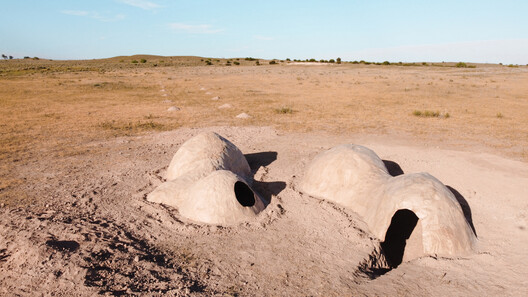

Earth Craft shifts attention from architectural aesthetics to material histories. With material as its central driver, the exhibition also includes workers and landscapes as constitutive elements of U.S. architecture. Soil, and therefore earthen architecture, differs across geographies, producing a diverse body of knowledge that spans the adobe communities of the Southwest and the earthen landscapes of Indigenous North America, as well as Monticello, military brickworks on the frontier, plantation kilns, and industrial brick towns such as Haverstraw, New York; St. Louis, Missouri; Tuskegee, Alabama; and Denison, Texas. Earthen buildings carry a record of their place, ways of working, and inherited knowledge, which will be transmitted to the public through an earthen materials library, fabrication workshops, and a published catalog.
Related Article
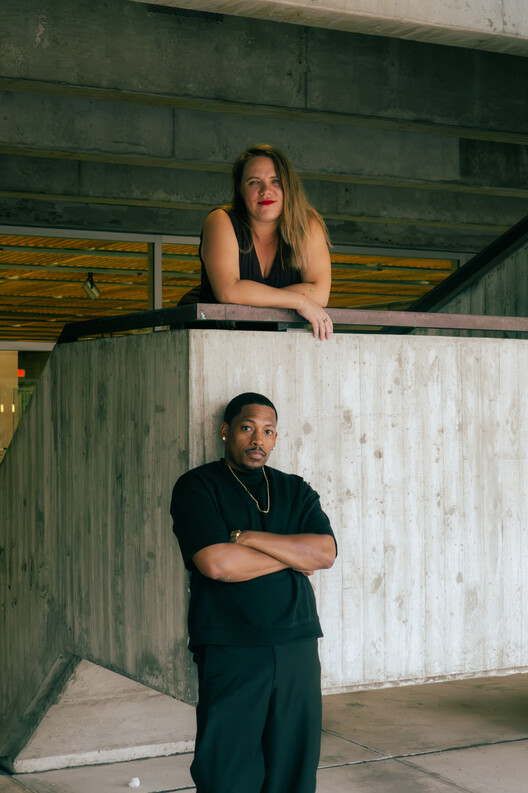
“Architecture Must Return to Its Essence”: Wang Shu and Lu Wenyu on the 2027 Venice Architecture BiennaleGermane Barnes and Vyta Pivo, the curators of the U.S. Pavilion at the upcoming Venice Biennale, bring together practice and scholarship. Barnes is a licensed architect and founding principal of Studio Barnes, a research and design practice that explores how architecture intersects with identity and how it carries social and political agency. His work has been shown in major museums and biennials, including the 2023 Venice Architecture Biennale, and is held in the permanent collections of leading US institutions. Pivo is an architectural historian and assistant professor at the University of Miami who studies material lifecycles, construction labor, everyday landscapes, and climate change. Her forthcoming book, Cast in Concrete: How the US Built Its Empire, traces the history of the American cement and concrete industries and their global and transplanetary expansion. Her research has appeared in academic and public-facing journals and has been supported by major foundations, scientific agencies, and national cultural institutions.
As an American school of architecture, we study the full range of what this country has built, and that includes the work of the people who built it – not just the designers whose names are bolded in textbooks, but the unrecognized field leaders innovating in materiality and craft that enabled the building techniques that define America. Representing the United States in Venice is an incredible opportunity to bring this perspective on American architecture to an international audience, and we are grateful for this opportunity. – Rodolphe el-Khoury, Dean of the University of Miami School of Architecture
The 20th edition of the Venice Architecture Biennale will be curated by architects Wang Shu and Lu Wenyu, founders of Amateur Architecture Studio. Other recent national exhibition announcements include Korea's exhibition "Catabolism," which focuses on the country's condition of hyper-shrinkage, the accelerated stage of population contraction and societal aging, within the context of global demographic change. The Luxembourg Pavilion is titled "Excess! On the Overconsumption of Living Space" and addresses the inequitable distribution of living space as a reflection of habits of excess, while the German Pavilion will host an exhibition titled "CONVIVERE — A Repertoire of Living Together," exploring how architecture can contribute to the foundations of democracy.


