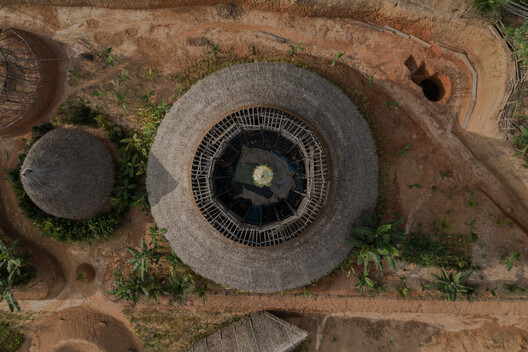
Where rivers, reservoirs, and rainfall can no longer be relied upon consistently, water is increasingly being sought in the atmosphere. Fog, atmospheric humidity, and condensation each offer different ways of collecting it. When architecture begins to collect water from the air, surfaces, structures, and open spaces become part of the water system.
According to UNICEF, Jordan's National Water Strategy estimates that each person has access to only about 61 cubic meters of renewable water per year, far below the 500 cubic meters commonly used as a threshold for absolute water scarcity. Around half of the population receives piped water only once a week, while groundwater is being extracted faster than many aquifers can naturally recharge.
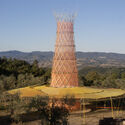
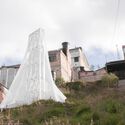
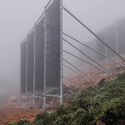
Atmospheric water harvesting encompasses several different technologies. Fog consists of suspended droplets that can be intercepted by mesh; dew forms when a surface cools below the dew point; and humidity can be extracted through sorption or condensation processes. Each requires different climatic conditions and produces different quantities of water. A critical review of atmospheric water harvesting for building façades identifies these as distinct approaches and finds that their integration into architecture remains constrained by technology readiness and manufacturing costs.
Related Article
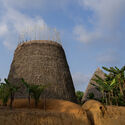
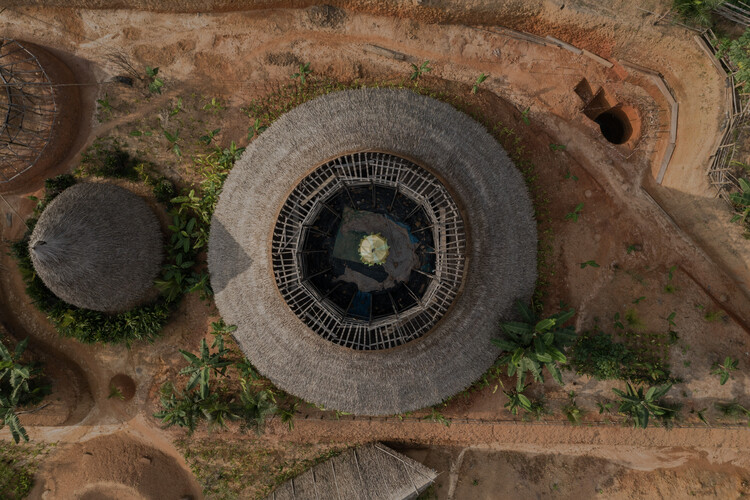
Warka Water and Arturo Vittori Create Integrated Village for the Rainforest Community in Cameroon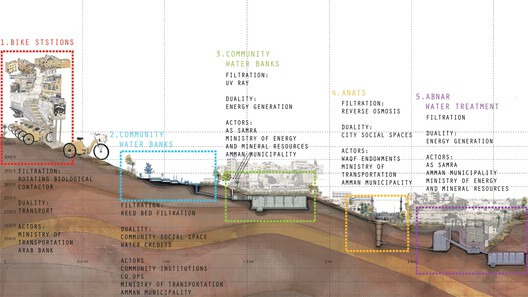
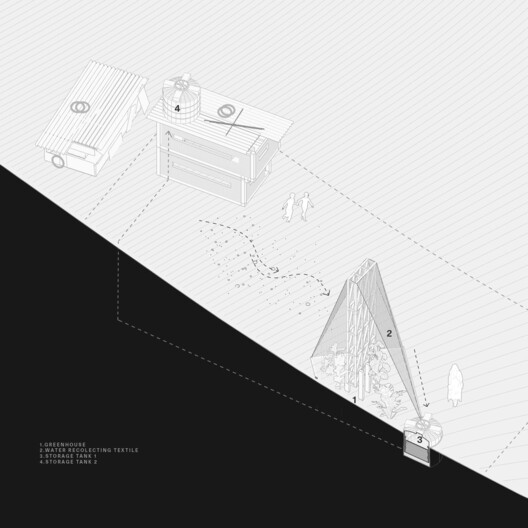
Columbia GSAPP's Water Urbanism: Amman explored these possibilities in Jordan. Developed around Jordan's water crisis and refugee conditions, the studio proposed interventions that combined water collection with shade, sanitation, gathering, and productive landscapes. At the Al-Hadalat site, shelter clusters of refugees were proposed around fog towers capable of collecting an estimated 800 to 2,000 liters of water per day, alongside smaller shaded fog structures projected to collect around 500 liters. These figures are design projections rather than measured operational results.
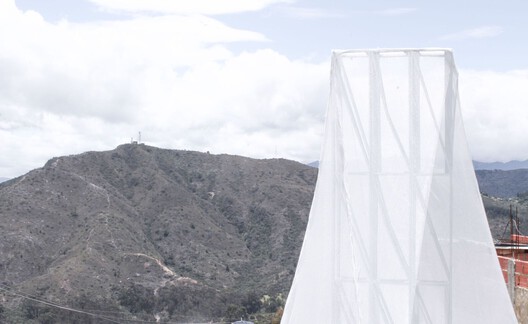
Built from palm wood and mesh knitted from discarded ration sacks, the structure would intercept fog while using its exposure to moving air to provide shade and a place for congregation. Water would travel through the structure into underground storage before being distributed to showers, sanitation, and productive landscapes. Wastewater would move through constructed wetlands and return to the agricultural system.
Reservoirs, treatment plants and distribution networks operate largely outside the architectural experience of the city. Fog harvesting requires infrastructure to remain uncovered to the atmosphere. The collector must occupy space, remain exposed and respond directly to atmospheric conditions. Designing the collector as shade, shelter, or public space gives it another use.
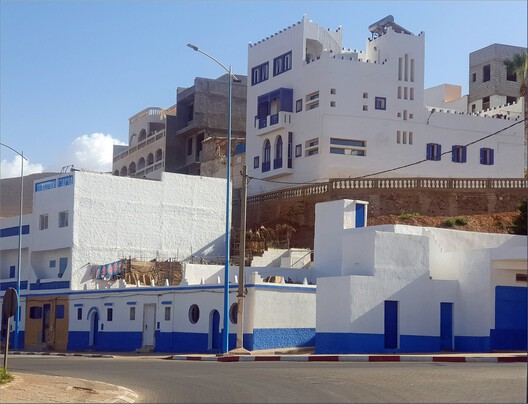
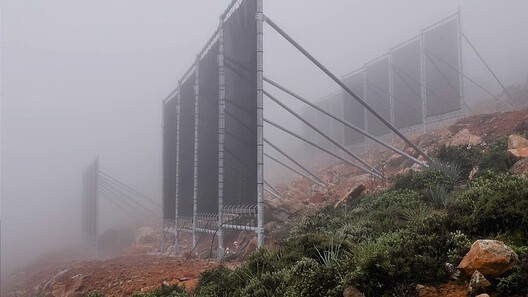
Any such system still has to contend with the unpredictability of the atmosphere. Morocco provides an example where fog harvesting has moved beyond the speculative drawing into an operational water system. At Sidi Ifni, on the Atlantic coast, fog is collected at Boutmezguida mountain, approximately 35 meters inland from the coast, and channelled into a wider system serving local communities. A 2024 assessment of the project describes it as the world's largest fog-collection project and evaluates its water output, water quality and community participation.
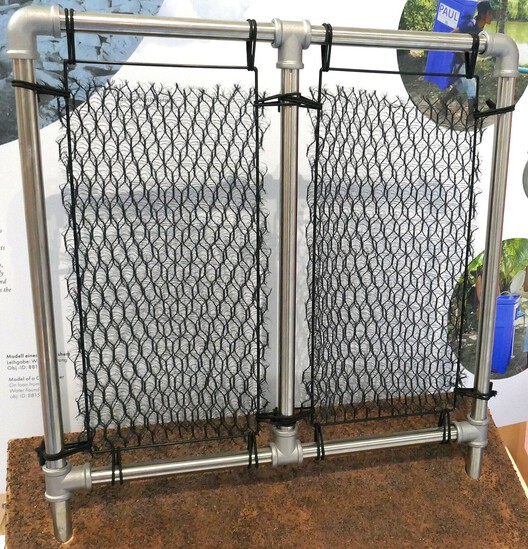
The project's output varies substantially across the year. Over four years, annual average collection ranged between 1.6 and 6 liters per square metre per day. During the fog season, March and April produced an average of 8.5 liters per square metre per day, while the highest monthly figure recorded was 21 liters per square meter per day in April 2021. Fog occurred throughout the year, but its frequency varied, making storage and supplementary supply important to the system.
Collection is only one component of the system. Water has to be captured, stored, treated, and distributed. The community also has to participate in maintaining and using the infrastructure. The researchers identify fog-yield variability and groundwater pollution among the project's principal challenges, warning that relying on fog as the sole source could result in inconsistent water availability.
Research into atmospheric water harvesting on building façades suggests that the envelope could become an active collection surface. Orientation, surface area, material properties and exposure to air all become environmental design variables. Sorption-based systems, in particular, have been identified as promising for integration into building envelopes, although current research still identifies low technology-readiness and manufacturing costs as significant barriers.
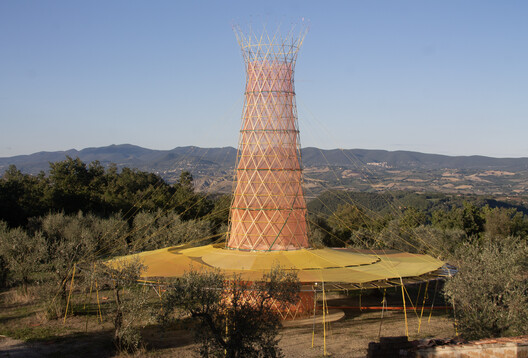
A water-harvesting façade would sit between interior and exterior while also responding to air movement and collecting water from the surrounding atmosphere. Roofs could become condensation surfaces. Screens could become fog collectors. Courtyards could incorporate collection and storage. Structures could also provide shade where their collection systems need to remain exposed.
Architecture cannot design the atmosphere itself. It can orient a collector toward prevailing fog, increase its surface area, provide storage and reduce dependence on distant infrastructure. It cannot guarantee that fog will arrive. In practice, atmospheric water would need to operate alongside storage, treatment and conventional supply systems.
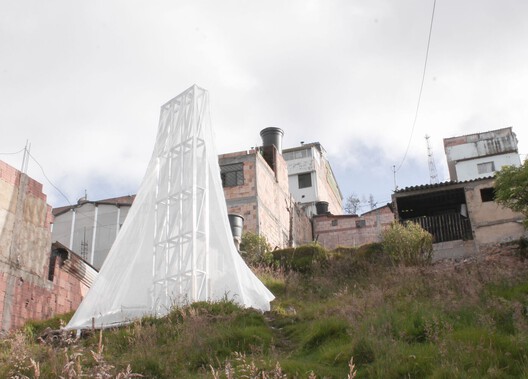
At Al-Hadalat, the fog tower combines collection with shade and gathering space. At Sidi Ifni, collection forms part of a larger system of storage, treatment and distribution. At the building scale, façades can collect water while continuing to control heat, light and air.
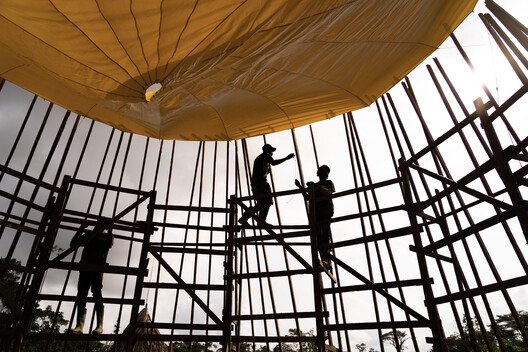
Architecture has always responded to the atmosphere: keeping rain out, tempering heat, admitting daylight and directing air. Atmospheric water harvesting adds another task: collecting water from the same atmospheric conditions buildings already respond to. Atmospheric water harvesting works as part of a wider water network. It adds another source to that network, one whose performance depends on climate, exposure, storage, and maintenance.
This article is part of the ArchDaily Topic: The Architecture of Water: Territories, Tensions & Transformations. Every month we explore a topic in-depth through articles, interviews, news, and architecture projects. We invite you to learn more about our ArchDaily Topics. And, as always, at ArchDaily we welcome the contributions of our readers; if you want to submit an article or project, contact us.