Architecture across Latin America this month reflects an ongoing conversation around inhabitation, cultural heritage, and the ways architecture can connect contemporary life with existing places and knowledge. From the Buenos Aires International Architecture Biennial and initiatives addressing traditional building practices and archaeological heritage to new cultural infrastructure and housing projects in Argentina, Ecuador, and Peru, recent developments highlight different approaches to working with local contexts. Across the region, questions of memory, community, landscape, and material practice continue to shape both architectural projects and broader discussions around how cities and territories are inhabited.
Inhabiting the City: Biennials, Heritage, and Cultural Memory
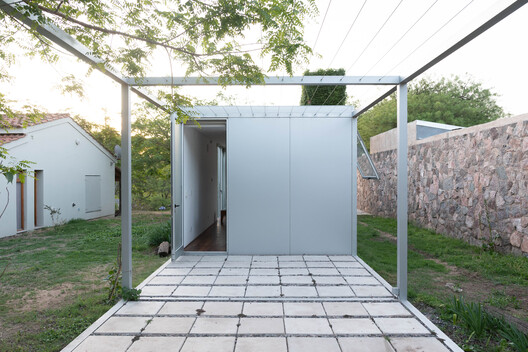
The Buenos Aires International Architecture Biennial marks its 40th anniversary with its 20th edition, bringing together around 100 architecture firms, 15 exhibitions, 50 conferences, and 40 international guests from more than 55 cities. Running from September 22 through October as part of Buenos Aires' Design and Architecture Month, the free program is organized around HABITAR (INHABIT) and explores the relationship between people, architecture, cities, territories, and communities. Its central exhibition at the Museo Nacional de Bellas Artes is accompanied by exhibitions addressing subjects ranging from Antarctica and nature to wood and the work of César Pelli and Diana Balmori, while a wider cultural circuit extends through the city.
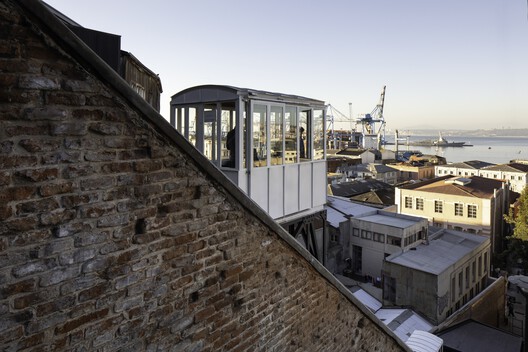
The focus on inhabitation also resonates with initiatives elsewhere in the region that approach heritage as a living form of knowledge. In Valparaíso, Chile, Oficios en Obra will bring master tradespeople, practitioners, training institutions, heritage organizations, and local communities together from October 9 to 11 to examine traditional construction practices through workshops, demonstrations, discussions, and heritage routes. The gathering addresses the transmission of trades such as carpentry and rammed-earth construction alongside new technologies, sustainable building, and conservation. In Lima, meanwhile, Red Lima Milenaria is seeking UNESCO recognition for a selection of pre-colonial archaeological sites embedded within the contemporary city, including El Paraíso, Huaca Pucllana, the Campoy fortress, and sections of the Surco Canal, bringing the question of how historic places remain part of urban life into focus.
Cultural Institutions and Temporary Landscapes Extend Latin American Narratives
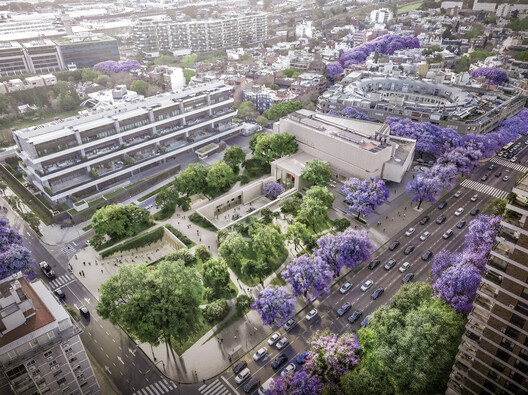
Cultural infrastructure is also undergoing transformation in Buenos Aires, where MALBA has announced an underground expansion designed by Taller Frida Escobedo as part of its 25th-anniversary program. Located beneath Plaza República del Perú, the project will approximately double the museum's exhibition space while adding temporary galleries, an auditorium, multipurpose spaces, workshops, storage, offices, and a new plaza-courtyard. By placing the expansion beneath the park, the proposal preserves the existing public space while establishing new connections between the museum, landscape, and surrounding streets. The project follows the addition of the Daros Latinamerica Collection and is expected to open in late 2029 or early 2030.
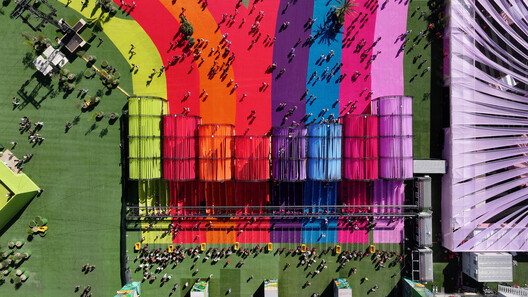
A different approach to cultural programming appears in Macondo Park, a temporary landscape designed by Bjarke Ingels Group (BIG), Komodo, and Vampire for Shakira's Madrid residency. Inspired by the fictional town in Gabriel García Márquez's One Hundred Years of Solitude, the 185,000-square-meter park surrounds the concert venue and extends the program through spaces for art, dance, gastronomy, literature, cinema, and fashion. Twelve thematic pavilions and a central plaza are connected by routes and more than 500 trees, creating a temporary cultural landscape alongside the concerts. The structures were assembled using lightweight fabric, modular scaffolding, and reusable components, with their eventual dismantling and reuse considered from the outset, while the trees will return to local nurseries after the residency.
Featured Projects
Kay Kay de Monkul Lookout Walkway / Gonzalo Verdugo + Carlos Seguel Arquitectos
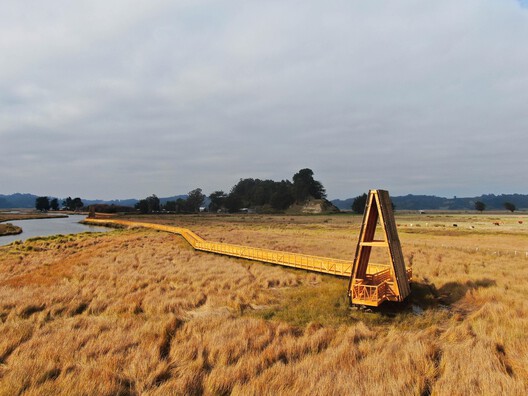
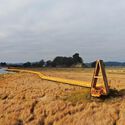
Located in Chile's Monkul Wetland, a Ramsar-recognized coastal ecosystem, the Kay Kay de Monkul Lookout Walkway by Gonzalo Verdugo and Carlos Seguel Arquitectos introduces a low-impact wooden path that allows visitors to experience the landscape while minimizing disturbance to its sensitive environment. The 1,110-square-meter intervention follows the wetland's geography as a yellow-toned, fully accessible walkway with three viewpoints featuring cultural and scientific information. Developed in collaboration with the Mateo Nahuelpan Community, the project engages with the ancestral territory and Mapuche Lafquenche culture while creating a sequence of views, pauses, and gathering points. Its reversible construction and careful installation respond to the existing landscape, combining environmental interpretation, accessibility, and cultural heritage within a minimal intervention.
La Colmena - Multi-family Housing as Shared Neighborhood Infrastructure / Ancestra + Natura Futura
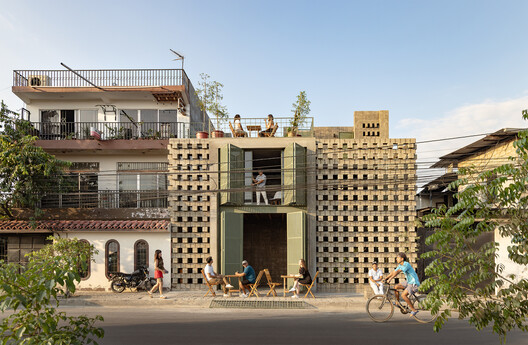
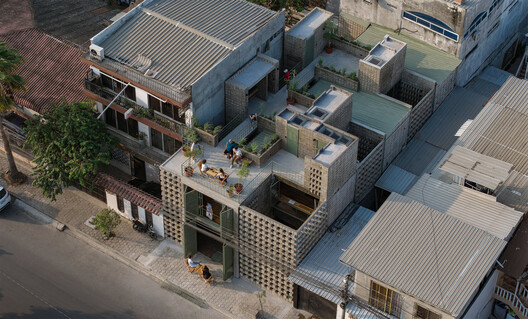
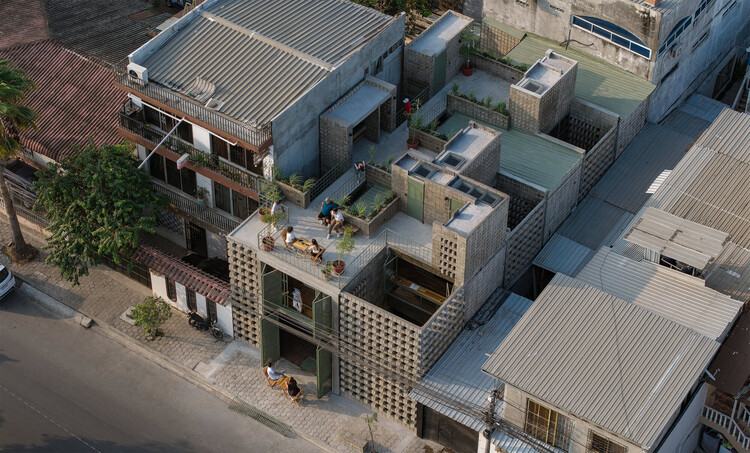
Located in Durán, a satellite city of Guayaquil, Ecuador, La Colmena transforms a deteriorated 1970s house into a three-unit residential project that reconnects housing with the surrounding neighborhood. Rather than occupying the entire 10-by-20-meter site, the 335-square-meter project preserves the existing structure while introducing six courtyards that filter rainwater and function as climate tunnels, improving ventilation and moderating indoor temperatures in a city where seasonal flooding is recurrent. A hallway conceived as an extension of the sidewalk, shared terraces, vegetable gardens, and a cultural-gastronomic space further connect the homes to the street and create spaces for gathering and productive activities. Locally sourced concrete blocks and wood, including traditional artisanal techniques, reinforce the project's relationship with its immediate context.
KUSKA Residence / Taller MACAA (Misión de Arquitectura, Construcción y Arte en los Andes)
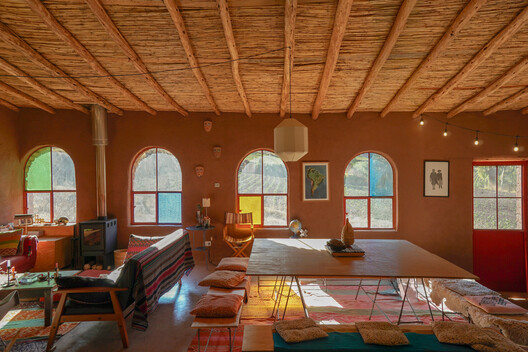
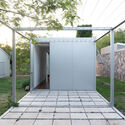
Located at 3,100 meters above sea level near Cusco, KUSKA Residence by Taller MACAA reinterprets Andean building traditions through a contemporary retreat designed for a writer and artisan, as well as visiting family, friends, and artists-in-residence. The 400-square-meter complex is organized as four interconnected volumes that create a sequence of courtyards, pathways, galleries, and shared spaces, establishing different relationships between private and communal life and the surrounding landscape. Built with 40-centimeter-thick adobe walls on stone foundations and eucalyptus-and-reed roofs, the project uses traditional materials to respond to the region's changing temperatures, while solar energy, rainwater harvesting, a biofilter, biodigester, and dry toilets allow the house to operate independently of conventional infrastructure.
On the Radar
XXX Colombian Biennial of Architecture and Urbanism to Take Place in Cartagena
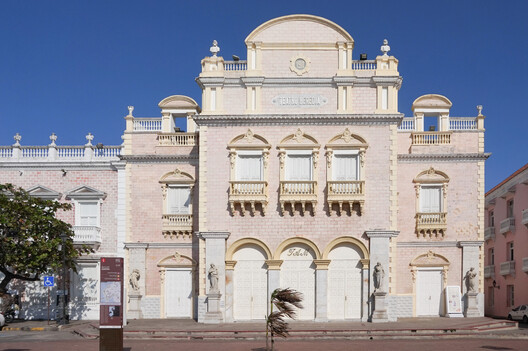
The XXX Colombian Biennial of Architecture and Urbanism, organized by the Sociedad Colombiana de Arquitectos, will mark its 30th edition in 2026, continuing a biennial platform for recognizing and documenting architecture produced in Colombia. The edition expands its regional scope through the I Latin American Biennial of Architecture of Colombia, bringing projects from across Latin America into dialogue with Colombian practices, while the VII Colombian Student Biennial of Architecture will highlight academic research and experimental projects by emerging architects. The biennial considers architecture in relation to urban, historical, environmental, social, and cultural contexts, bringing together professionals, institutions, academia, and the public.
Design Week Mexico 2026 to Bring Architecture and Design Programs Across Mexico City
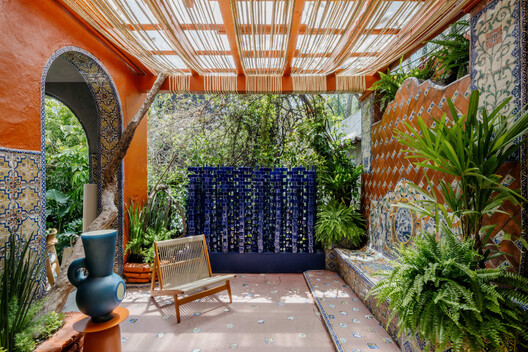
Design Week Mexico will return from October 5 to 11 for its 18th edition, bringing together architecture, design, crafts, and art across Mexico City through exhibitions, creative residencies, installations, tours, and other public programs. The 2026 edition will feature Chile as the Guest Country of Honor and the Middle East and North Africa as the Guest Region, with events taking place at venues including Casa Ortega, the National Museum of Anthropology, G.56 Hub Creativo, Design House, Espacio CDMX, and Lincoln Park. As part of the program, ArchDaily will also host Next Practices Live in Mexico at Design House on October 12, bringing together 2026 Next Practices Awards winners and previous Mexico-based recipients for a discussion on architecture's capacity to act and produce change.
This article is part of our Regional Focus series, bringing together recent architecture news, projects, and emerging developments from across Latin America. Explore more architecture news and projects from the region on ArchDaily.