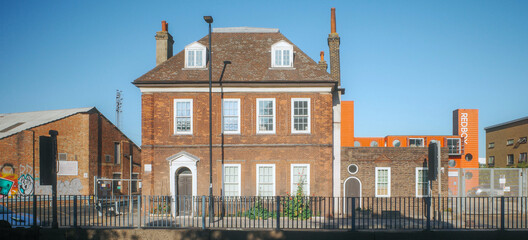
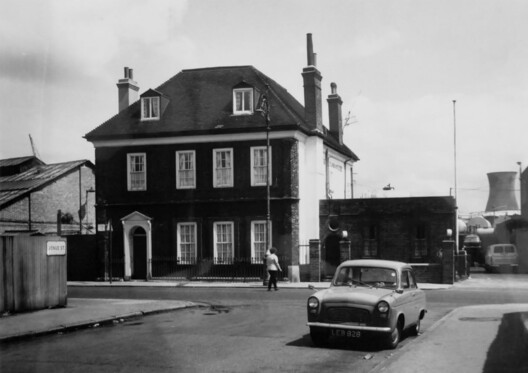
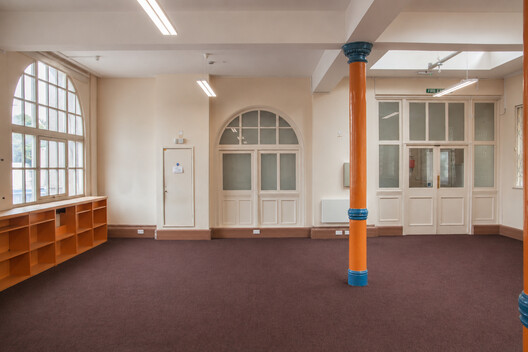
London-based art, architecture, and design collective Assemble has recently announced a new workspace project in the English capital. Since its founding in 2010, the studio has built a community around craft and making by providing creative and light industrial spaces resilient to market forces, working as a platform for ecologically and socially engaged work. It recently secured a 25-year lease, with the option to buy, on Bromley Hall, an early Tudor-period manor house considered one of the oldest houses in London. The plan is to transform the site's three buildings, Bromley Hall (c. 1485), the Old Poplar Library (c. 1904–5), and the RedBox container building, into Assemble's largest workspace to date, adding 14,000 sq ft to its current workspace provision, with the site's long-term development plan set to double this figure. The practice's new project follows a dual objective: restoring a Grade II*-listed building and increasing stability for the creative industries community, through long-term rental agreements and a new space for collaboration.

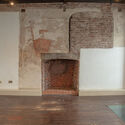
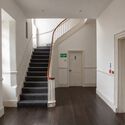
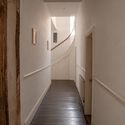
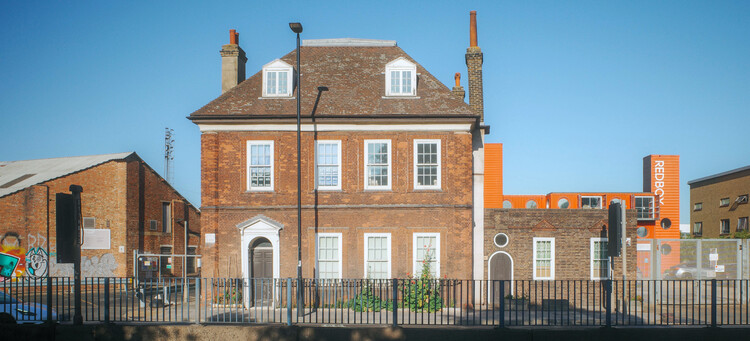
According to Assemble, London is set to lose 30% of its already scarce industrial floor space by 2041, making spaces for creative and light industrial work increasingly hard to find. The studio complements its work in architecture, art, and design with the development of spaces for the creative industries via Assemble Workspace, its branch dedicated to workspace provision. Since founding Sugarhouse Studios, its first workspace site on the fringes of the Olympic Park, in 2011, the practice has delivered and operated five similar spaces across the UK, including a dedicated textile studio, Fabric Floor, in Brixton, and, most recently, Leaside Yard in Bromley-by-Bow. In the case of Bromley Hall and its associated transformation project, Assemble has secured a 25-year lease with the option to buy the property following a fundraising phase. The practice is now looking for project partners: workspace tenants, collaborators for the site's refurbishment, and funding partners and investors.
A distinctive feature of Assemble's workspaces is that they are designed to welcome loud, messy, and experimental practices, such as community sauna fabricators, an aluminium furniture and homeware brand, a wholesale supplier of locally sourced fruit and vegetables, and a rehabilitative record label. By combining knowledge of refurbishment with management, administration, and maintenance, the practice has created a model that provides greater certainty for work and experimentation in the creative industries. According to one tenant at Workshop East CIC, the space creates a sustainable environment that incubates new craftspeople by providing high-quality facilities, services, and commissions to its network, offering a platform to support small craft businesses in spaces reclaimed for craft.
Related Article
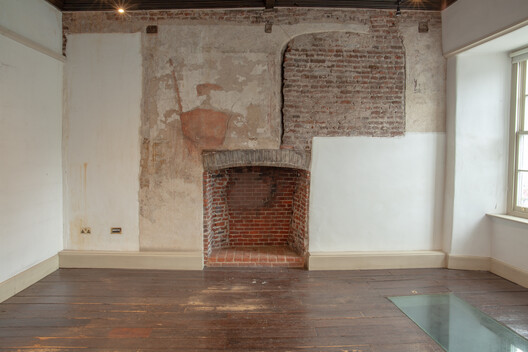
Obsolete Typologies Revived Through 17 Adaptive Reuse ProjectsBromley Hall's first structures date back to c. 1255. Since the 15th century, the house has served, at various points, as Henry VIII's mistress's residence, a hunting lodge, a Civil War gunpowder factory, a merchants' retreat, missionary headquarters, a pediatric hospital, and a calico printing works. Assemble has an extensive portfolio of renovation and reuse projects, beginning in 2018 with the redevelopment of Goldsmiths Centre for Contemporary Art, a Grade II-listed former Victorian bathhouse, and continuing this year with the retrofit of ten Victorian villas in the North Oxford Conservation Area. Assemble's approach to adaptive reuse is known for being community-driven, using retrofit and refurbishment as opportunities to build on local narratives and foster agency through making.
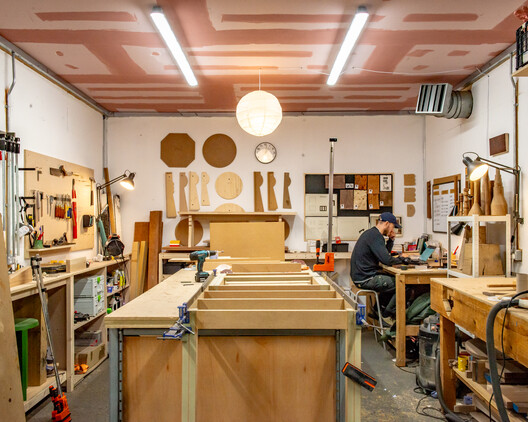
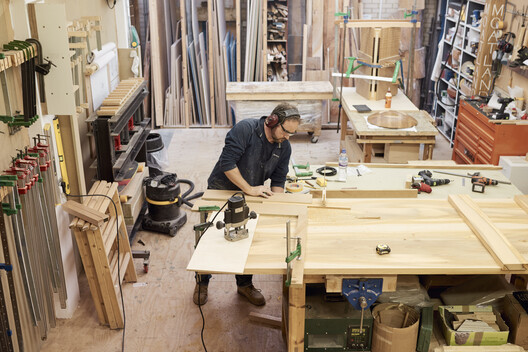
Bromley Hall brings together many strands that we care about, from resourceful reuse and retrofit of buildings, to supporting the creative economy and collaborative practice within the city and seeking imaginative opportunities for public access and benefit. The site's challenging context is what makes it a perfect opportunity for Assemble: we specialise in finding new life for overlooked spaces and delivering lasting cultural, social, and economic value. We're excited about the prospect of putting down roots in the local area, working in residence and being the long-term stewards of the site. We're looking forward to creating and managing a unique creative workspace with a critical mass of makers which can support sustained public access to heritage and programming on site. — Mathew Leung from Assemble
The Bromley Hall transformation project is divided into three phases. First, between 2026 and 2029, Assemble and the first tenants will move into the site while basic capital works begin, including the development of Bromley Hall's communal spaces (the Blount Room and shared kitchen). The goal of this stage is to prove the concept for the space and launch a fundraising campaign, allowing Assemble to eventually purchase the site. The purchase is planned for the second phase, between 2029 and 2032, initiating major capital works such as a new link building next to Bromley Hall and the development of a larger workspace building. In the third phase, from 2032 onwards, the development work should be completed, the full site tenanted, and the site made available for a long-term program of exhibitions, workshops, and talks.
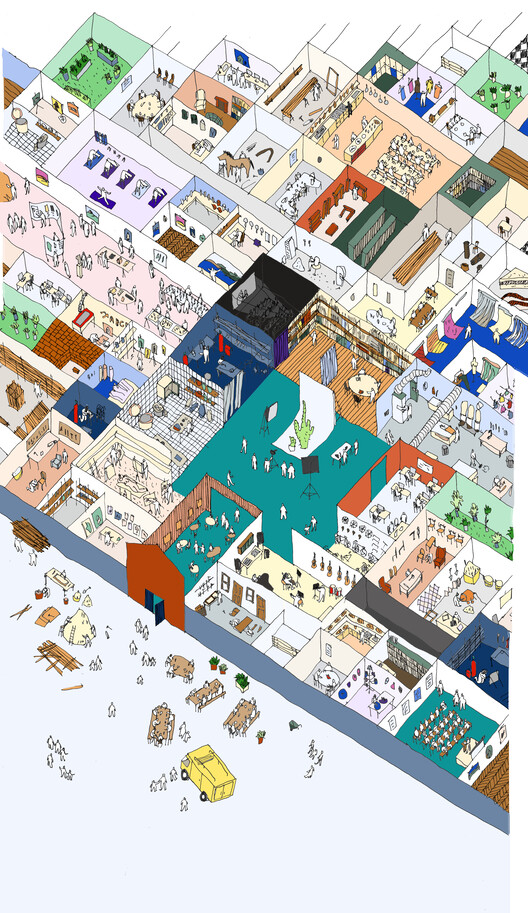
In the meantime, the new public program for the Bromley Hall property is centered on its key communal spaces: the Blount Room and the ground floor of the Bromley Hall building. Rooms accommodating up to 30 people will be bookable by studio holders and the wider public, with affordable rates for non-commercial use. Other recent news about London's cultural heritage includes the relocation of the London Museum to Smithfield's restored General Market ahead of its long-awaited opening, scheduled for November 28, 2026; and the opening of the first phase of the transformation of Olympia, a historic exhibition complex in West London, into a mixed-use cultural destination by Heatherwick Studio and SPPARC. Also in the city, the Serpentine Pavilion, designed by LANZA Atelier, will be on view through October 25, 2026.


